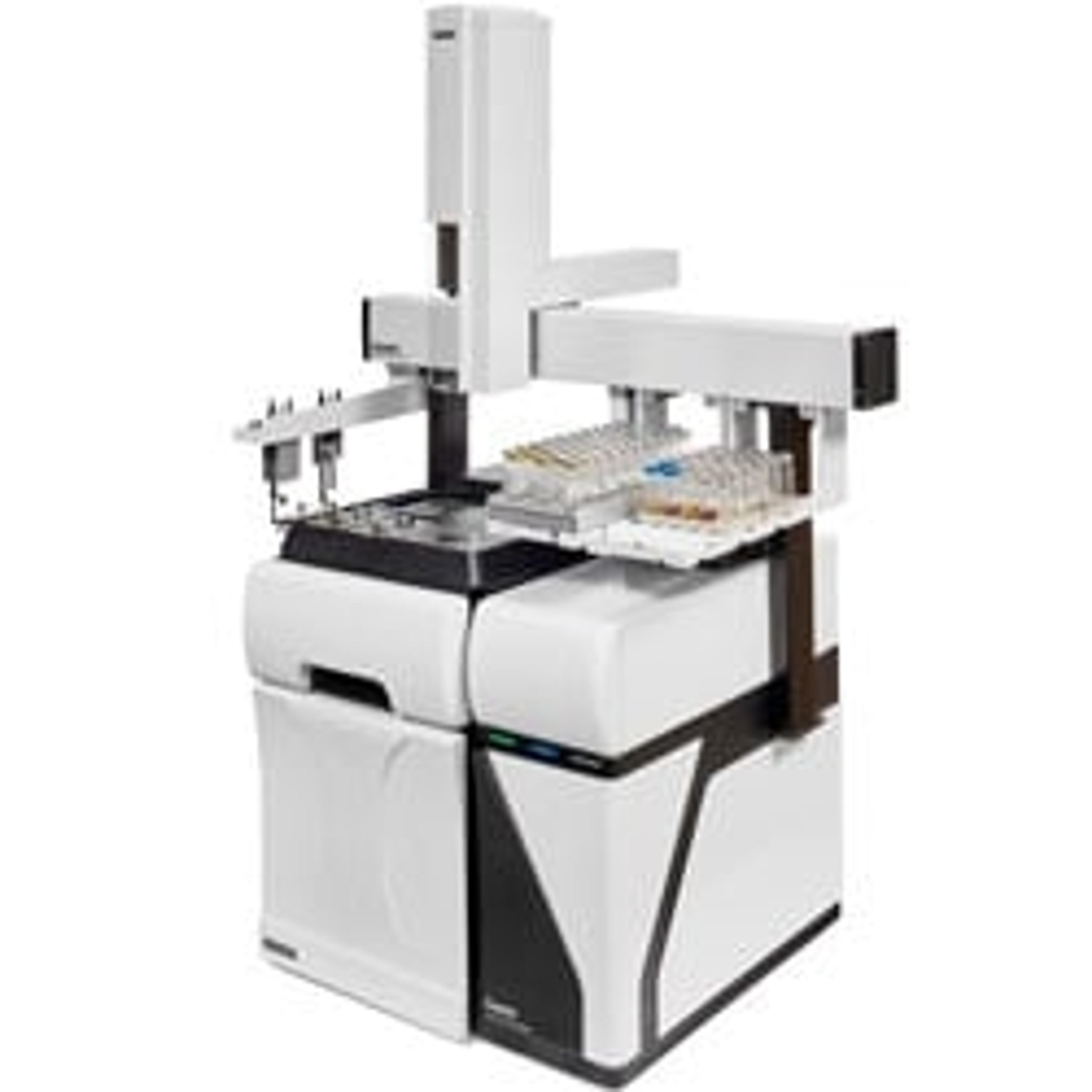
Micro-Chamber/Thermal Extractor
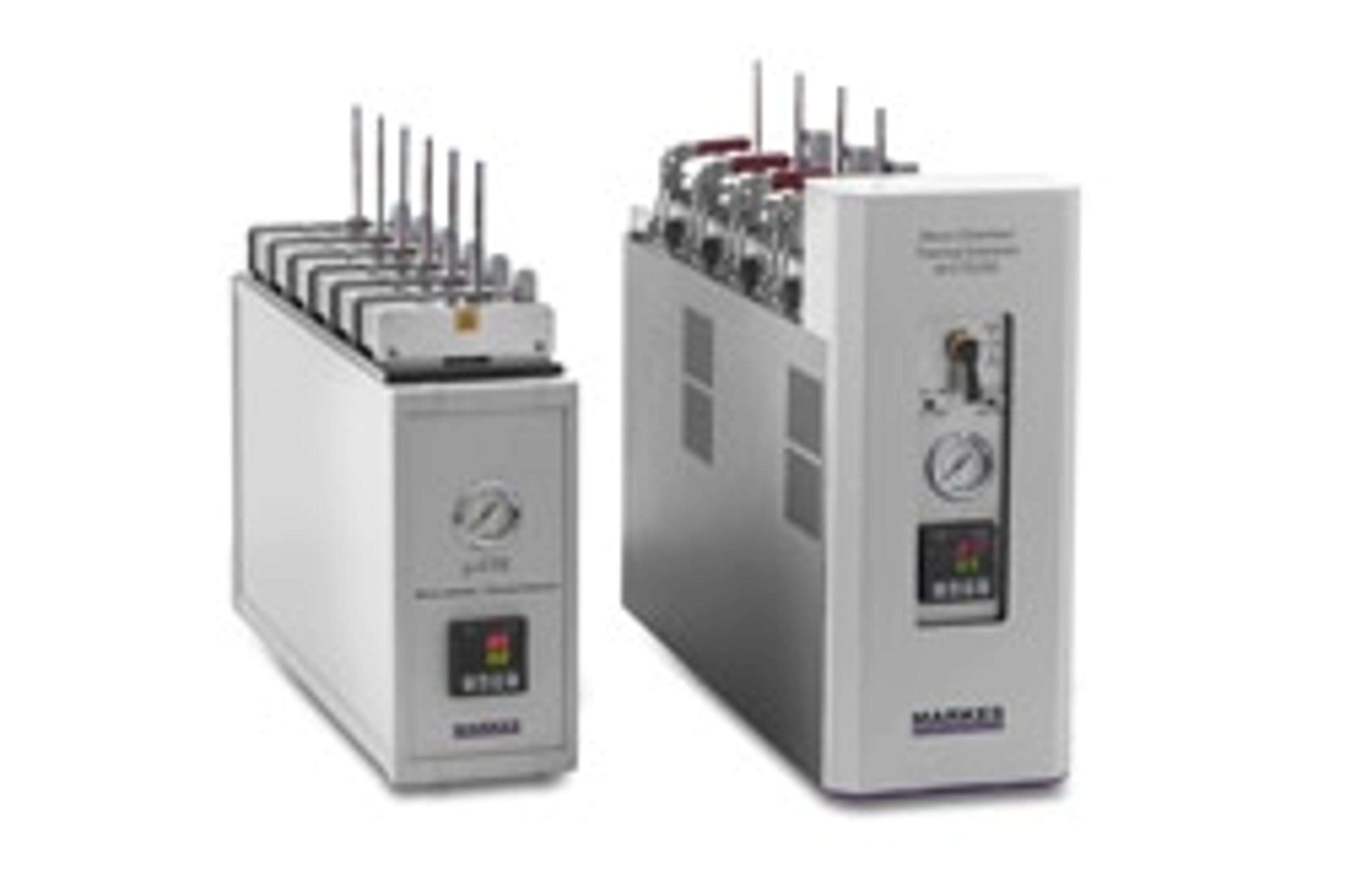
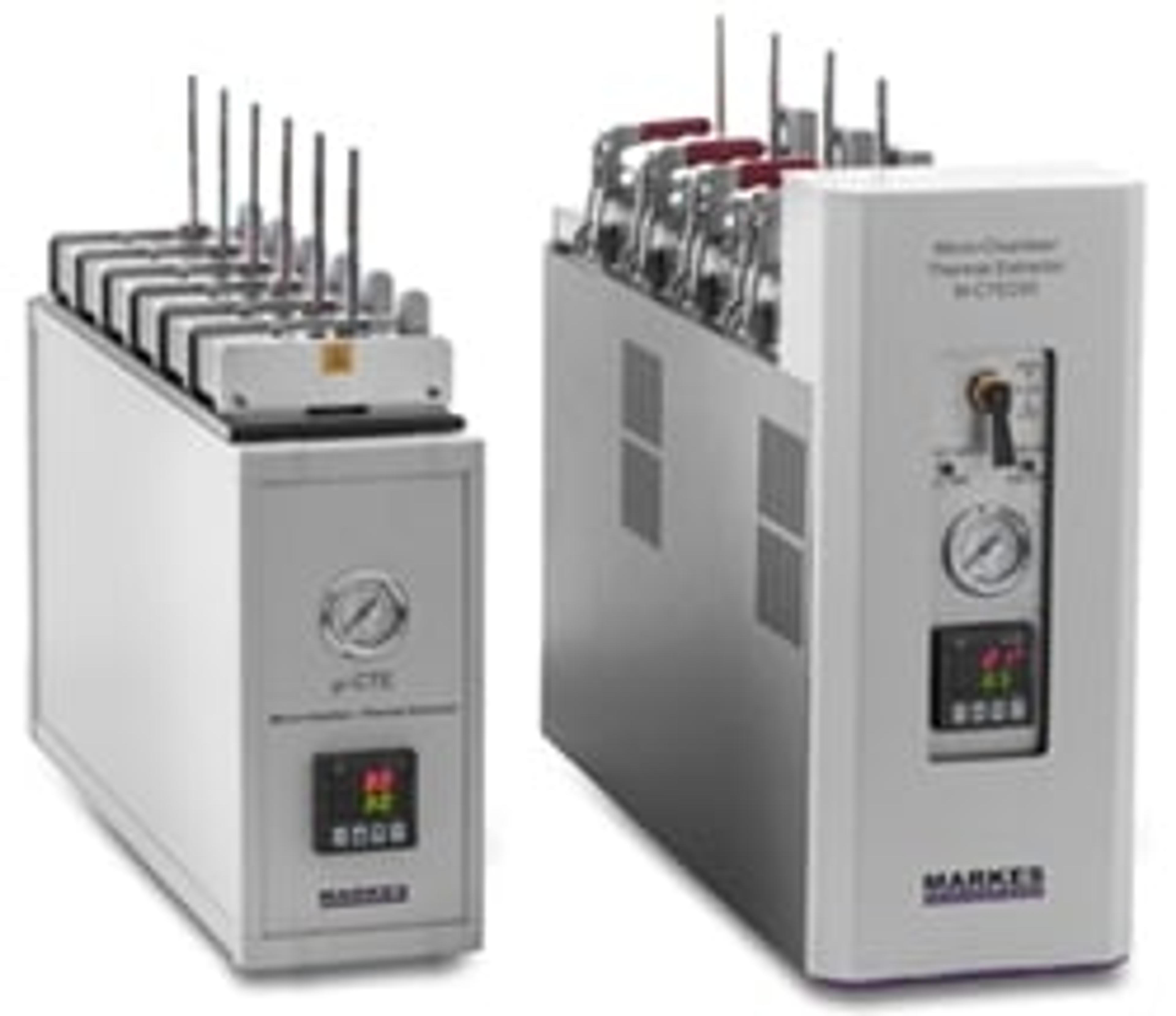
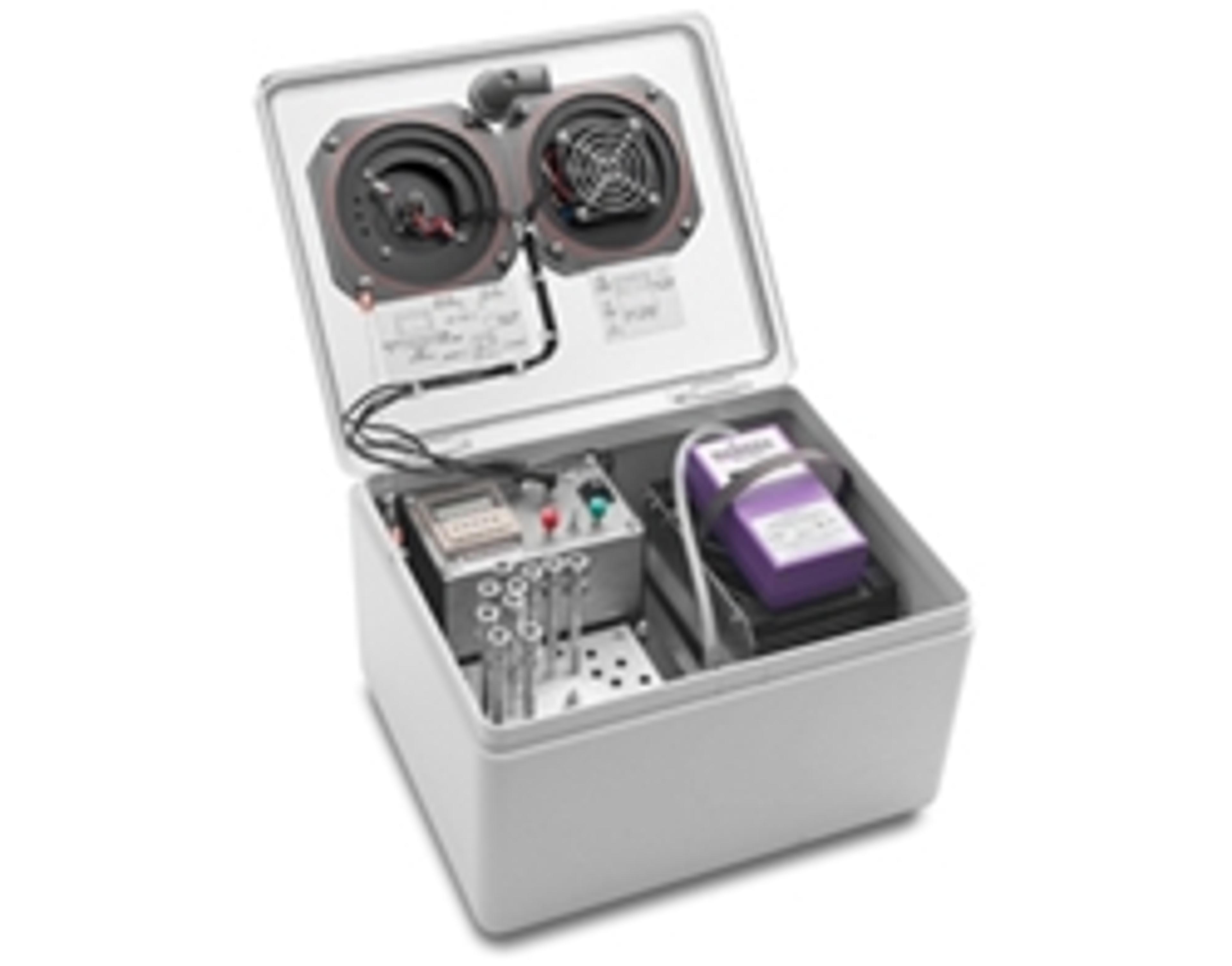
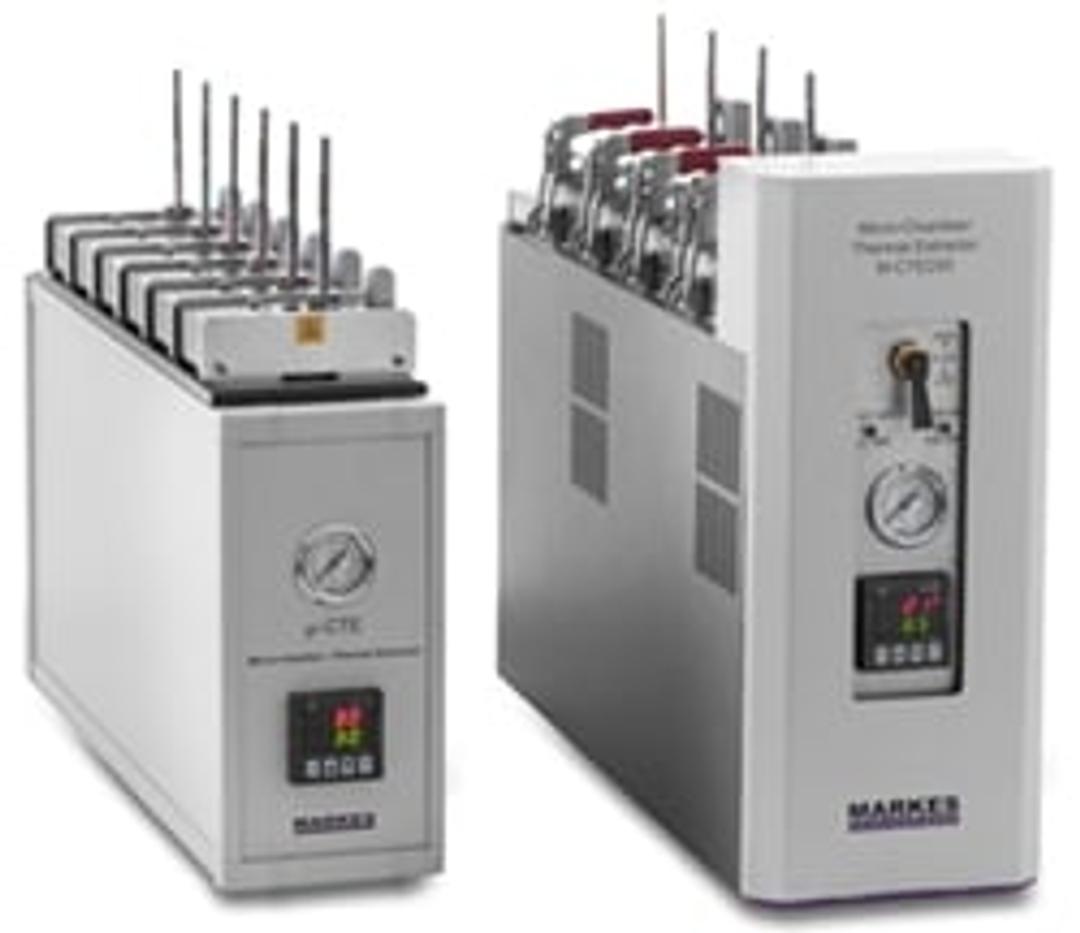
Fast sampling of emissions from products and materials. The Micro-Chamber/Thermal Extractor™ (µ-CTE™) is a versatile and compact unit with up to six small cylindrical chambers that enables the sampling of chemicals released from products or materials. Released volatile and semi-volatile organic compounds (VOCs and SVOCs) are collected onto sorbent tubes for analysis by TD–GC–MS. The capability of the Micro-Chamber/The…

Receive your quote directly from the manufacturer.
Fine but sometime problematic
voc detection via sorbant td tubes
Sometimes has problem in starting desorption if the caps of the tubes are not fitting well, which is hard to understand if it's fir or no. so you would start the run and check if it start desorbing or giving error.
Review Date: 9 Feb 2026 | Markes International Ltd
Great product for capture sample that can't be ran directly on the GC
Analyze of in cabin materials
Easy to use and easy to maintain. Large sample can be sampled easily on a TD tube and ran into the GC
Review Date: 18 Jan 2023 | Markes International Ltd
Easy to use and very helpful
Polymers
Easy to use and very helpful to reach detection of trace levels of volatile compounds.
Review Date: 28 Sept 2022 | Markes International Ltd
Great results when all chambers are working properly
Extraction of contaminants of sample plastic
Easy to use. set up is simple. the third chamber pot/ heater has given us problems. It is a good instrument
Review Date: 31 Mar 2022 | Markes International Ltd
Excellent results and greatly appreciate efficiency of the instrument.
Analysis of tissue and plant metabolites and other nutrients
We do achieve high quality results and detection of metabolites and efficient functionating.
Review Date: 18 Jun 2021 | Markes International Ltd
Great piece of kit.
Volatiles in air
This is a compact piece of kit. Flexible to use for products and monitor volatiles release from a range of surfaces. Reduces the need to have clean rooms and lengthy analysis time.
Review Date: 16 Mar 2021 | Markes International Ltd
Good equipment, can meet many test requirements.
VOC analysis of vehicle interior materials
It's easy to use, after couples of days training, you can operate it on your own. It's very robust, not much maintenance is required. But the temperature in the chamber is not uniform. The deviation of the temperature of the bottom and the upper can't meet our requirement.
Review Date: 4 Aug 2016 | Markes International Ltd
Useful piece of equipment, reliable and easy to modify.
Volatiles analysis from surfaces
The microchamber is easy to use and to setup. It holds temperature very well and will maintain a stable temperature across the whole range. With the uCTE-250 microchamber we bought the pots are a good size and have enabled us to analyze a wide range of different samples. We have looked at both liquids and solid surfaces and being able to fit bottles and watchglasses of liquid into the chamber has proved very useful. It has also proven very easy to modify and we have been able to easily modify it to enable standard injections into the chamber without opening the lid which has proven very useful for semi-quantitative experiments. The instrument is very reliable and we have had no problems in the 3 years we have owned it. My only criticism of the microchamber is the seals on the lids of the pots, you have to be careful when closing the lids as it is quite easy to pinch the seal and damage it, but they can be easily replaced.
Review Date: 3 Aug 2016 | Markes International Ltd
Leachables and Extracables
Slightly confusing functionality with regards to the interface, however it is a useful product for concentrating trace level volatiles and semi-volatiles.
Review Date: 26 Sept 2014 | Markes International Ltd
Automoile interior analysis
Easy to use and simple to prepare samples. A lot of applications, according to experimenter, are available with the microchamber.
Review Date: 6 Aug 2014 | Markes International Ltd
Fast sampling of emissions from products and materials.
The Micro-Chamber/Thermal Extractor™ (µ-CTE™) is a versatile and compact unit with up to six small cylindrical chambers that enables the sampling of chemicals released from products or materials. Released volatile and semi-volatile organic compounds (VOCs and SVOCs) are collected onto sorbent tubes for analysis by TD–GC–MS. The capability of the Micro-Chamber/Thermal Extractor has been further extended by the release of the Humidifier Accessory, which supplies the Micro-Chamber/Thermal Extractor with air or gas at up to 50% relative humidity.
Features:
- The four-chamber model has a chamber volume of 114 mL and a maximum temperature of 250°C
- The six-chamber model has a chamber volume of 44 mL and a maximum temperature of 120°C
- Volatiles are collected on sorbent tubes for analysis by TD–GC–MS; also compatible with DNPH cartridges for formaldehyde monitoring
- No sample preparation needed – simply place the material in the chamber
- A constant flow of heated air or gas ensures rapid production of a representative VOC/SVOC profile
- Results can be correlated with longer-term reference methods
- Construction from inert-coated stainless steel – compatibility with reactive or thermally labile chemicals
- Accessories allow surface-only sampling or permeation testing
- An optional humidifier accessory (available for both models of microchamber) supplies air/gas at up to 50% relative humidity to allow closer simulation of conditions used in reference tests and to enhance the recovery of some less-volatile polar compounds
Benefits:
- Save time and money by minimising the need for third-party reference tests
- Convienient and fast – test multiple samples in minutes, not days, for efficient quality control
- Confidence in results – Data from the Micro-Chamber/Thermal Extractor has been shown to correlate with longer-term reference-test results
- Avoid tedious and time-consuming sample preparation – simply place your sample in the microchamber
- Complies with international standard methods ISO 12219-3 (interior air of road vehicles) and ASTM D7706 (rapid screening of VOC emissions from products)
- Peace-of-mind – you are buying a quality product from the recognised leader in thermal desorption instrumentation
Applications:
- RMicro-Chamber/Thermal Extractor analysing
- Rapid emissions screening of materials used indoors and in vehicles, especially to aid compliance with regulations and safety labels
- Product R&D and formulation of lower-emitting products
- Testing of raw materials and production-line quality control
- Comparison with competitors’ products
- Testing permeation of vapours through materials
- Aroma profiling of foods or fragranced materials

What is thermal desorption?
In this application note, Markes International offers a guide to the basics of thermal desorption, including the basic principles, applications of the technique, different sampling options and answers how and the benefits of applying thermal desorption across a wide range of scenarios.
Thermal desorption applications guide: Food and drink
In this Applications Guide, Markes International describe how thermal desorption (TD) can be used for key applications in the field of food and drink VOC profiling – covering everything from comparing brands of cheese, to improving the shelf-life of ready-to-eat fresh-cut fruit.
What can thermal desorption do for you?
Thermal desorption (TD) is an advanced technique used to analyze volatile and semi-volatile organic compounds (VOCS and SVOCS). It is designed to overcome the challenges of traditional sample preparation techniques to provide a safe and easy analytical method, with high sensitivity and a wide application range.
In this application eBook, we outline the benefits of using thermal desorption in your organic compound analysis and highlight application areas in life and applied sciences, including:
- Biological profiling
- Food and beverage testing
- Defense and forensic analysis
- Automotive manufacturing
Food Decomposition Analysis using the Micro-Chamber/Thermal Extractor and TD-GC/MS
This Application Note investigates decomposition of three types of bacon, with sampling using Markes’ Micro-Chamber/Thermal Extractor™ and analysis by automated thermal desorption (TD)–GC–MS. The ability to quantitatively retain compounds over a wide volatility range is emphasised, along with the ease of sample preparation.
A Simple and Reliable Approach to Assessing Permeation of Volatiles Through Materials
This application note describes the operation of the permeation accessory for Markes’ Micro-Chamber/Thermal Extractor™ (µ-CTE™), and shows how it can be used for investigations into the permeation of volatile chemicals through thin membranes. It shows that the permeation accessory expands the application range of the µ-CTE, by providing a simple and reliable way of investigating the migration of chemicals through membranes.
Rapid Aroma-Profiling of Cookies by Dynamic Headspace Sampling and TD–GC–TOF MS
This study shows the value of dynamic headspace sampling and thermal desorption–GC–TOF MS analysis to rapidly profile volatile compounds released from flavored cookies, avoiding the problems typically encountered when using solvent-extraction methods.
Fragrance and Odor Profiling using Thermal Desorption
This is a comprehensive guide to assessing the odor profiles of products and materials using thermal desorption. It details the many different products that can be profiled using thermal desorption such as tobacco, shampoo, and air fresheners and directs you to the relevant application notes which detail the methods used. The guide also describes relevant analytical and sampling techniques and outlines the advantages of using thermal desorption for fragrance and odor profiling.
Automotive Studies using Thermal Desorption
This is a comprehensive guide to using thermal desorption in the vehicle-manufacturing industry. The guide describes how thermal desorption can be applied to various applications in the industry including vehicle interior air quality monitoring, analysis of polycyclic aromatics hydrocarbons (PAHs) and detecting volatile carbonyl compounds, and directs you towards relevant application notes which describe the methods in detail. The guide also describes relevant analytical and sampling techniques and outlines the advantages of using thermal desorption in automotive studies.
Biological Profiling using Thermal Desorption
This is a comprehensive guide to how thermal desorption is being applied to advance research into human health, atmospheric chemistry and chemical ecology. The guide details how thermal desorption is used diverse branches of biological research such as disease diagnosis, monitoring of marine halocarbons and interspecies interactions and in each case, directs you towards relevant experimental data from published research.
Assessing Consumer Environmental Health using Thermal Desorption
This is a comprehensive guide to the use of thermal desorption to assess chemical emissions from construction materials and consumer products. It describes how the standard methods developed to assess emissions from construction materials and consumer products are compatible with thermal desorption. The guide goes onto details how thermal desorption can be applied to various techniques in assessing consumer environmental health, from near-real-time-air monitoring to assessing formaldehyde emissions, and directs you towards relevant application notes which describe the methods in detail.

Markes International Launches Analytical Chemistry Awareness Campaign
Markes International Launches Analytical Chemistry Awareness Campaign