Cortisol Saliva ELISA
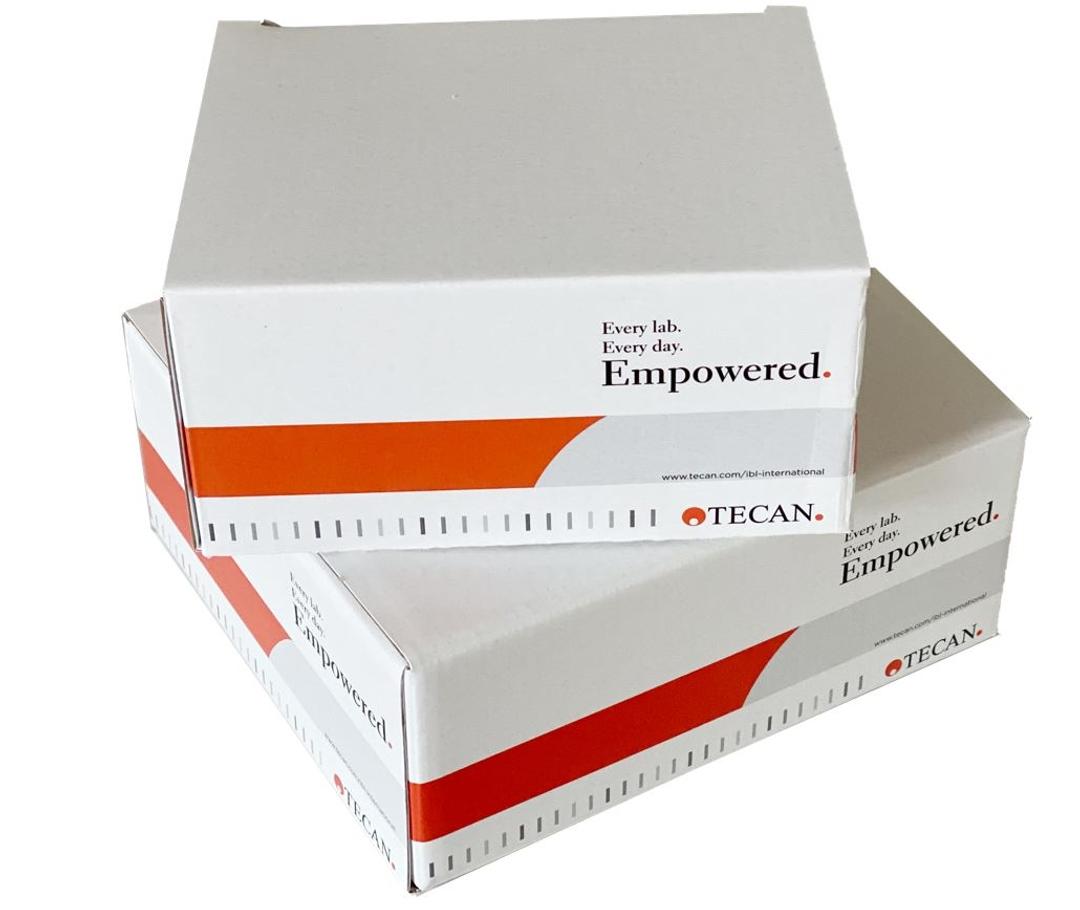
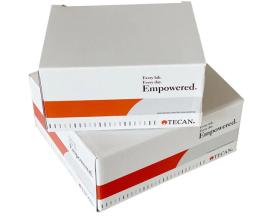
The Tecan Cortisol Saliva ELISA is an excellent alternative to the current complex and relatively expensive LC-MS/MS method to determine cortisol in saliva as accurately as possible.



Receive your quote directly from the manufacturer.
Sensitive and reliable
The investigation of cortisol in saliva is indicated in the diagnostic work-up of clinical issues in various scientific/medical fields, particularly endocrinology, psychology, sports medicine, pediatrics, anti-aging medicine, and veterinary medicine
Measuring the free cortisol levels in saliva is a very simple and convenient way to check the function of the adrenal gland. Persistently elevated or decreased cortisol levels are often found in patients with adrenal dysfunction. Adrenal dysfunction can occur in many other diseases, such as fibromyalgia, hypothyroidism, chronic fatigue syndrome and premature menopause.
The salivary cortisol test can also be used in patients with conditions such as reduced stress tolerance, fatigue, sleep disorders and depression.
Standardized reagents
Our Saliva ELISA product line has been revised so that the main steroids (cortisol, testosterone, progesterone, DHEA) may be processed in a similar way:
- The substrate, washing and stop solutions are interchangeable;
- The enzyme conjugate, the substrate and stop solutions are uniformly pipetted with 100 µL;
- The kits contain as few as 6 standards and 2 controls;
- Only 50 µL sample volume are required;
- All kits use the same sample diluent buffer.
Advantages of the new IBL Cortisol Saliva ELISA
- Calibration to the LC-MS/MS reference method;
IBL-ELISA = 1.015 x LCMS-0.028, R=0.99 - As few as 6 standards and 2 controls;
- Simple processing;
- Clearly defined reference values.

Saliva diagnostics by Tecan
Saliva-based diagnostics is revolutionizing the field of personalized medicine because they can now be used to evaluate a huge variety of different physiological conditions, such as sex hormone imbalances, stress, and depression. This is because saliva contains various hormones and other chemicals that can serve as direct indicators or indirect biomarkers of human health, biochemical imbalances, as well as certain disease states. Download this white paper by Tecan to find out just how much information can be obtained from saliva testing.
Uncovering how recent vs. remote trauma alters key stress biomarkers
In this presentation, Prof. Nicolas Rohleder, Chair of Health Psychology at Friedrich‑Alexander‑Universität Erlangen‑Nürnberg, explores how trauma type and timing shape the body’s biomarker response, revealing distinct patterns across recent and remote trauma exposure. He shares research examining key indicators, including cortisol, cytokines, heart‑rate variability, and alpha‑amylase, and highlights how individuals with trauma histories show biological response profiles that differ markedly from those of healthy controls.
Assessing salivary biomarkers for stress, depression and anxiety
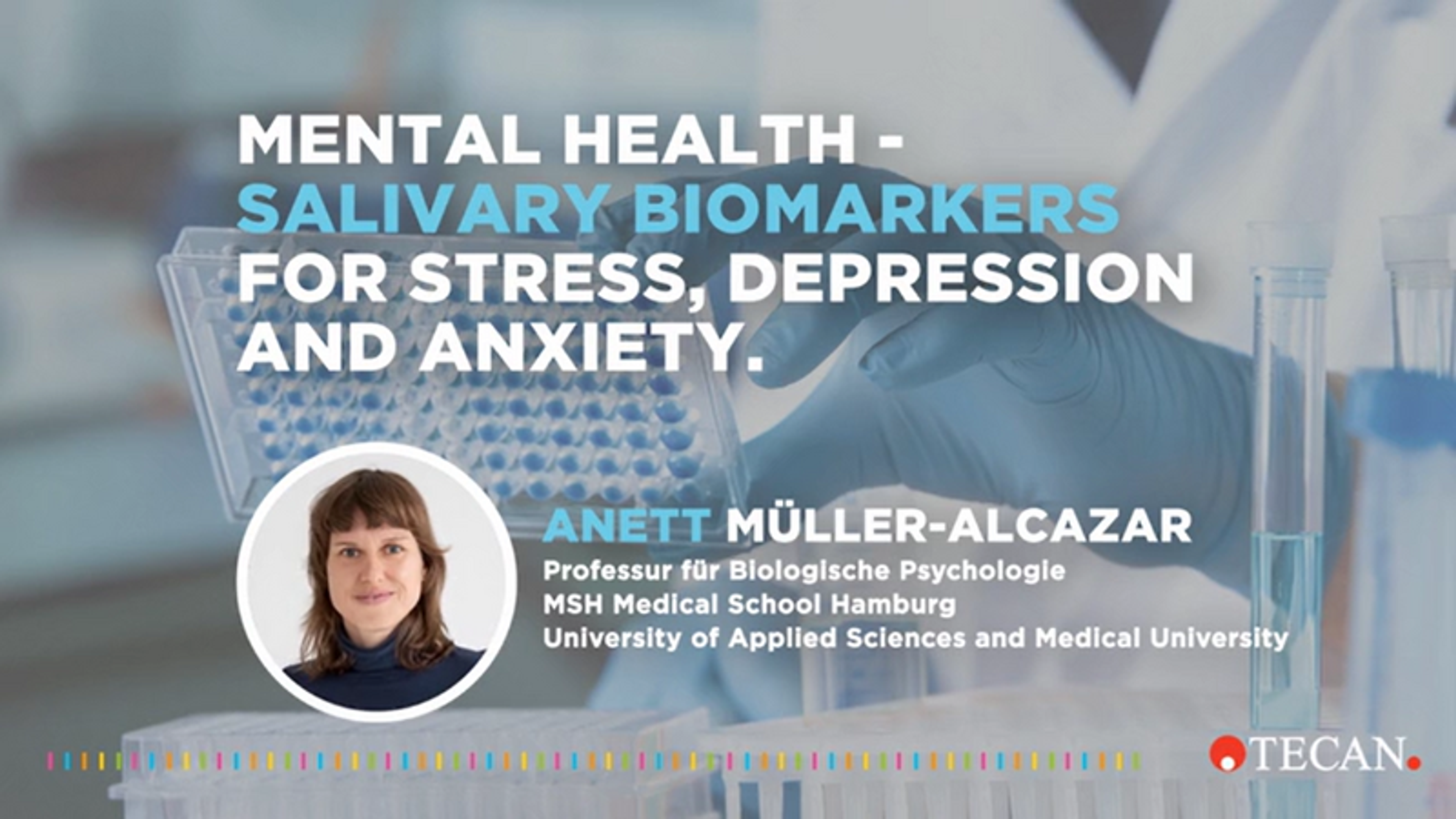
Join Prof. Dr. habil. Anett Müller-Alcazar from MSH Medical School Hamburg, University of Applied Sciences and Medical University as she discusses the latest clinical research into salivary biomarkers for stress, depression, and anxiety.
Prof. Müller-Alcazar explores the fascinating world of saliva-based biomarkers, discussing their numerous advantages and transformative potential in mental health. Plus, she provides an in-depth exploration of how these biomarkers, such as cortisol, can be used to accurately measure stress, depression, and anxiety, highlighting their role in enhancing our understanding and assessment of mental health conditions.
Saliva diagnostics: The non-invasive blood tests of the 21st Century
In this video, Dr. Aron Gonshor, President and CEO at FLUIDS IQ®, discusses some of the advantages of saliva testing for patients and for the lab, including how it is a non-invasive technique and the ease in which samples can be transported. Gonshor further discusses some of the typical hormones tested for when diagnosing hormonal imbalances.