
New Microcentrifuges from Beckman Coulter Life Sciences Simplify Setup, Offer Increased Speed and Capacity
21 Jul 2013Microfuge 20 and 20R microcentrifuges from Beckman Coulter Life Sciences are designed to meet the specific requirements of a wide range of research applications, and are efficient and easy to use. Paired with Microfuge series rotors, the compact instruments provide flexibility and reliable, precise performance while occupying a small footprint.
Processes are performed seamlessly, and include nucleic acid and protein preparation; pelleting, extractions, purifications, concentrations, phase separations and receptor binding; and rapid sedimentation of protein precipitates, particulates and cell debris.
Entry and recall of up to 10 user-defined programs is facilitated by an easy-to-use interface and saves setup time for common protocols. Increased energy efficiency lowers utility costs.
Samples can be processed at speeds up to 15,000 rpm (20,627 x g) in the Microfuge 20 and in the 20R, a refrigerated version with a temperature range of -10 to 40°C. Fixed angle rotors are made of polypropylene or aluminum and offer capacities of 24 or 36 microcentrifuge tubes or four PCR tube strips. An optional BioCertified rotor enables safe processing of hazardous samples.
"The Microfuge 20 series provides researchers with an accurate, reliable and durable microcentrifuge," said David Rolwing, centrifuge product manager, Beckman Coulter Life Sciences. "Strong performance and ergonomic features combine in these units to provide confidence and efficiency."
Space-saving footprint, low noise levels at max speed and minimal heat dissipation enhance usability. A motorized lid lock eases opening and closing, and simplifies the loading and unloading process.
Together with the previously released Microfuge 16, the Microfuge series provides strong quality and performance features for a variety of research requirements.
Related products
Request Quote for All Products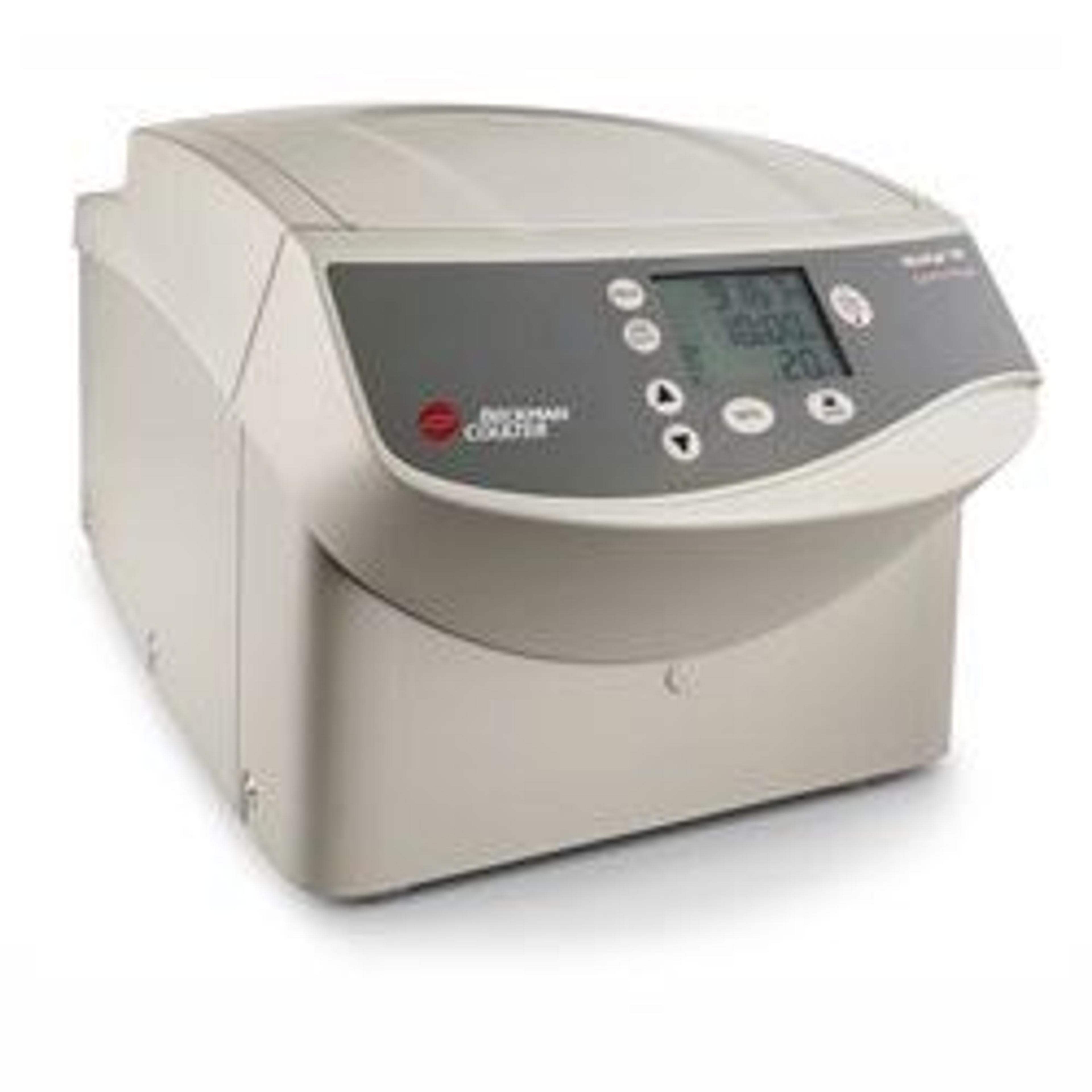
Microfuge 20 Series Benchtop Centrifuge
Beckman Coulter Life SciencesSpeed and versatility in a compact footprint