
How compact liquid handling systems are making lab automation more accessible
Discover how compact, affordable liquid handling systems give core facilities, startups, and teaching labs reliable, walk-away precision
21 Jul 2026
Manual pipetting is the basis of most routine lab work, and it is also one of the easiest places for error, variation, and strain to creep in. For many labs, access to automation has traditionally been limited by space, infrastructure requirements, and implementation complexity. Today's compact liquid handling platforms are helping to expand access to automation, enabling more labs to improve reproducibility, efficiency, and workflow consistency.
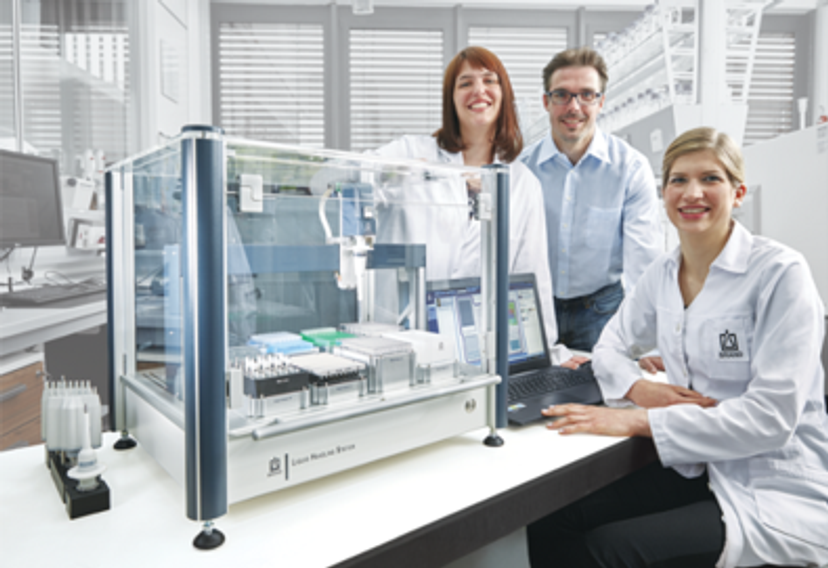
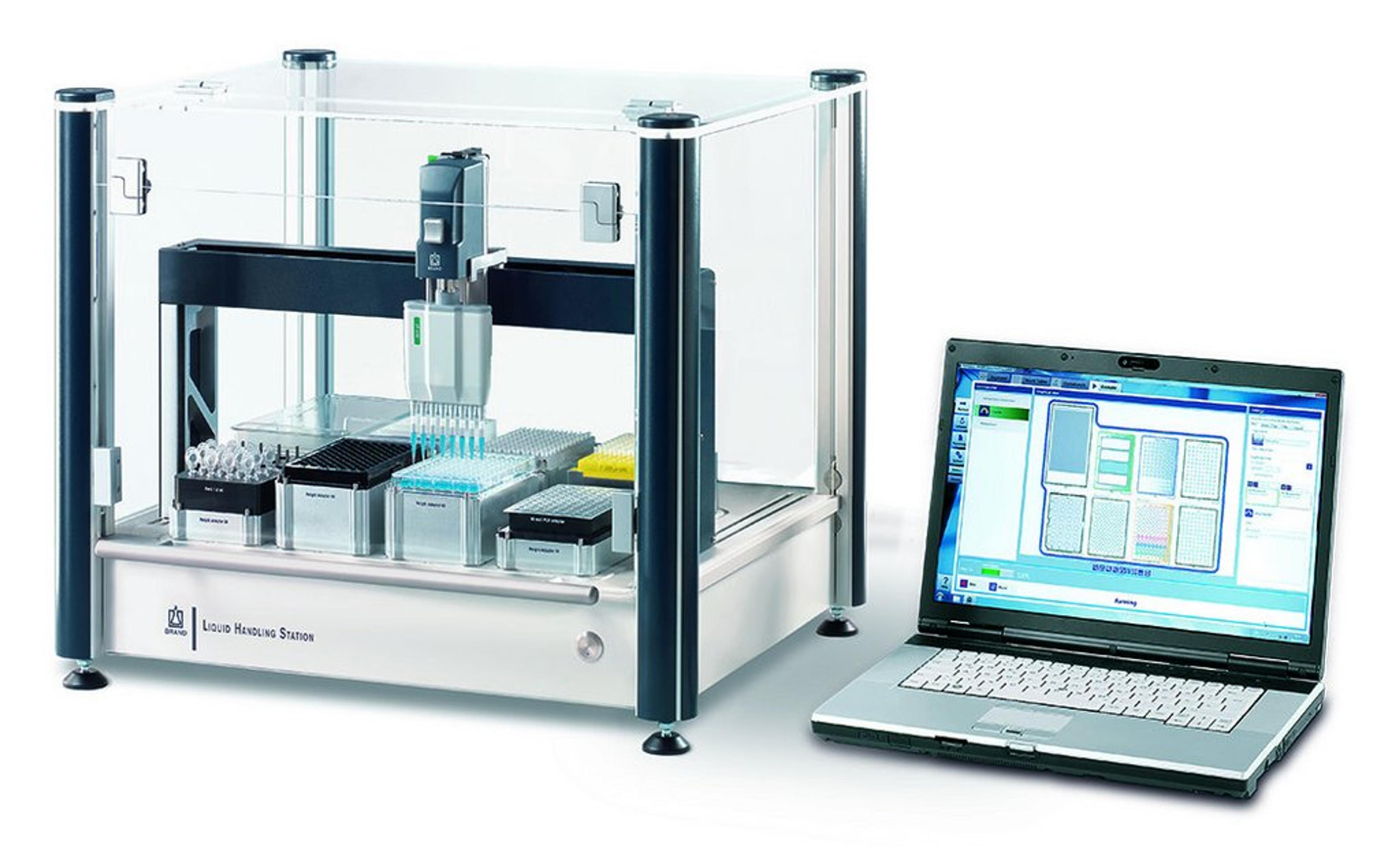
The BRAND Liquid Handling Station is a compact benchtop pipetting robot aimed at low to medium throughput labs.
Repetitive pipetting is an integral part of everyday science, from enzyme-linked immunosorbent assay (ELISA) plates and serial dilutions to polymerase chain reaction (PCR) and quantitative PCR (qPCR) setup. However, when performed by hand, it is slow, difficult to reproduce exactly from one operator to the next, and a recognized contributor to repetitive strain injury.
Large, well-resourced labs have managed this with full automation systems for years. Smaller groups, shared core facilities, and early-stage companies often cannot: the established platforms tend to be expensive, bulky, and complex enough to need a dedicated specialist to run them.
This is the gap that entry-level pipetting robots are built to close. The BRAND Liquid Handling Station (LHS) from BRANDTECH Scientific is one such system, sitting between a handheld electronic pipette and a large, high-complexity robotic platform.
What is automated liquid handling?
Automated liquid handling is the use of a programmable instrument to aspirate and dispense precise volumes in place of a manual or electronic pipette. A pipetting robot moves liquids between tubes, reservoirs, and microplates according to a defined method, repeating each step the same way every time. The category spans everything from compact benchtop units to large, fully integrated workstations. What separates them is mostly scale, cost, and complexity, not the basic principle.
What are the benefits of automated liquid handling?
The clearest benefit of automated liquid handling is consistency. A robot repeats the same aspirate and dispense actions identically across a plate and across a day, removing the operator-to-operator variation that can quietly undermine assay reproducibility.
The second benefit is capacity. Walk-away operation lets a single scientist set up a run and step away, processing far more samples than hands-on pipetting allows and freeing skilled time for analysis rather than dispensing.
Accuracy at small volumes matters too. Automating microliter quantities protects precious reagents and nucleic acid samples, where a small manual error can be costly, and it lowers the repetitive strain that comes with long pipetting sessions.
These benefits show up in practice. In one case study, Jackson ImmunoResearch used the BRAND Liquid Handling Station (LHS) to automate an antibody functionality ELISA, reporting results close to its manual method while cutting technician workload and repetitive strain.
What can you use a pipetting robot for?
Pipetting robots are built for the routine, high-repetition tasks that dominate many labs. Common uses include ELISA, serial dilution, cherry picking, sample preparation, PCR and qPCR setup, and enzyme assays. The same system can usually grow with the work, starting with simple dilution series and later taking on assay development or high-throughput screening. That range is part of what makes a single instrument easy to justify, because it is rarely tied to one protocol.
Who benefits most from lab automation?
Where automated liquid handling instruments used to be limited to large labs, some of the strongest cases for compact systems are in core facilities, shared lab spaces, biotech startups, and teaching labs.
For startups and lean commercial labs, the appeal of an automated pipette system is largely economic. An accessible automation platform lets a small team raise throughput without adding headcount or major capital expenditure, which makes it easier for a lab director or grant writer to justify as a shared resource. In teaching labs, the same standardization gives students a consistent, reproducible way to learn core techniques.
How do you prevent contamination on a shared instrument?
Shared automation raises a practical problem: how to keep calibration and contamination under control when many teams use one liquid handling instrument.
The BRAND Liquid Handling Station (LHS) approaches this by letting individual teams or projects be assigned their own liquid ends, so every user knows exactly where their calibrated hardware has been. The liquid ends are fully autoclavable and, according to BRANDTECH, swap in around a second, making it straightforward to sterilize them between users and reducing the cross-contamination risk common to shared automation.
For work that must be kept free of particles and microorganisms, the LHS Flow variant adds an integrated filtered-air enclosure that maintains a laminar air stream across the worktable.
Do you need programming skills to use a pipetting robot?
One of the main barriers to first-time automation is the assumption that it requires coding. The BRAND Liquid Handling Station (LHS) is set up through software that installs on a standard Windows PC and needs no programming, with a visual simulation to check a method before it runs. Methods and fluid types can be saved and reused, so a routine validated once does not have to be rebuilt each time. That low barrier to operation is central to its positioning as a first step into automation rather than a specialist platform.
What should you look for in a compact liquid handling system?
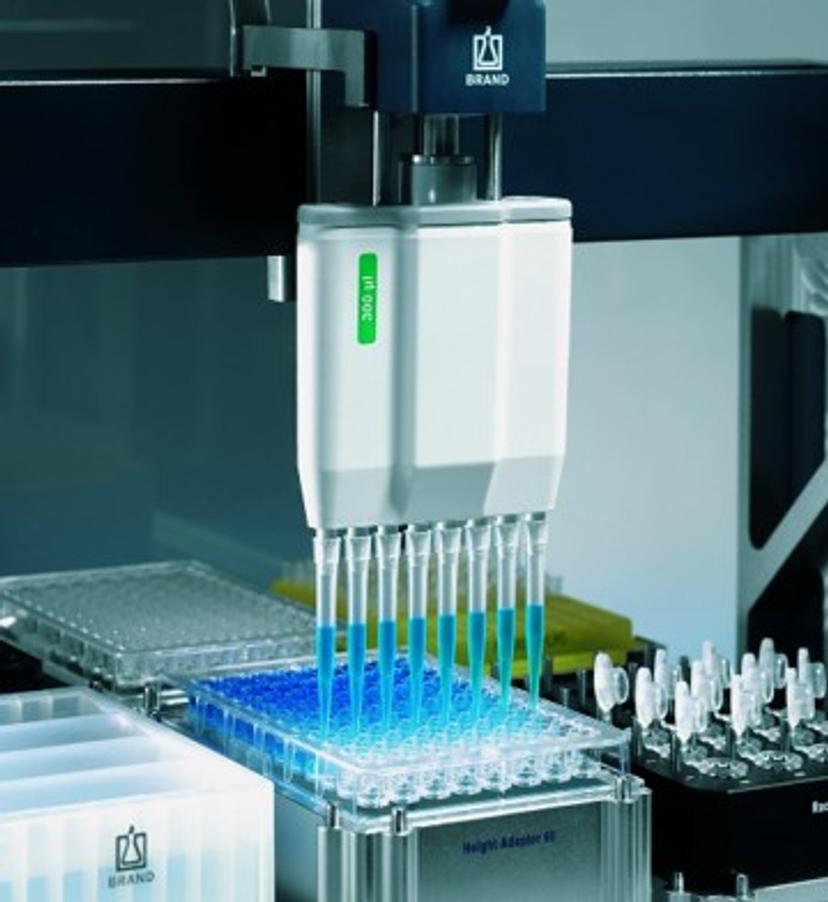
Exchangeable, autoclavable liquid ends let shared facilities assign hardware to individual teams.
A few features separate a genuinely useful system from one that ends up underused. Bench space is often the first consideration: a compact, quiet footprint that fits where the work already happens, ideally without claiming a whole bench.
The BRAND Liquid Handling Station (LHS), for instance, is a benchtop unit with a front-opening door so it can sit under shelving. It offers seven configurable positions and exchangeable single-channel and multichannel liquid ends covering 1 microliter to 1 milliliter, across tubes, reservoirs, and plates up to the 384-well format.
Expandability matters too, since accessories that handle adjacent steps save buying separate equipment. On the LHS, cooling blocks hold temperature-sensitive reagents at a stable temperature during PCR and qPCR setup, protecting sample integrity, and a heater-shaker module handles mixing and incubation on the deck without moving plates.
Is entry-level automation worth the investment?
For a small biotech or contract research organization (CRO), the decision to automate liquid handling is often as much financial as scientific. Running more samples a day, reliably and hands-free, means more billable work, more data to bring to partners, and a quicker path to the milestones that unlock the next round of funding. That is a return investors and grant reviewers recognize.
The same is true for academia, where in many cases a core facility that can serve more groups gets more out of the same budget and the same staff by incorporating an automated instrument into their workflow.
So, the real question is no longer whether a small team can justify automating. It is which repetitive job to hand over first. For the scientist at the bench, the payoff is concrete: fewer hours spent moving microliters by hand, and more spent on the science those samples were collected for.
See the BRAND Liquid Handling Station in action:
Related products
Request Quote for All Products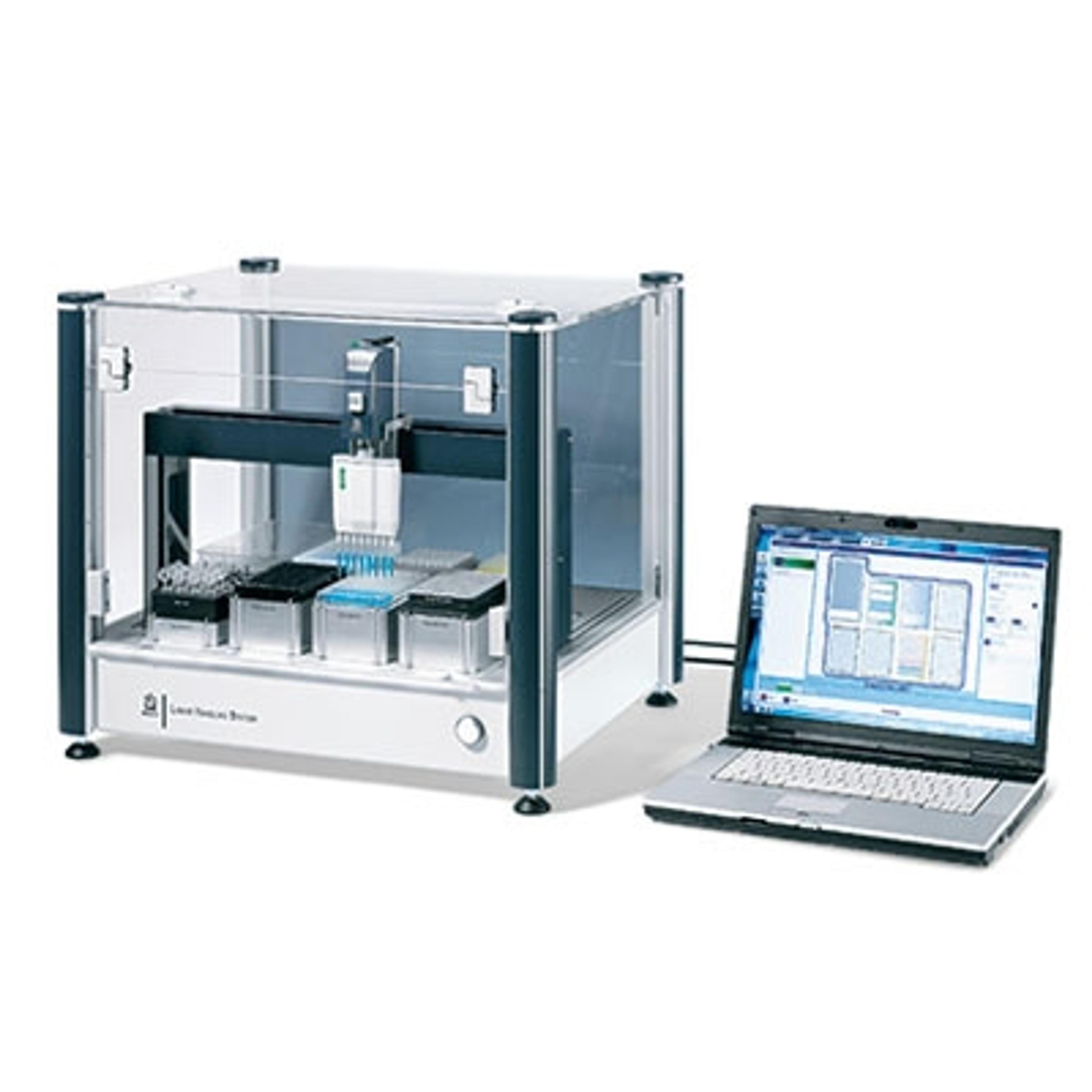
Liquid Handling Station
BRANDTECH® Scientific, Inc.The BRAND Liquid Handling Station pipetting robot handles routine tasks at high speed and with the highest precision. The LHS closes the gap between electronic pipettes and highly complex, expensive pipetting robots. It is a quiet and compact instrument with a unique front door allowing it be set up in tight quarters. The instrument has 7 working positions and 5 available liquid ends with single channel volumes up to 1000uL and multichannel volumes up to 300uL. The system has the flexibility to move liquids between reservoirs, tubes, and plates. Adapters and racks bring the consumables to an even height, reducing unnecessary vertical movements to save time during pipetting. Applications: Preparation of ‘assay ready’ plates PCR, qPCR, and ELISA Set-up Serial dilutions Microplate Replication and Reformatting DNA Normalization Cherry Picking Cell Cultures General Liquid Transfers
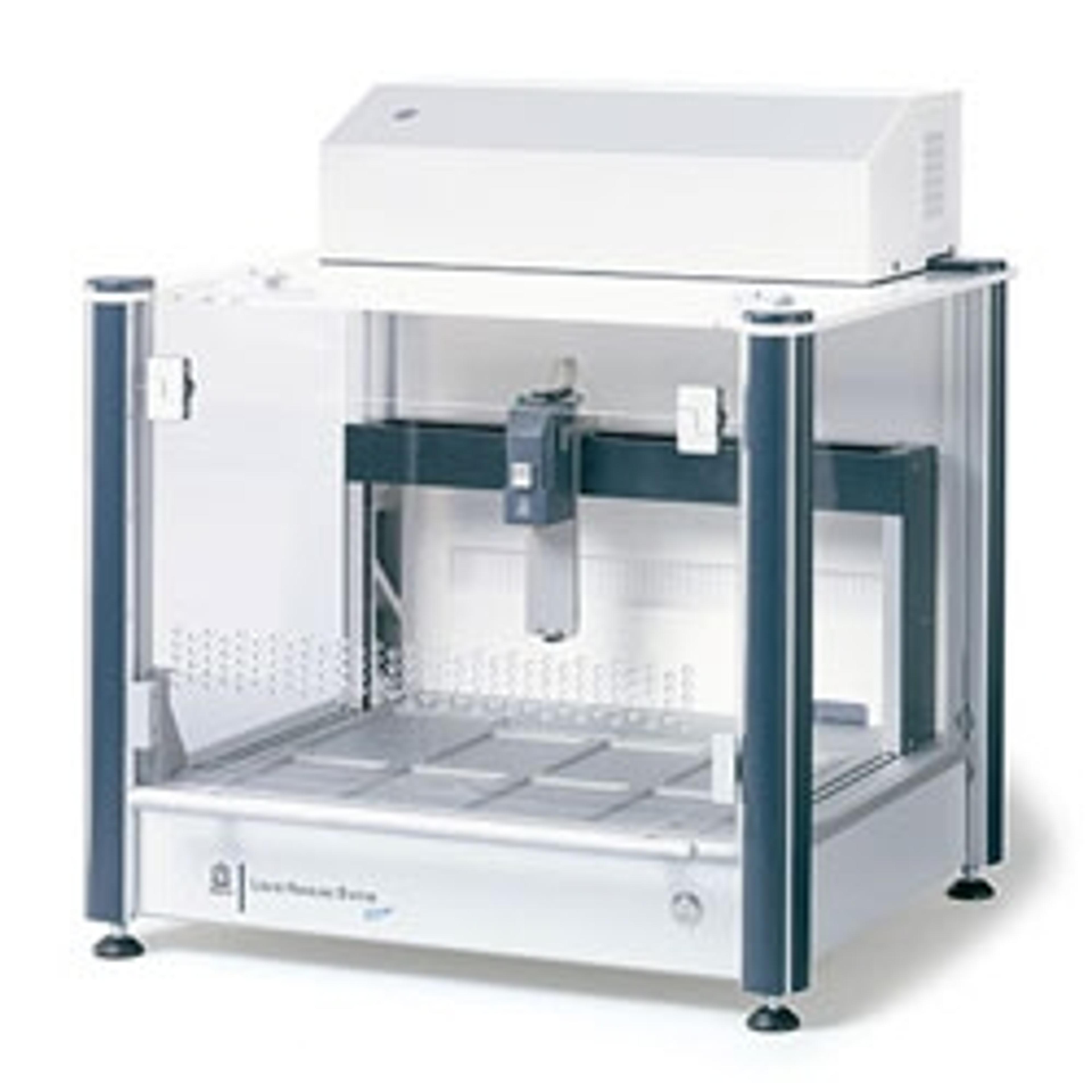
Liquid Handling Station flow
BRANDTECH® Scientific, Inc.The BRAND Liquid Handling Station (LHS) pipetting robot handles routine tasks at high speed and with the highest precision.
Links
Related content
Rethinking ELISA pipetting routines in small-scale labs
The bottlenecks of manual ELISA are well known, but modern liquid handling tools offer a practical way to fix them

How to improve pipetting accuracy for challenging liquids
Discover how BRANDTECH’s latest pipette allows temporary fine-tuning for different liquids, temperatures, and tip styles
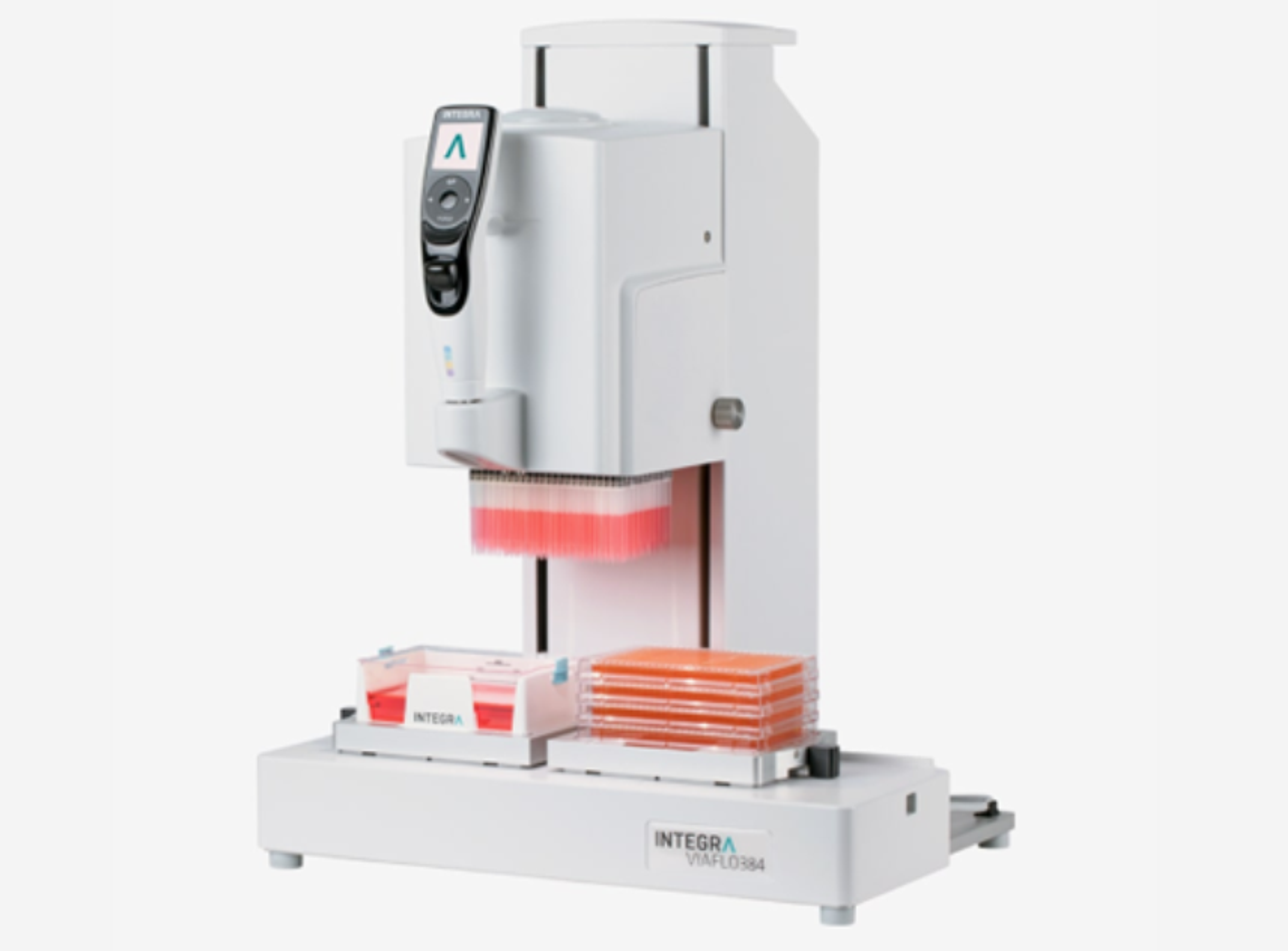
Liquid handling solutions to combat cell culture challenges
Discover how VIAFLO 96 and VIAFLO 384 handheld electronic pipettes from INTEGRA Biosciences can be used to overcome key challenges associated with cell culture, including contamination, viability, and reproducibility.
Tags
Frequently asked questions
Show frequently asked questions
How does the BRAND Liquid Handling Station pipetting robot improve reproducibility in ELISA, PCR, and qPCR workflows?
The BRAND Liquid Handling Station (LHS) automates repetitive pipetting for ELISA, PCR, and qPCR, delivering consistent aspirate and dispense actions across plates and runs. By replacing manual pipetting, it reduces operator-to-operator variation and repetitive strain. Jackson ImmunoResearch reported results close to its manual antibody functionality ELISA while significantly cutting technician workload using the BRAND LHS.
Why are compact pipetting robots like the BRAND Liquid Handling Station ideal for biotech startups, core facilities, and teaching labs?
Compact pipetting robots expand access to automated liquid handling for smaller labs, shared core facilities, biotech startups, CROs, and teaching labs. The BRAND Liquid Handling Station offers a benchtop footprint, walk-away operation, and no-code Windows software, helping lean teams increase throughput without extra headcount. In teaching and academic core labs, it standardizes workflows, improves reproducibility, and maximizes use of limited budgets and staff.
What contamination control features make the BRAND Liquid Handling Station suitable for shared lab automation?
The BRAND Liquid Handling Station supports contamination control in shared environments by assigning individual, fully autoclavable liquid ends to different teams or projects. These liquid ends swap in about a second, simplifying sterilization and maintaining calibration. For particle- and microorganism-sensitive work, the LHS Flow variant adds an integrated filtered-air enclosure that maintains a laminar air stream across the worktable.