
New automated sampler from Markes enhances aroma evolution research
Automated sequential VOC sampling enables detailed analysis of aroma evolution over time
14 Jul 2026Markes has launched the MTS-32 Pro automated multi-tube sequential sampler to help researchers and product developers understand how aromas and volatile organic compounds (VOCs) evolve over time in fragrances, consumer products, foods, beverages and indoor environments.
By automating sequential air sampling onto sorbent tubes for thermal desorption–gas chromatography–mass spectrometry (TD–GC–MS) analysis, the system enables time-resolved studies of VOC release and dissipation in laboratory and commercial settings.
Addressing the challenge of aroma evolution analysis
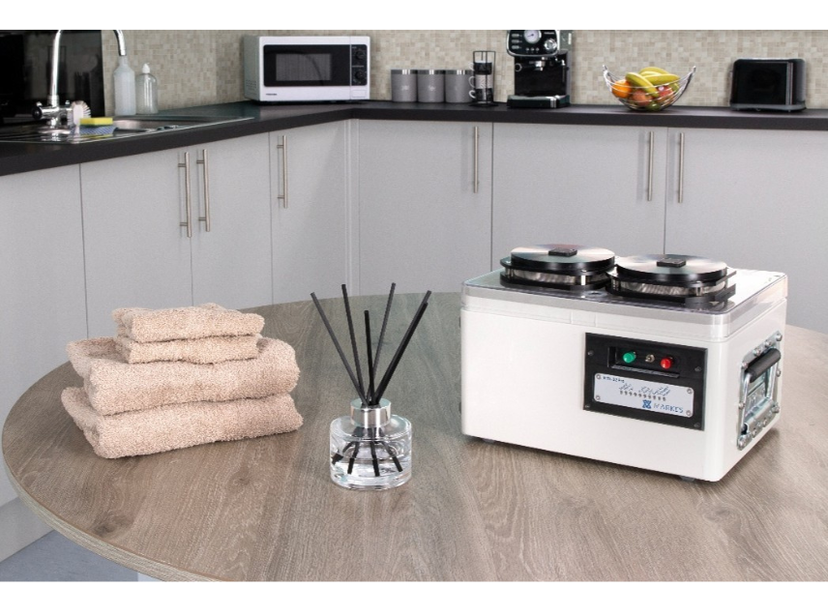
The MTS-32 Pro automated multi-tube sequential sampler
Understanding how aromas change over time presents a significant analytical challenge for product developers and researchers. Traditional sampling approaches often rely on manual collection and provide only isolated snapshots of complex, time-dependent processes.
The MTS-32 Pro addresses this challenge by automatically collecting sequential air samples onto industry-standard sorbent tubes or mini-tubes according to programmed, user-defined sampling schedules. Compatible with established TD–GC–MS workflows, the system enables researchers to investigate how volatile compounds are released, evolve and dissipate over periods ranging from minutes to hours.
Developed by Markes, the automated multi-tube sequential sampler is designed to help researchers and product developers better understand how volatile compounds evolve over time.
Moving beyond single-point VOC measurements
“Understanding how aromas change over time can be difficult with traditional sampling approaches,” said Rachael Szafnauer, Group Product Marketing Manager – GC Sample Introduction Technologies at Markes.
“Researchers increasingly want to move beyond single measurements and build a clearer picture of how volatile compounds are released, evolve and dissipate. The MTS-32 Pro makes this practical by automating the collection of sequential air samples, supporting product development, performance testing and quality assessment.”
By combining unattended operation with automated time-resolved sampling, the MTS-32 Pro helps reduce manual workload while providing a practical approach to capture changing VOC behavior. The system enables researchers to generate detailed time-series data that can improve understanding of aroma evolution and product performance.
Key features for time-resolved VOC sampling
The MTS-32 Pro supports unattended sequential sampling of up to 32 sorbent tubes, allowing extended studies of VOC release and aroma evolution without manual intervention.
The instrument incorporates integrated flow control, with adjustable flow rates from 20 mL/min to 1 L/min. User-programmable sampling and dwell times allow flexible sampling strategies, enabling rapid collection during periods of peak VOC release and longer sampling intervals as concentrations change over time.
To help maintain sample quality, the MTS-32 Pro uses dedicated high-flow micro-check valve caps that protect samples against contamination and analyte loss prior to and after sample collection. This helps ensure confidence in subsequent TD–GC–MS analysis.
Applications in fragrance, food, beverage and indoor air research
The instrument is well suited to applications where understanding aroma evolution is critical. Fragrance and consumer product developers can investigate scent release and longevity under realistic conditions, supporting fragrance performance testing and product development.
Food and beverage researchers can study changing aroma and flavor profiles, revealing better insights to support product formulation and quality assessment. The system also offers opportunities for studies of changing VOC concentrations in indoor environments and other time-dependent applications where VOC behavior over time is important.
The technology has already demonstrated its value in commercial settings, with leading fragrance and consumer goods organisations deploying multiple systems for fragrance-release studies and product performance evaluation.
Supporting established TD–GC–MS workflows
The MTS-32 Pro is compatible with established TD–GC–MS workflows, allowing laboratories to integrate automated sequential sampling into existing analytical methods. By enabling unattended, time-resolved sampling onto sorbent tubes, the system helps laboratories capture detailed VOC profiles that reflect real-world aroma evolution and product performance.
Want the latest science news straight to your inbox? Become a SelectScience member for free today>>
Links
Tags
Frequently asked questions
Show frequently asked questions
How does the Markes MTS-32 Pro improve time-resolved VOC and aroma analysis compared to traditional sampling methods?
The Markes MTS-32 Pro automates sequential air sampling onto sorbent tubes or mini-tubes for TD–GC–MS analysis, replacing manual, single-point sampling. It enables unattended, time-resolved studies of VOC release and dissipation over minutes to hours, generating detailed time-series data that reveal how aromas and volatile compounds are released, evolve and dissipate in laboratory and commercial environments.
What are the key technical features of the MTS-32 Pro automated multi-tube sequential sampler for VOC research?
The MTS-32 Pro supports unattended sequential sampling of up to 32 sorbent tubes, with integrated flow control from 20 mL/min to 1 L/min. User-programmable sampling and dwell times allow flexible strategies for peak VOC release and changing concentrations. High-flow micro-check valve caps protect samples from contamination and analyte loss, ensuring reliable TD–GC–MS analysis and high-quality time-resolved VOC data.
In which applications and industries is the MTS-32 Pro most beneficial for aroma and VOC studies?
The MTS-32 Pro is ideal for fragrance and consumer product development, enabling fragrance-release and performance testing under realistic conditions. Food and beverage researchers use it to study changing aroma and flavor profiles for formulation and quality assessment. It also supports indoor air research and other time-dependent VOC applications, with leading fragrance and consumer goods organizations already deploying multiple systems commercially.