
Smarter vacuum systems release scientists from manual guesswork
Why automated vacuum control is the key to reducing manual errors and giving laboratory scientists their time back
2 Sept 2026
Vacuum plays a critical role in everyday evaporation, filtration, and drying workflows, yet many laboratories still rely on systems that deliver far less precision than their science demands. Mike Mesteller, Product Manager, Vacuum at BRANDTECH® Scientific, explains how the VACUUBRAND® VACUU·SELECT® vacuum controller and VARIO Technology are changing what researchers should expect from their vacuum systems, and what that means for the scientists who depend on them.

Mike Mesteller, Product Manager, Vacuum at BRANDTECH Scientific
Picture a scientist at a rotary evaporator, one hand on a venting valve, watching for the first sign that the solvent is about to boil over. It is a common scene in chemistry and research labs, and according to Mesteller, it is also a symptom of a much wider problem. "A vacuum is one of those tools that it's not a one-size-fits-all application," he says. "Being able to harness and accurately administer that vacuum and have it do what they need it to do is really critical."
For most scientists, controlling a vacuum still means turning a valve by hand and relying on experience and judgment to get it right. When it goes wrong on a rotary evaporator, it goes wrong fast. Mesteller describes it as a runaway train scenario, with uncontrolled boiling, bumping, ruined samples, and a mess that contaminates equipment and derails the entire workflow. And as he explains, it rarely stops there. One inefficiency cascades into the next, creating a domino effect that runs all the way down the process line.
Transforming a vacuum from a tool into a smart lab partner
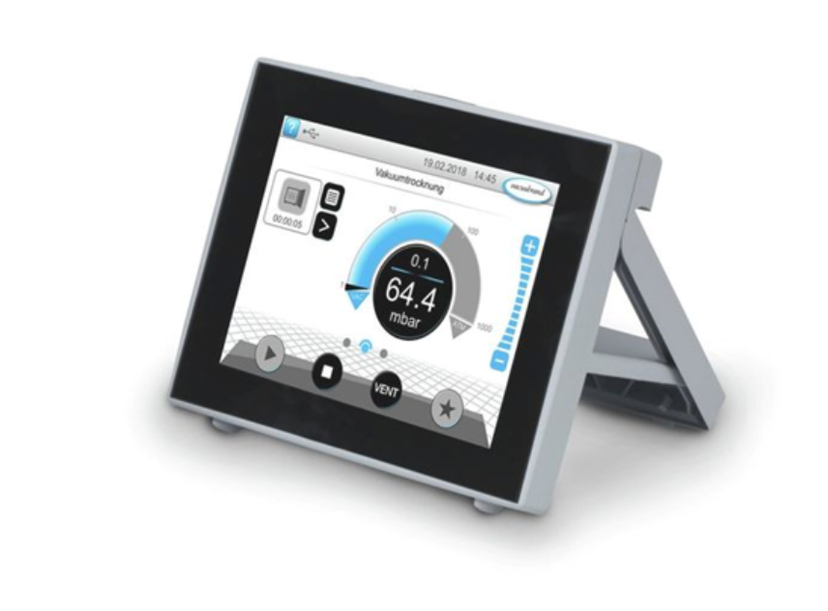
The VACUU·SELECT is an application-based controller with a touch screen display for all your lab-scale vacuum processes
Mesteller’s go-to analogy is cruise control on a car. Set a speed, and leave the engine to do the work – accelerating on a hill, backing off on a descent, constantly adjusting without any input from the driver. "It's constantly making those adjustments," he says. The VACUU·SELECT works the same way, actively monitoring the process and responding in real time.
For evaporation, it detects the onset of boiling and adjusts before things get out of hand. In filtration, it keeps the vacuum from tearing the filter paper or triggering unwanted evaporation mid-process. In vacuum oven drying, it applies the right vacuum throughout, cutting process time without compromising the result.
"With manual control, it is really hard, borderline impossible, to achieve and maintain a fixed vacuum set point," Mesteller explains. "Most vacuum applications are dynamic applications. They're constantly changing." The VACUU·SELECT handles all of that automatically. "You're removing the human element and errors that come with that," he says. "You can really get repeatable, accurate results for what it is that you're trying to do."
Freeing up scientists to focus on the science
Scientists do not go into research to spend hours watching a valve. "Nobody wants to be the person sitting and monitoring vent valves for two hours," Mesteller says. "It lets that user be used somewhere else in a better way."
Labs that have made the switch notice it quickly. "They're able to focus more time on the science without having to worry about the vacuum that is being applied to it," Mesteller says. The benefits run further too, "removing the inefficiencies early saves them time down the line," he adds, with fewer ruined samples, less rework, and fewer problems to unpick later in the process.
They’re able to focus more time on the science without having to worry about the vacuum that is being applied to it.
Mike Mesteller, Product Manager, Vacuum at BRANDTECH Scientific
Faster drying and a quieter lab
Many labs run vacuum drying ovens overnight simply because they have to, running fixed 12-hour protocols with safety margins built in, started before everyone goes home. The VACUU·SELECT can cut those cycles significantly, applying the right vacuum throughout so the process finishes when it is actually done rather than running to an arbitrary end time. However, the benefit users mention most is not the time saving, it is the quiet. This is because the VACUU·SELECT runs VARIO pumps at a fraction of its full speed for most of the cycle, "it almost makes that pump completely silent, and the process is still going," Mesteller says. In a lab already filled with the persistent hum of fume hoods, chillers, and other equipment running all day, taking one of those out of the equation makes a difference.
Data logging, protocol sharing, and ease of use
The VACUU·SELECT logs real-time vacuum data throughout every process, building a pressure curve that captures exactly what the vacuum was doing at each point in the run. "If you know what your vacuum was doing at any given time that you were working a process, and if you got the result you wanted, being able to view that pressure curve allows you to actually see and replicate what happened," Mesteller explains. Validated protocols can be saved to a USB drive and transferred to other controllers or scaled up to production systems without starting from scratch.
The controller is designed to be as straightforward to use as the rest of the system. A detachable glass touchscreen, operable with gloves on, can be positioned wherever is most practical, including outside a fume hood or base cabinet. Pre-defined procedures cover the most common applications, and building custom protocols is, as Mesteller puts it, as simple as moving an app on a phone. "We've made it so that it truly becomes a plug-and-play tool," he says. "Plug it in, turn it on, it will do what you need it to do."
Across evaporation, filtration, drying, and beyond, the case Mesteller makes is consistent, where manual vacuum control asks scientists to be both researcher and technician at once, monitoring, adjusting, and compensating for a process that should be running itself. That is exactly what the VACUU·SELECT and VARIO Technology are designed to change, giving researchers their attention back, while making their results more consistent, and quietly removing a source of error that most labs had simply learned to live with.
Related products
Request Quote for All Products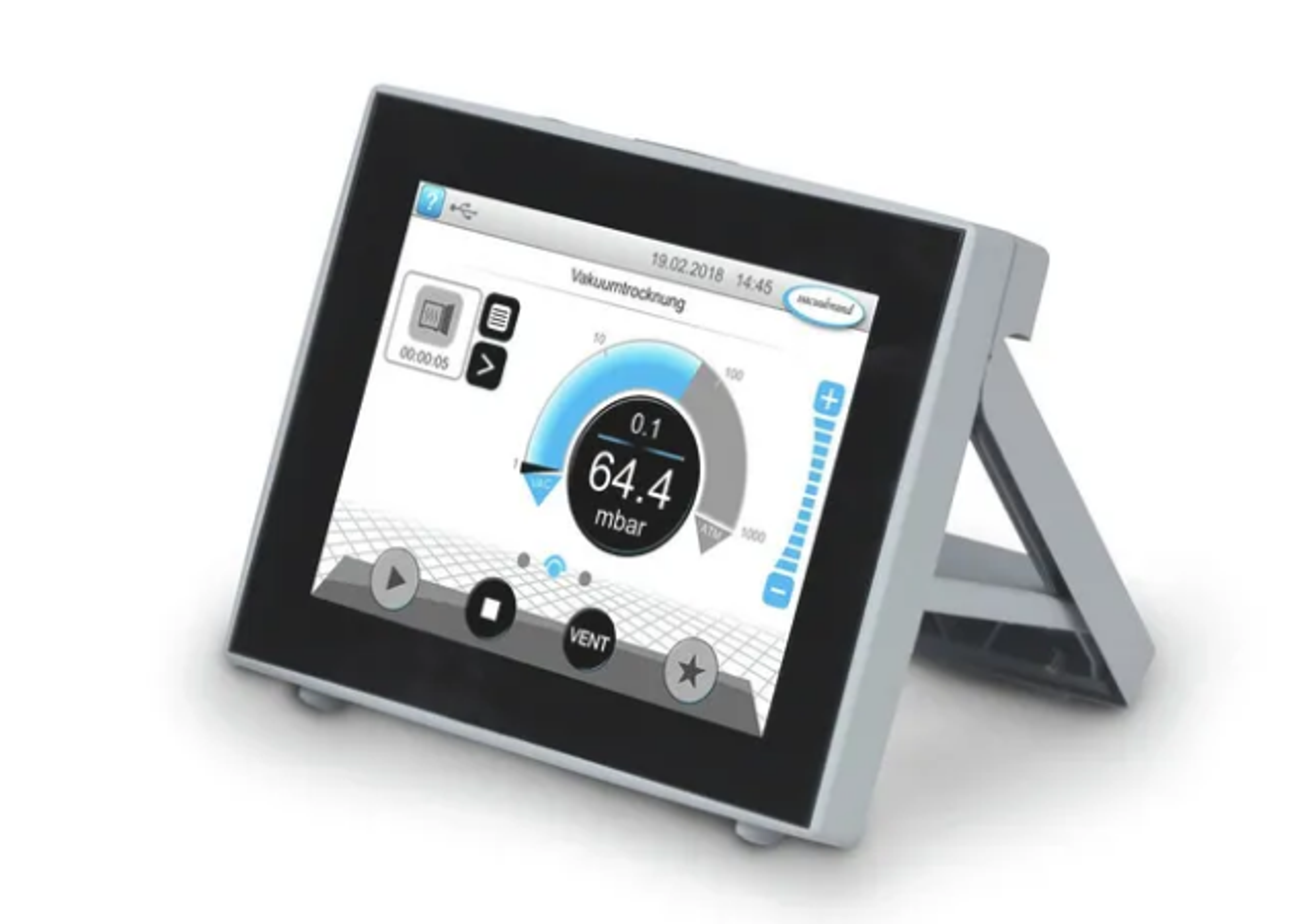
Links
Tags
Frequently asked questions
Show frequently asked questions
How does the VACUUBRAND VACUU·SELECT vacuum controller improve vacuum control for evaporation, filtration, and drying compared with manual methods?
The VACUUBRAND VACUU·SELECT vacuum controller transforms vacuum from a manually adjusted tool into an automated, smart lab partner. Instead of relying on hand‑turned valves and operator judgment, it actively monitors the process and makes real‑time adjustments, similar to cruise control in a car.
In evaporation, it detects the onset of boiling and adjusts the vacuum before bumping or boil‑over occurs. In filtration, it prevents the vacuum from tearing filter paper or causing unwanted evaporation, and in vacuum oven drying it maintains the right vacuum throughout the run, shortening process times without compromising results.
By automatically achieving and maintaining appropriate vacuum levels in these dynamic applications, the controller removes the human element, reduces errors, and delivers repeatable, accurate results.
What benefits do scientists and laboratories gain by using the VACUUBRAND VACUU·SELECT controller with VARIO Technology in everyday workflows?
Scientists and laboratories gain greater precision, efficiency, and usability when they use the VACUUBRAND VACUU·SELECT controller with VARIO Technology. The system frees researchers from continuously monitoring vent valves, allowing them to focus more time on their science instead of acting as technicians.
By preventing uncontrolled boiling, bumping, and sample loss, it reduces ruined samples, rework, and downstream process issues. In vacuum drying ovens, it can significantly shorten drying cycles by applying the right vacuum throughout, so processes finish when they are actually complete rather than after fixed, overly long protocols.
Since VARIO pumps typically run at a fraction of full speed for most of the cycle, the system is also much quieter, which users often cite as a major benefit in labs already filled with noise from fume hoods, chillers, and other equipment.
How do data logging and user-friendly features of the VACUUBRAND VACUU·SELECT support reproducible vacuum processes and protocol sharing in the lab?
The VACUUBRAND VACUU·SELECT supports reproducible vacuum processes through integrated data logging and intuitive control features. During every run, it records real‑time vacuum data and generates a pressure curve that shows exactly what the vacuum was doing at each point in the process. When a desired result is achieved, scientists can review this pressure curve to understand and replicate the successful conditions. Validated protocols can be saved to a USB drive and transferred to other VACUU·SELECT controllers or scaled up to production systems without rebuilding methods from scratch.
The detachable glass touchscreen, which can be operated with gloves and positioned outside fume hoods or base cabinets, along with pre‑defined procedures and simple custom protocol building (described as similar to moving an app on a phone), makes the controller a plug‑and‑play tool that is easy to adopt across the lab.