
Reproducible cryopreservation using alcohol-free cell freezing
Azenta’s CoolCell™ enables alcohol-free, controlled-rate cell freezing for reproducible cryopreservation
12 Aug 2026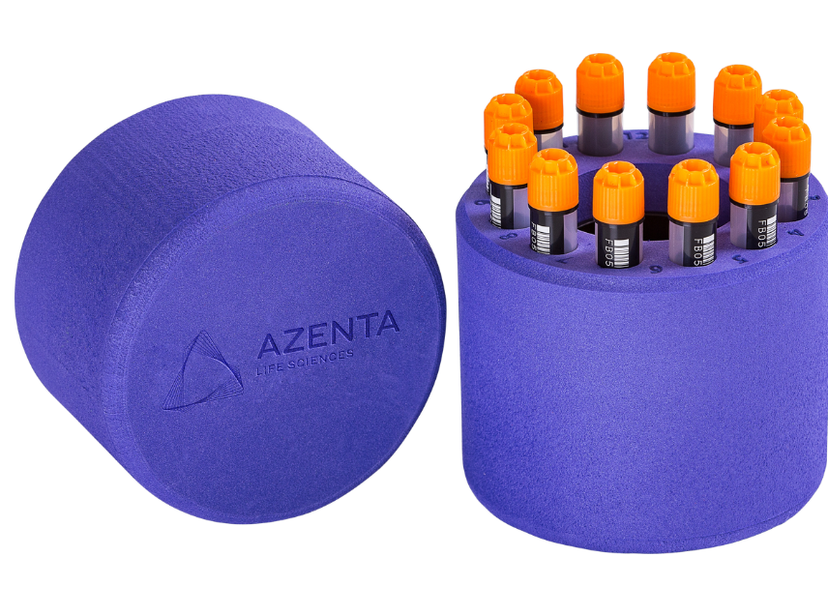
CoolCell™ Cell Freezing Containers provide standardized controlled-rate freezing without alcohol, ensuring reproducible cryopreservation and consistent sample viability
Azenta Life Sciences has introduced CoolCell™ cell freezing containers to help researchers in academic laboratories, biotechnology and pharmaceutical companies, clinical laboratories and biobanks achieve reproducible cryopreservation of valuable cell samples.
These alcohol-free cell freezing containers are designed for use in conventional –80°C freezers, providing standardized controlled-rate freezing without programmable freezers or isopropanol, so laboratories can maintain cell integrity, improve workflow consistency and reduce operating costs.
Standardized controlled-rate freezing without alcohol
CoolCell cell freezing containers from Azenta Life Sciences deliver a standardized cooling rate of approximately –1°C per minute in a conventional –80°C freezer. This controlled-rate freezing performance is achieved without the use of isopropanol or other liquids, supporting consistent cryopreservation of cell samples for downstream research and development.
The proprietary CoolCell technology combines a thermoconductive alloy core with a highly insulative outer housing. This design precisely controls heat removal from each sample vial, ensuring uniform cooling and reproducible freezing performance across the entire container.
Supporting expanding cell therapy, regenerative medicine and biobanking workflows
As cell therapies, regenerative medicine and biobanking continue to expand, laboratories face growing pressure to preserve increasingly valuable and diverse cell samples with consistent viability and reproducibility. Standardized controlled-rate freezing is critical to maintaining cell integrity and ensuring reliable downstream research results.
CoolCell cell freezing containers are validated for a wide variety of cell types, including stem cells, primary cells, peripheral blood mononuclear cells (PBMCs), established cell lines, insect cells and yeast. By delivering reproducible cryopreservation performance comparable to programmable controlled-rate freezers, CoolCell offers a simpler, more economical workflow for laboratories working with these cell types.
Alcohol-free design reduces costs, waste and maintenance
Unlike traditional alcohol-based freezing containers, CoolCell cell freezing containers eliminate the need for isopropanol. By removing the requirement for up to 12 litres of isopropanol per unit each year, CoolCell helps laboratories reduce consumable costs, minimize routine maintenance and decrease laboratory waste.
The alcohol-free design also improves day-to-day workflow consistency by removing the variability associated with filling, replacing and monitoring isopropanol in conventional freezing containers. Researchers can place their vials directly into the CoolCell container and transfer it to a -80°C freezer, simplifying the cryopreservation process while protecting valuable biological samples.
Enhancing reproducibility and protecting valuable samples
CoolCell cell freezing containers support researchers working in academic laboratories, biotechnology companies, pharmaceutical development, clinical laboratories and biobanks. By providing a simple, reliable solution for standardized controlled-rate freezing without alcohol or programmable freezers, CoolCell helps preserve cell viability, protect valuable biological samples and improve the reproducibility of cryopreservation workflows.
Want the latest science news straight to your inbox? Become a SelectScience member for free today>>
Links
Tags
Frequently asked questions
Show frequently asked questions
How do Azenta Life Sciences CoolCell cell freezing containers enable standardized controlled-rate freezing without alcohol?
CoolCell™ cell freezing containers from Azenta Life Sciences provide a cooling rate of approximately –1°C per minute in a conventional –80°C freezer. Using a thermoconductive alloy core and highly insulative outer housing, they precisely control heat removal from each vial. This design delivers uniform, reproducible freezing performance without isopropanol, other liquids or programmable controlled-rate freezers.
What types of cell samples can be cryopreserved using CoolCell cell freezing containers?
CoolCell cell freezing containers are validated for a wide range of cell types, including stem cells, primary cells, peripheral blood mononuclear cells (PBMCs), established cell lines, insect cells and yeast. By offering reproducible cryopreservation comparable to programmable controlled-rate freezers, CoolCell supports expanding workflows in cell therapy, regenerative medicine, biobanking and broader research and development applications.
How does the alcohol-free design of CoolCell containers benefit laboratories and biobanks?
The alcohol-free CoolCell design eliminates the need for up to 12 liters of isopropanol per unit each year, reducing consumable costs, waste and routine maintenance. By removing variability from filling and monitoring alcohol, researchers can place vials directly into CoolCell and move them to a -80°C freezer, improving workflow consistency, preserving cell viability and protecting valuable biological samples in academic, clinical and biobank settings.