
Will AI replace scientists? Busting AI myths in the laboratory
Guest editorial by Maya Carlyle, Principal AI Engineer at the National Physical Laboratory (NPL)
30 Sept 2026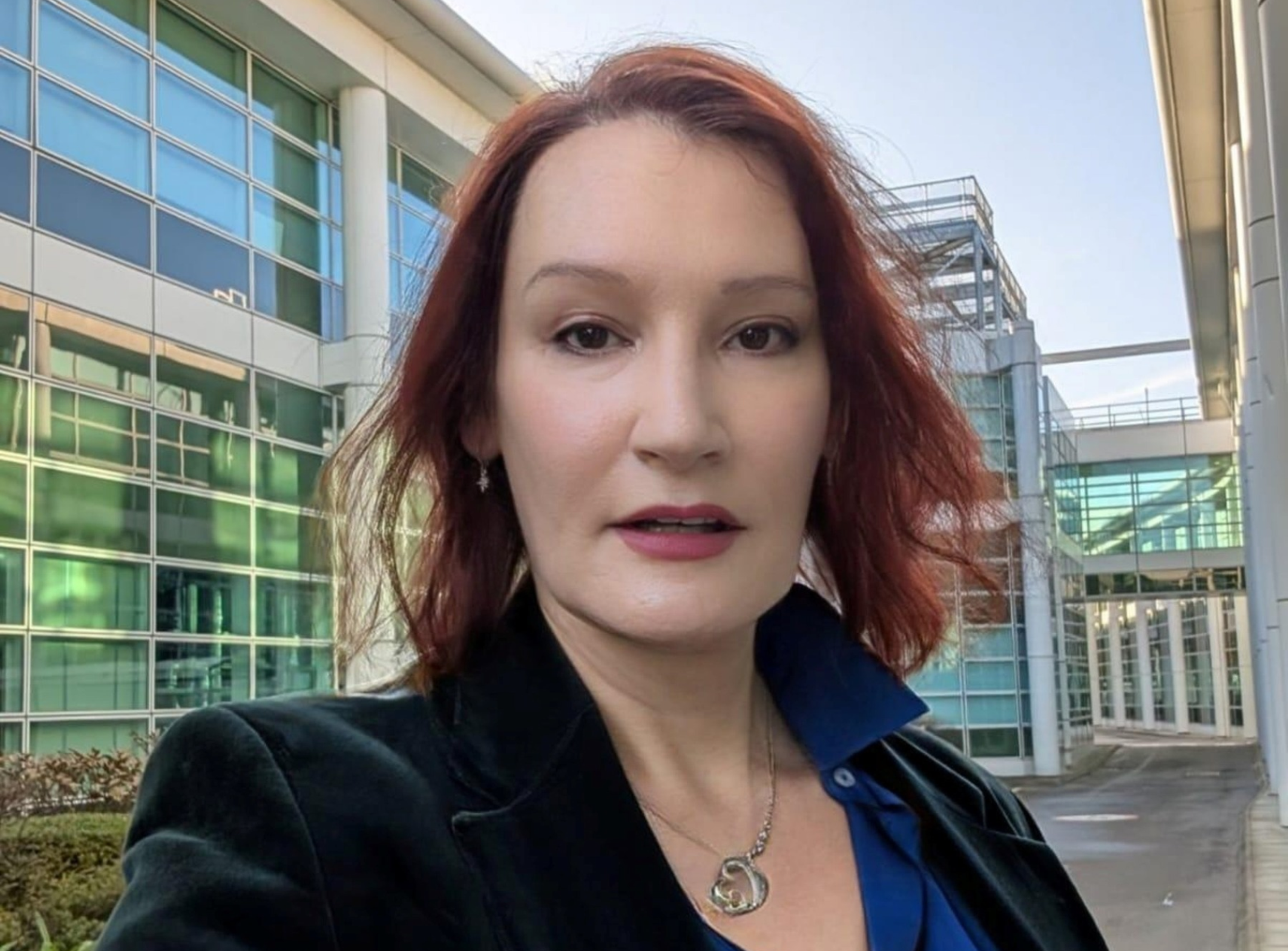
Maya Carlyle, Principal AI Engineer at the National Physical Laboratory (NPL)
When photography emerged in the 19th century, artists feared the camera would replace them. Pablo Picasso saw it differently: it would free painters from having to paint the same portraits of wealthy old ladies over and over. Here, Maya Carlyle, Principal AI Engineer at the National Physical Laboratory (NPL), explains that AI in the lab deserves the same reframe by busting some common myths on behalf of Lab Innovations, the UK & Ireland’s biggest laboratory event.
Replacement by artificial intelligence-powered robots wearing lab coats is, at once, a nightmare of science fiction and a concern that genuinely occupies scientists in many sectors. In reality, this replacement usually includes two things: automation of repetitive tasks and decision-making without accountability.
Automating low-value industrial tasks is a primary value-add of AI technologies, and has been shown to improve job satisfaction and interest. However, the idea of research and process development decisions made and acted upon without accountability is rightly concerning.
At the 2026 India AI Impact Summit, Google DeepMind chief executive Demis Hassabis used his keynote speech to highlight the importance of “building the right guardrails around AI systems” and admitted that keeping up with the pace of AI is “the hard thing” for regulators.
A Royal Society review published in 2025, ‘Autonomous self-driving laboratories’, explains that when researchers stress-tested Coscientist, an AI system capable of independently designing and running chemistry experiments, they found it could meaningfully lower the bar for someone with no scientific training to attempt dangerous work. Could the safety, legal and commercial implications of such technologies jeopardize the modern scientific model?
Decision-making without accountability? Not in regulated science
Simply put, this isn’t how science works. In professional, regulated science organizations, as soon as something matters, someone’s name is on it and they’re responsible. The same review notes that only “natural persons” can be named as inventors, not AI systems. The U.S. Patent and Trademark office ruled, and two separate courts upheld, that inventions by an AI tool named DABUS could not be patented without a named human.
The progress of AI tools in recent breakthroughs without displacing scientists, such as DeepMind’s AlphaFold2 for which Hassabis and colleagues won the 2024 Nobel Prize for Chemistry, indicates the direction of progress. Analyzing a protein’s tertiary structure once consumed entire doctorates. Now it can be completed in hours. Tools like YOLO image processing can identify equipment and chemicals in real time and flag safety issues as they happen.
Clearly, the scientist is still “in the loop”, freed from tedious, repetitive elements of their job to make critical decisions.
Pattern recognition, literature scanning and anomaly detection can all be handled by machines, while scientists remain essential to define research questions in the first place, to judge whether sufficient evidence exists to reach a conclusion, and to assume responsibility for experimental and commercial risks.
AI might be great at finding the needle in the haystack, but without someone to ask, “Is this the right needle to look for?”, laboratory pursuits would be a ship without a captain.
AI results are either objective — or an untrustworthy black box
Our next myth is really two myths at either end of a spectrum: some treat AI output as neutral, definitionally objective, simply because no human bias produced it. Others go the opposite way, distrusting it entirely because they cannot see how it reached its answer. In regulated science, where every result must be traceable and defensible, both instincts cause problems.
On the first point, my answer is straightforward: scientists were always a black box too, guided by our own unique mixture of training, experiences and biases. Those biases have always been part of the profession, and AI has thrown a spotlight onto them because they now exist outside human minds.
We can build trust with a toolset that already exists. Small language models, domain experts in one specific field, are less likely to hallucinate as their training data is narrower in scope.
Cross-checking, running one model’s output through another, is similar to peer review, while sandboxed testing and red-teaming can demonstrate resilience before systems are exposed to real laboratory environments.
Formal standards are catching up too. ISO 42001, the British Standards Institution's management standard for trustworthy AI, is one we at NPL are actively engaged with.
The result that model developers, industry regulators and laboratory professionals must work towards together is AI systems that can be held to the same standards that human scientists rise to every day.
Lab Innovations is the place to learn about the latest advancements and debates in AI for laboratories. Register for free here and join us at the NEC, Birmingham, on November 4 and 5.
Tags
Frequently asked questions
Show frequently asked questions
Will AI replace laboratory scientists?
AI is more likely to change laboratory roles than eliminate scientists altogether. It can automate repetitive work and accelerate analysis, but qualified professionals remain essential for defining questions, interpreting evidence, managing risk and taking responsibility for decisions.
Which laboratory tasks are best suited to AI?
AI is well suited to high-volume tasks such as pattern recognition, image analysis, literature scanning, anomaly detection and the automation of routine workflows. These applications can free scientists to focus on judgement, experimental design and complex problem-solving.
Can AI-generated laboratory results be trusted?
Trust should be earned through evidence rather than assumed. AI systems need suitable training data, documented validation, traceable outputs, performance monitoring and independent checks. Their limitations should also be clear to the scientists using them.
Who is accountable when AI is used in a regulated laboratory?
Accountability remains with the people and organizations that develop, approve, deploy and operate the system. Laboratories therefore need clear responsibilities, human oversight, documented controls and escalation procedures for unexpected or unsafe outputs.
How should laboratories validate AI before routine use?
Validation should use representative data and predefined performance criteria, followed by testing in controlled conditions. Laboratories should assess accuracy, robustness, bias, cybersecurity, traceability and failure modes, then monitor performance after implementation. Frameworks such as ISO/IEC 42001 can support responsible AI governance.
What skills will scientists need as AI becomes more common?
Alongside scientific expertise, laboratory professionals will benefit from data literacy, critical evaluation, an understanding of AI limitations and confidence in challenging automated outputs. Communication, ethics and risk management will remain equally important.