
What will define a resilient infectious disease response over the next decade?
Guest Editorial by Stephanie Ibbotson, Senior Director, Strategic Marketing and Market Access, Diasorin
30 Sept 2026
Stephanie Ibbotson, Senior Director, Strategic Marketing and Market Access, Diasorin
A resilient infectious disease response over the next decade will be defined not only by speed and innovation, but by the ability of key stakeholders across the healthcare ecosystem to act in a coordinated manner. We have world-class capabilities within agencies such as the CDC, FDA, CMS, and state and local public health departments, but resilience depends on those organizations working from a shared framework that connects surveillance, diagnostics, regulatory decision-making, and reimbursement.
Diagnostics are often the first line of defense in an emerging outbreak, so we need systems that can rapidly detect new threats, generate actionable data, and move that information seamlessly from laboratories to clinicians, public health authorities, and policymakers. Just as important, the FDA must have mechanisms to evaluate and authorize new diagnostic technologies efficiently, while CMS and other payers establish clear pathways that support access and adoption when those tools are needed.
The lessons of recent public health emergencies demonstrated that scientific innovation can move incredibly quickly, but implementation is strongest when agencies, healthcare providers, laboratories, and industry are aligned. A resilient response requires sustained investment between public health crises in laboratory infrastructure, workforce development, data interoperability, and surveillance networks, so that we are not rebuilding capabilities when the next threat emerges. Ultimately, preparedness is not simply about having better technology; it is about having a coordinated system that can turn scientific advances into timely clinical and public health action.
How can advances in early detection, diagnostics, and surveillance improve patient care and outbreak preparedness?
Advances in diagnostics and surveillance can improve both patient care and outbreak preparedness, but we need to think beyond simply doing more human testing. Some of the most valuable surveillance approaches are those that provide population-level insights efficiently, such as wastewater monitoring, genomic surveillance, and integrated public health reporting. These approaches can often identify emerging threats earlier, at lower cost, and with a broader view of community spread than relying solely on individual patient testing.
From a preparedness perspective, every day gained through earlier detection matters. The window between identifying a potential outbreak and implementing an effective response is often very limited. During COVID-19, the diagnostics industry demonstrated that scientific innovation was not the primary bottleneck. Companies were able to develop and validate novel diagnostic assays in a matter of weeks. In many cases, the challenge became aligning regulatory, policy, and operational frameworks quickly enough to make those innovations broadly available.
Earlier surveillance signals provide more than just epidemiologic awareness. They create valuable time for public health agencies, regulators, healthcare systems, and manufacturers to prepare. If wastewater surveillance, genomic monitoring, or other early-warning systems can identify a threat weeks before widespread clinical disease emerges, that additional time can be used to develop tests, generate evidence, establish regulatory pathways, scale manufacturing, and prepare healthcare systems for implementation.
At the patient level, advances in diagnostics remain critically important. Multiplex and molecular testing can help clinicians distinguish between pathogens with similar symptoms, guide appropriate treatment decisions, reduce unnecessary antibiotic use, and support better infection control practices. However, the broader opportunity lies in connecting diagnostic innovation with smarter surveillance systems and more agile regulatory and public health processes.
Ultimately, preparedness is not just about detecting outbreaks sooner. It is about using the additional time created through earlier detection to ensure that public health agencies, regulators, healthcare providers, and industry can respond in a coordinated way. The science is often capable of moving faster than the system. Our goal should be to use advances in surveillance to narrow that gap and translate innovation into action more quickly.
What partnerships are needed across healthcare, public health, academia, and industry to strengthen infectious disease response?
Strong partnerships are essential, but the challenge is not simply bringing stakeholders together. It's creating alignment across organizations that operate on very different timelines and priorities. Today, scientific innovation often moves faster than policy development, regulatory frameworks, and reimbursement mechanisms. As a result, we can have highly effective diagnostic technologies available while patients still face barriers to access because coverage, coding, payment, or implementation pathways have not kept pace.
Addressing infectious disease threats requires coordinated action among healthcare providers, public health agencies, CDC, FDA, CMS, academic institutions, laboratories, and industry. Each plays a distinct role. CDC and public health agencies help establish surveillance priorities and response strategies. FDA evaluates the safety and effectiveness of new technologies. CMS and other payers determine whether patients and providers can realistically access those innovations. Industry develops and scales solutions, while healthcare systems and laboratories generate the real-world evidence needed to demonstrate value.
The goal should not be innovation for innovation's sake. We need a system that can translate innovation into equitable access. That means developing policies, reimbursement models, and evidence frameworks that evolve alongside advances in diagnostics and infectious disease management.
Importantly, strengthening infectious disease response is not just about better tests. It also requires addressing the structural barriers that contribute to inequities in care, including variations in access to healthcare services, laboratory capacity, public health infrastructure, and diagnostic testing across communities. The next generation of preparedness efforts should focus not only on scientific advances, but on ensuring that the benefits of those advances reach all patients, regardless of geography, socioeconomic status, or care setting.
The most successful partnerships will be those that move beyond crisis response and work together to align surveillance, regulation, reimbursement, and implementation. When those elements are coordinated, we can accelerate access to innovation, improve health equity, and build a more resilient infectious disease response system.
What lessons from recent public health emergencies should continue to shape infectious disease preparedness moving forward?
Recent public health emergencies showed that our biggest challenges are often not scientific; they are operational. During COVID-19, industry demonstrated an ability to develop new diagnostics at unprecedented speed, but the healthcare system still struggled with regulatory processes, supply chain constraints, inconsistent public messaging, and uneven access to testing. Going forward, preparedness efforts need to focus on reducing the time between scientific innovation and implementation.
One clear lesson is the importance of maintaining diagnostic and surveillance infrastructure between outbreaks. Public health agencies, healthcare systems, and laboratories need sustainable investments in testing capacity, genomic surveillance, wastewater monitoring, and data-sharing networks so they can scale rapidly when a new threat emerges. Building these capabilities during a crisis is far less effective than maintaining them continuously.
Another key lesson is the need for coordinated communication. During public health emergencies, the public receives information from federal agencies, state health departments, healthcare providers, media outlets, and private organizations. When those messages are inconsistent, trust erodes and response efforts become more difficult. Clear alignment among CDC, FDA, state and local public health agencies, and healthcare leaders is essential to communicate what is known, what is uncertain, and what actions the public should take.
Professional societies also play a critical role. Organizations such as the American Society for Microbiology (ASM) and the Infectious Diseases Society of America (IDSA) provide scientific expertise, clinical guidance, and educational resources that help translate evolving data into practical recommendations for laboratories and clinicians. Their involvement is particularly important when evidence is changing rapidly and healthcare providers need clear, trusted guidance.
Finally, we need a more coordinated framework that aligns surveillance, diagnostics, regulation, reimbursement, and clinical practice. Scientific innovation will continue to move quickly, but preparedness depends on ensuring that public health agencies, regulators, professional societies, healthcare providers, and industry can act together. The goal is not simply to respond faster to the next outbreak, but to build a system that can consistently convert early signals into effective public health action, clinical guidance, and patient access.
Related products
Request Quote for All Products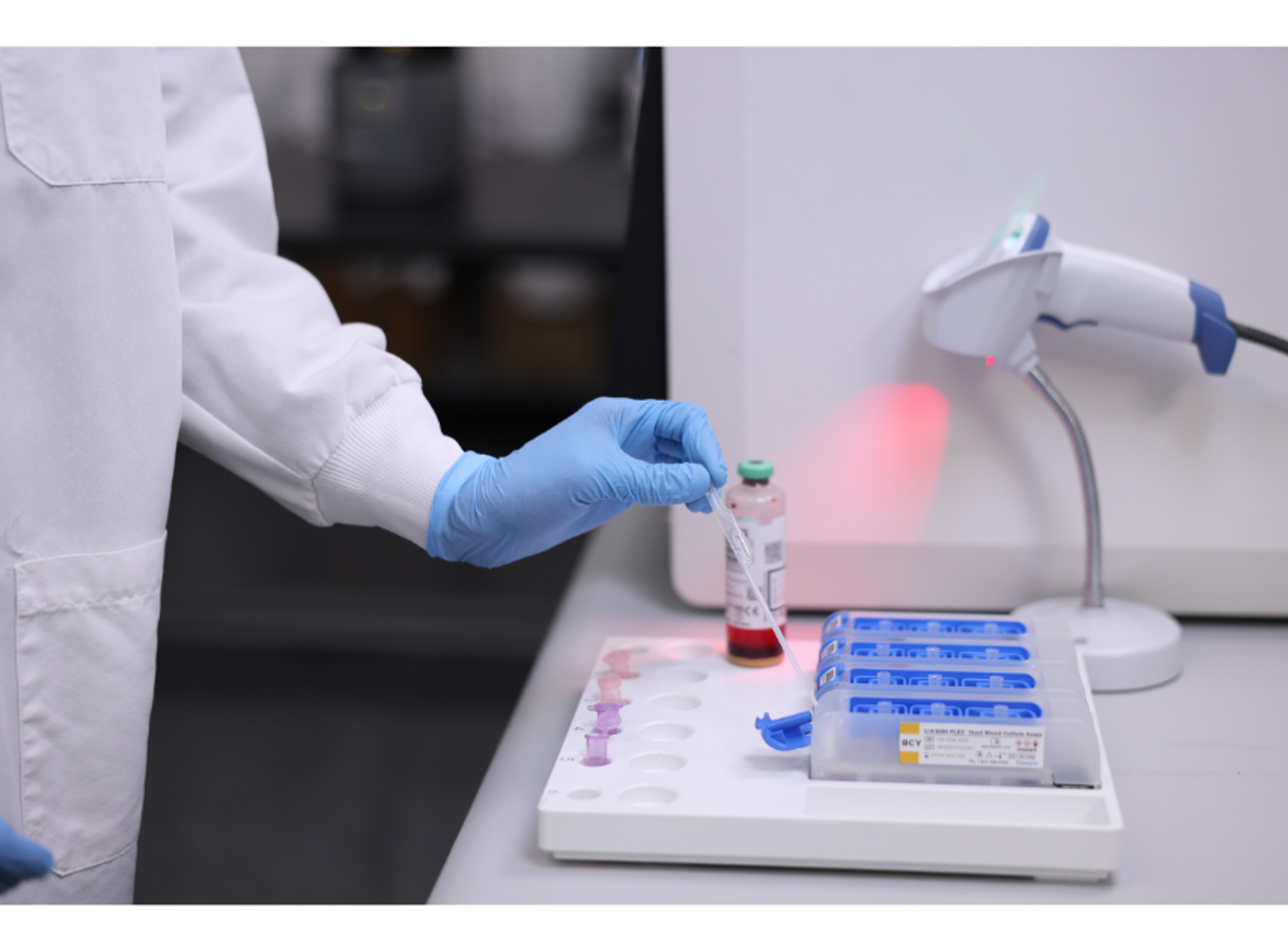
LIAISON PLEX® Bloodstream Infection Portfolio
DiasorinA smarter solution for bloodstream infection diagnostics—LIAISON PLEX® BSI features three FDA-cleared assays detecting 48 pathogens and 12 resistance genes, supporting diagnostic accuracy and stewardship goals