
Can autonomous phlebotomy transform blood collection?
Yale Professor Joe El-Khoury discusses Aletta, the ADOPT study and how autonomous blood collection could improve standardization, capacity, and quality across laboratory medicine
30 Sept 2026
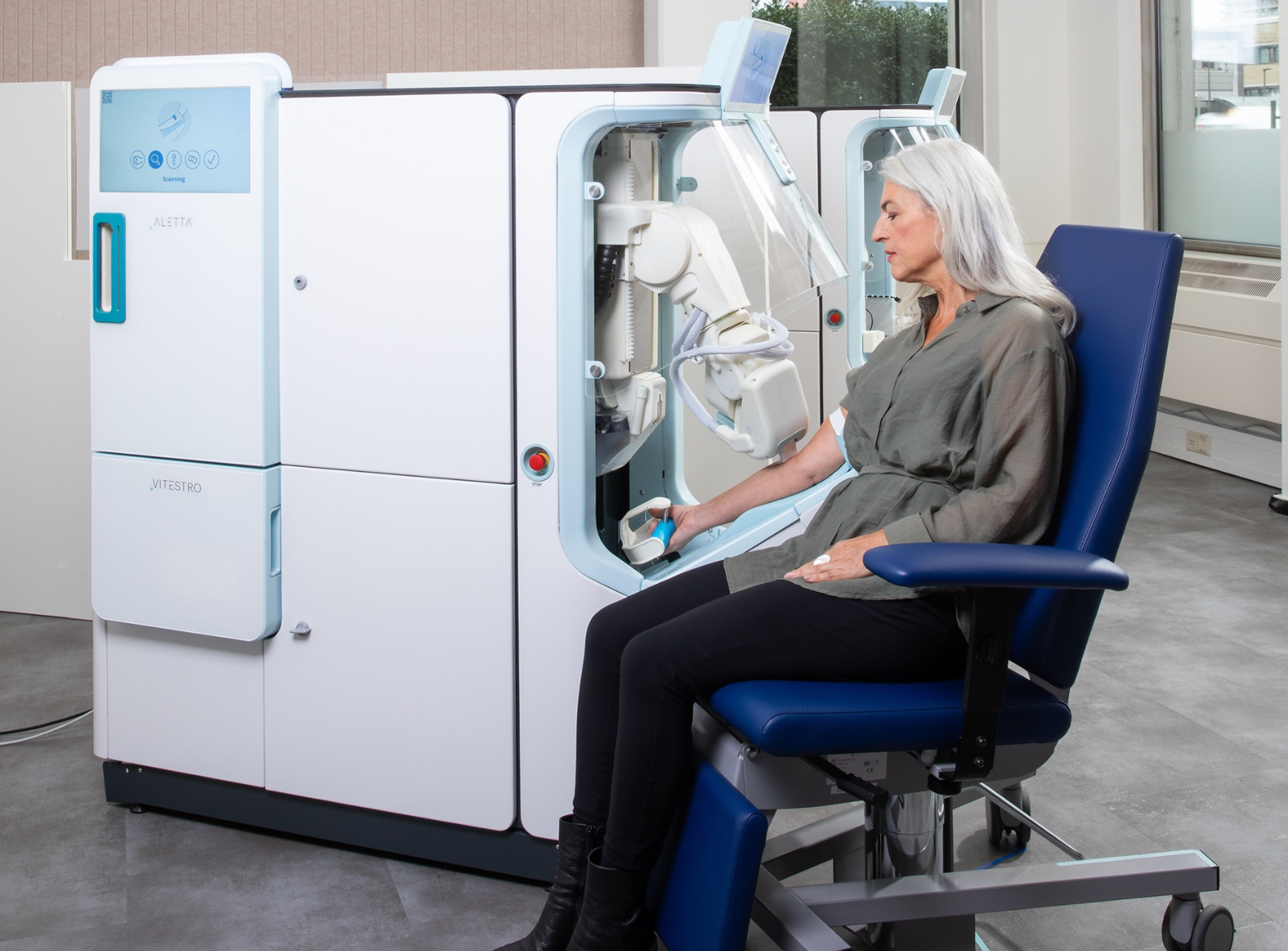
Image supplied by Vitestro © Norbert Waalboer Fotografie
Automation is moving beyond the clinical laboratory and into blood collection. In this interview, Sonia Nicholas, managing editor, SelectScience®, speaks with Joe El-Khoury, Professor of Laboratory Medicine at Yale School of Medicine, about the first FDA-cleared autonomous robotic phlebotomy device, the evidence from the ADOPT study and the questions that remain before wider adoption.
For those unfamiliar with the technology, what is Aletta®, and what challenge is it seeking to solve?
Joe El-Khoury: Aletta is the first autonomous robotic phlebotomy device to receive FDA clearance. It can draw blood from adult outpatients seated beside the machine, which is roughly the size of a mid-sized refrigerator. The patient places their arm into an extended holder, and Aletta disinfects the site, applies a tourniquet and uses infrared, ultrasound and Doppler imaging to locate a suitable vein. If access is successful, it uses a butterfly needle to fill the required tubes before withdrawing the needle, cleaning and bandaging the site. The system also gently mixes and labels the tubes. It is a major advance that could help address workforce shortages and increase testing capacity, particularly in remote locations and dense urban areas where phlebotomists are in high demand.
You wrote the editorial accompanying the ADOPT study1. What were your main conclusions about its strengths and limitations?
Joe El-Khoury: The ADOPT study, published in the August 2026 issue of Clinical Chemistry, reported on Aletta’s performance, safety and patient experience in more than 1,700 individuals. The study was conducted by scientists from Vitestro, the Dutch company behind the device. In my accompanying editorial, I highlighted Aletta’s exceptional performance: the overall first-stick success rate was 94.5%, remaining high among individuals with difficult venous access (92.7%), obesity (97.4%), and those aged 65 years or older (93.4%). All adverse events were mild and occurred at a rate of 0.6%, while 90% of patients reported similar or less pain than with traditional phlebotomy. Sample quality was analytically equivalent to traditional collection. A small US cohort also reported a positive experience up to the point of needle insertion, with only 8% saying they were unwilling or very unwilling to have blood drawn by the device.
The main concern I highlighted before clinical deployment is that the company did not specifically evaluate performance in individuals with darker skin tones. Some of the multimodal technologies used, particularly infrared imaging, have previously performed less reliably in these populations. This issue has been documented with pulse oximeters and has had serious consequences. The generalizability of the ADOPT findings to people with darker skin tones therefore remains uncertain.
What evidence would you still like to see before autonomous phlebotomy becomes mainstream?
Joe El-Khoury: I would like to see a prospective study, or a reanalysis if the relevant data are available, that specifically evaluates Aletta’s performance and safety in individuals with darker skin tones. It is encouraging that the ADOPT study was conducted in Amsterdam, a highly diverse city, but we still need evidence that performance does not decline in this population before recommending widespread adoption.
As a clinical chemist focused on quality and preanalytical errors, where do you see the biggest challenge and opportunity for Aletta to improve laboratory practice?
Joe El-Khoury: Aletta’s performance is already close to that of highly experienced phlebotomists, who have reported first-stick success rates of 95–97%, while rates among newly qualified phlebotomists and trainees can range from 70–90%. For patients, automation could make a smooth blood draw less dependent on the experience of the person performing it. That is what automation can achieve: greater standardization and less variability.
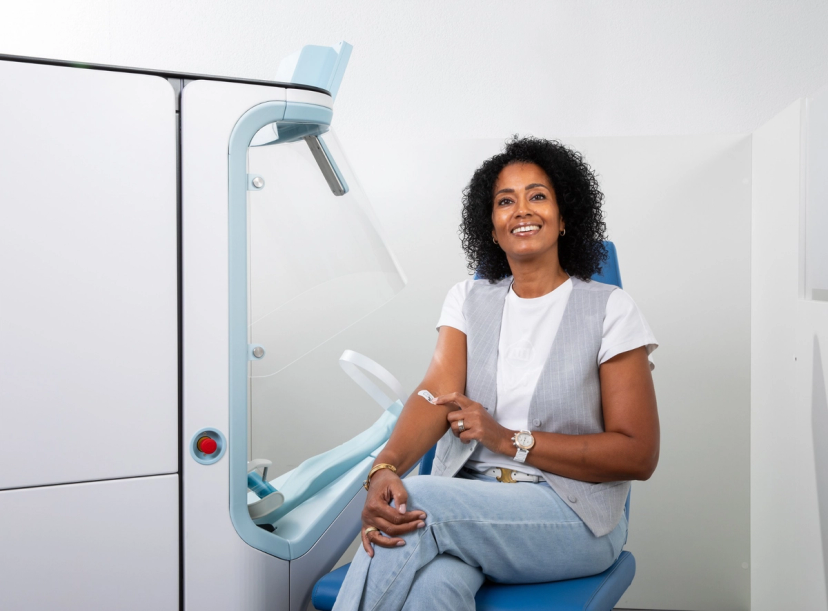
Image supplied by Vitestro © Norbert Waalboer Fotografie
The biggest challenge to adoption may therefore be societal rather than technical, because some people may be reluctant to have blood drawn by a robot. However, Aletta includes several safety features. The needle retracts automatically if the system detects sudden arm movement, and the patient can press a red button to stop the procedure. For people who are traditionally difficult to draw blood from, its ability to image beneath the skin may offer a particular advantage.
Future generations could also combine autonomous collection with on-site automated testing, creating a fully autonomous station for commonly ordered tests. Although this would carry a premium compared with traditional testing, it could benefit remote areas or specialist clinics where rapid results are needed. Other versions could connect directly to pneumatic tube systems, automatically transporting samples to the central laboratory and accelerating the process.
Laboratories have invested heavily in automating analytical workflows. Is the preanalytical phase now the biggest remaining opportunity for standardization and quality improvement?
Joe El-Khoury: Absolutely. The preanalytical phase is the greatest contributor to errors in laboratory results, with studies reporting that up to 75% occur at this stage of the total testing process rather than during the analytical or post-analytical phases. Greater standardization could eliminate many of these issues and improve the overall quality of laboratory testing.
How do you think the role of the phlebotomist changes if technologies such as Aletta become commonplace?
Joe El-Khoury: A major concern surrounding automation is job loss, but the laboratory industry is growing, and we cannot train enough people quickly enough to meet demand. This is fundamentally an issue of scale. As laboratory automation has evolved, testing personnel have increasingly focused on maintaining instruments and performing more specialized tests that automated systems cannot handle. I expect the phlebotomist’s role to evolve in a similar way, with staff overseeing and maintaining robotic devices while continuing to perform more difficult procedures.
Aletta is currently approved only for adult outpatients, so phlebotomists will still be needed for pediatric patients, inpatients and other procedures outside its approved use. The device also requires oversight by a trained phlebotomist, with one person supervising up to three systems. This could triple the capacity of outpatient blood-draw stations at a time when demand for wellness testing is rising.
Learn more about Aletta®, the world’s first Autonomous Robotic Phlebotomy Device™ (ARPD™)
This interview is published as part of the 2026 global CLINICAL24 conversation.
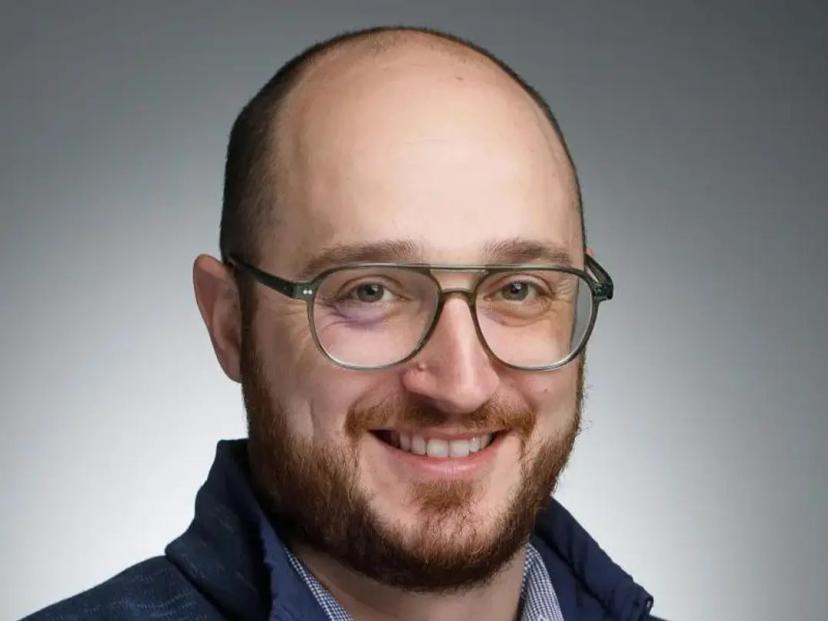
Joe El-Khoury, PhD, is Professor of Laboratory Medicine at Yale School of Medicine and Director of the Clinical Chemistry Laboratory and fellowship program at Yale-New Haven Health. He is board certified by the American Board of Clinical Chemistry and a fellow of the Academy of Diagnostics & Laboratory Medicine. He is the Incoming Editor-in-Chief for Clinical Biochemistry, and serves as Chair of the Committee on Kidney Diseases for the International Federation of Clinical Chemistry and Laboratory Medicine, and as Chair of the Faculty Advisory Council to the Dean of Yale School of Medicine. His interests include reducing preanalytical errors, biomarkers of kidney disease and injury, toxicology, mass spectrometry, and science communication.
References
1. El-Khoury JM, ADOPT Automated Phlebotomy: Exceptional Performance. Unproven Generalizability across Skin Tones, Clinical Chemistry, Volume 72, Issue 8, August 2026, Pages 819–820, https://doi.org/10.1093/clinchem/hvag045
Tags
Frequently asked questions
Show frequently asked questions
What is autonomous phlebotomy?
Autonomous phlebotomy uses robotic technology and imaging systems to identify a suitable vein, insert a needle, collect blood and complete key post-collection steps with minimal manual intervention. Aletta is the first FDA-cleared autonomous robotic phlebotomy device for adult outpatients.
How does Aletta collect blood?
The patient places their arm into the device, which disinfects the site, applies a tourniquet and uses infrared, ultrasound and Doppler imaging to locate a vein. If suitable access is found, Aletta uses a butterfly needle to fill the required tubes, then withdraws the needle, cleans and bandages the site, and mixes and labels the samples.
What did the ADOPT study show?
The ADOPT study reported strong performance, safety and patient experience data in more than 1,700 individuals. Aletta achieved an overall first-stick success rate of 94.5%, with mild adverse events reported at a rate of 0.6%, and sample quality was analytically equivalent to traditional collection.
What evidence is still needed?
Further evidence is needed to confirm performance and safety in individuals with darker skin tones, particularly because some imaging technologies have shown reduced reliability in these populations. Broader real-world evaluation will also help determine how autonomous blood collection performs across different patient groups and healthcare settings.
Will autonomous phlebotomy replace phlebotomists?
The technology is more likely to change the role of phlebotomists than replace it entirely. Aletta currently requires trained oversight and is approved only for adult outpatients, meaning skilled staff will still be needed for pediatric patients, inpatients, difficult procedures and supervision of robotic systems.
Why is automating blood collection important for laboratories?
Blood collection is part of the preanalytical phase, where many laboratory errors occur. Greater standardization at this stage could reduce variability, improve sample quality, support workforce capacity and help laboratories meet rising demand for testing.