
Building a better approach to Alzheimer’s diagnosis
Guest editorial by Russ Lebovitz, MD, PhD, is CEO and Co-Founder of Amprion
30 Sept 2026
Russ Lebovitz, MD, PhD, CEO and Co-Founder of Amprion
Alzheimer’s disease diagnostics are entering a new chapter not because one test has finally solved this complex disease, but because clinical laboratories are gaining new ways to bring disease biology into the diagnostic conversation. For much of modern medicine, Alzheimer’s disease has been identified primarily through changes in memory, thinking, behavior, and daily function. Clinical evaluation still remains indispensable, but symptoms alone do not reveal the full biological picture.
The gap between what we observe clinically and what is happening biologically has long limited diagnosis, research, and treatment development. Today, biomarkers are beginning to narrow that gap. Blood-based tests, cerebrospinal fluid analyses, and molecular imaging are giving clinicians and researchers new ways to identify disease-related changes in living patients. For clinical laboratories, this shift represents both an opportunity and a responsibility: an opportunity to make biological information more accessible, and a responsibility to ensure that this information is analytically robust, clinically contextualized, and used as part of a broader diagnostic process.
Why the symptom-first model is no longer sufficient
A symptom-first diagnostic model has obvious limitations in neurodegenerative disease. By the time a patient presents with clear cognitive impairment, biological processes may have been active for years. And while two patients may have similar problems with memory or daily function, they may not have the same disease biology.
This is not unique to Alzheimer’s disease. Neurodegenerative conditions are difficult to characterize because the brain is so functionally diverse. Where and how pathology progresses can substantially influence whether disease manifests through memory, movement, language, sleep, mood, or behavior. And while the field has learned a great deal about disease-associated proteins such as amyloid and tau, we still lack a complete causal map connecting biological processes to symptoms in each patient.
Blood-based biomarkers expand access
Among the most important developments in Alzheimer’s diagnostics is the growing ability to detect relevant biomarkers in blood rather than relying exclusively on cerebrospinal fluid or molecular imaging. Cerebrospinal fluid testing and PET scanning remain highly valuable tools, but both can be more difficult to access at scale. In contrast, blood collection is already embedded in routine healthcare worldwide and can be performed in far more settings. That creates the potential to expand access to biological information beyond specialized memory clinics and major academic centers.
That accessibility matters. Patients with cognitive concerns often face long waits to see specialists, and advanced imaging is not available to every patient or health system. Blood-based biomarkers may provide a more scalable entry point for evaluating disease-related biology and determining when additional evaluation is warranted. But wider access should not be confused with diagnostic simplicity.
A laboratory result may indicate that a disease-associated biological process is present. It does not necessarily tell us how much that process contributes to a patient’s symptoms, how quickly their disease will progress, or whether another pathology is also shaping the clinical picture. As blood-based testing becomes more widely available, laboratories will be essential in helping clinicians understand both the value and the limits of those results.
Biomarkers do not tell the full story
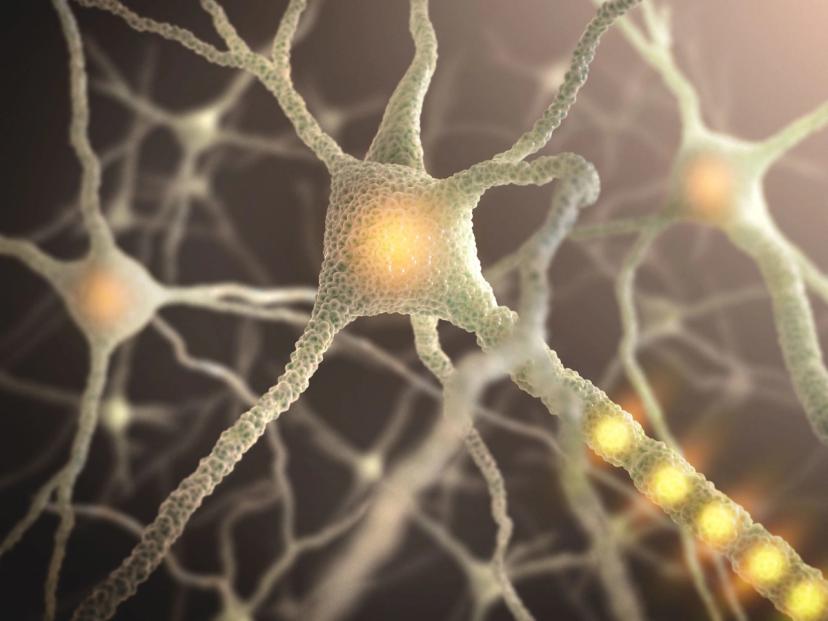
As blood-based testing becomes more widely available, laboratories will be essential in helping clinicians understand both the value and the limits of those results
Amyloid and tau biomarkers have fundamentally changed the way Alzheimer’s disease can be studied and assessed, yet they do not always define the entire disease process or explain a patient’s presentation. Many patients with cognitive impairment have more than one relevant pathology. Alpha-synuclein, TDP-43, vascular factors, and other biological changes may coexist with Alzheimer’s-related pathology and potentially influence symptoms, progression, and therapeutic response.
For this reason, a biomarker should be understood as a critical piece of evidence, not a complete answer. The question is not merely whether a patient has a positive or negative biomarker result. The more clinically significant question is what that result means in the context of the patient’s cognitive profile, symptoms, imaging findings, medical history, and changes over time.
From a test result to a diagnostic pathway
The future of Alzheimer’s assessment is multimodal. This does not mean that every patient needs every test, however. It means that clinicians and laboratories should use complementary tools to answer different questions. Molecular biomarkers can help identify disease-related biological processes, imaging can provide information about structural or regional changes in the brain, and clinical evaluations can show how those processes may be affecting the patient’s life. Digital measures may eventually add another important layer by capturing aspects of movement, speech, sleep, behavior, and cognition more frequently than traditional clinic visits allow and against a patient’s own prior baseline.
The key is integration. A biomarker result does not exist in isolation and neither do symptoms. The clinical value comes from connecting biology with function and tracking how both change over time. Clinical laboratories are becoming central to that process and their role extends beyond generating molecular data. Assay validation, quality management, clear reporting, clinician education, and consultation pathways can all help ensure biomarkers are used and interpreted appropriately.
Adoption requires more than technology
Scientific advances do not move into routine practice automatically. Before an emerging test becomes part of a standard workflow, laboratories and health systems must address analytical performance, validation, regulatory requirements, reimbursement, ordering practices, result interpretation, staffing, and patient access. A new test must demonstrate not only that it can measure something accurately, but also that the result can be used safely and meaningfully.
Going forward, there will not be one universal implementation model. Some systems may initially rely on specialized reference laboratories, while others may adopt local testing as platforms, volume, and expertise develop. In either model, education and workflow design will matter as much as the technology itself.
Earlier information matters when it enables better decisions
The promise of new Alzheimer’s diagnostics is not simply earlier testing. Earlier information matters only when it gives patients and clinicians a clearer understanding of disease biology and helps inform the next decision. There is also no magic test that will make neurodegenerative disease straightforward. The brain is too complex, and our causal understanding of these conditions remains incomplete. But clinical laboratories can help move the field beyond an exclusively symptom-based model and toward one where results are reliable, contextualized, and connected to care decisions.
The next chapter in Alzheimer’s diagnostics will not be defined by a single biomarker. It will be defined by our ability to connect reliable laboratory evidence with imaging, clinical expertise, functional assessment, and the experience of each patient.
Author biography
Russ Lebovitz, MD, PhD, is CEO and Co-Founder of Amprion, where he leads the company's mission to advance precision medicine for neurodegenerative diseases through biomarker-driven diagnostics. Before entering executive leadership, he spent more than 15 years as a senior scientist and research physician. Lebovitz has held faculty appointments at Baylor College of Medicine and Fox Chase Cancer Center and earned his MD and PhD from Washington University School of Medicine.
Tags
Frequently asked questions
Show frequently asked questions
What are blood-based biomarkers for Alzheimer’s disease?
Blood-based biomarkers are measurable biological signals in blood that may indicate Alzheimer’s-related processes, including changes associated with amyloid and tau. They can make biological assessment more accessible, but results must be interpreted alongside the patient’s symptoms, medical history, imaging, and other clinical evidence.
Can a blood test diagnose Alzheimer’s disease on its own?
No. A blood test can provide important evidence about disease-related biology, but it does not by itself explain a patient’s symptoms, predict the precise course of disease, or rule out coexisting pathologies. Diagnosis should remain part of a broader clinical pathway.
How do blood biomarkers compare with cerebrospinal fluid testing and PET imaging?
Blood testing is generally easier to access and scale because blood collection is already part of routine healthcare. Cerebrospinal fluid testing and PET imaging remain valuable, however, and may provide complementary information when further assessment is needed.
Why is a multimodal approach important in Alzheimer’s disease assessment?
Different tools answer different questions. Biomarkers can identify disease-related biological processes, imaging can reveal structural or regional brain changes, and clinical and functional assessments show how those changes may be affecting the patient. Combining relevant evidence supports more informed decisions.
What role do clinical laboratories play in Alzheimer’s biomarker testing?
Clinical laboratories support safe and meaningful use through assay validation, quality management, clear reporting, clinician education, and consultation. Their role extends beyond generating a result to helping ensure that it is understood in the correct clinical context.
What is needed for wider adoption of Alzheimer’s blood tests?
Wider adoption will depend on strong analytical performance, appropriate validation, regulatory and reimbursement pathways, clear ordering and interpretation guidance, trained staff, equitable patient access, and workflows that connect results to clinical decisions.