
Women in STEM breaking barriers and advancing the future of regenerative medicine
Dr. Vasiliki E. Kalodimou on women in STEM, global collaboration and the next era of regenerative medicine
30 Sept 2026
SelectScience® has previously spoken with Dr Vasiliki E. Kalodimou, a leading expert in regenerative medicine, assistant professor based in Frankfurt, and an Ambassador for the Women in STEM Network, about empowering women in STEM and using advanced flow cytometry to translate cellular science into meaningful patient benefit.
In this latest interview with Sonia Nicholas, managing editor of SelectScience, the regenerative medicine expert builds on those conversations, reflecting on the barriers facing women in science, the institutional changes needed to develop future leaders and the international partnerships driving healthcare innovation. Kalodimou also explores how precision cellular characterization, artificial intelligence, multi-omics and tissue engineering could help regenerative medicine progress from scientific promise to safe, reproducible and personalized treatments.
Looking back, what were the most significant barriers you faced as a woman in science, and how did you overcome them?
VK: A career in science is defined by scientific rigor, persistence, and the ability to continuously adapt, but women have historically had to navigate additional structural and cultural barriers. In my own career, these have included unconscious bias, unequal access to influential networks, different expectations of leadership, and, at times, the pressure to demonstrate competence repeatedly before being afforded the same degree of recognition or authority.
I learned relatively early that scientific credibility must ultimately be built through the quality and consistency of one's work. That required discipline, resilience, and an unwavering commitment to excellence. I also learned the importance of developing an international network of colleagues and collaborators who value scientific integrity and intellectual contribution.
Importantly, I do not believe that women should have to become better at navigating barriers simply because those barriers exist. The scientific community itself must evolve. We need transparent evaluation systems, equitable access to leadership opportunities, and institutional cultures in which excellence is recognized irrespective of gender.
For me personally, overcoming these challenges has also created a strong sense of responsibility toward the women who are coming after me. Mentoring and supporting other women in science has become an important part of my own journey. I believe that when you have experienced the challenges of building a scientific career, you have a responsibility to make the path more visible and more accessible for the next generation.
I try to encourage women to recognize their own scientific value, to speak with confidence, to pursue opportunities even when they do not feel completely ready, and to understand that leadership is not something they need to wait to be invited into. Sometimes a few words of encouragement, a meaningful introduction, or someone believing in your potential at the right moment can make a profound difference.
Ultimately, I see mentorship not simply as giving advice, but as creating opportunities, opening doors, sharing experience, and helping talented women see possibilities that they may not yet see for themselves. If my experience can help another woman progress more confidently in science, then that is one of the most meaningful contributions I can make beyond my own research.
You've spoken about the importance of addressing the 'confidence gap' among women in STEM. What practical steps can institutions take to help talented women see themselves as future leaders?
VK: The so-called confidence gap should not be interpreted as an individual deficiency. In many cases, it is a consequence of institutional environments in which women receive fewer opportunities to demonstrate leadership, greater scrutiny of their decisions, or less encouragement to pursue positions of authority.
Institutions therefore have to address the environment, not simply ask women to become more confident.
First, leadership opportunities must be deliberately and equitably distributed. Women should be given meaningful responsibility for research programs, clinical initiatives, scientific committees, collaborations, and strategic decisions.
Second, institutions need robust sponsorship mechanisms. Mentoring provides advice; sponsorship creates opportunities. Senior scientists and institutional leaders have a responsibility to actively identify talented women and advocate for their advancement.
Third, promotion and recognition criteria should be transparent and based on measurable contributions rather than informal networks or assumptions about what a leader "looks like."
Finally, we need visibility. Women need to see women occupying positions of scientific authority as principal investigators, department heads, clinical innovators, entrepreneurs, editors, and institutional leaders. Representation changes what the next generation considers possible.
I would also emphasize that confidence is frequently a consequence of opportunity. We should not wait until a talented scientist feels completely ready before giving her the opportunity to lead. Leadership itself is one of the mechanisms through which confidence and capability develop.
You have spent nearly two decades researching stem cells from placental, umbilical cord, and adipose tissue sources. What are the most exciting developments you are seeing in regenerative medicine today?
VK: Regenerative medicine is entering a particularly important phase. The field is moving beyond the relatively simplistic concept of cell replacement toward a much more sophisticated understanding of cellular function, cell–cell communication, immunomodulation, tissue microenvironments, and mechanisms of repair.
One of the most significant developments is our growing appreciation of the biological activity of cells derived from perinatal and adipose tissues. Their therapeutic potential extends beyond differentiation capacity; their immunomodulatory and paracrine functions, including their interaction with the tissue microenvironment, are increasingly important areas of investigation.
At the same time, advances in high-dimensional flow cytometry, single-cell technologies, multi-omics, extracellular vesicle research, organoid models, biomaterials, and tissue engineering are giving us unprecedented tools to understand cellular heterogeneity and therapeutic mechanisms.
Artificial intelligence is now adding another transformative dimension to this landscape. AI and machine learning approaches have the potential to integrate complex, multidimensional datasets from flow cytometry and single-cell analysis to imaging, genomics, proteomics, and clinical data and identify biological patterns that would be extremely difficult to recognize using conventional approaches alone.
This could be particularly important for regenerative medicine, where cellular populations are inherently heterogeneous. AI may help us better characterize cellular phenotypes, predict functional potency, identify biomarkers of therapeutic response, optimize manufacturing processes, and ultimately determine which cellular product may be most appropriate for a particular patient.
However, I believe we must approach AI with the same scientific rigor that we apply to cellular therapies themselves. AI should augment scientific and clinical expertise, not replace it. The quality, representativeness, and standardization of the underlying data remain fundamental, and models must be rigorously validated before they can inform clinical decision making.
This is particularly important because "stem cells" should never be regarded as a homogeneous therapeutic entity. Cells derived from different tissues, donors, manufacturing processes, and culture conditions can have substantially different biological characteristics.
The next generation of regenerative medicine will therefore depend on precision cellular characterization, functional potency, advanced analytics, and increasingly AI driven interpretation of complex biological data not simply on cell numbers. We need to understand which cellular populations have which biological properties, how those properties can be reproducibly maintained, and which patient populations are most likely to benefit.
The convergence of regenerative medicine, precision medicine, advanced cellular analytics, and artificial intelligence is, in my view, one of the most consequential developments shaping the future of the field. The real opportunity is to move from a largely empirical approach to one that is increasingly data driven, predictive, personalized, and mechanistically informed.
You collaborate with researchers and institutions across Europe, Asia, and the United States. What have these international partnerships taught you about innovation in healthcare?
VK: International collaboration has reinforced one fundamental principle: scientific innovation accelerates when expertise, perspectives, and infrastructures are connected across borders.
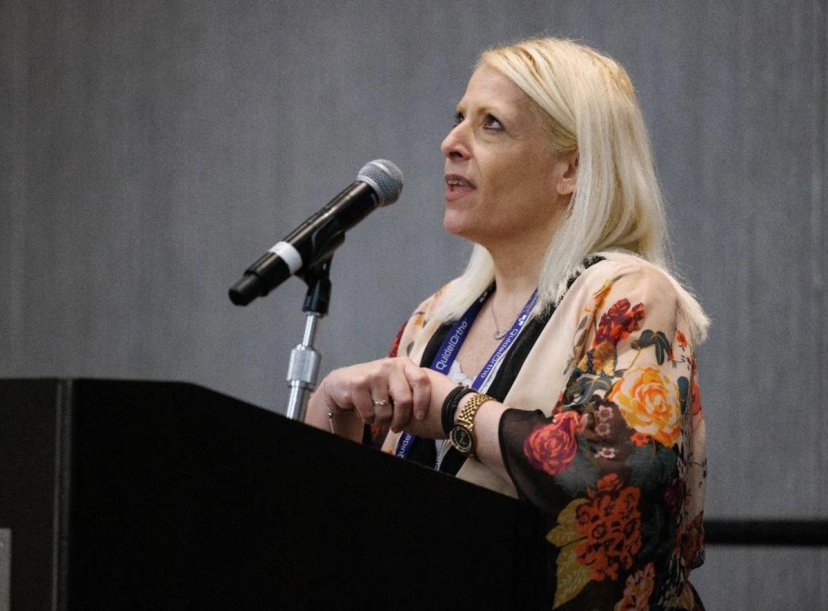
Dr Vasiliki E. Kalodimou, is a leading expert in regenerative medicine, assistant professor based in Frankfurt, and an Ambassador for the Women in STEM Network
Europe, Asia, and the United States each possess distinctive research ecosystems, clinical environments, technological capabilities, regulatory frameworks, and approaches to innovation. Working across these environments demonstrates that there is rarely a single pathway from discovery to clinical impact.
International collaboration also challenges scientific assumptions. Researchers working within one healthcare system can become accustomed to particular methodologies or institutional structures. Exposure to different approaches creates intellectual friction and that friction can be extremely productive.
However, successful international collaboration requires more than scientific expertise. It requires trust, intellectual openness, respect for different research cultures, and a shared commitment to rigorous methodology.
Perhaps most importantly, international partnerships have demonstrated to me that healthcare innovation must ultimately be judged by its ability to create meaningful clinical value. A technologically sophisticated intervention is not necessarily an innovation if it cannot be translated, scaled, regulated, or made accessible to patients.
Are there lessons that different healthcare systems can learn from one another when it comes to supporting scientific research and innovation?
VK: Certainly. One of the most valuable lessons is that research capacity is an essential component of healthcare capacity. Scientific research should not be treated as an activity peripheral to healthcare delivery. It is one of the foundations upon which the future of medicine is built.
Different healthcare systems have developed different strengths. Some have highly integrated academic medical centers; others have strong public research infrastructures, sophisticated industry partnerships, or effective mechanisms for translating discoveries into clinical practice.
The important question is not which system is universally superior, but which elements can be adapted successfully to different environments.
We need stronger connections between universities, hospitals, research institutes, biotechnology companies, regulators, policymakers, and critically patients. Translational research flourishes when these stakeholders are connected from the beginning rather than brought together only after a discovery has already been made.
There is also a lesson concerning long-term investment. Breakthrough science rarely follows a predictable timetable. Sustainable funding for fundamental research, investigator development, infrastructure, and translational programs is therefore essential.
Finally, innovation must be accompanied by responsibility. Scientific progress should be evaluated not only according to what is technically possible, but according to evidence, safety, reproducibility, ethics, cost-effectiveness, and equitable access.
If you could solve one major challenge facing regenerative medicine over the next decade, what would it be?
VK: I would focus on one central challenge: closing the translational gap between biological discovery and reproducible, clinically validated regenerative therapies that can be truly personalized to individual patients.
We have reached a point where the scientific potential of regenerative medicine is considerable. The challenge is no longer simply demonstrating that a cell, tissue, biomaterial, or biological product can produce an interesting effect in an experimental model. The real challenge is demonstrating that the intervention can be manufactured consistently, characterized rigorously, shown to have a defined mechanism and potency, evaluated through appropriately designed clinical studies, and ultimately delivered safely, economically, and at scale.
At the same time, I believe the future of regenerative medicine must be increasingly patient specific. We are moving toward a model in which treatment decisions are informed by the biological characteristics of each patient rather than relying exclusively on a one-size-fits-all therapeutic approach. The integration of cellular therapies with precision and personalized medicine, advanced diagnostics, artificial intelligence, and multi-omics could allow us to identify which therapy is most appropriate for which patient, at which stage of disease.
Another particularly exciting frontier is the development of three-dimensional tissues and organs. Advances in organoids, 3D bioprinting, tissue engineering, biomaterials, and vascularization are bringing us closer to creating functional human tissues that could eventually be used not only for transplantation, but also for disease modelling, drug development, toxicity testing, and personalized therapeutic decision-making.
Imagine being able to use a patient's own biological information to develop a three dimensional model of their disease, test different therapeutic strategies, and then select the intervention most likely to work before administering it. That is the direction in which personalized regenerative medicine could ultimately evolve.
Living cellular products, however, introduce a level of biological complexity that conventional pharmaceutical development does not always encounter. Donor variability, cellular heterogeneity, manufacturing conditions, cryopreservation, culture processes, potency, stability, immune compatibility, and long-term patient outcomes all require careful consideration.
Over the next decade, I would therefore like to see the field establish a much stronger culture of standardization, reproducibility, mechanistic understanding, evidence based translation, and patient specific therapeutic design.
This does not mean slowing innovation, quite the opposite. Robust scientific and regulatory standards can accelerate responsible innovation by distinguishing genuinely promising therapies from approaches that remain scientifically premature.
Ultimately, the measure of regenerative medicine will not be the number of exciting publications, experimental therapies, or technological breakthroughs we generate. It will be our ability to translate high quality science into safe, reproducible, personalized, accessible treatments and functional tissues that demonstrably improve patients' lives.
For me, that is the real vision: moving from promise to proof, from generalized therapies to personalized medicine, and ultimately from repairing tissues to engineering functional human tissues and organs. That transition could define the next era of regenerative medicine.
This interview is published as part of the 2026 global CLINICAL24 conversation.