General Lab Scientists’ Choice Award winner announced

INTEGRA Biosciences, Malvern Panalytical, and Metrohm AG recognized

19 Jun 2022

Sarah Thomas
Associate Editor

Editorial article

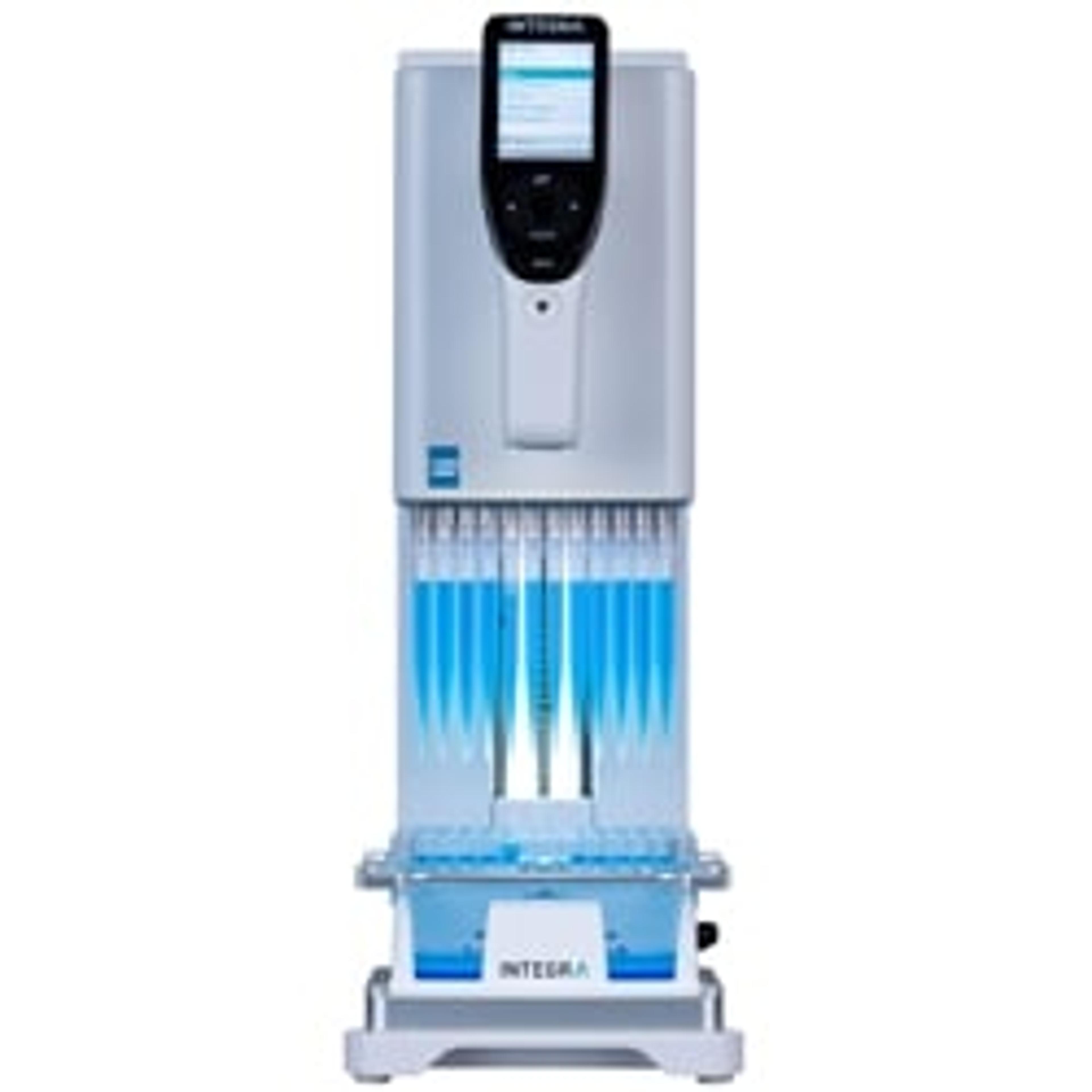
The MINI 96 - 96 Channel Portable Electronic Pipette is the winner of Best New General Lab Product of 2021.
MINI 96 – 96 Channel Portable Electronic Pipette from INTEGRA Biosciences is the winner of Best New General Lab Product of 2021

The world’s most innovative and effective laboratory technologies have been recognized during a special online ceremony. Winners of the 2022 Scientists’ Choice Awards® were announced by SelectScience CEO, Kerry Parker, and Editor, Dr. Lois Manton-O’Byrne.

Now in their 15th year, the awards are unique in the industry as they are chosen by scientists. Each year, we invite scientists around the globe to participate by nominating, reviewing, and voting for the lab products that have had the greatest impact on their work. This year, more scientists than ever got involved — read on to learn about this year's winners.

Best New General Lab Product of 2021

The award for Best New General Lab Product of 2021 goes to the MINI 96 – 96 Channel Portable Electronic Pipette by INTEGRA Biosciences, as voted for by scientists around the world.

This ultra-compact and portable system is one of the most affordable electronic 96 channel pipette on the market and is available in four volume ranges: 0.5–12.5 µL, 5–125 µL, 10–300 µL, and 50–1250 µL – offering improved productivity for virtually any microplate-based liquid handling task.

Your runners-up are:

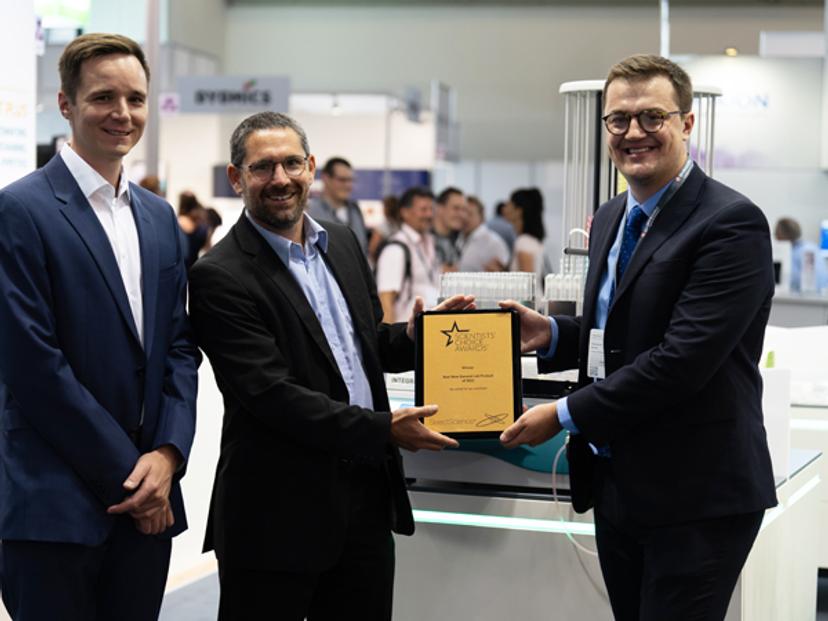
Emir Cetojevic, and Lukas Emanuel Keller, both from INTEGRA Biosciences accept the award for Best New General Lab Product of 2021

Reviewers' Choice: Analytical Science Company of the Year

This year’s coveted Reviewers’ Choice Award for Analytical Science Company of the Year goes to Malvern Panalytical, in acknowledgment of the consistently positive feedback it has received from scientists sharing their opinions via reviews on the SelectScience website over the past year.
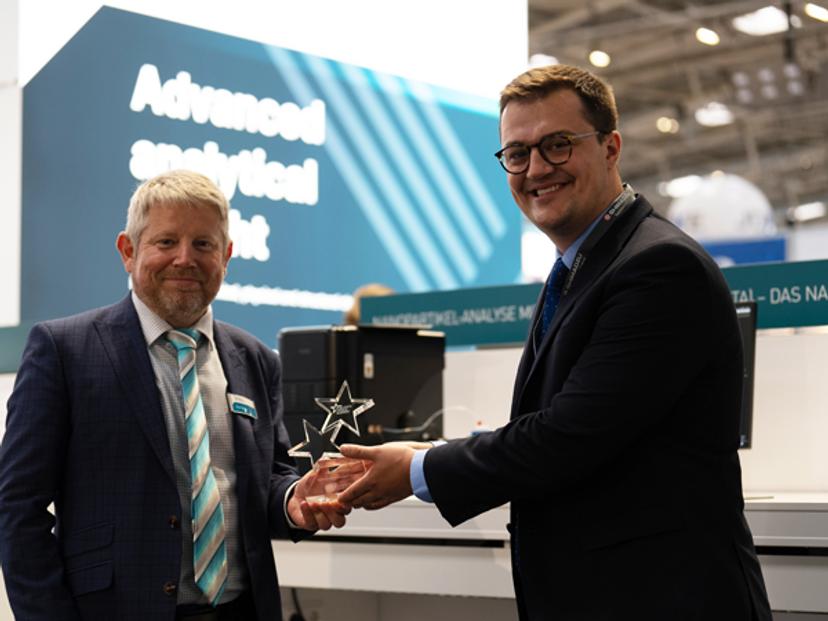
Paul Kippax, Malvern Panalytical, accepts the award for Analytical Science Company of the Year

Analytical Science Application eBook of the Year

The Analytical Science Application eBook of the Year Award goes to Metrohm AG for ‘Ion chromatography for food & beverage analysis’. This popular application compendium presents a guide on how you can bring your food and beverage analysis to the next level – enhancing productivity, reducing costs, and achieving accurate results using the 940 Professional IC Vario.
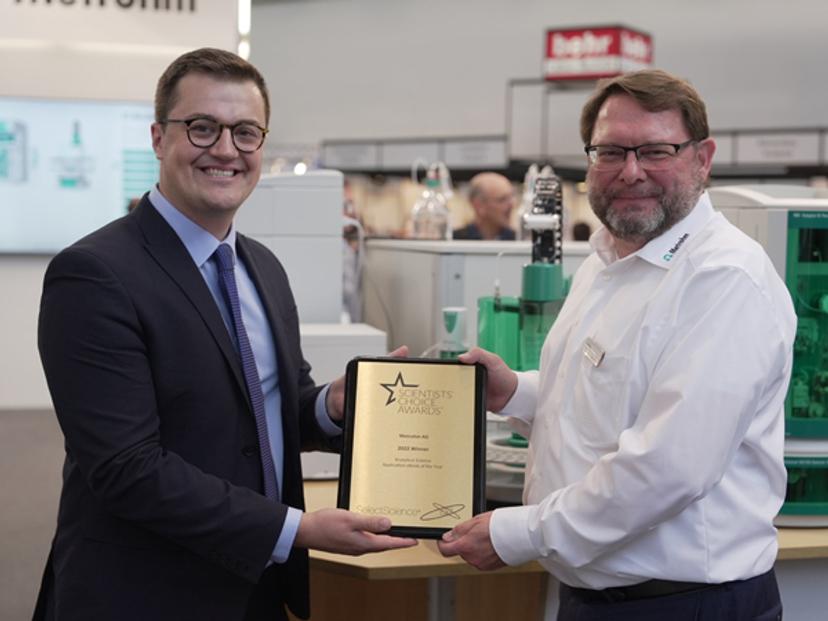
Markus Steinke, Metrohm AG, accepts the award for Analytical Science Application eBook of the Year

Do you use any of these lab products? Share your opinion today by leaving a lab product review>>

Visit the Scientists’ Choice Awards website for more information

Links

Tags

Autoclaves and SterilizersAutoclaves and sterilizers are commonly used to sterilize laboratory equipment, instruments and growth media using constant pressure and temperature. When choosing an autoclave or sterilizer consider medical or laboratory application, size, loading and sterilization method. Sterilization methods include flame (Bunsen burners), heat (steam or dry), chemical and UV.Balances and Moisture AnalyzersBalances & Moisture Analyzers / weighing scales measure static or dynamic loads. Features to consider when choosing an analytical balance include accuracy, capacity and resolution. Additional features and specialized balances include enclosures for weighing powder, microbalances for measuring small quantities, portable balances, moisture analyzers, top loading balances and internal calibration for measurements over time or with varied temperature.Baths and CirculatorsLaboratory baths and circulators are capable of refrigerating and heating to meet the demands of any temperature controlled application.Refrigerators Freezers and CryogenicsRefrigerators, Freezers & Cryogenics can be used for preservation or experimental purposes. Types of freezers include deep freeze, -80C°C, ultra-low temperature, explosion proof, cryogenic and controlled rate freezers. Freezing is also used in freeze-drying equipment for dehydration processes. Feature to consider in freezers include temperature control and recorders, failure alarms and self-closing mechanisms.FiltrationFiltration and microfiltration are used to separate solids, particulates or large molecules from fluids (liquid or gases) in order to purify the filtrate. Explore a range of filter formats, including filter paper, plates and membranes for your separation needs. While larger particulates may be separated by gravity filtration, smaller particulates may require additional force for timely separation. Microfiltration equipment includes vacuum filters, as well as positive pressure, crossflow and centrifugal filtration devices. Find the best filtration products in our peer-reviewed product directory: compare products, check customer reviews and receive pricing direct from manufacturers.IncubatorsLaboratory incubators are used to provide a stable environment to cultivate and store samples in, giving you optimal control of temperature, humidity, oxygen and CO<sub>2</sub> levels. Incubators are necessary equipment for cell culture and microbial research. Control temperature with heated or refrigerated incubators, or the levels of CO<sub>2</sub> and oxygen with CO<sub>2</sub> incubators. Using environmental chambers, create a humid climate for testing samples. Find the best incubators in our peer-reviewed product directory: compare products, check customer reviews and receive pricing direct from manufacturers.pH Meters and ElectrodesIon and pH meters are electrochemical equipment used to measure the pH (acidity or alkalinity) or specific ion concentration of a solution. Other meters can also measure the conductivity or dissolved oxygen content of a solution. pH meters, specific ion meters, conductivity meters and dissolved oxygen meters can come as benchtop or portable equipment. A meter’s electrodes can be replaced with easy to clean electrodes or electrodes for difficult media. pH, ion and conductivity meters are typically used in life science research, pharmaceutical testing, food and beverage, environmental and water analysis. Find the best pH meters and electrodes in our peer-reviewed product directory: compare products, check customer reviews and receive pricing direct from manufacturers.Pipettes and DispensersPipettes and dispensers are essential lab equipment used to dispense measured volumes of liquid accurately. Explore a range of manual and electronic pipettes, including single and multichannel, serological and volumetric pipettes, as well as a range of pipette tips. Bottle-top dispensers are also available for simple and fast solvent dispensing. Find the best pipettes & dispensers in our peer-reviewed product directory: compare products, check customer reviews and receive pricing direct from manufacturers.Labware and Lab SuppliesLabware and lab supplies include various forms of glassware, plasticware, reagents and personal protective equipment (PPE) and are used across all scientific laboratories, enabling daily tasks to be performed. Explore a range of flasks and beakers, petri dishes, carboys and storage bottles. Labware such as condensers, desiccators and burettes are also available for more specific tasks. Find the best labware and lab supplies in our peer-reviewed product directory: compare products, check customer reviews and receive pricing direct from manufacturers.CentrifugesCentrifuges are used to separate particulates suspended in a liquid via the application of a centrifugal force including cells, macromolecules, nanoparticles and precipitates. Centrifuges come in three sizes: microcentrifuges, benchtop and floor-standing centrifuges, depending on the volume and number of samples that require separation. When choosing a centrifuge, consider its maximum separation power indicated by its relative centrifugal force (RCF) value. Low force centrifuges reach a maximum RCF of 8,000 g, high-force centrifuges can reach maximum RCF values of 80,000 g. For extremely high forces, consider ultracentrifuges (up to 800,000 g). Refrigerated and vacuum centrifuges also known as concentrators are available for more specialized applications. A range of volumes are available for centrifuge tubes and microfuge tubes, depending on sample sizes. Find the best centrifuges in our peer-reviewed product directory: compare products, check customer reviews and receive pricing direct from manufacturers.TitrationTitration is an analytical technique for determining substance concentration in a solution. For titration consider a manual or automated system, volumetric or coulometric reagent addition and indication by a potentiometer, spectrometer, turbidometer or by the Karl Fischer method. Other features of titration to consider include burettes, reagents, concentration range, reaction time and autosamplers.Evaporators and Freeze DryersCentrifugal evaporation is used for solvent removal from a sample. This is a useful technique for sample concentration or sample drying. Many centrifugal evaporators are modular with a central vacuum pump for generating low pressure. Useful features of evaporators or vacuum ovens include minimal solvent bumping, solvent resistance, computer control, temperature regulation and benchtop design.Water PurificationThere are a number of water purification methods available to remove contamination from laboratory water. These systems include demineralization, reverse osmosis, filtration and ultrafiltration. A combination of methods is sometimes necessary to achieve purified water suitable for use in experiments.Homogenizers and BlendersHomogenizers and blenders are used to homogenize various types of material, including tissue, cells, plants, food, soil, biological and chemical samples for subsequent analysis. Lab equipment for sample homogenization includes handheld and benchtop homogenizers, bead mill, ultrasonic and multiple sample homogenizers, high shear homogenizers and blenders. Homogenizer bead and probe multipacks are available to avoid cross contamination of samples, as well as cooling systems for homogenizing temperature-sensitive samples. Homogenizers are often used in the first step of extraction of DNA, RNA and proteins from tissue and cell samples. Find the best homogenizers and blenders in our peer-reviewed product directory: compare products, check customer reviews and receive pricing direct from manufacturers.Fumehoods and Biological Safety CabinetsFume hoods and biological safety cabinets are used to provide personnel, sample and environmental protection by limiting exposure to hazardous materials either by venting or enclosing hazardous sample space. Fume hoods include filtered and ductless fume hoods, general ducted fume hoods, laminar flow cabinets and cabinets for powder weighing. There are three classes of biological safety cabinet, dependent on the level of protection provided. Class I provide personnel and environmental protection, class II provide product, personnel and environmental protection. Class III provide the highest level of protection and are designed for use with high-risk biological agents. Other ventilated workspaces for the laboratory include glove boxes, glove bags, anaerobic and hypoxic workstations. Find the best fume hoods and biological safety cabinets in our peer-reviewed product directory: compare products, check customer reviews and receive pricing direct from manufacturers.
General Lab Scientists’ Choice Award winner announced