
Podcast: Sustainability strategies for modern labs
Guest editorial features key takeaways from Balancing the Future Podcast, season 2, episode 11, by METTLER TOLEDO
12 Oct 2026Laboratories make scientific research and innovation possible, but the equipment, resources, and consumables needed to support discovery also carry a substantial environmental footprint. From energy-intensive freezers and fume hoods to water consumption and single-use plastics, the environmental impact of everyday laboratory operations can quickly add up.
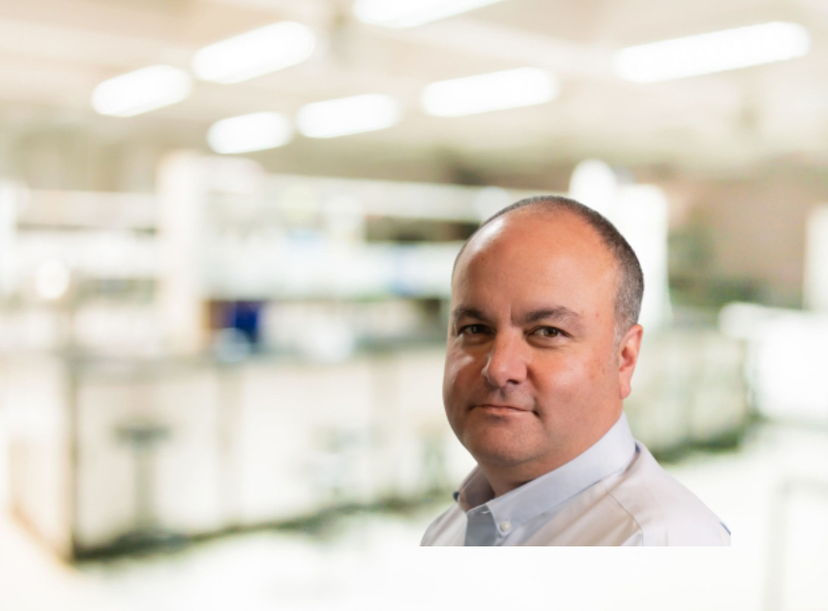
Raj Patey, Business Development Director, My Green Lab
In this episode of METTLER TOLEDO’s Balancing the Future podcast, hosts Chai Nussbaumer and Micah Schweizer speak with Raj Patey, Business Development Director at My Green Lab®, about how laboratories can reduce their environmental impact without compromising research quality or safety.
The episode, titled ‘Inside the Green Lab: How Scientists Are Cutting Carbon Without Compromising Discovery’, explores the three central pillars of laboratory sustainability: energy, water, and waste. It also examines sustainable procurement, the challenge of greenwashing, and how verified environmental information can help scientists make more informed purchasing decisions.
Listen to Balancing the Future, season 2, episode 11, by METTLER TOLEDO on your favorite streaming platform: Spotify, Apple Podcasts, YouTube, Amazon Music.
Read on for key highlights from the conversation
Patey begins by explaining why laboratories deserve particular attention within organizational sustainability strategies. Although resource use varies according to the type of research being conducted, laboratories often rely on equipment that operates continuously and consumes considerable energy. Experimental processes can also require large volumes of water, solvents, and other chemicals, while producing plastic, chemical, and biological waste.
For example, ultra-low-temperature freezers, which are commonly operated at temperatures as low as –80°C, can consume as much energy annually as an average household. Fume hoods, centrifuges, heating and ventilation systems, and other equipment add to the overall demands.
The scale of this impact becomes clearer at an institutional level. Patey cites figures from the University of Bristol, where laboratories occupy approximately 6% of the university’s space but account for 40% of its energy consumption. The university also reports that laboratories can have five times the environmental impact of office spaces.
Waste presents another challenge. Laboratories use large quantities of disposable tubes, pipette tips, gloves, and other plastic consumables. Although, these are used often for important safety and contamination-control reasons, the volumes involved create opportunities to reassess where single-use materials are necessary and whether protocols can be redesigned to reduce consumption without affecting experimental integrity.
“We often divide the lab’s impact into three areas to start with: energy, water, and waste,” Patey explains. “We can all picture that and identify with it in our households and then multiply it up in the lab.”
Sustainability is not an add-on. It’s not like we made a product and then thought, ‘What should we do about sustainability now?
Raj Patey, Business Development Director, My Green Lab
Small changes can produce significant savings
The environmental intensity of scientific research can appear daunting. This episode highlights practical opportunities for improvement.
My Green Lab’s International Freezer Challenge encourages laboratories to optimize cold-storage practices through measures such as defrosting units, improving sample inventories, retiring unnecessary freezers, and reviewing operating temperatures. One example is that for suitable samples and validated workflows, raising an ultra-low-temperature freezer from –80°C to –70°C can reduce its energy consumption by approximately 25% to 30%. At the University of Bath, adjusting the temperature of 24 freezers reportedly generated annual savings of more than £11,000. The university emphasizes that laboratories should review sample requirements and supporting evidence before changing storage conditions. Making laboratories more sustainable requires more than individual effort. Researchers may recognize opportunities to reduce energy, water, and waste, but they also need the authority, time, funding, and institutional support required to act.
According to Patey, sustainability should work alongside safety, quality, and scientific output rather than compete with them. In some cases, changing to less hazardous chemicals or improving equipment maintenance could support a safer laboratory while also reducing waste and extending product life. One of the biggest challenges is overcoming the assumption that an established process must remain unchanged simply because it has always been performed in the same way.
“Scientists are all about bettering and furthering the world, but scientists are also incredibly conservative,” Patey says. “Why do we do a process this way? Why do we use that bit of equipment? Well, we’ve always done it that way.”
When sustainability supports business performance
More sustainable laboratory operations can also produce measurable financial benefits.
During the podcast, Patey discusses a My Green Lab Certification pilot involving three GSK laboratories. According to My Green Lab, the participating laboratories reduced water consumption by approximately 136.8 million liters and achieved a 14-fold return on investment. METTLER TOLEDO reports that the pilot also saved around 426,000 kWh of energy, avoided approximately 150 metric tons of carbon dioxide equivalent, and delivered more than US$200,000 in annual savings.
Some savings are directly connected to lower energy and water bills. Others can come from reducing the volume of hazardous or contaminated material requiring specialist disposal.
“Sustainability is only really part of your culture when it’s embedded in your business operations,” Patey explains.
Sustainability is also becoming more prominent in laboratory procurement. Patey describes a growing expectation for suppliers to provide credible information about the environmental performance of their products, particularly as sustainability criteria become more influential in tenders and purchasing frameworks.
Looking beyond a single environmental claim
Understanding the total impact of laboratory equipment requires more than comparing energy-consumption figures.
Even a relatively small instrument such as a laboratory balance has a lifecycle extending from material extraction and manufacturing to packaging, transportation, use, maintenance, and eventual disposal. Its durability, repairability, and availability of spare parts may be as important as its electricity consumption.
A product that uses slightly more energy but remains reliable for many years could have a lower overall impact than one that uses less electricity but must be replaced frequently.
“Let’s not ever just zoom in on one stat of a product, because that can actually be quite misleading,” Patey says. “That’s quite often where things like greenwashing come from.”
A product may be described as recyclable, for example, but that claim has limited practical value if local facilities cannot accept its materials or if contamination means it must enter a specialist waste stream. Broad terms such as ‘green’ or ‘eco-friendly’ can be equally difficult to interpret without supporting evidence.
Improving transparency with the ACT Ecolabel
My Green Lab’s ACT Ecolabel is designed to provide transparent, independently verified environmental information about laboratory products. ACT stands for accountability, consistency, and transparency.
Patey compares the Ecolabel to the nutritional information found on food packaging. Rather than displaying carbohydrate, protein, and fat content, it communicates information about manufacturing, materials, packaging, energy and water consumption, product longevity, and end-of-life options.
The updated ACT Ecolabel 2.0 uses a science-based, weighted scoring system and includes available company- and product-level carbon data. My Green Lab states that the program evaluates equipment, consumables, chemicals, and reagents using third-party auditing to verify manufacturers’ sustainability data and claims.
The revised label also aims to make information easier to understand. Instead of presenting an isolated score without context, it can show details such as recycled or renewable content and available end-of-life pathways. Where product carbon data is supplied, the label communicates how that information was generated, recognizing that differences in lifecycle-assessment methods can limit direct comparisons. This transparency is intended to help laboratories move beyond vague environmental claims and make purchasing decisions using more consistent evidence. It also gives manufacturers a structured framework for identifying opportunities to improve product design, manufacturing, packaging, durability, and end-of-life management.
Building sustainability into scientific culture
For researchers who want to begin making changes, Patey recommends starting with education. My Green Lab’s Ambassador Program provides introductory training on laboratory sustainability, while its certification program helps laboratories assess current practices and identify opportunities for improvement.
He also encourages laboratories to make sustainability a regular topic of discussion. Setting aside just 15 minutes during regular meetings for sustainability can help scientists and technicians share their ideas for reducing resource use, improving processes, and identify opportunities for changes.
Most importantly, sustainability should be considered when a laboratory, protocol, or product is first designed, not added retrospectively as a marketing or reporting exercise. My Green Lab’s International Freezer Challenge also helps laboratories identify practical opportunities to improve sample management, maintain equipment, and reduce unnecessary freezer use.
“You’ve got the most educated, well-informed people on the globe,” Patey concludes. “If science can’t lead the way in sustainability, then who can?”
Listen to Balancing the Future, season 2, episode 11, by METTLER TOLEDO on Spotify, Apple Podcasts, YouTube, Amazon Music.
Links
Related content

Global threat of antimicrobial resistance explored in podcast
Guest editorial features key takeaways from Balancing the Future Podcast, episode 8, by METTLER TOLEDO

The power of 3D cell cultures explored in podcast
Guest editorial features key takeaways from Balancing the Future Podcast, episode 2, by METTLER TOLEDO