
Easing pipetting strain while tackling variability head‑on
How the latest Vero electronic pipettes from Rainin are bringing consistency, comfort, and control to labs
17 Jun 2026
The challenges of manual pipetting are familiar to most scientists. Manual pipettes are lightweight, simple, and fast, but when research demands precise liquid handling across many samples, lots and operators, questions around reproducibility and variability quickly enter the conversation.

Brandon Miller, Senior Product Manager, Connected Devices, METTLER TOLEDO Rainin
Differences in aspiration speed, dispense consistency, hand position, and timing are all common culprits of variation. In sensitive workflows such as polymerase chain reaction (PCR), next-generation sequencing (NGS), and cell-based assays, that variation can contribute noise and complicate analysis; in regulated and manufacturing environments, it can become a much bigger problem.
Then there is the enduring issue of repetitive strain. However well-designed a manual pipette may be, the human thumb did not evolve for endless cycles of pressing a plunger and ejecting tips, as anyone who has experienced de Quervain’s tenosynovitis, or ‘pipettor’s thumb’, will attest.
Electronic pipettes control aspiration and dispensing mechanically, reducing the extent to which results depend on the individual user. At the same time, electronic operation reduces repetitive physical effort during long workflows.
And so, while manual pipettes remain indispensable for many routine tasks, electronic pipetting is an attractive option for laboratories pushing towards higher throughput, greater consistency, and more standardized workflows. The question then becomes: what should scientists look for when making the switch?
SelectScience® spoke with Brandon Miller, Senior Product Manager at METTLER TOLEDO Rainin, to find out what researchers are asking from electronic pipettes, and how Rainin’s latest Vero™ models have been designed to address the reproducibility, usability, and physical pain points associated with manual pipetting.
Introducing the Vero electronic pipette
Few companies are better placed than Rainin to say what makes a good electronic pipette. It introduced the world’s first in 1984, at a time when bringing digital control to a handheld pipette was itself a substantial leap. In the decades since, electronic pipettes have become far more capable, shaped by both advances in technology and the practical demands of scientists at the bench. According to Miller, Rainin’s new electronic pipette, Vero, is the latest result of that continuing process of refinement.
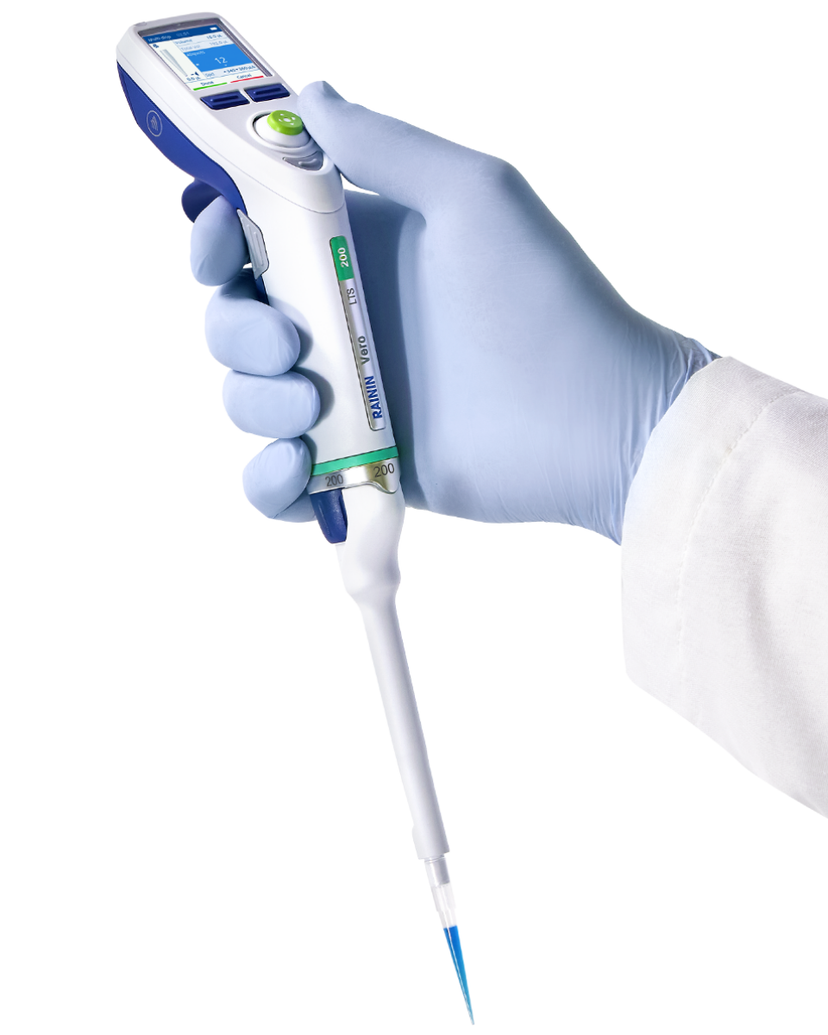
The Vero pipette from Rainin is available in single-channel and 8- and 12- channel multichannel models, with a volume range spanning 0.5 µL to 20 mL
“Users wanted the consistency and functionality of electronic pipettes, but many still preferred manual pipettes because they felt lighter and faster,” he says. “That drove a major focus on ergonomics, ease of use, and workflow efficiency with Vero. At the same time, improvements in motor control, battery technology, and software allowed us to significantly improve performance and usability compared to previous generations.”
Vero builds on Rainin’s E4 XLS+ line, but with several important differences. The first is accuracy. Vero electronic pipettes have up to 3.2 times lower systematic error specifications than other electronic pipettes, giving users greater confidence that the intended volume is delivered with each pipetting step.
Then there is weight. Vero is up to 30% lighter than its predecessor, helping to address one of the most common reservations about electronic pipettes, which is that they can feel heavier and bulkier than the manual instruments scientists are used to.
Less weight also means less strain, but Vero tackles ergonomics in a more targeted way too. Electronic pipettes can greatly reduce thumb strain by removing manual plunger movement, but many still rely on repeated thumb action to aspirate and dispense.
Vero gives users more choice. Aspiration and dispensing can be controlled by tapping the central joystick with the thumb, or by pressing one of the side-mounted trigger buttons with an index finger. Either of these actions can be used to commence a series of automatic timed dispenses. Depending on the user’s handedness and preference, the right- or left-side trigger can be enabled, while the other can be disabled to prevent accidental activation. For users carrying out long or repetitive workflows, this flexibility can greatly reduce the risk of hand fatigue.
Finally, Vero also ejects tips electronically, easing yet another prime source of thumb and hand fatigue.
Intuitive pipetting that feels natural from the first touch
The other challenge Vero tackles is ease of use. Electronic pipettes have sometimes carried a reputation for complexity, especially when users need to change volumes or move between modes.
“One traditional criticism of electronic pipettes is that they can feel slower or more complicated than manual pipettes,” explains Miller. “So, we spent a lot of time simplifying the interface and speeding up common actions like volume adjustment.”
The result is a completely redesigned interface with a graphical tile layout designed to keep common actions close to hand. With Vero, key information remains visible during pipetting, and users can move between settings and modes without digging through nested menus.
“Vero’s joystick-based interface allows very fast navigation and volume setting,” adds Miller. “We also added precise flow rate control in microliters per second, which is important for delicate samples, viscous liquids, and sensitive assays.”
Standardizing workflows while strengthening consistency
Ease of operation becomes even more important when a pipetting task has to be repeated, shared, or transferred. In many laboratories, the challenge is not only setting the right volume or flow rate once, but ensuring that the same parameters are used every time, regardless of who is holding the pipette.
“Another major focus was workflow standardization,” explains Miller. “With Vero, users can save protocols, organize methods by user or application, and lock settings when consistency is critical.”
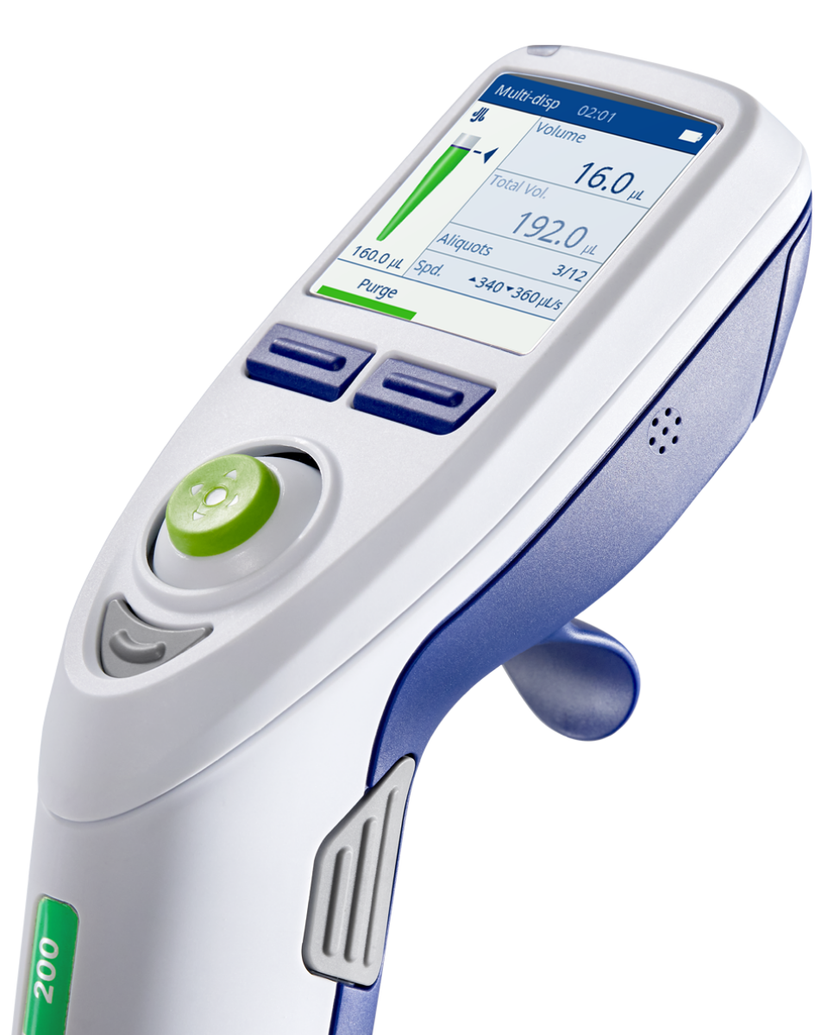
Vero displaying Multi-Dispense mode for repeated aliquoting from a single aspiration
Users can create and save protocols that include multiple steps, volumes, aspiration and dispense speeds, flow rates, mixing parameters, and more. Those protocols can draw on a range of operating modes designed for different types of liquid handling.
For straightforward tasks, Basic mode allows users to select a single volume and aspiration/dispense speed. More complex workflows can be handled through Advanced mode, which enables mixing and separate aspiration and dispensing speeds, while Multi-Dispense mode supports repeated aliquoting from a single aspiration with user-defined automatic dispense intervals. Manual mode simulates manual pipette operation through the joystick, and Reverse mode is available for applications involving dense or volatile liquids.
For repeated tasks, presets can save setup time while improving consistency between runs, users, and experiments. In shared or regulated environments, administrators can configure the pipette so that only approved presets are available, preventing users from modifying settings during operation. This helps ensure that validated methods are followed as intended, whether in a QC lab, production environment, or research group.
For laboratories working under Good Laboratory Practice (GLP), Good Manufacturing Practice (GMP), or internal standard operating procedures (SOPs), Vero also includes a GLP Alarms feature to ensure pipettes are used within defined calibration limits. Users can set the next calibration date, define a warning period before calibration is due, and enable automatic disablement once that date has passed.
Early praise from the bench
Since its launch, Vero has begun to attract the kind of feedback Rainin was hoping for: not simply that it performs well, but that it feels different from what many users expect of an electronic pipette.
“The feedback so far has been very positive, especially around ergonomics, weight, and ease of use,” says Miller. “Many users are surprised by how light Vero feels compared to traditional electronic pipettes.”
Feedback has been especially strong among users performing high-throughput or sensitive workflows, where comfort and consistency are king.
“We’ve received positive feedback from users running repetitive QC and molecular biology workflows who appreciate the consistency, electronic tip ejection, and precise flow rate control,” says Miller. “Customers working with small volumes and sensitive samples especially value the confidence that comes from highly repeatable liquid handling.”
The feedback so far has been very positive, especially around ergonomics, weight, and ease of use.
Brandon Miller, Senior Product Manager, METTLER TOLEDO Rainin
Where Vero fits best
The case for electronic pipetting is strongest where small differences matter, or where they can accumulate. A single pipetting step may seem minor, but repeated across a plate or a production workflow, small variations can quickly skew results and compromise whole experiments or batches.
That makes Vero most relevant for laboratories where precision and repeatability are part of the everyday routine. This includes biopharma, QC, assay development, molecular biology, analytical testing, and manufacturing environments, particularly where multiple operators may be carrying out the same workflow.
Manual pipettes will continue to be a mainstay of laboratory work. But for scientists who recognize the familiar frustrations of thumb strain, inconsistent technique, or method variability, electronic pipettes such as Vero offer a practical next step towards more consistent, comfortable, and controlled liquid handling.
Related products
Request Quote for All Products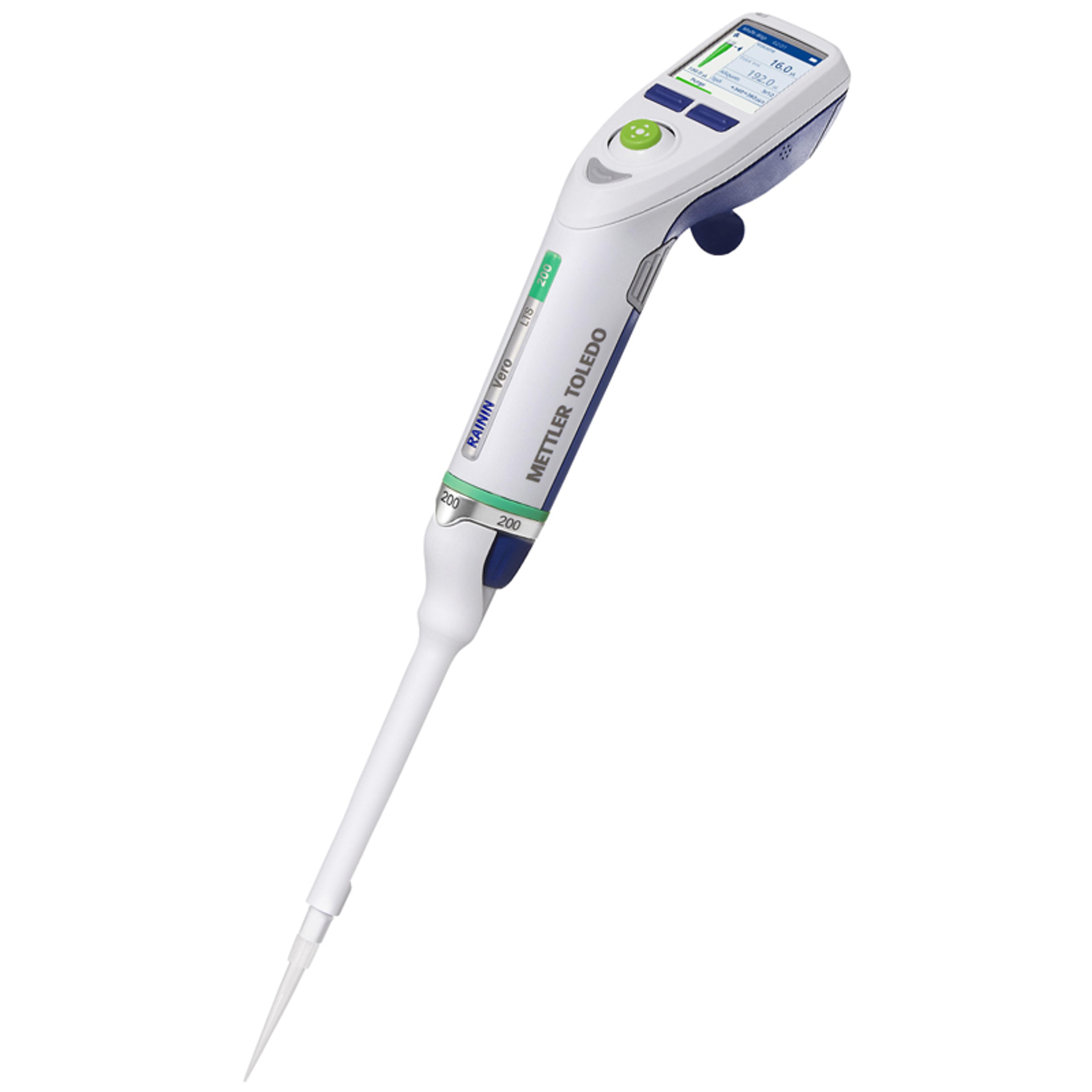
Rainin Vero Electronic Single Channel Pipettes
RaininRainin Vero™ electronic pipettes deliver confidence in every pipetting step with industry-leading accuracy, intuitive joystick navigation and customizable protocols. Designed for comfort and control, Vero reduces variability, protects workflows with secure pre-sets and GLP features, and streamlines everyday pipetting across a wide volume range.
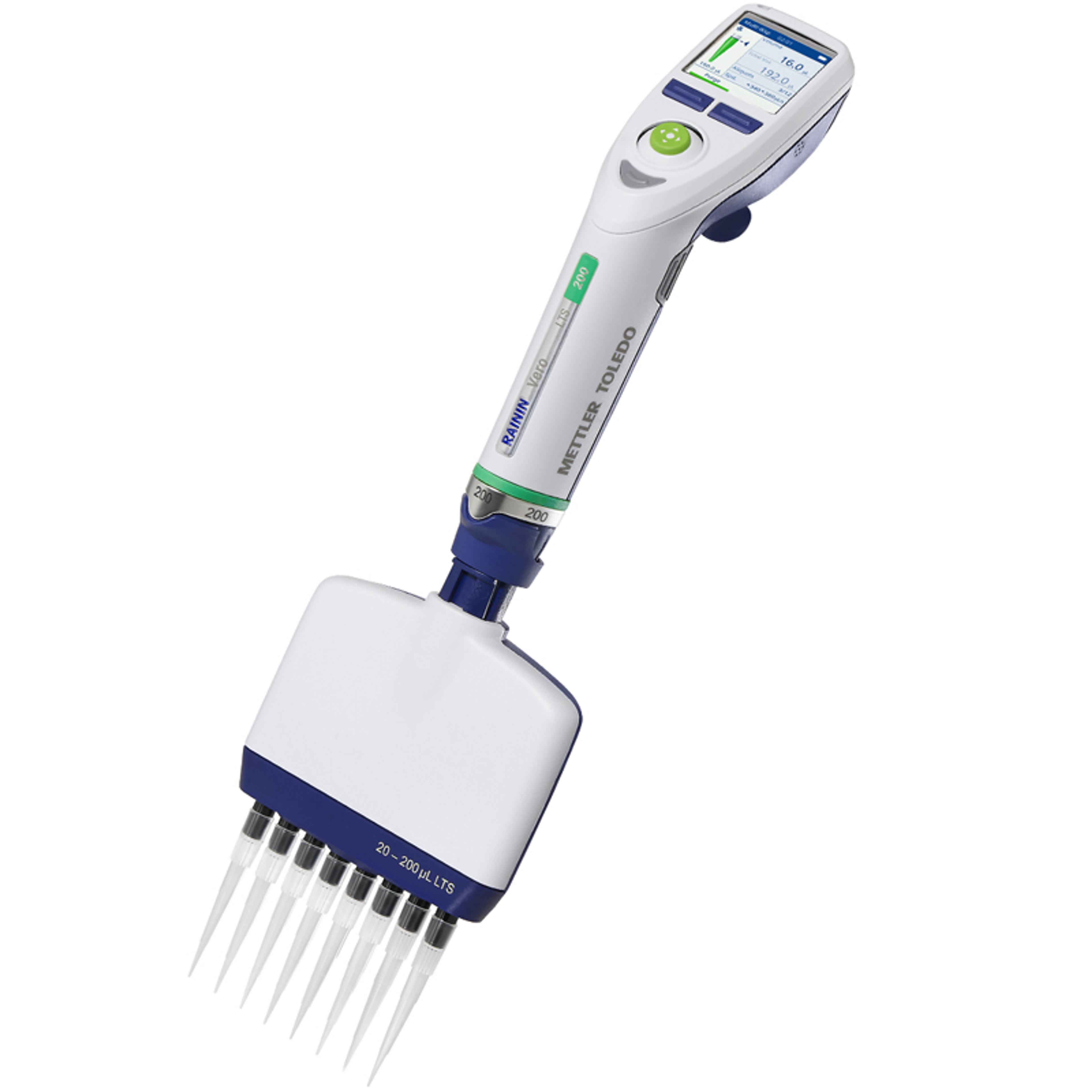
Rainin Vero Electronic Multichannel Pipettes
RaininRainin Vero™ multichannel electronic pipettes bring speed, consistency and control to plate-based workflows. With intuitive navigation, customizable presets and exceptional channel-to-channel performance, Vero reduces variability, improves reproducibility and streamlines high-throughput pipetting.
Links
Tags
Frequently asked questions
Show frequently asked questions
How do Vero electronic pipettes improve reproducibility compared to manual pipettes?
Vero electronic pipettes from METTLER TOLEDO Rainin mechanically control aspiration and dispensing, reducing user-dependent variability seen with manual pipettes. They offer up to 3.2× lower systematic error than other electronic pipettes, precise flow rate control in µL/s, and savable, lockable protocols. These features enhance reproducibility in sensitive workflows such as PCR, NGS, cell-based assays, QC, and biopharma applications.
What ergonomic advantages do Vero electronic pipettes offer for high-throughput laboratories?
Vero electronic pipettes are up to 30% lighter than their E4 XLS+ predecessors and remove manual plunger movement, reducing thumb strain and the risk of ‘pipettor’s thumb’. Users can control aspiration and dispense via a central joystick, side-mounted triggers, or automatic timed intervals. This flexibility, combined with reduced weight, helps minimize hand fatigue during repetitive QC, molecular biology, and manufacturing workflows.
How does the Vero electronic pipette support GLP, GMP, and standardized workflows?
Vero supports GLP, GMP, and SOP-driven labs by allowing users to save multi-step protocols with defined volumes, speeds, and mixing parameters, and to organize methods by user or application. Administrators can lock presets so only approved methods are used. The GLP Alarms feature lets labs set calibration dates, warning periods, and automatic disablement, ensuring pipettes operate within defined calibration limits.