
Advances in Microbiome Research: SelectScience Special Feature
From NGS-based methods to the world’s largest crowd-sourced microbiome project, find out the latest techniques and technologies advancing the microbiome field
3 Mar 2020
The microbiome has received increasing attention over the past decade, from scientists exploring the gut microbiome to understanding how our microorganisms can influence physiological and psychological health. From NGS-based methods to why we are what our microbes eat, find out the latest developments, resources, and technologies revolutionizing the microbiome field.
eBook: Genetic testing basics for health science professionals
Find out the latest approaches for effective microbiome analysis and discover how NGS-based methods can help you overcome challenges associated with conventional microbiome analysis, in this eBook from Tecan. Download now>>
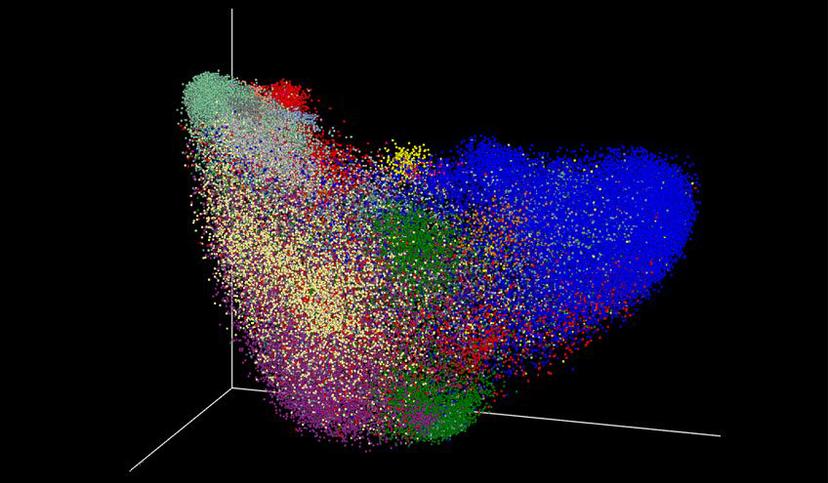
Article: What’s behind the world’s largest crowd-sourced microbiome project?
Take a sneak-peek into what goes on inside one of the busiest microbiome labs in the world. We uncover the technologies enabling this high-throughput research, and finally, what happens to all the data collected from participating citizens. Read now>>
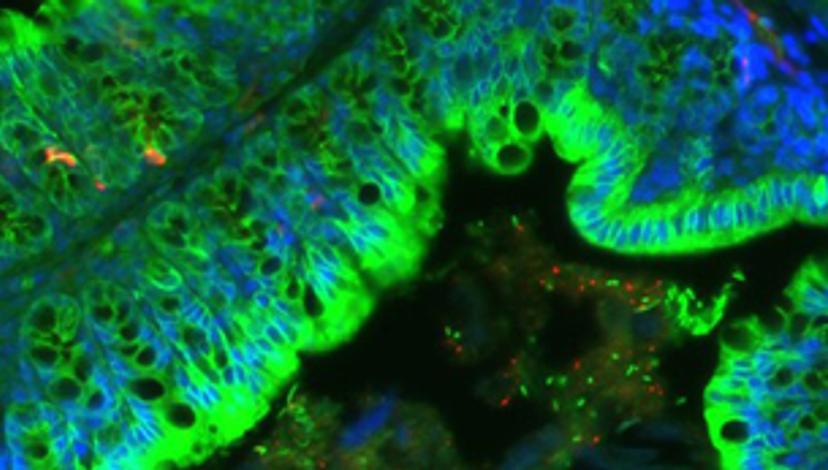
Article: The Diet Bacteria: Why we are what our microbes eat
Pioneering microbiome scientist Prof. Patrice Cani reveals how his work has unearthed some of the most groundbreaking discoveries in the world of gut microbes, and how they influence human physiology. Read now>>
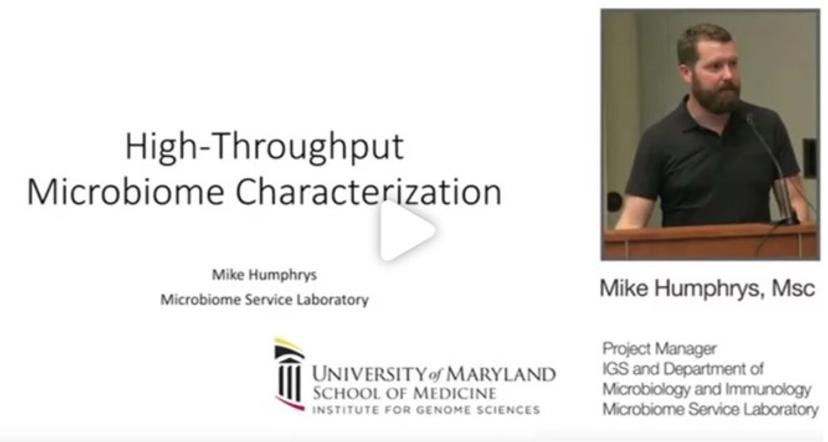
Video: High-Throughput Microbiome Characterization
In this video, watch Mike Humphrys, project manager at the University of Maryland's Microbiome Service Laboratory, describe a novel automated workflow for 16S rRNA sequencing using the mosquito HV genomics liquid handling platform from SPT Labtech. Watch video>>
Downloadable resources
- Microerobic fermentation within gut physiological conditions:Learn how microaerobic fermentation of a probiotic strain, Lactobacillus acidophilus, can be performed at very low oxygen levels to mimic the conditions of human gut microbiome. Download method>>
- Standardizing microbiome research - culture from discovery to production: In this poster, Eppendorf outlines a microbiome culture workflow covering the diverse culturing needs of gut microbes (including oxygen, pH, and temperature control) and the scalable bioprocess systems that are available for culture research to production. Download method>>
- What to look for in your next microscope: This exclusive how-to-buy eBook guide provides you with all the information you need to make the right microscopy purchasing decisions for your lab. Download now>>
Video interviews with leading scientists
- Discover the link between the microbiome and disease: Dr. Sofia Forslund at ECRC discusses the surprising relationship between the human microbiome and cardiovascular disease, which could soon help lead to personalized therapeutics. Watch now>>
- Manipulating Gut Microbiota to Alleviate the Effects of Stress-Related Disorders: In this video, Dr Gerard Clarke of the Department of Psychiatry and Neurobehavioural Science at University College Cork, describes how gut bacteria can affect brain and behavior. Dr Clarke discusses how a novel probiotic has shown beneficial effects in alleviating stress and anxiety in pre-clinical testing and his aim to translate this research into a clinical setting. Watch now>>
- Rapid diagnostic systems for bacterial infections: Prof. Pak Kin Wong, Professor of Biomedical Engineering, Mechanical Engineering, and Surgery at the Pennsylvania State University, discusses his research into the development of comprehensive microbiology analysis systems designed to rapidly determine the presence of bacteria within samples. Watch video>>
- Mass Spectroscopy helps scientists elucidate bacterial microbiomes: John McLean, of Vanderbilt University, describes the new 'Fight-Club' mass spectrometry technique, which will help elucidate new drug molecules. This technique has been designed to utilize the evolutionary pressure placed on cave-dwelling bacteria causing them to have developed chemicals to fight off predatory bacteria, which scientists hope could be used as drug targets. Watch now>>
References
McDonald D, Vázquez-Baeza Y, Koslicki D, McClelland J, Reeve N, Xu Z, Gonzalez A, Knight R. Striped UniFrac: enabling microbiome analysis at unprecedented scale. Nat Methods. 2018 Nov;15(11):847-848.
Related products
Request Quote for All Products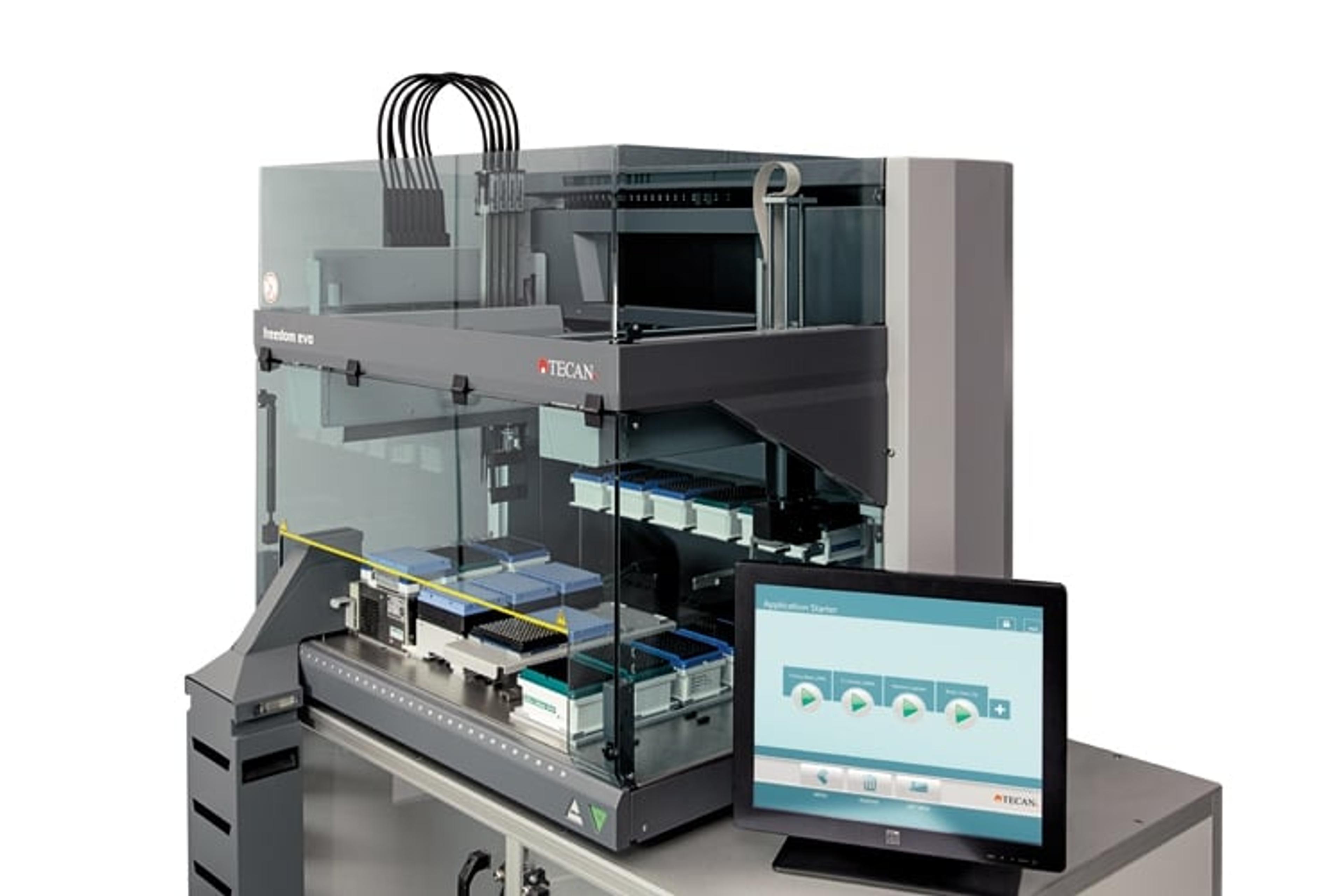
Freedom EVO® NGS Workstation
TecanThe Freedom EVO NGS workstation combines Tecan’s expertise in laboratory automation with sequencing-verified protocols to offer hassle-free NGS sample prep at the touch of a button. NGS is the fastest growing application in genomics, yet many sample preparation protocols can be labor intensive and time consuming. The Freedom EVO NGS workstation has been developed to offer robust and reliable automation of library preparation, quantification, qPCR set-up, normalization, pooling and capture. Offering user-friendly, walkaway automation at the touch of a button, it eliminates the need for extensive manual processing, helping to simplify day-to-day activities and ensure high quality results. Freedom EVO NGS workstation includes all the modules required for precise set-up of NGS sequencing libraries and, with one-touch method selection and step-by-step user instructions via Tecan’s intuitive TouchTools™ graphical interface, it reduces hands-on time and increases productivity – even for inexperienced users. The system’s key benefits include: Precise pipetting – from 1,000 µl down to 0.5 µl using eight pipetting channels and innovative air displacement pipetting technology Integrated temperature control – to keep reagents cool and provide optimal enzymatic conditions Efficient bead clean-up – using a 96-position magnetic plate separator (Alpaqua 96S Super Magnet Plate) Walkaway processing – with on-board consumables storage for long unattended runs Straightforward operation – with step-by-step set-up instructions To further streamline processing, Tecan has worked with leading industry partners to supply ready-to-run protocols for a number of popular NGS technologies. Protocols for Illumina’s TruSeq™ Nano DNA, TruSeq Stranded mRNA* and Nextera™ Rapid Capture Exome* chemistries have been developed in collaboration with Illumina and the High-Throughput Sequencing Facility, University of North Carolina at Chapel Hill, with thorough testing and sequencing data analysis to ensure high quality results. In addition, the system is supplied with protocols covering the Ion Torrent™ library preparation workflow for Ion AmpliSeq™ panels, developed and supported by Thermo Fisher Scientific. *Illumina-qualified protocol.