
How pTau 217 and NfL blood-based biomarkers are reshaping diagnosis in Alzheimer’s and neurodegenerative disease
See why accessible, pathology-informed testing is becoming increasingly important for earlier diagnosis, patient stratification, and more efficient neurological care
21 Aug 2026

Dr. Jessie Theuns and Dr. Peter Jagiello, Neuro Marketing Managers EMEA, Fujirebio
The field of neurodegenerative disease diagnostics is entering an exciting new phase. For many years, conditions such as Alzheimer’s disease were diagnosed largely through clinical assessment, often by ruling out other possible causes of cognitive decline. While cerebrospinal fluid testing and PET imaging have brought greater insight into underlying pathology, these methods remain difficult to scale broadly across healthcare systems due to cost, infrastructure requirements, and patient acceptability.
That is now becoming a more urgent problem. As disease-modifying therapies begin to reshape expectations around Alzheimer’s disease and related conditions, clinicians are under growing pressure to identify patients earlier and with greater biological confidence. Blood-based biomarkers are increasingly being seen as a practical way to help close that gap.
For Fujirebio, this shift reflects a broader move away from symptom-led evaluation and towards earlier, biomarker driven assessment. “What truly is needed is a shift towards widely accessible, pathology-informed diagnostics that can be implemented early in the patient journey to support faster, more confident, and more equitable clinical decision-making,” says Dr. Peter Jagiello, Neuro Marketing Manager at Fujirebio Europe N.V.
Why earlier diagnosis of neurodegenerative disease is still so difficult
One of the central challenges in neurodegenerative disease is that symptoms are rarely specific in the early stages. Cognitive decline, behavioral change, and functional impairment can overlap across different neurological and psychiatric conditions, making early diagnosis difficult.
Until recently, this often meant that Alzheimer’s disease was diagnosed relatively late, as Dr. Jagiello explains, “many patients are still diagnosed too late, often after significant neurodegeneration has already occurred, reducing the opportunity for timely intervention.”
The biological timeline of disease makes this especially problematic. In Alzheimer’s disease, pathological changes may begin long before symptoms emerge. “The presence of Alzheimer’s disease pathological changes can develop up to two decades before symptoms appear,” Dr. Jagiello notes, underlining why earlier detection has become such an important clinical goal.
Why blood-based testing matters now
The urgency around accessible diagnostics has increased dramatically with the emergence of new treatments in Alzheimer’s disease. These therapies are changing how diagnosis is approached because they require evidence of the underlying pathology, not simply a clinical suspicion based on symptoms.
“The emergence of disease-modifying therapies, particularly in Alzheimer’s disease, is fundamentally changing expectations towards earlier and biologically confirmed diagnosis,” says Dr. Jessie Theuns, Neuro Marketing Manager at Fujirebio Europe N.V. In the case of anti-amyloid therapies, confirmation of amyloid pathology is essential before treatment can be considered.
This is where blood-based biomarkers are beginning to play a much more practical role. Plasma pTau 217, for example, is increasingly being recognized as a relevant marker for amyloid pathology and as a useful tool for triage in clinical pathways. “This blood-based biomarker can be measured using the recently CE-marked Lumipulse® G pTau 217 Plasma assay and is a good example of a novel biomarker transitioning from an exploratory tool to a practical clinical solution,” Dr. Theuns says.
Plasma pTau 217 stands out because it brings together strong diagnostic performance, biological relevance, and practical accessibility. Unlike broader neurodegeneration markers, pTau 217 is closely linked to amyloid and tau pathology and has shown strong concordance with amyloid-PET imaging and CSF amyloid and tau measurements.
pTau 217 is emerging as a key biomarker for current Alzheimer’s blood-based diagnostics, whereas other biomarkers may provide complementary information.
This distinction is becoming increasingly important as disease-modifying therapies enter clinical pathways. Plasma pTau 217 could support first-line triage in specialist settings, helping identify patients who may be eligible for currently approved therapies and those who require confirmatory PET or CSF testing. When combined with additional clinical information, such as APOE4 zygosity, pTau 217 testing could help support more efficient patient selection, reduce unnecessary specialist procedures, and improve confidence in pathology-informed decision-making.
The wider significance is that diagnostics are no longer evolving in isolation. Therapeutic progress is now actively increasing demand for scalable biological testing. As Dr. Jagiello puts it, “this convergence of therapeutic innovation and diagnostic readiness is creating immediate pressure on healthcare systems to implement scalable, accessible testing solutions.”
Moving beyond a single biomarker view in Alzheimer’s diagnosis
At the same time, Fujirebio is clear that the future of neurodiagnostics will not be defined by one marker alone. As the field matures, the emphasis is shifting towards more integrated and personalized biomarker strategies.
“Today, blood-based biomarkers such as pTau, amyloid ratios, neurofilament light chain, and GFAP have reached a level of maturity where they are now supported by scientific evidence and evolving guidelines,” says Dr. Jagiello. He also stresses, however, that understanding patient needs remains crucial. “It is becoming increasingly clear that information about individual patients and their specific health conditions is important.”
In Alzheimer’s disease, this could mean combining pathology-relevant biomarkers with additional patient-level information, such as APOE status, to support treatment decisions, assess risk, and provide appropriate monitoring as amyloid-targeting therapies enter clinical pathways. “If we can better characterize a patient’s ‘brain state’ using a biomarker panel, clinical assessment will become more precise, as the focus shifts to the individual patient,” says Dr. Theuns.
That wider move towards multimodal biomarker approaches is becoming increasingly relevant across neurology, particularly as clinical trials move earlier in disease and healthcare systems seek more efficient ways to stratify patients.
A broader role across neurological disease
Although Alzheimer’s disease is currently driving much of the momentum, blood-based biomarkers are not limited to a single disease area. Fujirebio’s research points to a broader opportunity across neurodegenerative, inflammatory, and traumatic neurological conditions.
This is particularly clear in the case of NfL. Unlike pTau 217, which is more closely linked to Alzheimer’s-related pathology, NfL reflects neuro-axonal injury more broadly. That gives it clinical relevance across multiple neurological settings.
“The key value of the recently CE-marked Lumipulse® G NfL Blood assay is that it translates a well-established biomarker of neuro-axonal injury into a standardized, fully automated routine-laboratory format,” says Dr. Jagiello. “Unlike disease-specific markers such as pTau 217, NfL provides a cross-disease signal of active neuronal damage”.
This broader biological relevance means NfL can potentially support clinical pathways in conditions including Alzheimer’s disease, multiple sclerosis (MS), amyotrophic lateral sclerosis (ALS), and traumatic brain injury. Rather than functioning as a disease-defining test on its own, it contributes an objective readout of ongoing neuronal damage that can add depth to the clinical picture.
What makes Lumipulse G NfL Blood clinically useful?
For Fujirebio, the importance of the Lumipulse® G NfL Blood assay lies not just in the biomarker itself, but in how it is delivered. Moving a biomarker from research into routine care requires standardization, automation, throughput, and reproducibility across laboratories.
“The assay’s combination of a broad clinical intended purpose and routine-laboratory compatibility,” is one of the key factors that early adopters are responding to, says Dr. Jagiello. This is helping laboratories integrate the assay into existing workflows while reducing dependence on research-use-only methods.
That said, Fujirebio does not position NfL as a standalone answer. Dr. Jagiello is clear that interpretation is central to clinical value. “Its real clinical impact comes from being embedded into structured interpretation frameworks, including age-adjusted reference values and longitudinal monitoring, rather than being used as a standalone diagnostic test.”
In that sense, the assay is most useful when it forms part of a layered and clinically contextualized decision-making process. It can support differentiation, prognosis, and monitoring, but only when interpreted within the right framework.
What early adopters are showing with blood-based NfL testing
Feedback from early users suggests that implementation depends as much on interpretation support as on analytical performance. Because NfL is not disease-specific, laboratories and clinicians need clear guidance on how to use the results meaningfully.
“Early adopters indicate that the strongest impact on real-world implementation for NfL comes from the assay’s combination of a broad clinical intended purpose and routine-laboratory compatibility,” says Dr. Jagiello. Users also see value in the flexibility of the assay across multiple care settings, including memory clinics, MS clinics, and ALS centers.
From biomarker discovery to routine neurodegenerative disease testing
That broader implementation challenge sits behind Fujirebio’s Neuro Expert Toolbox, or NExT, framework. Successful biomarker adoption requires support across the full pathway, from discovery and selection through to assay development and routine practice.
“NExT reflects the holistic understanding that successful biomarker adoption requires an end-to-end framework,” says Dr. Jagiello. “Unlike many other diagnostic companies, we start with researching the biology of biomarkers, defining their potential in different clinically relevant contexts of use, and finally bringing a careful selection of those into clinical routine.”
This end-to-end framing is important because neurological biomarkers often face significant barriers between scientific promise and real-world use. Analytical performance alone is not enough; biomarkers must be interpretable, reproducible, clinically relevant, and practical for routine labs to adopt.
A more scalable future for neurodiagnostics
If blood-based biomarkers are adopted more widely in neurological disease care, the implications could be significant for both patients and healthcare systems. At the patient level, they could support earlier diagnosis, better counseling, improved care planning, and more equitable access to treatment evaluation. At the system level, they could help create more efficient diagnostic pathways by reserving specialist procedures such as PET and CSF for the patients most likely to benefit.
“Instead of sending all patients through complex and capacity-limited diagnostic pathways, a layered approach can be implemented,” says Dr. Jagiello, “starting with simple tests, combined with clinical examination, and reserving specialized procedures for selected cases.”
That kind of tiered strategy may prove increasingly important as biologically driven neurology care becomes more realistic. Blood-based biomarkers are not replacing every specialist tool, but they are beginning to provide something the field has dreamt of for a long time: an accessible route into earlier, more informed, and more scalable diagnostic decision-making.
Related products
Request Quote for All Products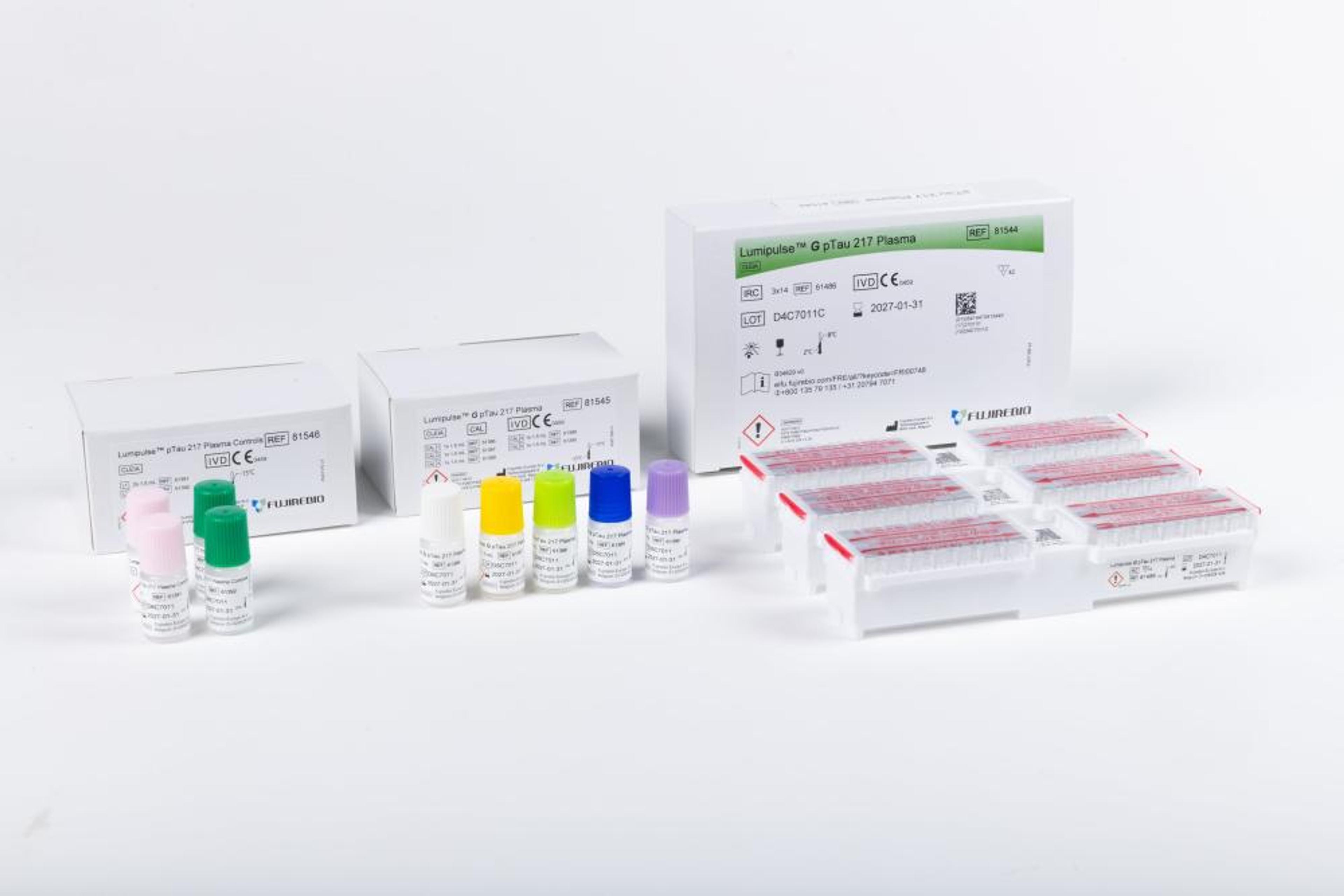
Lumipulse® G pTau 217 Plasma (CE marked (IVDR))
FujirebioLumipulse G pTau 217 Plasma is a test for in vitro diagnostic use with the automated LUMIPULSE G System for the quantitative measurement of Tau phosphorylated at threonine 217 (pTau 217) in human plasma (K2EDTA).
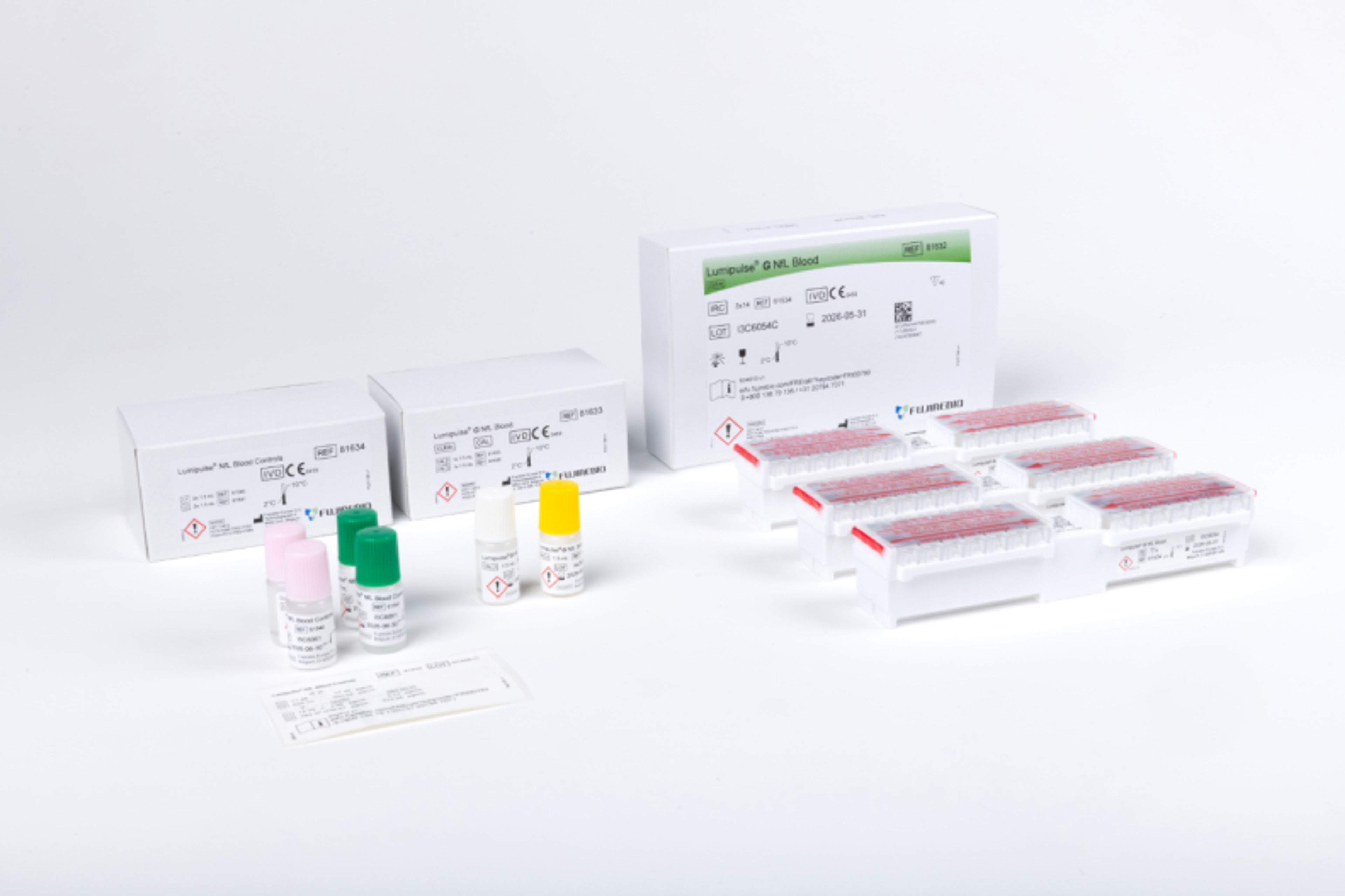
Lumipulse® G NfL Blood (CE marked (IVDR))
FujirebioLumipulse G NfL Blood is a quantitative test for in vitro diagnostic use with the automated LUMIPULSE G System for the measurement of neurofilament light chain (NfL) in human blood (serum/plasma) in patients with neurological diseases.
Links
Related content

Fujirebio integration of ADx NeuroSciences expands neurodiagnostic biomarker capabilities
Fujirebio Europe N.V. explains how the full integration of ADx NeuroSciences strengthens its end-to-end model for neurological biomarker development, from early discovery to routine clinical application

Fujirebio Europe secures CE mark for Lumipulse G pTau 217 Plasma assay under IVDR
Lumipulse G pTau 217 Plasma test supports identification of amyloid pathology in patients with cognitive decline

Fujirebio receives FDA clearance for plasma test to detect Alzheimer’s-linked amyloid pathology
The test operates using the company’s fully automated Lumipulse G1200 instrument system
Tags
Frequently asked questions
Show frequently asked questions
How is Fujirebio using blood-based biomarkers like plasma pTau 217 to improve early Alzheimer’s disease diagnosis?
Plasma pTau 217, measurable with the CE-marked Lumipulse® G pTau 217 Plasma assay, is closely linked to amyloid and tau pathology and shows strong concordance with amyloid-PET and CSF markers. Fujirebio positions it as a first-line triage tool in specialist settings to identify patients likely to have Alzheimer’s pathology, guide selection for PET or CSF testing, and support access to disease-modifying therapies.
What makes the Lumipulse G NfL Blood assay clinically valuable across multiple neurological diseases?
The CE-marked Lumipulse® G NfL Blood assay translates neurofilament light chain, a marker of neuro-axonal injury, into a standardized, fully automated routine-laboratory format. It provides a cross-disease signal of active neuronal damage relevant to Alzheimer’s disease, multiple sclerosis, ALS, and traumatic brain injury, and is most useful within structured interpretation frameworks using age-adjusted reference values and longitudinal monitoring.
What is Fujirebio’s NExT framework and how does it support scalable neurodegenerative disease diagnostics?
Fujirebio’s Neuro Expert Toolbox (NExT) is an end-to-end framework that supports biomarker adoption from biological research and clinical context definition through to assay development and routine implementation. By focusing on interpretability, reproducibility, and routine-lab compatibility, NExT helps translate biomarkers like pTau 217 and NfL into scalable, pathology-informed diagnostics that enable earlier, more equitable neurodegenerative disease care.