Fujirebio integration of ADx NeuroSciences expands neurodiagnostic biomarker capabilities
Fujirebio Europe N.V. explains how the full integration of ADx NeuroSciences strengthens its end-to-end model for neurological biomarker development, from early discovery to routine clinical application
13 Jul 2026
Fujirebio’s full integration of ADx NeuroSciences marks a significant step in the evolution of neurological diagnostics, bringing early biomarker discovery and clinical translation closer together.
Fujirebio Europe N.V. has formally integrated ADx NeuroSciences N.V. into its organization as of April 1, 2026. This completes a process that began with the acquisition of ADx NeuroSciences in June 2022 and strengthens a partnership designed to benefit both organizations, as well as their partners, collaborators, and customers.
ADx NeuroSciences, widely recognized for its early-stage neurodegenerative fluid biomarker development, will cease to operate as a separate legal entity from April 2026. Its teams and capabilities will continue as an integral part of Fujirebio’s activities in neurological diagnostics, contributing to Fujirebio’s biomarker pipeline and expanding the combined organization’s capability across the biomarker development pathway, from early discovery through to routine clinical application.
A stronger end-to-end model for neurological diagnostics
The strategic value of the integration lies in how the two organizations complement each other’s competencies. Fujirebio is renowned for its strength in taking biomarkers through clinical evidence generation, regulatory approval, and global commercialization at scale. ADx NeuroSciences’ expertise is focused on the earlier stages, including identifying and developing novel biomarker candidates across neurodegenerative disease fields such as Alzheimer’s disease, Parkinson’s disease, and motor neuron disease. This includes exploring clinical potential through research programs and consortia, and building close relationships with academic institutions and pharmaceutical partners that can feed new opportunities into the pipeline.
Fujirebio’s Neuro Expert Toolbox, or NExT, provides a framework for understanding how these capabilities fit together. The NExT model organizes biomarker development into four sequential chambers: Concept, Explorer, Incubation, and Routine. Together, these cover the trajectory from fundamental biomarker identification to clinical implementation.
Within this model, the former ADx NeuroSciences team strengthens Fujirebio’s ability to generate and mature new biomarker programs, while Fujirebio’s broader organization provides the development, regulatory, and commercial infrastructure needed to bring the most promising biomarkers closer to clinical application. In practical terms, this means stronger capacity to move innovative biomarker ideas forward in a structured and continuous way.
A prime example of the NExT funnel in practice is Fujirebio’s new DDC, or DOPA decarboxylase, assay. This has progressed from early exploratory work towards an Xplorer assay and is now moving towards becoming a market-ready research-use-only assay.
A wider influence across R&D, clinical evidence, and CDMO partnerships
ADx NeuroSciences’ contribution to the combined organization extends beyond research and development. Fujirebio operates through what it describes as a “virtuous circle” of innovation, proof, and global expansion. This includes developing biomarkers, establishing clinical value using its proprietary Lumipulse® technology, and expanding access through partnerships, including collaborations with other technology providers in the field.
Specifically, at the level of Fujirebio’s CDMO (Contract Development and Manufacturing Organization) business, through which the company supplies reagents to partner companies worldwide rather than restricting its innovations to its own platform. In this context, ADx NeuroSciences’s proprietary antibody library of novel biomarkers significantly expands the portfolio available to partners.
Fujirebio’s open business model, based on sharing innovation across platforms and with partners throughout the industry rather than locking content to a single system, was a key strategic consideration behind the integration.
Continuity of team and approach
For existing ADx NeuroSciences partners and customers, the changes on April 1 are primarily administrative: contact details and banking information will update to reflect the Fujirebio entity, and the ADx NeuroSciences name and logo will no longer appear on correspondence or materials. The ADx NeuroSciences website will redirect to Fujirebio, with a dedicated page providing transition information and links to relevant resources.
The ADxPLORER® product line – a range of research-use-only assays for novel biomarker evaluation in dedicated projects, running on the LUMIPULSE® G 1200 platform – will continue under that name.
Continuity is therefore a central part of the integration. The people, knowledge base, partner network, and scientific approach will remain in place, now supported by Fujirebio’s broader scale and infrastructure.
The Fujirebio Neuro Center of Excellence
The institutional home for the combined team’s collaborative approach is the Fujirebio Neuro Center of Excellence. It embodies a model of engagement that distinguishes Fujirebio in the field: continuous interaction with key opinion leaders, pharmaceutical partners, academic institutions, and memory clinics.
This model also reflects a deliberate openness to scientific risk – a willingness to invest in novelty by exploring biomarker candidates whose commercial potential is uncertain, but whose scientific interest is real. It is an approach that more commercially constrained organizations find difficult to sustain seen the economical uncertainty. For Fujirebio, an R&D driven organization, it is an important differentiator and an expression of the open business model with a focus on innovation that the integration further strengthens.
From Alzheimer’s disease to the broader neurological spectrum
The integration comes at a time of considerable momentum in neurological diagnostics. Fujirebio’s FDA-cleared Lumipulse® G pTau 217/β-Amyloid 1-42 Plasma Ratio test, designed to identify amyloid pathology associated with Alzheimer’s disease, and the CE-IVDR certification of the Lumipulse® G NfL Blood assay, a marker of neuro-axonal damage in various neurological conditions, are two examples of the progress that can emerge when scientific innovation is translated into clinically meaningful applications.
The ambition now is to extend the same model more broadly across the neurological spectrum. Parkinson’s disease, multiple sclerosis, motor neuron diseases, and psychiatric disorders all represent areas of significant unmet diagnostic need, where blood-based biomarkers could be transformative.
Before the acquisition, ADx NeuroSciences had ongoing developments in these areas through academic and pharmaceutical partnerships. Now, with Fujirebio’s infrastructure, those programs have access to the resources needed to scale biomarker development and support faster decision-making based on clinical demand.
The goal is to become a definitive content partner for neurological diagnostics across the full disease spectrum, from early discovery through to routine clinical application, and across major platforms in the field.
In summary
The full integration of ADx NeuroSciences into Fujirebio is more than a legal or organizational change. It creates a more connected and capable model for neurological biomarker innovation.
ADx NeuroSciences’ expertise in early discovery and assay development remains in place, while Fujirebio’s scale in clinical validation, regulatory execution, and commercialization adds the downstream capabilities needed to bring more innovation forward. For partners and customers, the result is continuity. For the field, it is a stronger platform for translating novel neurological biomarkers into real-world impact.
For enquiries relating to the integration, please contact fnce@fujirebio.com or visit www.fujirebio.com/adx.
Related products
Request Quote for All Products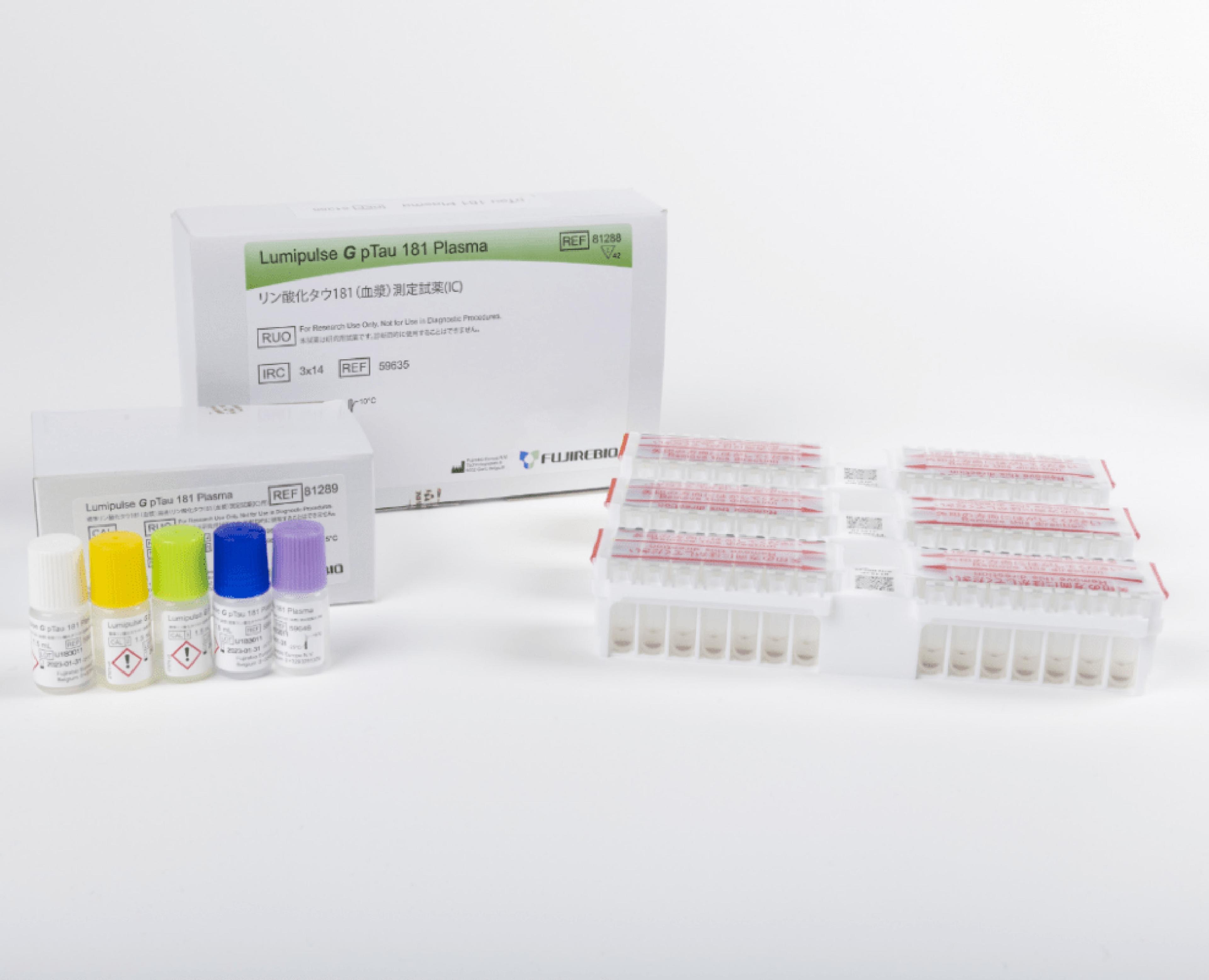
Lumipulse® G pTau 181 Plasma (RUO)
FujirebioImmunoassay to be used with the automated LUMIPULSE G System for the quantitative measurement of Tau phosphorylated at threonine 181 (pTau 181) in human plasma.
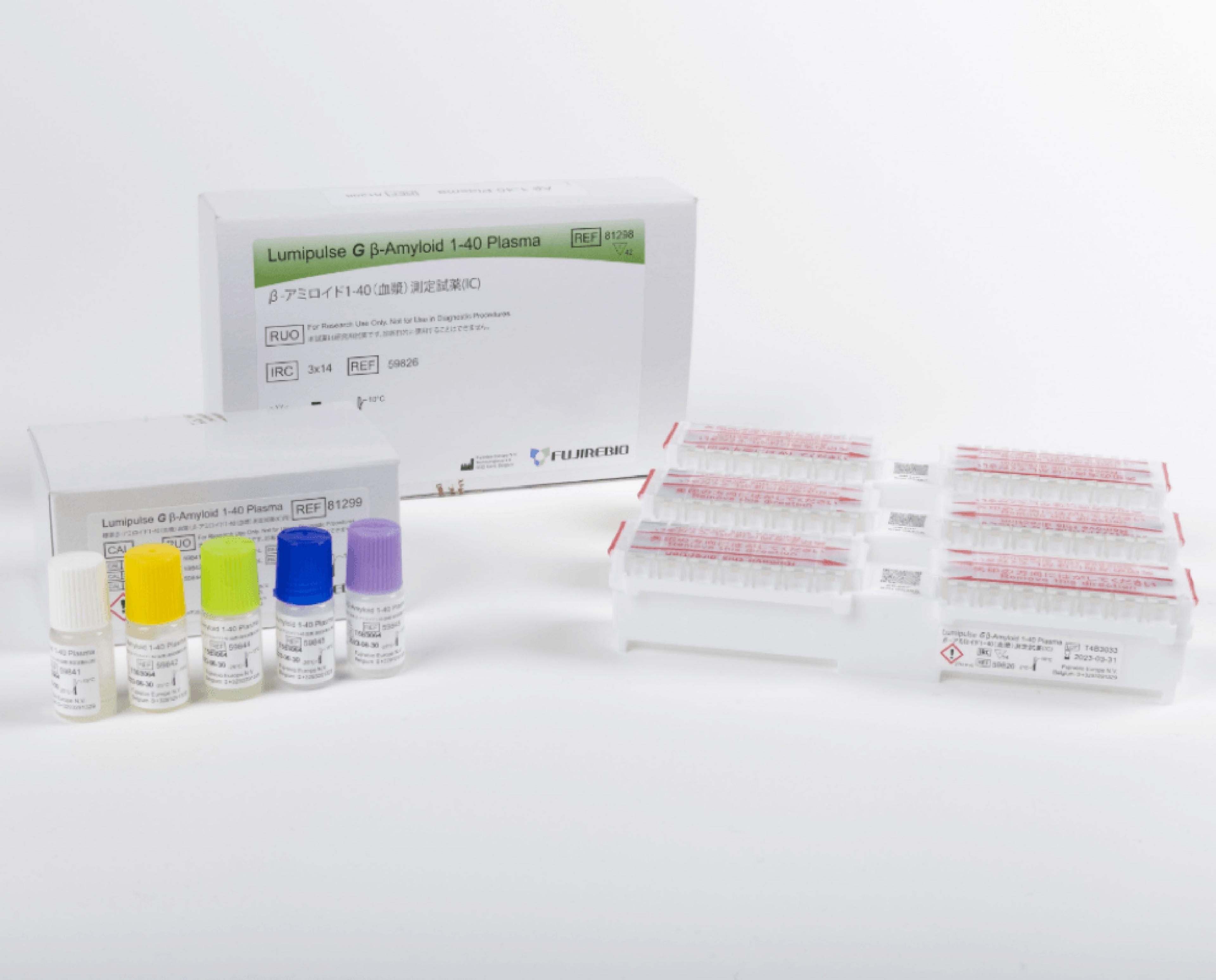
Lumipulse® G β-Amyloid 1-40 Plasma (RUO)
FujirebioImmunoreaction cartridges to be used with the automated LUMIPULSE G System for the quantitative measurement of β-amyloid1-40 in human plasma.
Links
Tags
Frequently asked questions
Show frequently asked questions
How does the integration of ADx NeuroSciences into Fujirebio enhance neurological biomarker development?
Fujirebio’s full integration of ADx NeuroSciences, effective April 1, 2026, combines early-stage neurodegenerative biomarker discovery with Fujirebio’s strengths in clinical validation, regulatory approval, and global commercialization. Within the Neuro Expert Toolbox (NExT) framework, the former ADx NeuroSciences team boosts Fujirebio’s capacity to move biomarkers from concept through routine clinical application, strengthening an end-to-end model for neurological diagnostics.
What role do Fujirebio’s Lumipulse® assays and ADx NeuroSciences’ antibody library play in neurological diagnostics?
Fujirebio’s Lumipulse® G pTau 217/β-Amyloid 1-42 Plasma Ratio test and Lumipulse® G NfL Blood assay exemplify successful translation of neurological biomarkers into clinical use. ADx NeuroSciences’ proprietary antibody library expands Fujirebio’s biomarker portfolio, particularly for neurodegenerative diseases such as Alzheimer’s disease, Parkinson’s disease, and motor neuron disease, supporting both Fujirebio’s own platforms and its global CDMO reagent partnerships.
How will existing ADx NeuroSciences partners and customers be affected by the Fujirebio integration?
From April 1, 2026, ADx NeuroSciences ceases as a separate legal entity, with administrative details such as contacts and banking shifting to Fujirebio Europe N.V. The ADxPLORER® research-use-only assays on the LUMIPULSE® G 1200 platform continue under the same name. The ADx NeuroSciences website redirects to Fujirebio, with transition information at www.fujirebio.com/adx, while teams, expertise, and partner networks remain in place.