
How AI can help predict and improve individual drug responses
29 Jun 2026
In this SelectScience interview, Dr. Brinton Seashore-Ludlow, Senior Research Specialist at Karolinska Institutet, discusses her research on improving individualized drug responses using advanced pre-clinical models. She explains how her team studies drug-response dynamics over time and integrates AI and machine learning into automated workflows to make analyses faster and more interpretable. The work focuses on closing the translational gap by developing more humanized, representative models that better predict which approved drugs will work for specific patients.
This SelectScience interview was filmed at SLAS Europe 2026.
Video transcript
Show transcript
The overall mission of our work is trying to understand why some patients respond to drugs and others do not, and we’re looking for ways to improve the response and be able to match that to individual patients in advance. There are several projects that we’re working on right now that we find really exciting. One of those includes trying to understand how dynamics of response changes over time, so incorporating the time dimension. The other projects that we’re working on look at how we can incorporate AI and machine learning into our automation to make things faster and more interpretable. There are many challenges in individualizing patient care on the clinical side and since I work on the pre-clinical side what we try to work on is trying to understand which drugs even though they’re approved for a specific indication actually work in individual patients and if we can predict that. We don’t have those tools yet and often that’s because we don’t have the right models to predict drug response. I think the translational gap has historically been a very big problem and so bringing more humanized models into pre-clinical and clinical development are very important because it’s where we hopefully will get more predictivity. This is one of the things we don’t have today. Many of the times we cannot predict drug response in the models that we’re using. So being able to build either more representative models, so incorporating more different cell types is important, or being able to use AI to enhance the responses that we’re getting so that we can better understand them is important. The most exciting parts of the next steps for the future of my work are related to how we integrate the AI and how we use that to better interpret what we’re doing, but also being able to take big data. to understand drug response over time. And that is really only possible with AI because you need to have these types of tools to curate that data, to understand that data that we can’t, as humans do, like with analysis methods currently.
What does this video cover?
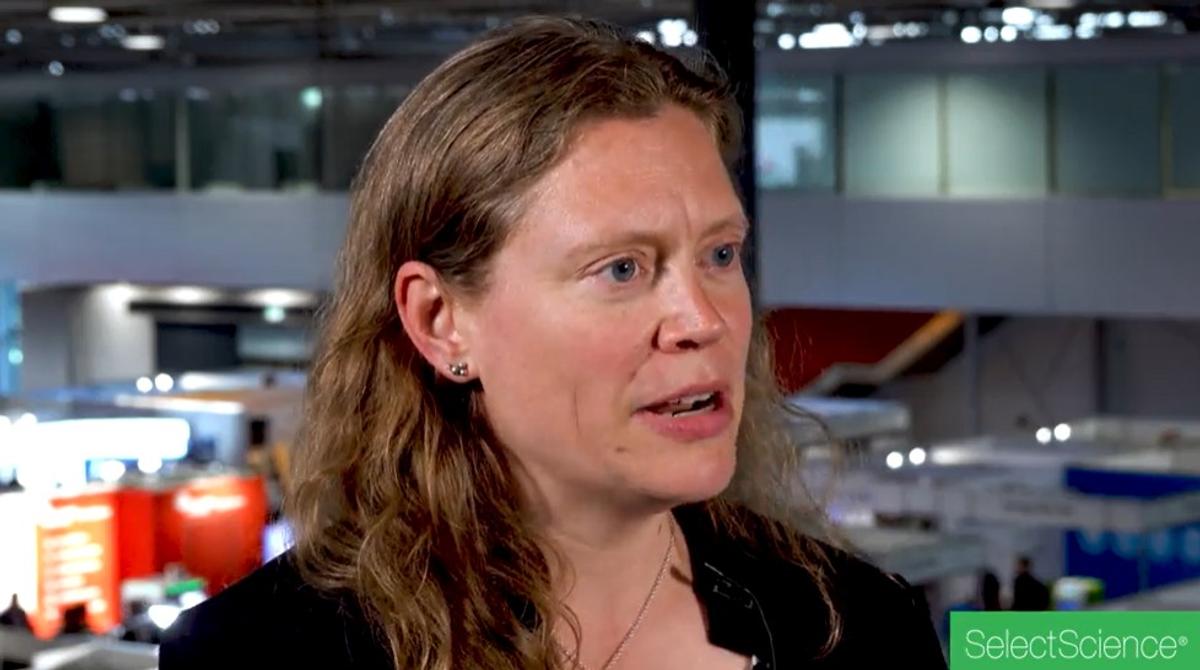
Dr. Brinton Seashore-Ludlow, Senior Research Specialist, Karolinska Institutet
Topics covered in this video
- How does Karolinska Institutet research personalize approved drug treatments for individual patients?
- What advanced pre-clinical models improve prediction of patient-specific drug-response dynamics over time?
- How is AI and machine learning integrated into automated drug-response workflows at Karolinska Institutet?