
Proximity inducing drugs for hard to treat diseases
27 Jul 2026
Dr. Johanna Huchting of Fraunhofer ITMP’s ScreeningPort site explains how her team combines drug screening with medical data science to advance proximity-inducing drug (also called proxy drugs) development. These small-molecule therapeutics form ternary complexes between target proteins and E3 ligases, enabling targeted protein degradation and access to previously “undruggable” targets like transcription factors. Dr. Huchting highlights key challenges, including the large size and bioavailability of bifunctional PROTAC-like molecules, the need to understand and measure cooperativity in ternary complexes, and the importance of strong innovation structures and collaboration between academia, biotech, and industry to translate these technologies for patient benefit.
This SelectScience interview was filmed at SLAS Europe 2026.
Video transcript
Show transcript
At the Fraunhofer ITMP, and that is Institute for Translational Medicine and Pharmacology (ITMP), we work at this intersection of academic research and industrial application of those research outputs. At the screening port site we combine drug screening and medical data science and we think that this is a very strong combination because it really combines those bench scientists work in the drug discovery with a data-driven approach that we now need. So, our mission is to in the end serve the patient to receive treatment But what we really do is we try and develop technologies further to be picked up by industry to a state where they can really serve and have an impact.
We work in this field of proximity-inducing drugs. They are also called proxy drugs. Those are small molecules, just like your regular drug, small molecule drug, but they don’t basically do the traditional way of inhibiting a certain protein function, for example. What they do is they rather modulate the interactome of proteins inside a cell. So, a proximity-inducing drug would bind to one protein in a cell and then recruit another protein there. and that could be first binding to an e3 ligase and then changing the surface of that e3 ligase to recruit a new substrate and this complex that then forms is a ternary complex, so it constitutes of the target protein the e3 ligase and the small molecule that you have added and in this ternary complex now the regular biological pathway can happen, so the e3 ligase would ubiquitilate your target and that is a flag for degradation, so this means your target protein is now degraded it’s not inhibited only it really is removed from the equation inside the cell and that now also reaches beyond traditional function inhibition and rather modulating of pathways and and yeah for example signaling inside a cell And that way we can reach targets that were classically deemed undruggable or hard to drug such as transcription factors is like the most prominent example I guess in the field.
One very practical challenge for these types of molecules is, especially for the bifunctional proximity inducing drugs where protex are the prototype, I would say, is their size. So, protex constitute of a binder for the target protein and a binder for the ligase and both are then connected by a linker. So, that makes like a high molecular size. in terms of still being a small molecule and this makes it challenging for those molecules to be bioavailable, so if you want to achieve to develop a project that you can deliver orally but then still have working for example in the brain that’s a specific challenge.
Another challenge that I see is a maybe more specific challenge to this modality. So, as I’ve said, this modality induces a ternary complex and in a ternary complex what you really want to achieve is cooperativity, so you don’t want your small molecule just to have high affinity for binding. each of the partners but you really want to achieve a cooperative binding and to be able to measure that but also to be able to rationally develop the rules for cooperative binding that’s not something that the field has quite understood yet and i think for this we really need concerted efforts in research to put a large power behind generating those data and understanding those rules that we aim to then pull out and be more rational in the development of those proximity and using drugs.
And I think maybe one more challenge really is operational to have really the structures of innovation in place that support such huge efforts. And I would say this really needs academia and industry, biotech, tech bio to come together and work together. on those general rules, on those basic principles to try and understand those better. I think my excitement and the few that I’m working in really spurs from this interdisciplinarity. I love to be coming together in teams that have diverse perspectives and diverse expertise that flow into a common mission in the end to try and serve patients but also to tackle challenging technical parts of that challenge.
What does this video cover?
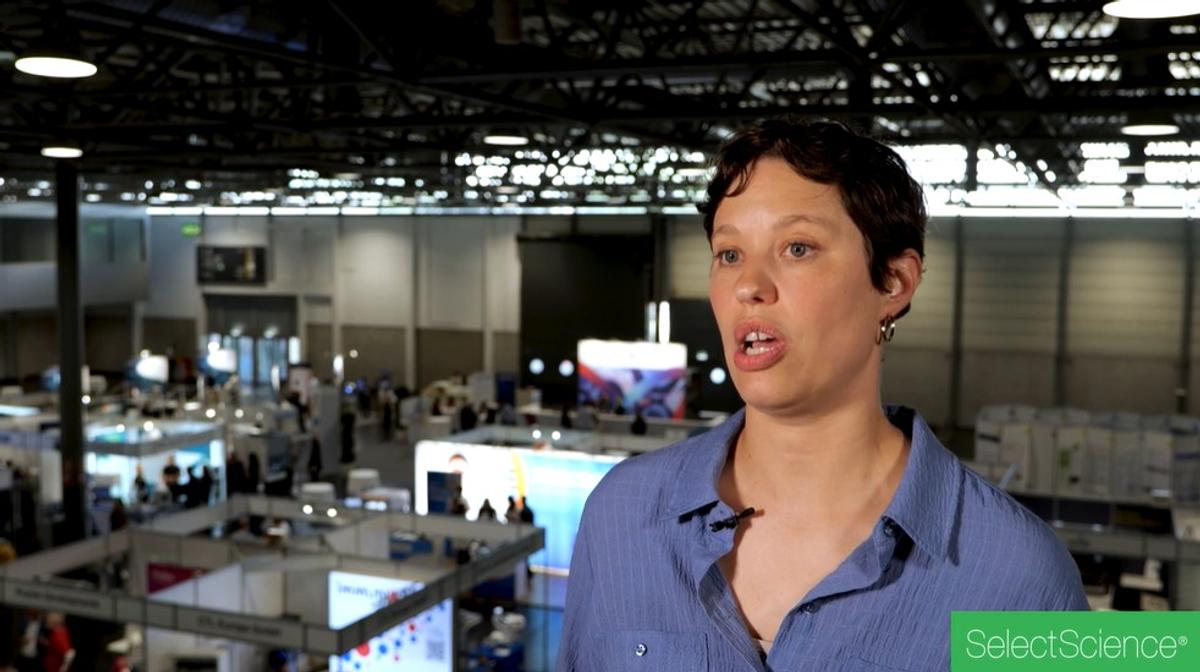
Dr. Johanna Huchting, Fraunhofer ITMP
Topics covered in this video
- How is Fraunhofer ITMP advancing proximity-inducing drugs for undruggable targets?
- What challenges limit oral bioavailability of bifunctional PROTAC proximity-inducing drugs?
- Why is cooperative ternary complex formation critical for proximity-inducing drug design?
- How can academia–industry collaboration accelerate translational pharmacology?