Evaluating PFAS impact in Great Lakes using high‑sensitivity MS detection
23 Jul 2026PFAS levels in Great Lakes fish are shifting in ways that matter for ecosystems and the people who rely on them. In this SelectScience® video follow Prof. Sujan Fernando from the Center for Air Resources Engineering and Science, Clarkson University, as he tracks these changing patterns and explains why his team chose the Xevo TQ Absolute XR for its exceptional sensitivity and selectivity, giving them the power to detect trace PFAS and keep monitoring aligned with EPA regulations.
This video was filmed at ASMS 2026.
About the company

Waters
Waters Corporation, the premium brand in the analytical instruments industry since 1958, creates business advantages for laboratory-dependent organizations by delivering practical and sustainable scientific innovation to enable significant advancements in such areas as: healthcare delivery, environmental management, food safety, chemical materials analysis, and water quality worldwide. Waters helps customers make profound discoveries, optimize laboratory operations, deliver product performance, and ensure regulatory compliance by providing a connected portfolio of separations and analytical science, mass spectrometry, laboratory informatics, as well as thermal analysis products.
Video transcript
Show transcript
PFAS was first introduced or produced back in 1938, and it was used most commonly for nonstick cookware, and soon after, in the 1940s, 50s, and 60s, mass production began, and it entered the environment soon after that. So the US EPA has been very interested in these forever chemicals in the environment, and Clarkson started monitoring for PFAS back in 2015. PFAS levels in the Great Lakes have been steadily decreasing over the past 20 years. In a recent study where we compared the 2024 data to the 2015 data, so it's about a span of about 10 years, we are seeing decreasing trends, especially in Lakes Ontario and Erie. But there are other lakes like Michigan and Huron where we are seeing a slight increase. And Lake Superior, which is one of the most isolated lakes, we don't really see much change, but it is at a very low level in that lake.
As part of our initial validation, what we did was compare the method detection limits from our current methodology and instrumentation to that of the Xevo TQ Absolute XR, and we found that indeed the instrument is more sensitive. We're seeing about seven‑fold more sensitivity, which is really important in that we need that sensitivity to see some of the traceable PFAS in samples. And also the Xevo TQ Absolute XR provides enhanced selectivity, which enables us to positively identify PFAS in samples.
In terms of monitoring, as you know, PFAS is classified as a forever chemical, so they're not going anywhere, and they're going to be in the environment for a long time to come. So it's very important that we monitor the levels, especially given how toxic these compounds are.
In terms of PFAS movement in the environment, the samples we analyzed were the top pair of fish, and that's because PFAS bioaccumulate up the food web and accumulate in these top pair of fish. And that's a concern because, especially with the Great Lakes, there's a lot of people that actually consume these fish.
Why is the Xevo TQ Absolute XR an ideal system for PFAS analysis? Certainly from a sensitivity standpoint, the robustness. It helps customers comply with the EPA regulatory methods that exist out there, whether it's drinking water analysis, whether it's food or consumer product matrices. The customers do need to comply with low limits of measurement for PFAS analysis, and the Xevo TQ Absolute XR is certainly a system that can help meet those requirements from a sensitivity and robustness aspect.
It's really exciting to see Professor Fernando using the Xevo TQ Absolute XR for his research. Certainly, he has all the tools in the lab to comply with the regulations that exist today, but also future‑proofs his lab to be able to look at other PFAS compounds as regulations evolve and additional PFAS compounds at much lower limits that may be required.
These compounds are highly toxic, so their MCLs keep decreasing over time. So it's very important that we have the technology and instrumentation to keep up with that and to monitor these compounds even at the very low levels they may be present in.
What does this video cover?

Topics covered in this video
- How have PFAS levels in Great Lakes fish changed between 2015 and 2024?
- Why are PFAS called forever chemicals by the US EPA and researchers?
- What makes the Xevo TQ Absolute XR ideal for trace PFAS analysis?
- How does PFAS bioaccumulation in top predator fish impact Great Lakes consumers?
- How does Xevo TQ Absolute XR help meet evolving EPA PFAS regulatory limits?
Related products
Request Quote for All Products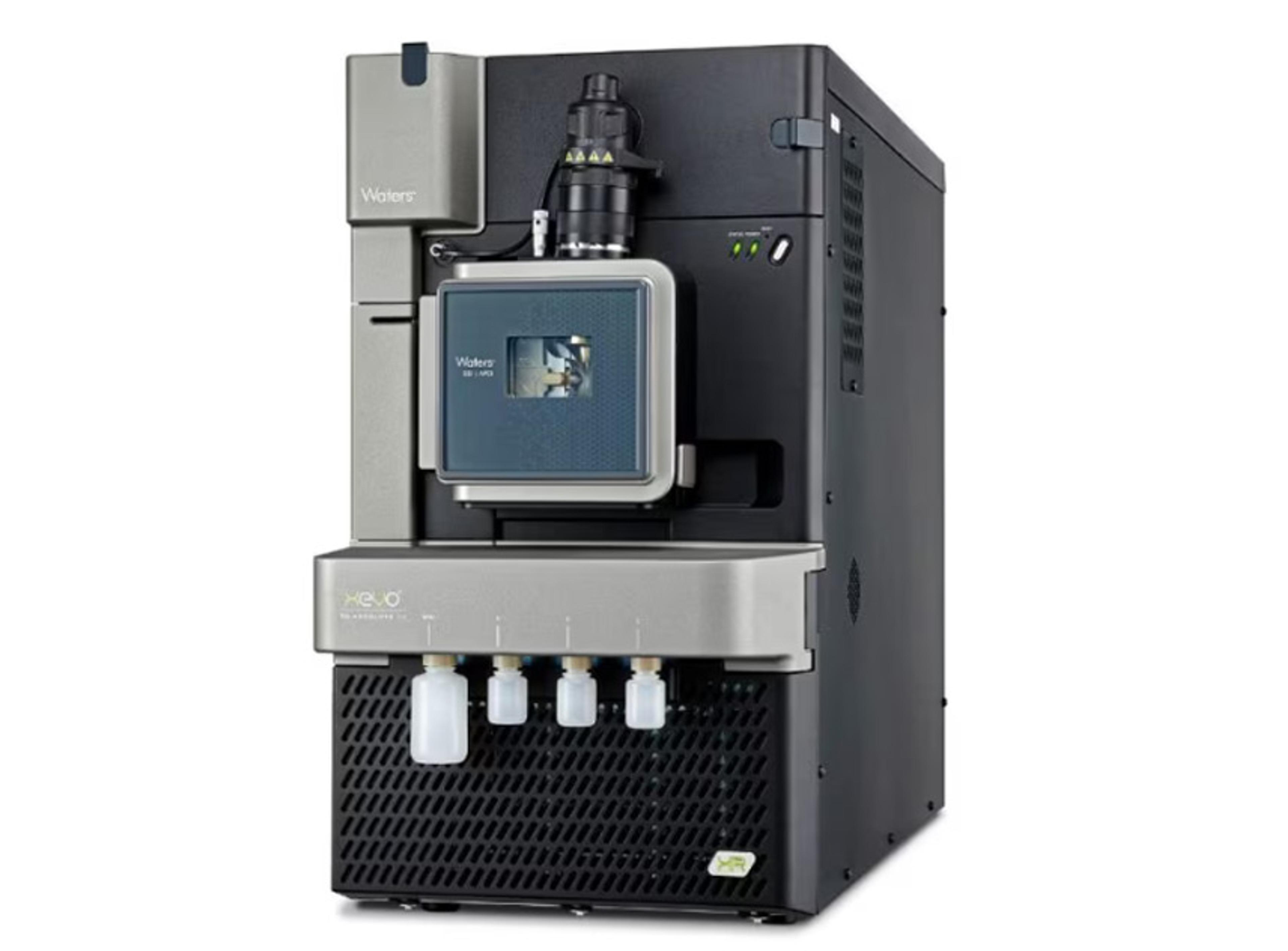
Xevo TQ Absolute XR Triple Quadrupole Mass Spectrometer
WatersQuantitate with Absolute Power and eXtreme Robustness