CPX-α, a high-throughput colony picking system
25 Jun 2026Curiosis has introduced the CPX™-α automated colony picking system, designed to improve precision and reproducibility in microbiology and synthetic biology workflows. The system uses high-resolution imaging and 3D coordinate profiling to detect and select colonies as small as ~200 µm, supporting accurate, automated picking across a range of plate formats.
Discover how with a fully electric pin control system and compatibility with robotic platforms, the CPX™-α enables end-to-end automation from picking to washing. This streamlines experiment preparation, reduces manual variability, and supports integration into high-throughput laboratory workflows.
About the company

CURIOSIS
“Curiosity is the most powerful assets you own”
Curiosis is an innovative biotech company to provide integrated solutions in the field of Life science, especially in cell-based application. Curiosis’ expert team of scientists and engineers is dedicated to developing high-efficiency instruments by using core technologies of biophysics and electronic engineering. Providing cutting edge technologies and optimized platform allow the researchers to challenge their progress improvement.
Video transcript
Show transcript
Colony picking has long relied on the hands and experience of researchers. Slow and repetitive manual processes have limited research efficiency and reproducibility.
As synthetic biology advances, colony picking increasingly demands higher precision and consistency across pharma, energy, and environmental research.
Designed with scalability in experimental conditions and operational flexibility in mind, and able to adapt to a wide range of research environments and objectives, Curiosus’ first in-house automated colony picking system — CPX™-α — is here to advance your research environment.
CPX™-α is a core automation system that accelerates research in synthetic biology, biopharmaceuticals, and microbe-based production. Featuring a cross-laser-based, high-precision automatic coordinate calibration system, it ensures high accuracy and stable reproducibility.
CPX™-α streamlines experiment preparation, allowing researchers to focus on results. Using imaging and distance measurement, CPX™-α accurately calculates 3D colony coordinates through XYZ profiling. Based on high-resolution imaging, it detects colonies as small as approximately 200 micrometers.
By analyzing both colony position and height, the system determines precise pin insertion depth. In addition, fluorescence filters enhance the identification of fluorescent-stained colonies.
CPX™-α enables precise picking through a fully electric pin control system. Replacing conventional pneumatic-powered pins, each pin height is precisely controlled with 40-micrometer resolution. Optimized motion speed prevents colony scattering and ensures stable operation on uneven agar surfaces or tilted plates.
CPX™-α integrates with robotic arms, liquid handlers, and sequencing equipment, fitting seamlessly into automated lab workflows. Compatible with various plate formats, it automates the full process — from colony picking to dipping and washing — delivering over 99% picking accuracy and high reproducibility.
CPX™-α is the new standard in automated colony picking, delivering precision, reproducibility, and consistent quality to advance the future of research.
Related products
Request Quote for All Products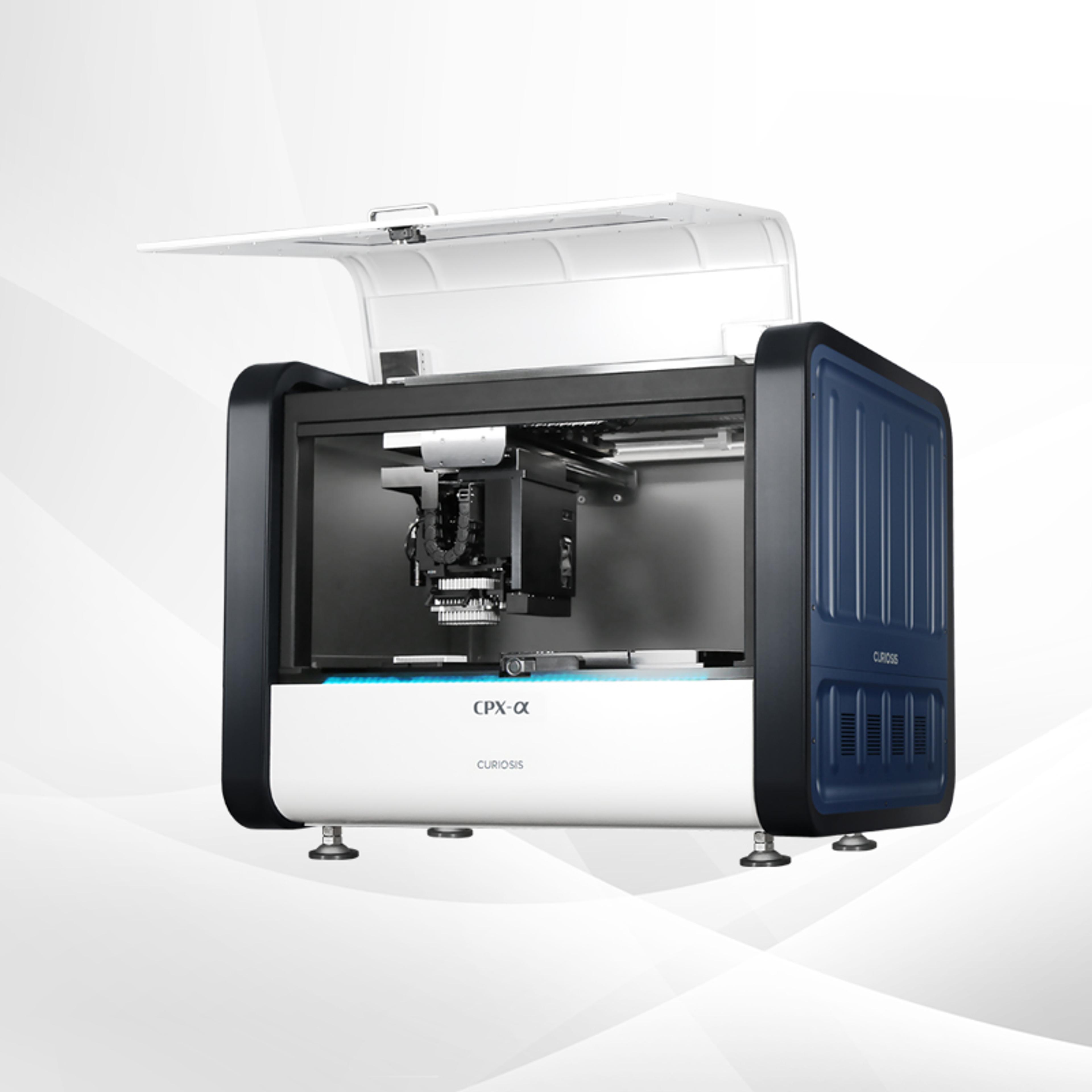
CPX™-α, Automated Colony Picking system
CURIOSISCPX™-α streamlines colony picking with high precision and automation, enabling consistent and reproducible selection across diverse applications in synthetic biology, pharma, energy, and environmental research.