
Spear Bio expands Alzheimer’s biomarker portfolio with novel epTau 217 and eMTBR-Tau assays, supported by a fully automated workflow
Advancing Alzheimer's disease research with innovative plasma Tau biomarkers and automated, high-throughput assay workflows
31 Jul 2026
At the 2026 Alzheimer’s Association International Conference® (AAIC 2026), Spear Bio showcased the launch of two novel blood-based biomarker assays — SPEAR epTau 217 and SPEAR eMTBR-Tau — alongside its fully automated S.W.I.F.T. workflow solution for hands-free processing of SPEAR UltraDetect™ and TrueDetect™ platforms.
These two new assays expand the company’s Alzheimer’s disease (AD) biomarker portfolio by enabling measurement of distinct aspects of Tau biology, while the automated workflow provides a scalable solution for reproducible, high-throughput clinical research.
In the video, Oliver Tassinari, VP of Business Development & Sales at Spear Bio, discusses the company’s commitment to delivering innovative, reliable immunoassays that enable researchers to generate high-quality biomarker data with minimal workflow complexity.
The SPEAR epTau 217 assay measures a unique subset of phosphorylated Tau 217 and was shown at AAIC to be the only Tau biomarker evaluated that produced highly consistent measurements between paired venous and capillary blood samples, unlike conventional plasma Tau biomarkers that exhibited an upward bias in capillary blood. While the biological basis of this observation remains under investigation, these findings suggest that epTau 217 may provide a more robust blood-based signal for decentralized sample collection and Alzheimer’s disease screening applications.
Spear Bio also introduced the first immunoassay for plasma eMTBR-Tau, an emerging biomarker that specifically reflects Tau tangle pathology. Data presented at the meeting demonstrated strong assay performance and showed marked increases in plasma eMTBR-Tau in individuals with advanced Alzheimer’s disease, addressing an important need for a blood-based Core 2 biomarker for AD Tau pathology.
The video also features insights from Dr. Thomas Karikari, Director of the Biomarker and Neurogenetics Core at the University of Pittsburgh Alzheimer’s Disease Research Center. Karikari explains why Alzheimer’s disease research requires a multi-biomarker approach to capture the complex biology of the disease, including amyloid pathology, Tau pathology, neurodegeneration, and inflammation. He discusses the growing importance of blood-based biomarkers that reflect Tau tangle pathology, highlighting the potential of emerging assays such as eMTBR-Tau to support disease staging, improve understanding of disease progression, and complement established measures including Tau PET imaging and neuropathological assessment.
Interview filmed at the 2026 Alzheimer's Association International Conference® (AAIC 2026).
About the company

Spear Bio
Spear Bio – founded in 2021 and headquartered in Woburn, Massachusetts – is an innovative leader in providing scalable solutions for ultra-sensitive protein biomarker measurements. Spear Bio’s proprietary technology, Successive Proximity Extension Amplification Reaction (SPEAR), employs a unique 2-factor authentication mechanism to precisely measure protein biomarkers at attomolar level from sub-microliter sample volume. Spear Bio is focused on leveraging its technology’s unprecedented sensitivity to transform protein research and early disease diagnosis.
Video transcript
Show transcript
Speaker 1: Oliver Tassinari, VP, Business Development & Sales, Spear Bio
We're really excited to be here at AAIC where we're launching our fully automated S.W.I.F.T.™ solution, which allows for hands-free automation of the SPEAR UltraDetect™ and TrueDetect™ platforms. We're also here to launch eMTBR, the first singleplex amino assay for tau pathology in plasma.
At Spear, we are very focused on developing assays for clinical research, specifically assays that can offer high reliability and reproducibility, which is important to the researchers to better understand the underlying pathologies that they're researching. Our focus in assay development is on markers that don't have a good solution right now, specifically. for biofluid biomarker detection, specifically in plasma. So as we move forward, our pipeline is focused on areas of research that customers are looking for, whether it's tau pathology, TDP proteinopathy, synucleinopathy – areas of research that don't have good immunoassay-based solutions.
And we're excited to be here at AAIC and learn from our customers, researchers, and pharmaceutical companies, what their critical needs are in order to go back to the lab and develop the facilities they need.
Speaker 2: Dr. Thomas Karikari, Director, Biomarker and Neurogenetics Core, University of Pittsburgh Alzheimer’s Disease Research Center, University of Pittsburgh Medical Center
One of the reasons why it is important to measure multiple biomarker candidates in a disease as complex as Alzheimer's disease is how multifaceted the different strands of biology that happens in a disease, because you have to look at it from multiple views. And by looking at, for example, typhus relation, which we know that the levels of which really track with amyloid-driven neurodegeneration, we get to really see what is happening from the amyloid side. And as we know at autopsy, you don't only have amyloid being a big characteristic of Alzheimer's disease. The other major player is tau pathology in terms of tangles. And then we now have to look out for biomarkers of machine tangles.
So by looking at these two from the same side, from the same sample set, we're able to understand, one, that someone truly has Alzheimer's disease with looking at those two biological correlates and two we can then be able to stage that at what stage of the disease can one can we see one in.
So when it comes to the eMTBR which you know is now the newest kid on the block when it comes to the blood biomarkers, it is extremely fascinating. For a long time it looked like that was evasive we couldn't measure it and with the methods really being created the technology becoming you know pushing it to the next level seems that now we're able to do that which is extremely exciting for the field.
Now with data we have what the eMTBR reveals, where the other markers are not able to include an absolute measure of tau tangles so with data we have when we compare with tau pathology measured by tau pet or with autopsy in individuals who have gone into autopsy and have actually had measures of tangles done by pathologists in the neurodegenerative assessment, what we see is that the eMTBR, measuring blood samples collected could be years even before death, really tracks.
They have very good measurement, a very good agreement with the amount of tau pathology, the tau tangle pathology, the tau aggregate pathology in the brains of these individuals and highly predictive also in individuals who took imaging, like went through tau PET imaging. So with these two being sort of the gold standards of tangle pathology, when you have tau PET or if you have autopsy, we're able to show that eMTBR have very good correlation and very good predictive power of these markers. And you don't see the same for other markers like phospho-tau.
In terms of potential of Spear Bio's assay panel and how they're actually helping to move the field from one level to the other. I feel like they're enormous in terms of one, for example, that with the different panels that are continuing to come through with, like, you know, the portfolio in terms of, you know, now they've got amyloid markers, they've got neurodegeneration markers, now they've got tau tangle markers, they've got inflammation markers. And so all these things are helping to address the multifaceted nature of Alzheimer's disease, which is by recommendation of diagnostic criteria.
What does this video cover?
Topics covered in this video
- S.W.I.F.T.™ automated assay workflow
- SPEAR UltraDetect™ and TrueDetect™ automation
- eMTBR plasma tau pathology assay
- Reliable biomarker testing for research
- Plasma-based biomarker detection
- Multi-marker Alzheimer’s disease profiling
- Amyloid, tau, neurodegeneration, and inflammation
- Tau tangles and disease staging
- Blood-based tau pathology measurement
- SpearBio’s expanding assay portfolio
Related products
Request Quote for All Products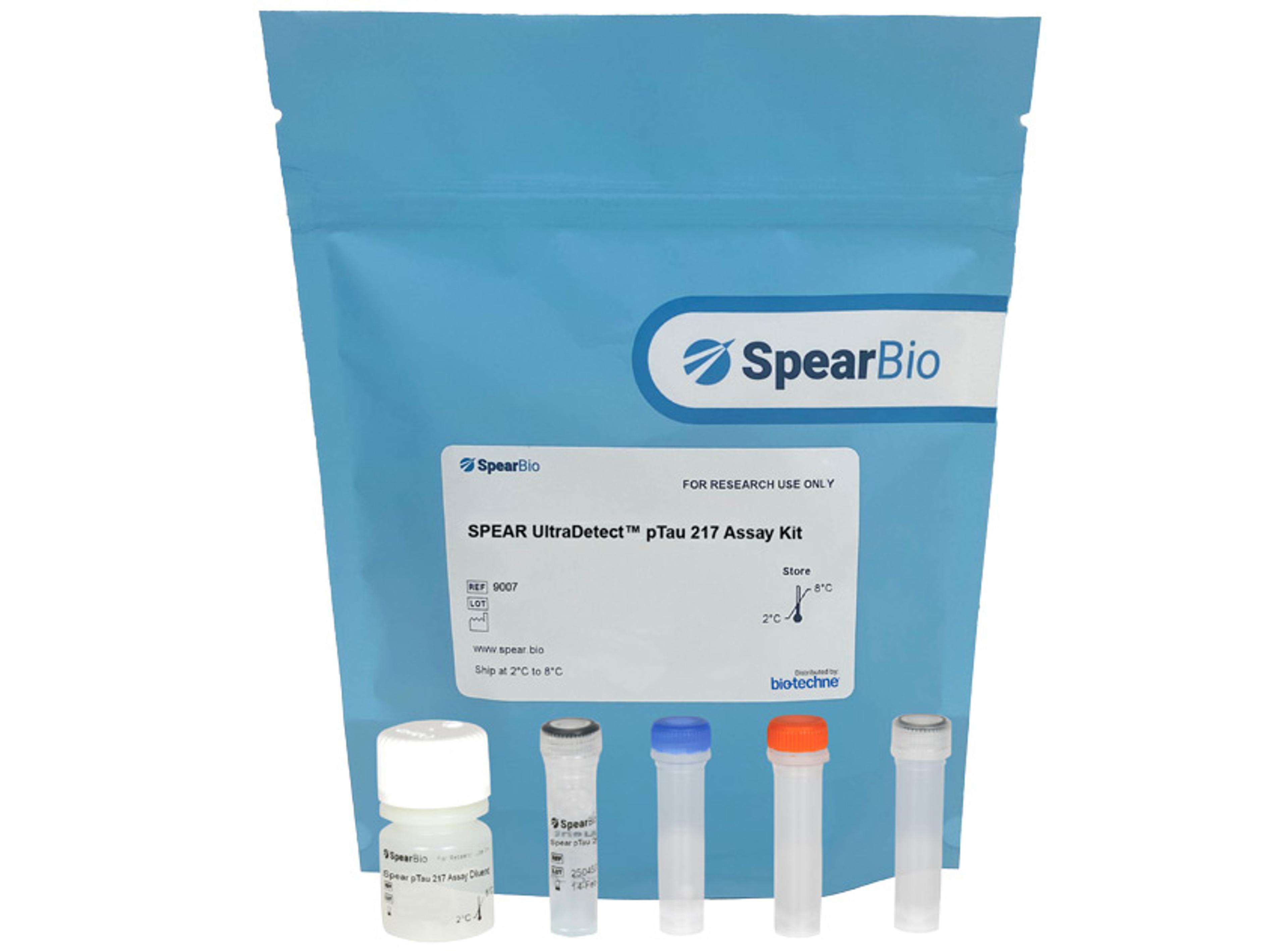
SPEAR UltraDetect™ pTau 217 Biomarker Assay Kit
Spear BioThe SPEAR UltraDetect™ pTau 217 biomarker assay kit provides a highly specific tool for Alzheimer’s disease research, optimized for plasma samples. Requires SPEAR UltraDetect™ Reaction Kit. For research use only.
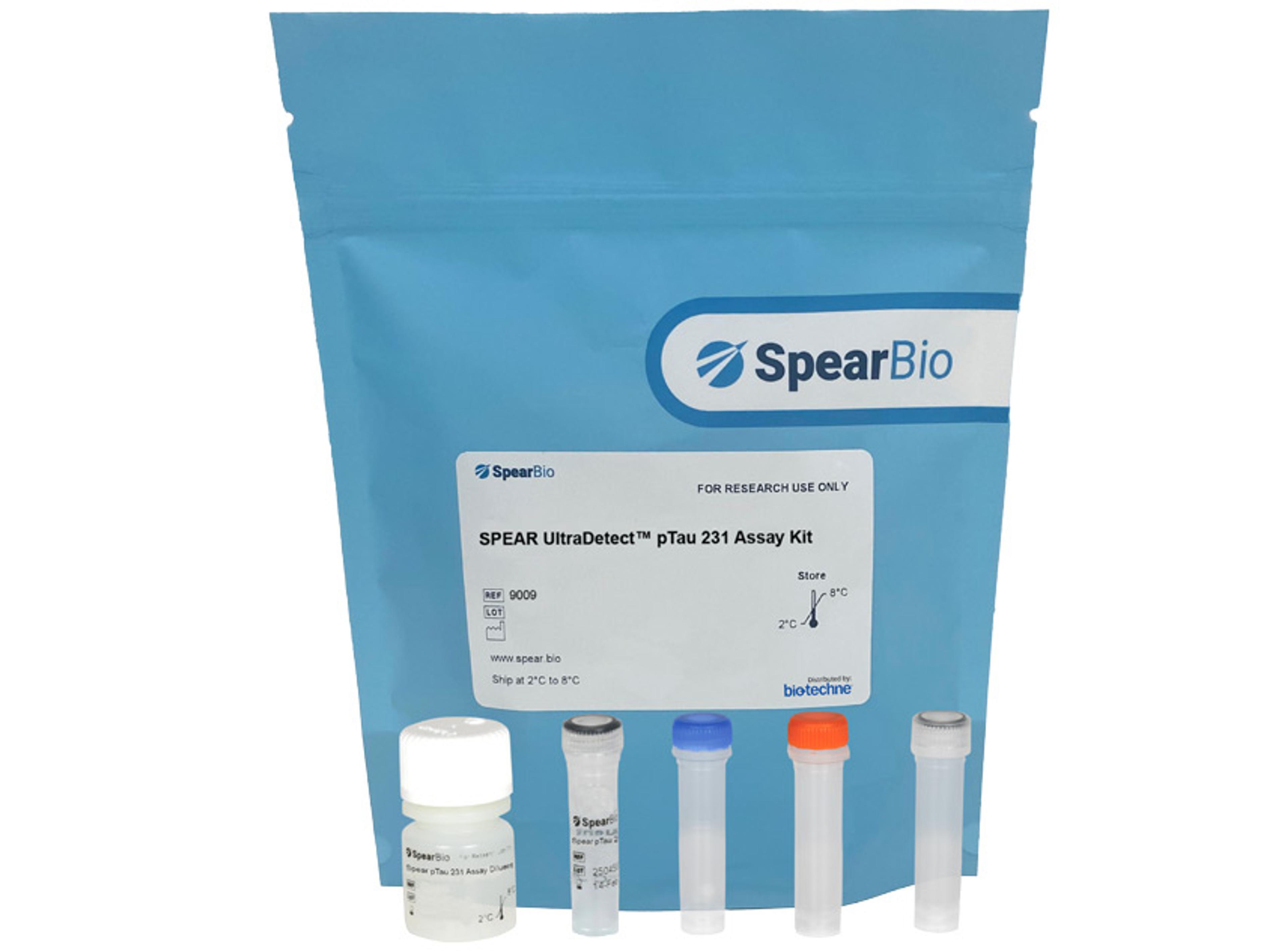
SPEAR UltraDetect™ pTau 231 Biomarker Assay Kit
Spear BioThe SPEAR UltraDetect™ pTau 231 biomarker assay kit is highly sensitive and ideal for Alzheimer’s research using plasma samples. Requires SPEAR UltraDetect™ Reaction Kit. For research use only.
Other videos from Spear Bio

Links
Related content

Spear Bio showcases novel Alzheimer’s disease immunoassays and fully automated instrument platform at AAIC 2026
Launches include the first commercially available singleplex eMTBR-Tau immunoassay, a novel pTau 217 assay for venous and capillary blood, and a fully automated instrument platform
Tags
Frequently asked questions
Show frequently asked questions
What did Spear Bio launch at AAIC 2026?
Spear Bio launched two novel singleplex biomarker assays, SPEAR epTau 217 and eMTBR-Tau, its fully automated S.W.I.F.T.™ solution for hands-free processing of the SPEAR UltraDetect™ and TrueDetect™ platforms.
What is eMTBR-Tau used for?
eMTBR-Tau is a blood-based biomarker assay designed to measure tau pathology in plasma, helping researchers assess tau tangle-related changes associated with late-stage Alzheimer’s disease.
Why are multiple biomarkers needed in Alzheimer’s disease research?
Alzheimer’s disease involves several biological processes, including amyloid pathology, tau pathology, neurodegeneration, and inflammation. Measuring multiple biomarkers can provide a more complete view of disease biology and progression.
How could blood-based biomarker assays support Alzheimer’s research?
Blood-based assays may help researchers study disease-related changes using more accessible sample types, such as plasma, and could support earlier, broader, and more scalable biomarker analysis.
What types of biomarkers does Spear Bio’s assay portfolio cover?
The video highlights Spear Bio’s work across amyloid markers, neurodegeneration markers, tau tangle markers, inflammation markers, and other areas where improved immunoassay-based solutions are needed.
Why is automation important for biomarker testing?
Automation can help streamline assay workflows, reduce hands-on time, and support more reliable, reproducible biomarker analysis for clinical research applications.