
Detection of Signaling Effector-Complexes Downstream of BMP4 Using in situ PLA
6 Nov 2017In situ PLA is a technology capable of detecting protein interactions with high specificity and sensitivity. This technology couples antibody recognition with the amplification of DNA surrogate of the protein. It generates a localized, discrete signal in a form of spots revealing the exact position of the recognition event. The number of signals can be counted and compared providing a measurement. We applied in situ PLA, using the Duolink kit, with a combination of antibodies that allows the detection of the BMP signaling effectors phospho-Smad1/5/8 and Smad4 only when these are in proximity i.e. in a complex, which occurs only with signaling activation. This allowed for the first time, the visualization and measurement of endogenous BMP signaling with high specificity and sensitivity in a time course experiment under BMP4 stimulation.
Related products
Request Quote for All Products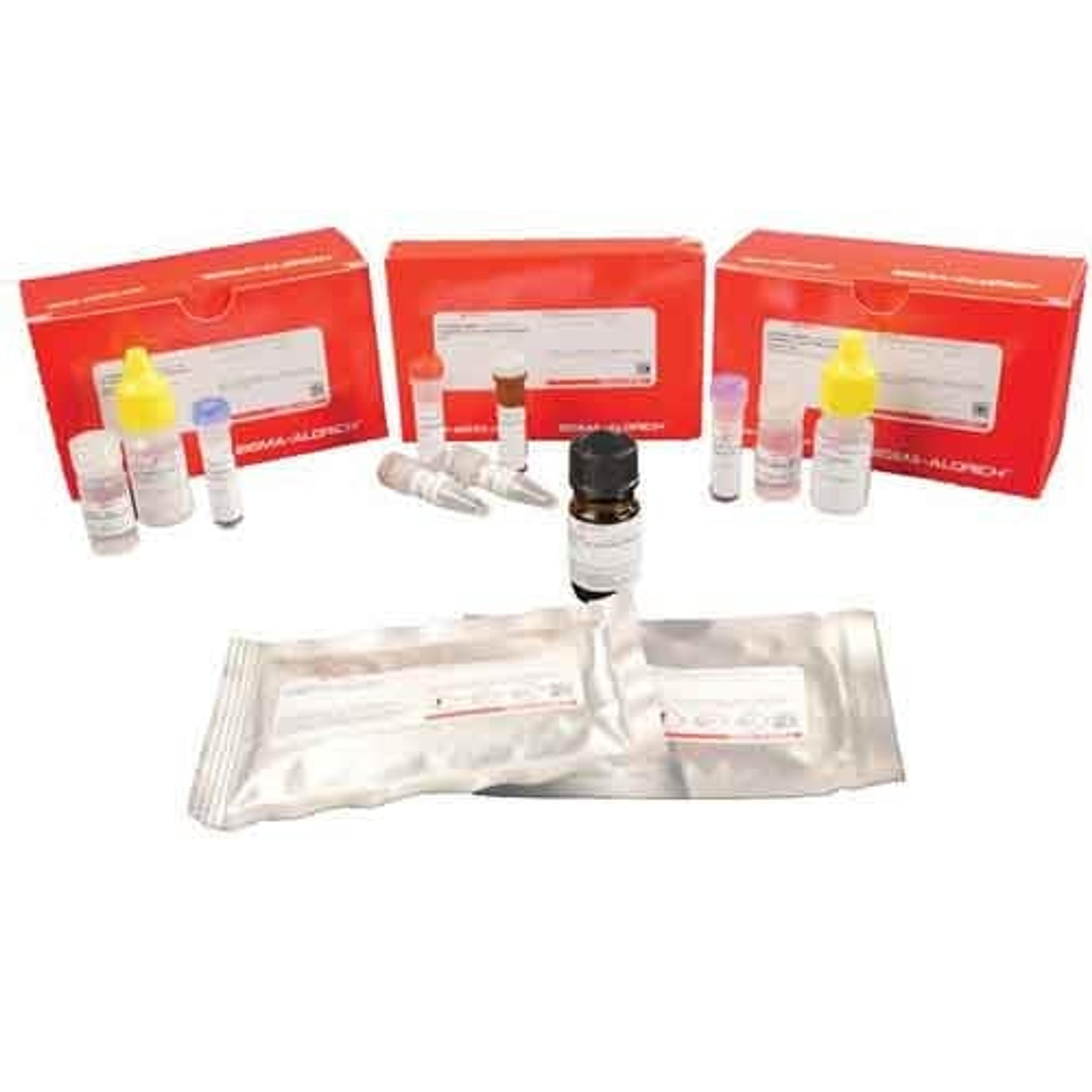
Duolink In Situ Red Starter Kit Mouse/Rabbit
MerckApplication Duolink® proximity ligation assay(PLA®) allows for endogenous detection of protein interactions, post translational modifications, and protein expression levels at the single molecule level in fixed cells and tissue samples. Follow the Duolink® In Situ Fluorescence Protocol to use this product. A set of short instructionsis also available. Visit our Duolink® PLA Resource Center for information on how to run a Duolink®experiment, applications, troubleshooting, and more. To perform a complete Duolink® PLA in situ experiment you will need two primary antibodies (PLA, IHC, ICC or IF validated) that recognize two target epitopes.This starter kit supplies all other necessary reagents for 30 Duolink® PLA reactions, which include a pair of PLA probes (Anti-Rabbit PLUS and Anti-Mouse MINUS), red detection reagents, wash buffers, and mounting medium. Note that the primary antibodies must come from the same species as the Duolink® PLA probes. Analysis is carried out using standard immunofluorescence assay equipment. Specificity The Duolink® In Situ Red Starter Kit Mouse/Rabbit requires one primary antibody from mouse and one primary antibody from rabbit. Red fluorescence detection reagents are often used with Texas Red® filter. Application Note Two primary antibodies raised in different species are needed. Test your primary antibodies (IgG-class, mono- or polyclonal) in a standard immunofluorescence (IF), immunohistochemistry (IHC) or immunocytochemistry (ICC) assay to determine the optimal fixation, blocking, and titer conditions. Duolink® PLA in situ reagents are suitable for use on fixed cells, cytospin cells, cells grown on slide, formalin-fixed, paraffin embedded (FFPE), or tissue (fresh or frozen). No minimum number of cells is required. Features and Benefits No overexpression or genetic manipulation required High specificity (fewer false positives) Single molecule sensitivity due to rolling circle amplification Relative quantification possible No special equipment needed Quicker and simpler than FRET Increased accuracy compared to co-IP Publication-ready results