Structure-based drug discovery with cryo-EM

7 Oct 2019

Cryo-electron microscopy (cryo-EM) is a powerful biophysical technique that allows researchers to visualize molecular assemblies at near-atomic resolution. In this application-based eBook, we outline the application of cryo-EM in structure-based drug discovery and look at how state-of-the-art microscopes, such as the Krios G4 cryo-TEM from Thermo Fisher Scientific, help to keep leaders in the pharmaceutical industry at the forefront of drug discovery.

Download this eBook to learn more about:

  • The single-particle analysis (SPA) workflow
  • Micro-electron diffraction (microED) using nanocrystals
  • The applications of cryo-EM in structure-based drug design
  • Scientists who are using this technique, including Nobel laureate Dr. Richard Henderson

Krios G4 Cryo-TEM for Life Sciences

Thermo Fisher Scientific

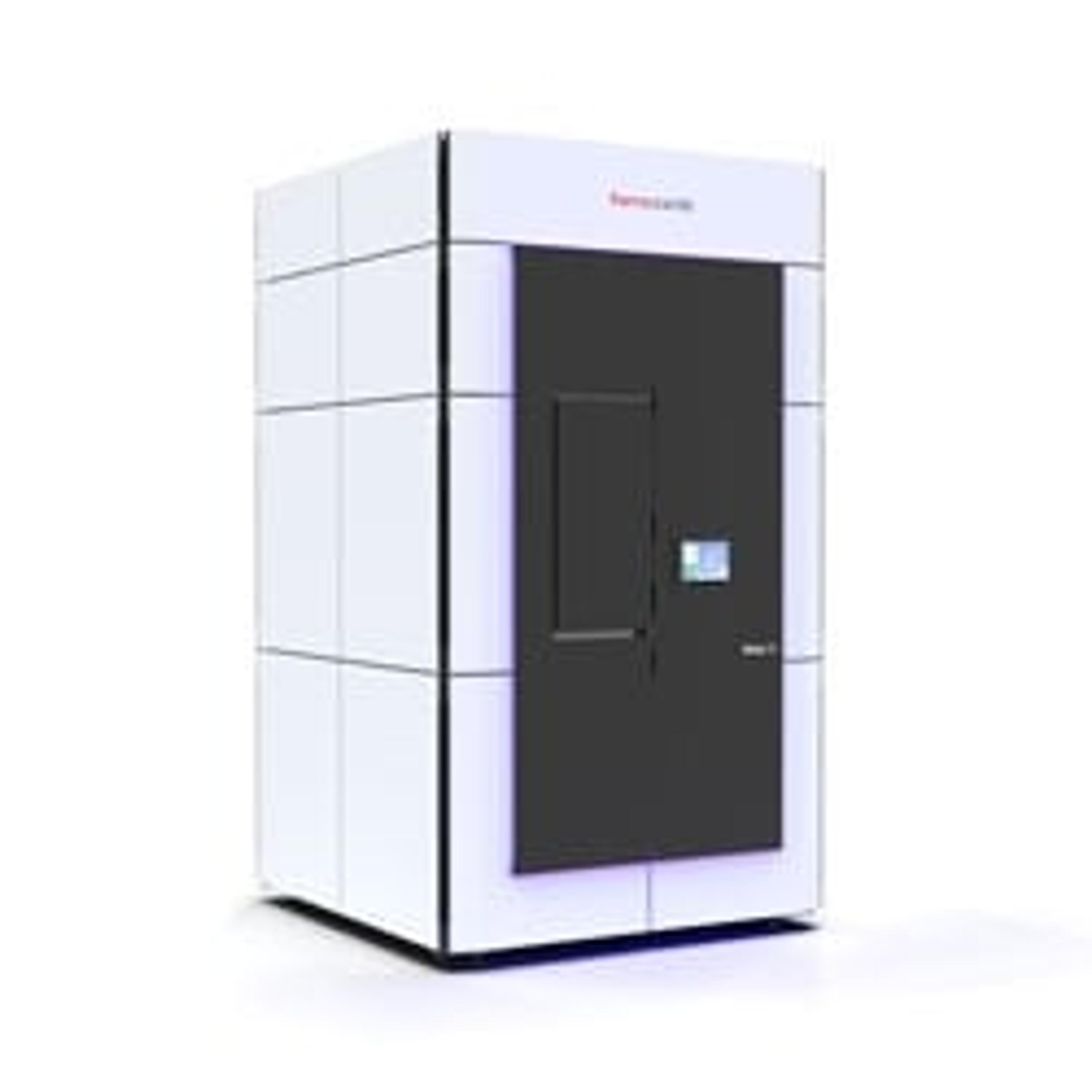
The Thermo Scientific Krios G4 Cryo-Transmission Electron Microscope (Cryo-TEM) is a compact TEM. The instrument can be installed in labs with a ceiling height below 3.04 m (~10 ft), as the microscope height it below 3 meters. The Krios G4 Cryo-TEM has improved ergonomics for easier sample exchange. Data acquisition set up is easier and faster thanks to enhanced automation, systematic user guidance and advanced performance monitoring. Simultaneo

(0)

Links

Tags

Electron MicroscopyElectron microscopes (EM) are used to create high-resolution images of samples at the nanoscale by means of an accelerated beam of electrons as a source of illumination. Types of electron microscope include scanning electron microscopes (SEM), transmission electron microscopes (TEM), scanning transmission electron microscopes (STEM) and cryo-electron microscopes. Focused ion beam (FIB) microscopes are useful for modifying or milling a sample surface with nanometer precision, as well as imaging. Find the best electron microscopes in our peer-reviewed product directory: compare products, check customer reviews and receive pricing direct from manufacturers.3D Imaging3D imaging technologies allow for the visualization and analysis of three-dimensional structures at high resolution. These systems are used in fields like molecular biology, material science, and medical diagnostics. 3D imaging can be applied to visualize cells, tissues, and organs, providing valuable insights into their structure and function. Browse our peer-reviewed product directory to find the best 3D imaging solutions, compare products, check reviews, and get pricing directly from manufacturers.MicroscopyMicroscopy is a technique used to observe small objects in detail, from cells to materials, using light or electron microscopes. It enables researchers to examine structures with high resolution, aiding in fields such as biology, medicine, and materials science. With advanced microscopy techniques, scientists can gain insights into cellular processes, tissue structures, and material properties. Explore the best microscopy solutions in our peer-reviewed product directory, compare products, read customer reviews, and get pricing directly from manufacturers.Drug DiscoveryDrug discovery is the process of identifying potential new medications, involving stages such as target identification, compound screening, and preclinical development. It relies on cutting-edge technologies like high-throughput screening, artificial intelligence, and molecular modeling to accelerate the identification of drug candidates. Drug discovery plays a pivotal role in developing new therapies for diseases ranging from cancer to rare genetic disorders. Browse our peer-reviewed product directory to find the latest drug discovery technologies, compare options, check customer feedback, and get pricing directly from manufacturers.Drug DevelopmentDrug development refers to the process of bringing a new drug to market.