
Steps to ensure cell culture success
6 Feb 2024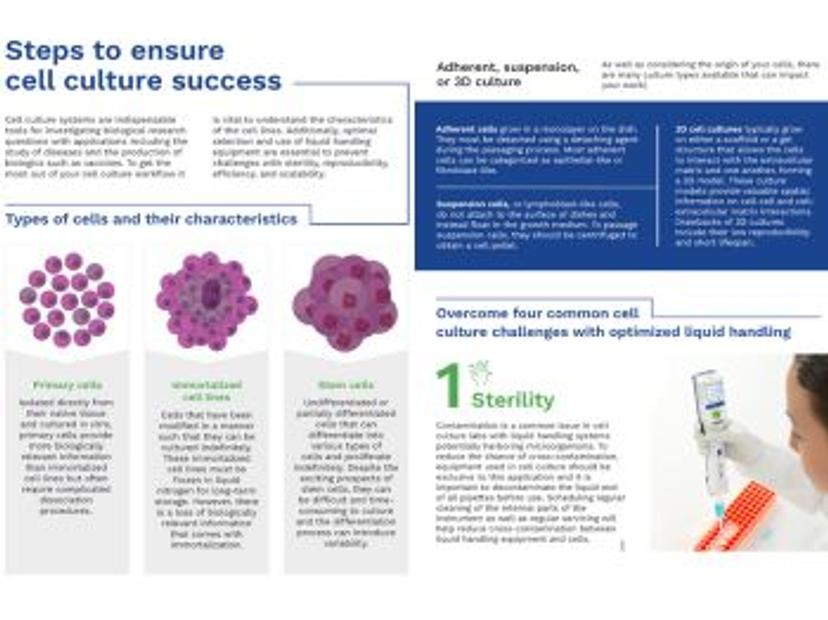
Optimal selection and use of liquid handling equipment is essential to preventing challenges with sterility, reproducibility, efficiency, and scalability that can arise when working with cell culture.
Many cell types with different structural and functional characteristics exist and the most appropriate cell line to use depends on the specific research area and application. Optimizing cell culture conditions is vital for investigating biological research questions with applications including the study of diseases and the production of biologics such as vaccines. Cell culture also plays a vital role in tissue engineering, where cells can be grown on a scaffold to create functional tissues and organs. To get the most out of your cell culture workflow it is vital to understand the characteristics of your cell lines, as well as the origin of your cells. Another factor to consider is how cells grow inside of a microplate well. For example, cells can adhere to the bottom of the well (adherent), they can float in media (suspension), or they can form spheroids in a matrix.
Liquid handling equipment used in cell culture workflows can include single channel, multichannel, repeater pipettes, and semi-automated pipetting systems. Many of the challenges that arise when working with cell cultures are rooted in poor, sub-optimal, or inappropriate liquid handling tools and techniques. Processes can be improved by optimal selection and use of liquid handling equipment. In this infographic, learn more about the different types of cells used in biological research and discover how to overcome four common cell culture challenges with optimized liquid handling.
Download this infographic to learn more about:
- How different cell types can be used for various applications
- The liquid handling tools required for efficient workflows, including single channel, multichannel, repeater, and semi-automated pipettes, and how optimal tool selection can help overcome common challenges in cell culture workflows related to sterility, reproducibility, efficiency, and scalability
- Semi-automated 96-channel pipetting solutions that can speed up cell culture workflows and help overcome the challenges associated with manual pipetting
Related products
Request Quote for All Products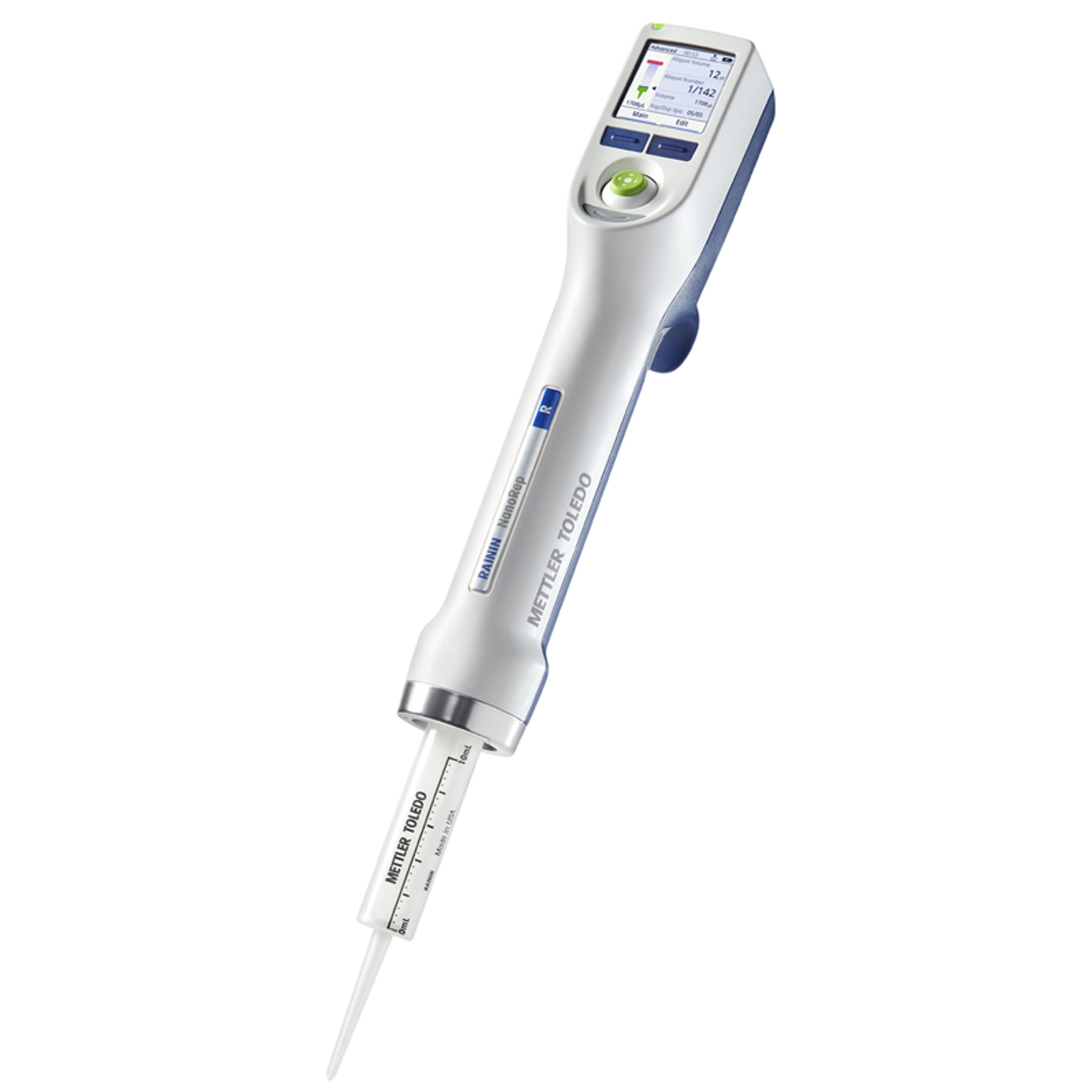
Rainin NanoRep Electronic Repeater Pipette
RaininThe Rainin NanoRep accurately repeat-dispenses biological solutions from 50 mL down to 100 nL, meeting the growing demand for assay optimization and miniaturization. NanoRep combines the versatility and value of a handheld repeater pipette with a unique non-contact dispense option that ensures repeatable accuracy and reduces the risk of cross-contamination.
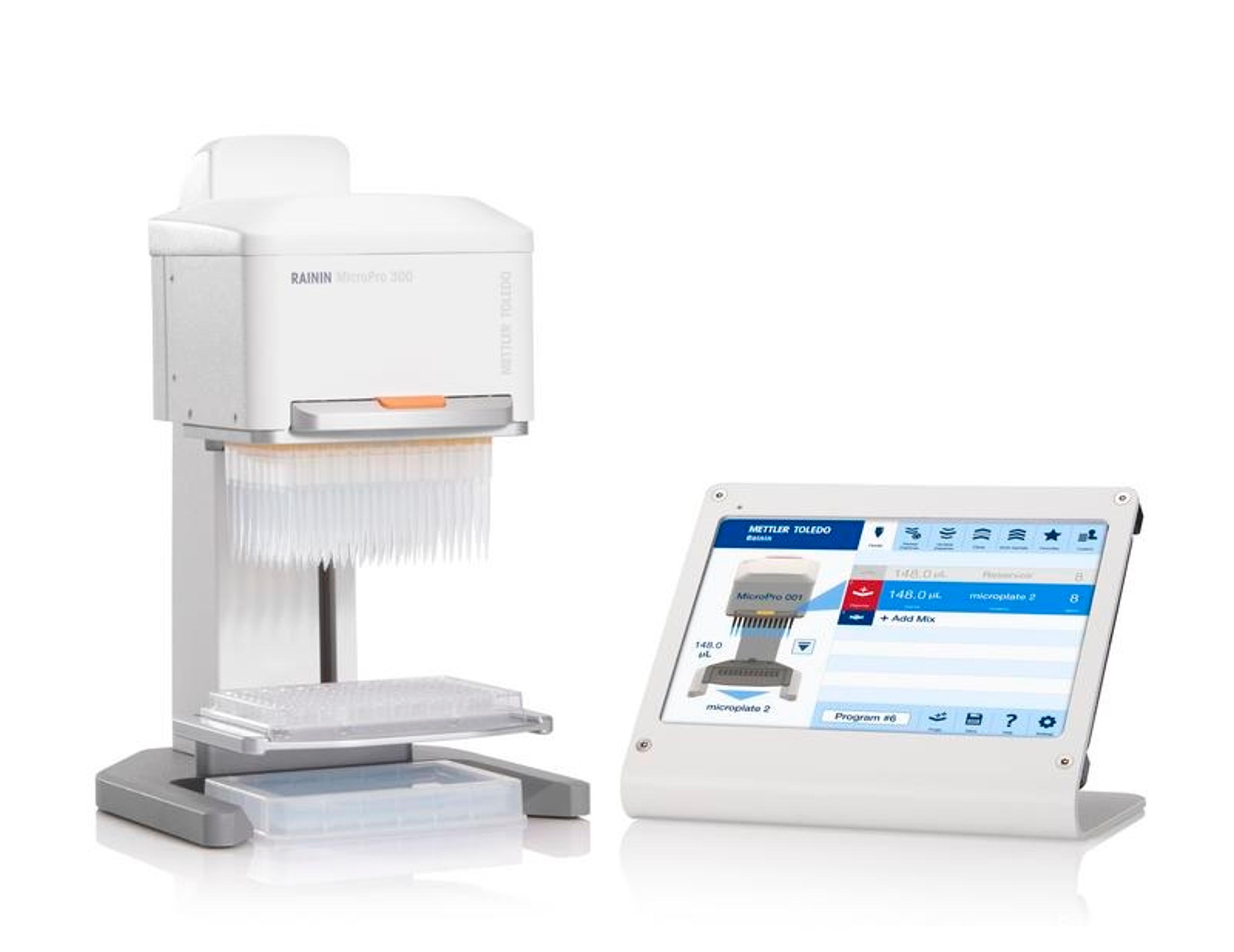
MicroPro
METTLER TOLEDOMicroPro is a compact 96-channel automated pipetting system that offers precision and faster-throughput when working in 96- or 384-well formats. At 32 cm tall, 19 cm wide and weighing just 5.1 kg, Rainin MicroPro 20 and MicroPro 300 pipetting workstations are the smallest 96-channel automatic pipettes available.