
Mastering the fundamentals of preparative LC
30 Jul 2026
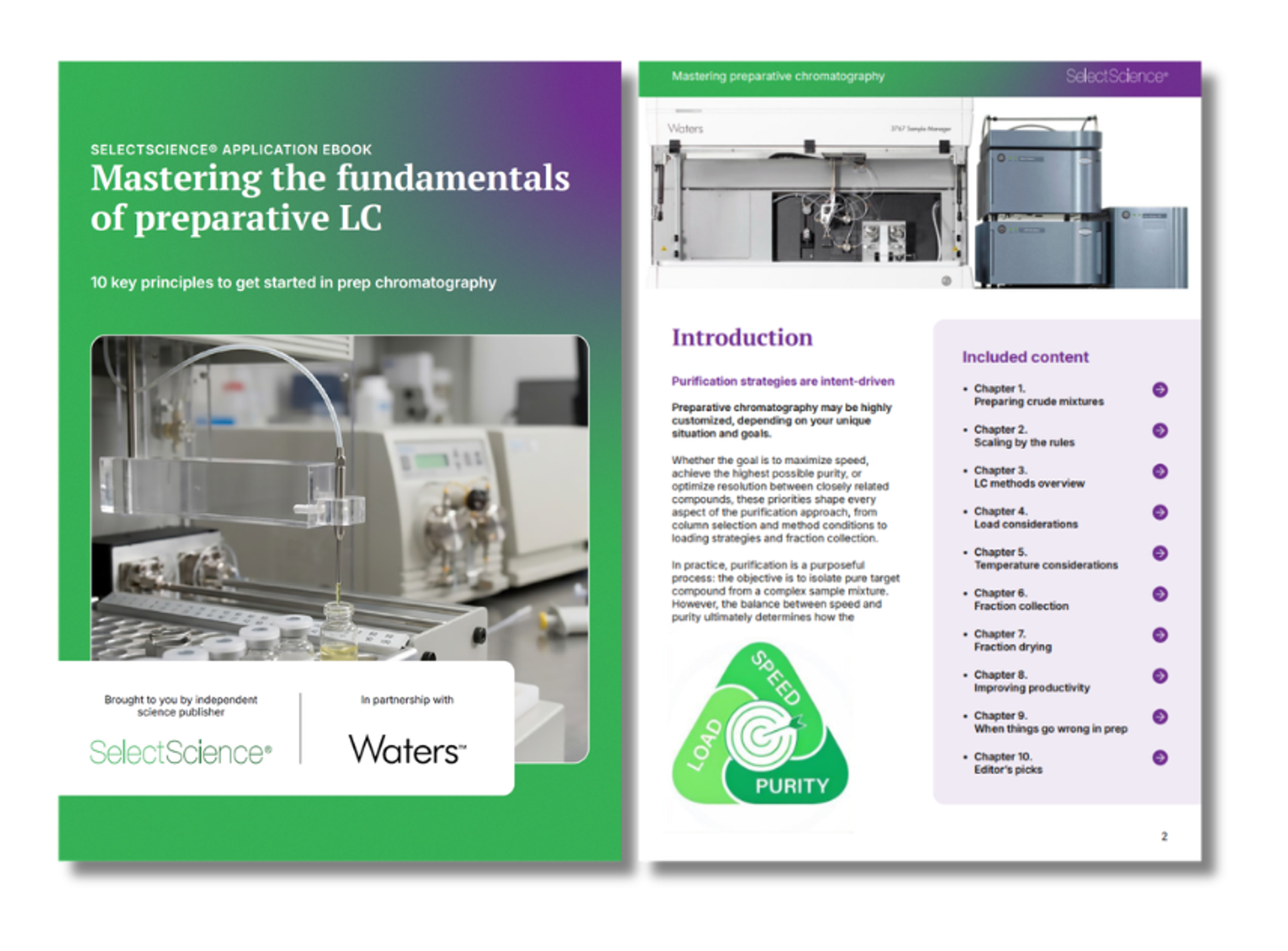
Preparative liquid chromatography (prep LC) is a cornerstone of modern purification workflows, enabling scientists to isolate target compounds from complex mixtures for research, development, and manufacturing applications. Whether supporting synthetic chemistry, analytical services, process development, or production environments, successful purification depends on balancing purity, recovery, speed, and scalability.
As purification demands grow, scientists face a range of challenges, from optimizing sample loading and scaling methods from analytical to preparative workflows, to improving productivity and overcoming common separation issues. A strong understanding of preparative LC fundamentals is essential for developing robust, efficient purification strategies that deliver reliable results.
In this SelectScience eBook, developed in partnership with Waters, explore expert insights, practical guidance, and real-world examples to help scientists build confidence in preparative chromatography. Plus, discover the key principles that underpin successful separations and learn strategies to improve purification performance across a range of applications.
Download this SelectScience guide to gain top tips on:
- Preparing crude mixtures
- Scaling by the rules
- LC methods overview
- Load considerations
- Temperature considerations
- Fraction collection
- Fraction drying
- Improving productivity
- When things go wrong in prep
Resource details:
- Document type: SelectScience application eBook
- Page count: 172
- Edition: 1st
Related products
Request Quote for All Products
Links
Tags
Frequently asked questions
Show frequently asked questions
What is preparative liquid chromatography (prep LC)?
Preparative liquid chromatography (prep LC) is a purification technique used to isolate and recover target compounds from complex mixtures. Unlike analytical LC, which is primarily used for identifying and quantifying compounds, preparative LC is designed to collect purified material for downstream research, development, and manufacturing applications.
What is the difference between analytical LC and preparative LC?
Analytical LC focuses on characterizing samples and generating chromatographic data, while preparative LC focuses on isolating and collecting compounds. Preparative systems use larger columns, higher sample loads, and fraction collection workflows to maximize compound recovery while maintaining purity.
How do you scale a chromatography method from analytical to preparative LC?
Successful scale-up requires proportional adjustment of key parameters including sample load, injection volume, flow rate, and gradient conditions. Maintaining consistent column chemistry and accounting for system dwell volume can help ensure the preparative separation closely matches the analytical method.
What factors affect sample loading in preparative chromatography
Sample loading performance can be influenced by column chemistry, mobile phase composition, pH, gradient design, sample solubility, injection solvent, and temperature. Optimizing these parameters can improve resolution, increase loading capacity, and reduce the number of purification runs required.
What is at-column dilution in preparative LC?
At-column dilution is a technique that allows samples dissolved in strong solvents, such as DMSO, to be diluted immediately before entering the chromatography column. This can reduce injection-related artifacts, improve chromatographic performance, support larger sample loads, and minimize precipitation issues.
What are the most common challenges in preparative LC and how can they be resolved?
Common preparative LC challenges include poor peak shape, inadequate resolution, excessive system pressure, sample precipitation, peak splitting, and low recovery. Addressing method conditions, sample preparation, column selection, loading strategies, and system maintenance can help improve purification performance and product yield.