
Colorado School of Mines Uses a NexION 300Q ICP-MS to Obtain a Better Understanding of the Environmental Impact of Engineered Nanomaterials
9 Oct 2012This case study presents Dr. Ranville of the Colorado School of Mines research in the area of nanoparticle sensitivity and specificity involving the use of ICP mass spectrometry (ICP-MS). Because of its trace element capability, and extremely low detection limits, the technique is ideally suited to the characterization of ENPs, containing elements such as Ag, Au, Ti and Fe, which have been integrated into larger products such as consumer goods, foods, pesticides, pharmaceuticals, and personal care products. The ubiquitous use of goods containing these nanomaterials will inevitably lead to environmental releases, which may be studied and quantified using state-of-the-art ICP-MS technology, such as PerkinElmer’s NexION® 300Q system, which was acquired recently.
Related products
Request Quote for All Products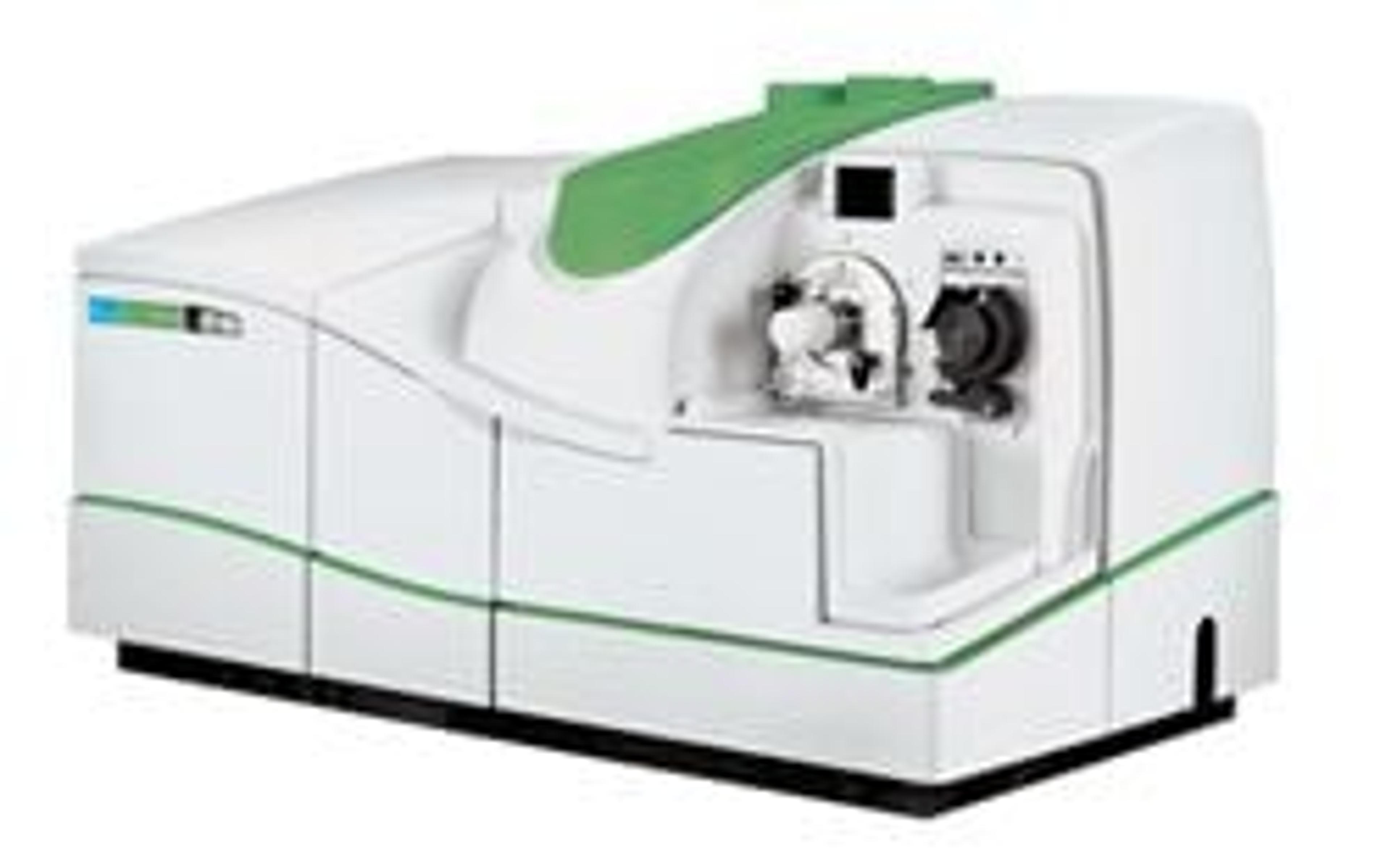
NexION 350 ICP-MS Spectrometers
PerkinElmerWhen your instrument is more efficient and productive, so too are your scientists and your lab. And nothing puts the flow in your workflow better than the NexION® 350 ICP-MS. With a data acquisition speed 10 times faster than any other ICP-MS on the market, the new NexION 350 ICP-MS opens up a whole new world of efficiency and opportunity, allowing you to measure more in less time, and accurately characterize nanoparticles. In addition to the exceptional application flexibility afforded by its speed, the instrument also delivers superior uptime and productivity through a variety of unique features engineered to enhance signal stability: Triple Cone Interface produces the industry’s most tightly focused ion beam and prevents sample deposition on internal components. Quadrupole Ion Deflector turns positively charged ions 90° into the Universal Cell and filters off neutrals. Analyzing Quadrupole made of a unique steel alloy for negligible thermal expansion for unparalleled stability. No extraction lenses to clean for minimized maintenance.