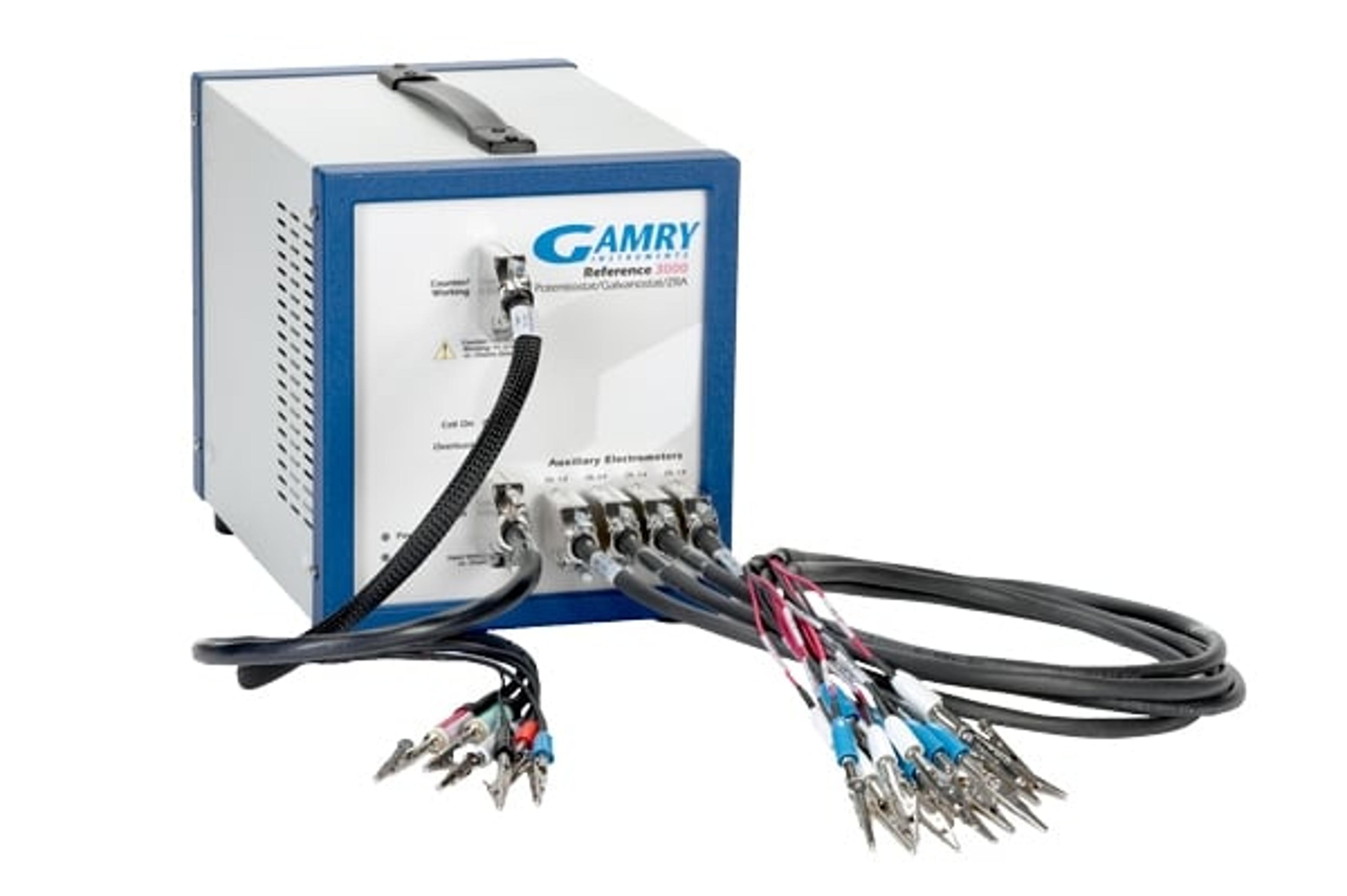
Reference 3000AE Potentiostat
The 3000AE is useful for testing multiple cells within a stack or measuring auxiliary voltages.
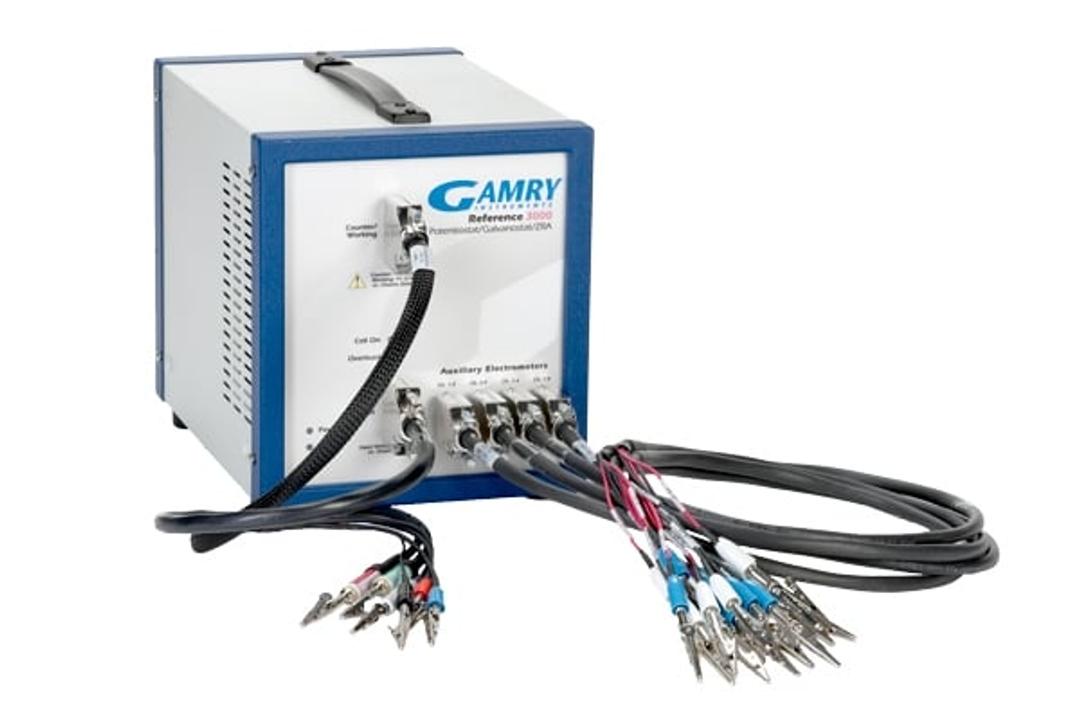
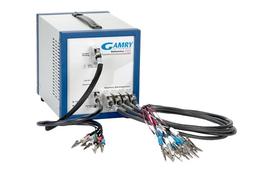
Reference 3000AE shown with cables

The supplier does not provide quotations for this product through SelectScience. You can search for similar products in our Product Directory.
Excellent potentiostat for research
Water Electrolysis and fuel cells
Great potentiostat that can be used for many of electrochemical applications. It is used for research scale, but having additional booster makes it easy to do research at a larger scale. Software is easy to use, and has comprehensive functions that can be modified simply through separate coding.
Review Date: 16 Oct 2025 | Gamry Instruments
The Gamry Reference 3000AE is a versatile, precise potentiostat, perfect for advanced electrochemical research tasks
Electrochemical testing
The Gamry Reference 3000AE is an exceptionally versatile and dependable potentiostat that excels in various electrochemical applications due to its precision, user-friendly design, and flexible programmability. It is particularly well-suited for electrochemical energy technologies, battery research, and corrosion testing tasks. Its capacity to manage high currents and voltages, along with features such as auxiliary inputs/outputs and the option to integrate additional boosters, positions it as a top choice for complex electrochemical measurements. Overall, the Gamry Reference 3000AE consistently delivers outstanding performance across a diverse range of applications. Supported by strong customer service and an adaptable feature set, it continues to be highly recommended by researchers and engineers seeking a reliable and robust tool for electrochemical analysis.
Review Date: 20 Sept 2024 | Gamry Instruments
The Gamry AE3000 met our expectations and needs
Fuel cell diagnostics and impedance
The Gamry AE3000 was the ideal solution for our lab scale single cell and short stack fuel cell diagnostic needs. The floating electrodes allow for performing parallel impedance measurements with ease. The software and data analysis packages are easy to use and the training time for new students is very short. I like the use of the calibration board for routine validation of the unit's performance, without having to send the unit back to the manufacturer. These days many suppliers of potentiostat/galvanostat/FRA systems exist and we were looking to upgrade our old Solartron setup and the price point and functionality met our needs; so much so I just bought a second unit for our lab.
Review Date: 11 Sept 2024 | Gamry Instruments
Unique combination of properties that aren't possible with competitive instruments
Li-ion Batteries
Great results, accuracy, and programmability. Also, good customer support and application notes. Unique ability to pair with booster 30K to increase current and voltage compliance. I also plan to use the high frequency AC at high amplitude which is not available with other instruments.
Review Date: 13 Oct 2021 | Gamry Instruments
Great results.
Corrosion
Usability: Very good. Reliability: Very good. Software: Easy to use. After sales service: Efficient. Applications: Corrosion testing and paint evaluation.
Review Date: 15 Mar 2021 | Gamry Instruments
Great instruments. I only choose Gamry.
Electrochemical energy tech, batteries, electrolysers
I love the Gamry instruments. I have brought 7 over the last few years. They are easy to use, data is easy to export and have excellent support. Particularly like Aux inputs and outputs. Use some of these to record cell voltages and CE - ref potential. Aux output used to control shutter for photo echem setup. Highly recommended!
Review Date: 10 Mar 2021 | Gamry Instruments
Very useful for lab scale battery testing!
Flow battery testing
Valuable and effective tool for electrochemical lab testing of batteries and electrolyzers. We receive reproducible results and we appreciate the fast and friendly service.
Review Date: 13 Oct 2020 | Gamry Instruments
Great for quick results.
Analyze alkaline electrolyzer cells
A great device to quickly run standardized tests. For independent high level results, you'll need to get used to the special handling of Gamry software.
Review Date: 13 Oct 2020 | Gamry Instruments
Great product and great service.
Electro-polishing and electro-chemistry
I like this product and service from the company is fabulous. The technical support company is very professional.
Review Date: 4 Dec 2019 | Gamry Instruments
Easy to use, efficient and a comprehensive tool.
Supercapacitors
Compared with others, It is easy to use, efficient and a comprehensive tool. I've been using it for five years, almost uninterrupted, for a long period of charge-discharge experiments. I have no problems.
Review Date: 4 Dec 2019 | Gamry Instruments
The Reference 3000 AE is a high-current, high-performance potentiostat designed for use by battery, fuel cell and supercap researchers.
The additional voltage sensing channels make it especially useful for testing of multiple cells within a stack or measuring auxiliary voltages from devices such as pressure gauges or pH meters.
Features:
- Dual compliance – 15 V at 3A or 32 V at 1.5 A
- 2, 3, 4, 5, 6 or 22 cell connections
- EIS to 1 MHz
- Current Interrupt and Positive Feedback iR Compensation
- Auxiliary I/O
- Boostable to 30 A
Techniques Available:
- Physical Electrochemistry
- Pulse Voltammetry
- DC Corrosion
- Battery Testing
- Electrochemical Noise
- Electrochemical Impedance Spectroscopy
- Critical Pitting Temperature
- Custom techniques available

High-current pulses for battery research
In this application note, Gamry Instruments demonstrates the ability of the Reference 3000™ potentiostat/galvanostat and the Reference 30k™ Booster to handle the demanding requirements involved in cell testing. There are many different ways of testing batteries and battery materials to determine their characteristics. Traditional methods include:
- Long-term cycling to determine cycle life and capacity fade
- Electrochemical impedance spectroscopy (EIS), internal resistance capacitance, and other characteristics
- Potentiostatic (and galvanostatic) intermittent titration techniques (PITT/GITT) for diffusion rates, leakage rates, and self-discharge
There are many others but these form the basis for a large number of tests. Gamry Instruments equipment has been designed to be able to do these types of rapid, high-current pulses. The Reference 3000 potentiostat/galvanostat and Reference 30k Booster can accurately generate current pulses as short as the high tens of microseconds. Download this free application note to find out more.
Characterization of batteries and fuel cells using electrochemical impedance spectroscopy
Alternative energy sources are becoming more prevalent as alternatives to fossil fuels become important in the electricity generation equation. Fuel cells and batteries both play their part in this arena for energy storage and conversion. Their success depends on continued improvement in performance. While there are many tools used in the characterization of these devices during all stages of developent, one stands common – electrochemical impedance spectroscopy. Electrochemical impedance spectroscopy (EIS) is a powerful technique that is particularly useful for battery and fuel cell development. What makes this technique so powerful is that it is a non-destructive technique that allows you to characterize everything from materials, to cells, to modules, and even full packs.
Setting up two, three and four electrode experiments
Electrochemical experiments range from simple potentiostatic (chronoamperometry) to cyclic voltammetry (potentiodynamic), to complex AC techniques such as impedance spectroscopy. Moreover, each individual technique may have multiple possible experimental setups, often with a best option. This note discusses one aspect of these setups: the number of electrodes (or probes) used.
Square-wave voltammetry
Among the many electrochemical techniques available in Gamry Instruments’ Framework™ software is square-wave voltammetry, a form of pulse voltammetry. This Application Note describes what square-wave voltammetry is, and the parameters involved.
Checking the integrity of a Gamry cell cable
Of all the components of a Gamry Instruments system, the cell cable is the one that is constantly being flexed and exposed to corrosive environments. In this application note, Gamry outlines how to check the integrity of a cell cable.
Troubleshooting your Gamry potentiostat
In this application note, Gamry outlines how to troubleshoot, calibrate and check the EIS performance a Gamry potentiostat.
How to Set Up Your Electrochemical Experiment: Two-, Three-, and Four-Electrode Experiments
This applcication note explores and explains the setup of Gamry Instruments potentiostats in a series of electrode experiments. This note is applicable to any Gamry potentiostat, as well as some others.
Testing Super-Capacitors Part 1 – CV, EIS, and Leakage Current
Super-capacitors generally store energy through the physical separation of electrical charges. This application note is the first part of a two-part overview of the electrochemical techniques used to test a super-capacitor device or technology. Part 1 introduces super-capacitators, describes ideal and non-ideal capacitors and discusses techniques familiar to electrochemists including Cyclic Voltammetry, Electrochemical Impedance Spectroscopy and measurement of leakage current.
Accuracy Contour Plots – Measurement and Discussion
Electrochemical Impedance Spectroscopy (EIS) is an indispensable, valuable, and versatile analytical tool for resolving electrochemical processes. This technical note discusses the Accuracy Contour Plot (ACP). The ACP gives the user valuable information about a potentiostat’s EIS performance and accuracy, enabling the user to compare the EIS capability of any potentiostat.
Testing Electrochemical Capacitors Part 3: Electrochemical Impedance Spectroscopy
This application note is Part 3 of the series describing electrochemical techniques for energy-storage devices. It discusses basics of Electrochemical Impedance Spectroscopy (EIS) and introduces Gamry’s EIS techniques by measurements on single electrochemical capacitors (ECs) and stacks.