Minor groove binder (MGB) probes
Licence-free MGB probes for any application

Receive your quote directly from the manufacturer.
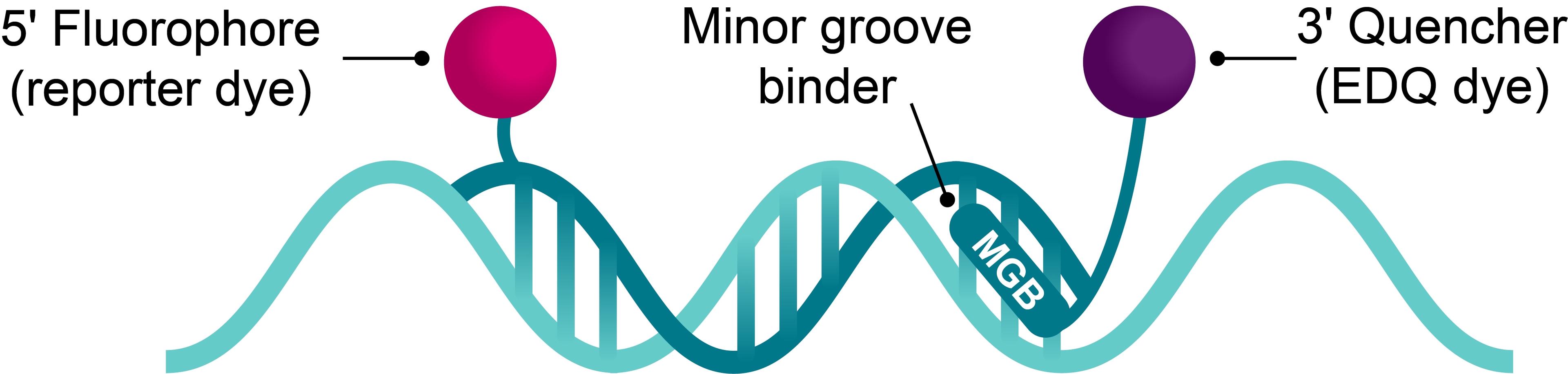
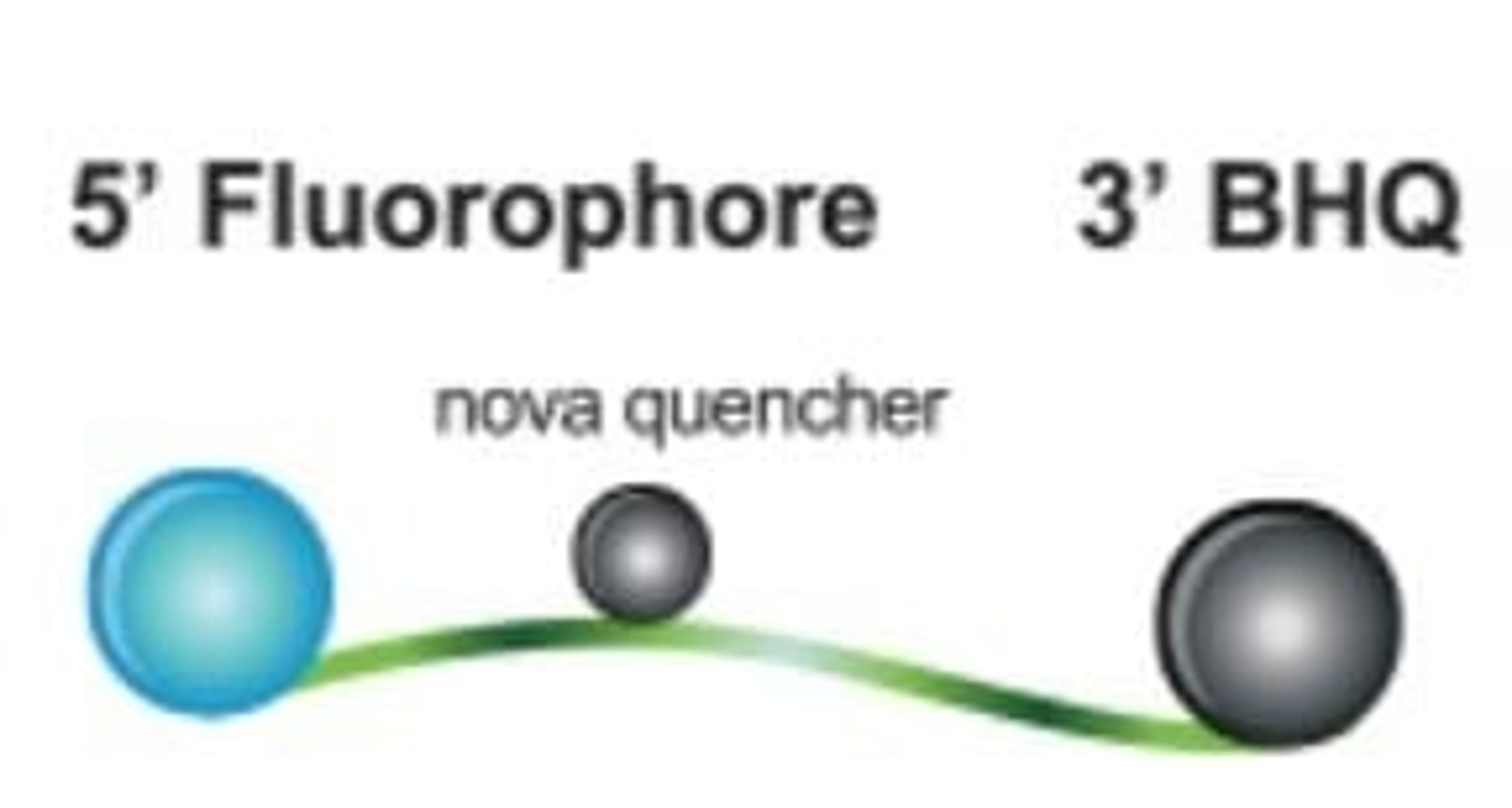
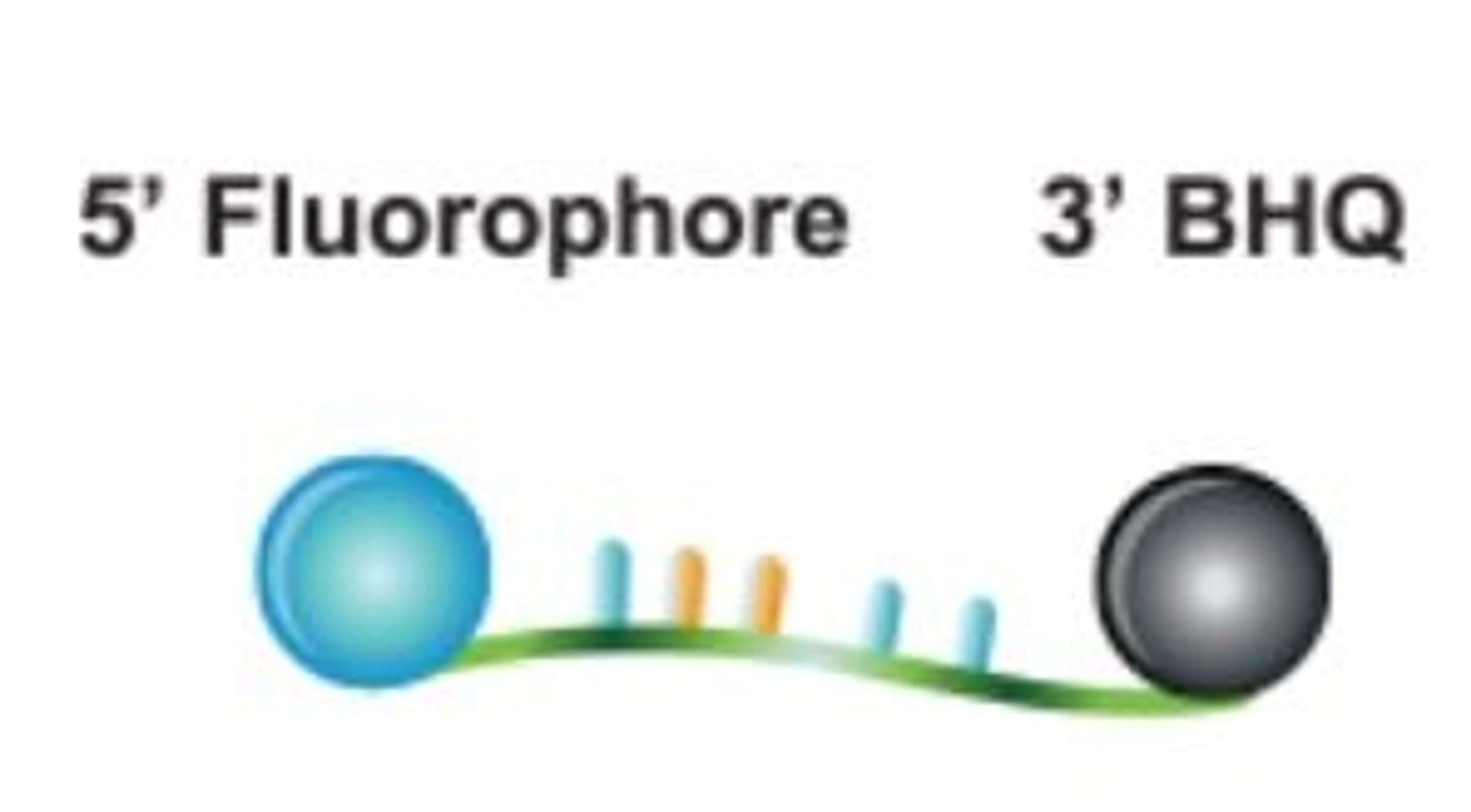
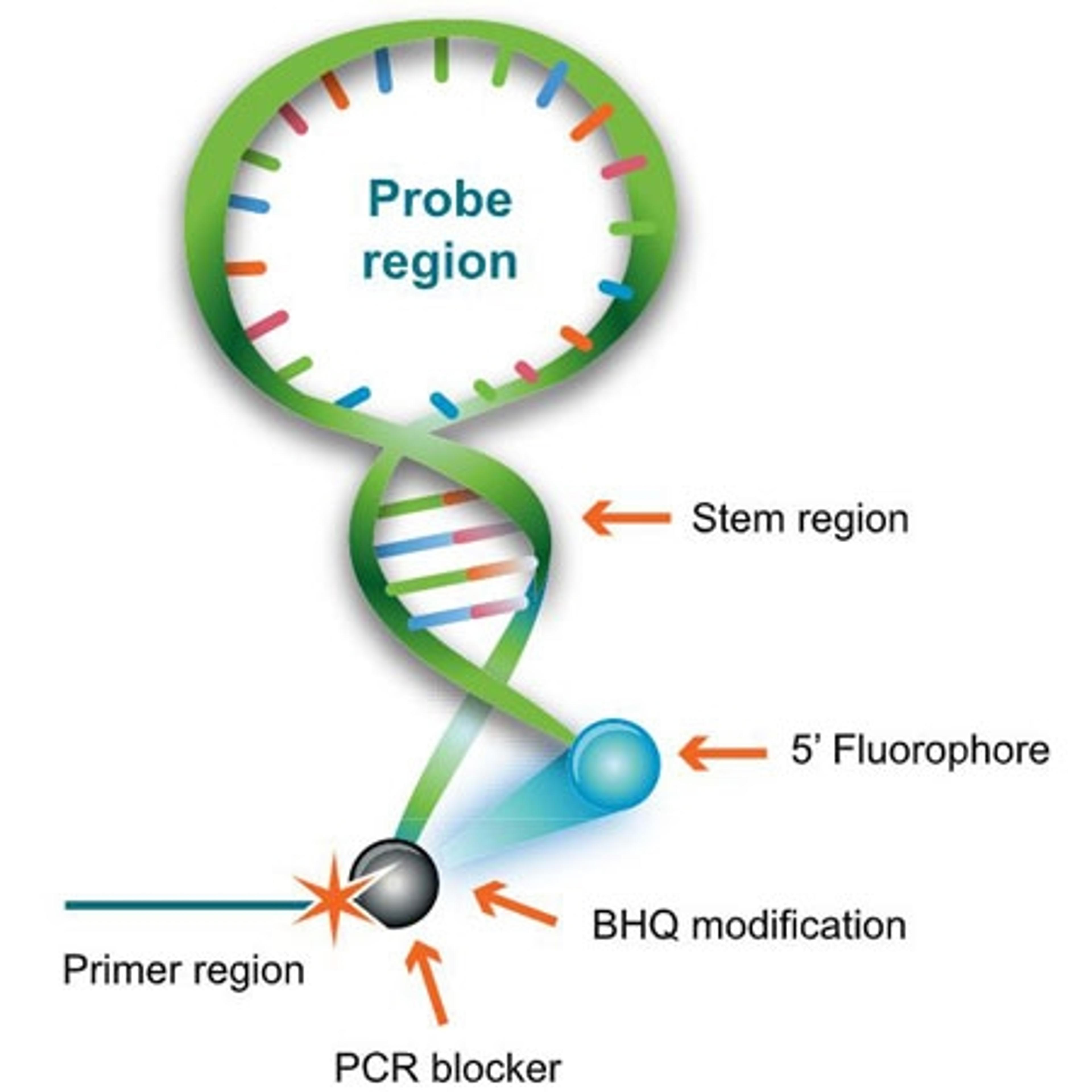
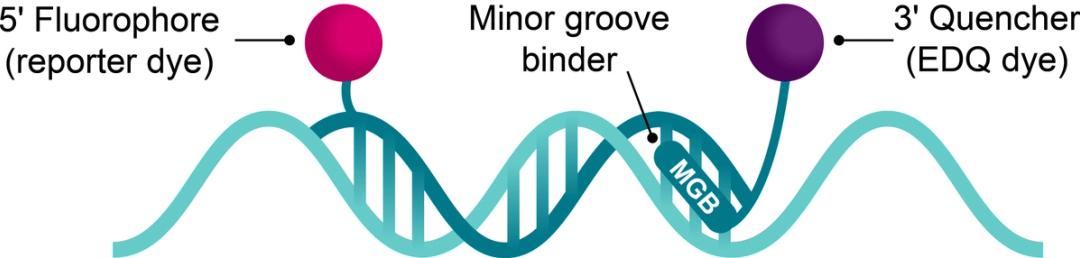
Minor groove binder (MGB) probes are dual-labeled 5' hydrolysis probes consisting of a 5' fluorescent reporter dye and a 3' Eclipse Dark Quencher (EDQ) conjugated to an MGB moiety. Biosearch Technologies offers high-quality yet cost-effective MGB oligos with a competitive turnaround time and no minimum order quantity.
Short probe design delivers high specificity and signal-to-noise
The 3' MGB moiety binds non-covalently to the minor groove and stabilizes the target-probe duplex, effectively increasing the Tm of the duplex. The increased Tm allows probes to be shorter, which increases sequence specificity.
A shorter probe has greater quenching efficiency because the dye is closer to the quencher. Combined with a non-fluorescent quencher, such as EDQ, the short MGB probe leads to a low background and high signal-to-noise.
Improved SNP/mismatch discrimination
Single base mismatches have a more significant destabilizing effect on MGB probes than other probe types, mainly when the mismatches are within the minor groove binding region. This dramatically enhances the ∆Tm for a mismatch and improves SNP discrimination.
Trusted supplier of high-quality oligos
Our multi-site oligo manufacturing operations provide manufacturing redundancy, risk mitigation, and surge capacity. With our unique vertical integration, our chemical manufacturing labs produce most of the critical raw materials used in our own oligo synthesis methods, ensuring a steady and secure supply chain as well as consistent quality at every stage of development. By manufacturing our own dyes, quenchers, specialty amidites, CPG, and specialty synthesis columns, we ensure that we are a reliable partner from project inception through commercial scale up.

Top tips for robust qPCR results
Reproducibility issues are a common pain point experienced by scientists carrying out quantitative polymerase chain reaction (qPCR), or real-time PCR, with challenges being linked to suboptimal design, probe selection, or workflow execution. The inconsistencies impact not only data quality, but also wasted time, lost samples and delayed research milestones.
A successful qPCR experiment relies on a well‑designed workflow, from high‑quality sample preparation to optimized reagents, primers, and probes, supported by thoughtful assay design that avoids issues like nonspecific binding or inefficient amplification. Expert probe‑selection strategies enhance specificity, especially in multiplexing, while effective troubleshooting helps diagnose common problems such as poor efficiency, primer‑dimers, or high variability. By applying key optimization techniques, researchers can achieve sensitive, accurate, and reproducible qPCR results.
Download this SelectScience guide to explore:
- How to overcome challenges in qPCR assay design
- A guide to selecting the right qPCR probe
- The best way to troubleshoot your qPCR
- Tips for qPCR optimization and validation
Resource details:
- Document type: SelectScience guide
- Page count: 49
- Read time: 69 mins
- Edition: 1st

Simplifying the journey from molecular diagnostic assay development to commercialization
Molecular diagnostics (MDx) is rapidly advancing, with a growing array of DNA- and RNA-based tests now available to physicians, pharmacists, geneticists, research scientists, and other healthcare professionals.
As labs work with human and microbial genes, test developers must comply with clinical guidelines and regulations. Both established companies and start-ups face challenges, including meeting regulatory standards, ensuring quality, and managing supply chain issues. Early planning and robust partnerships are key to overcoming these obstacles.
This essential guide explores these challenges through detailed case studies. It covers everything from early development and assay formulation, to supply chain security, offering expert insights on successfully bringing PCR, next-generation sequencing (NGS), and other nucleic acid-based diagnostic tests to market.
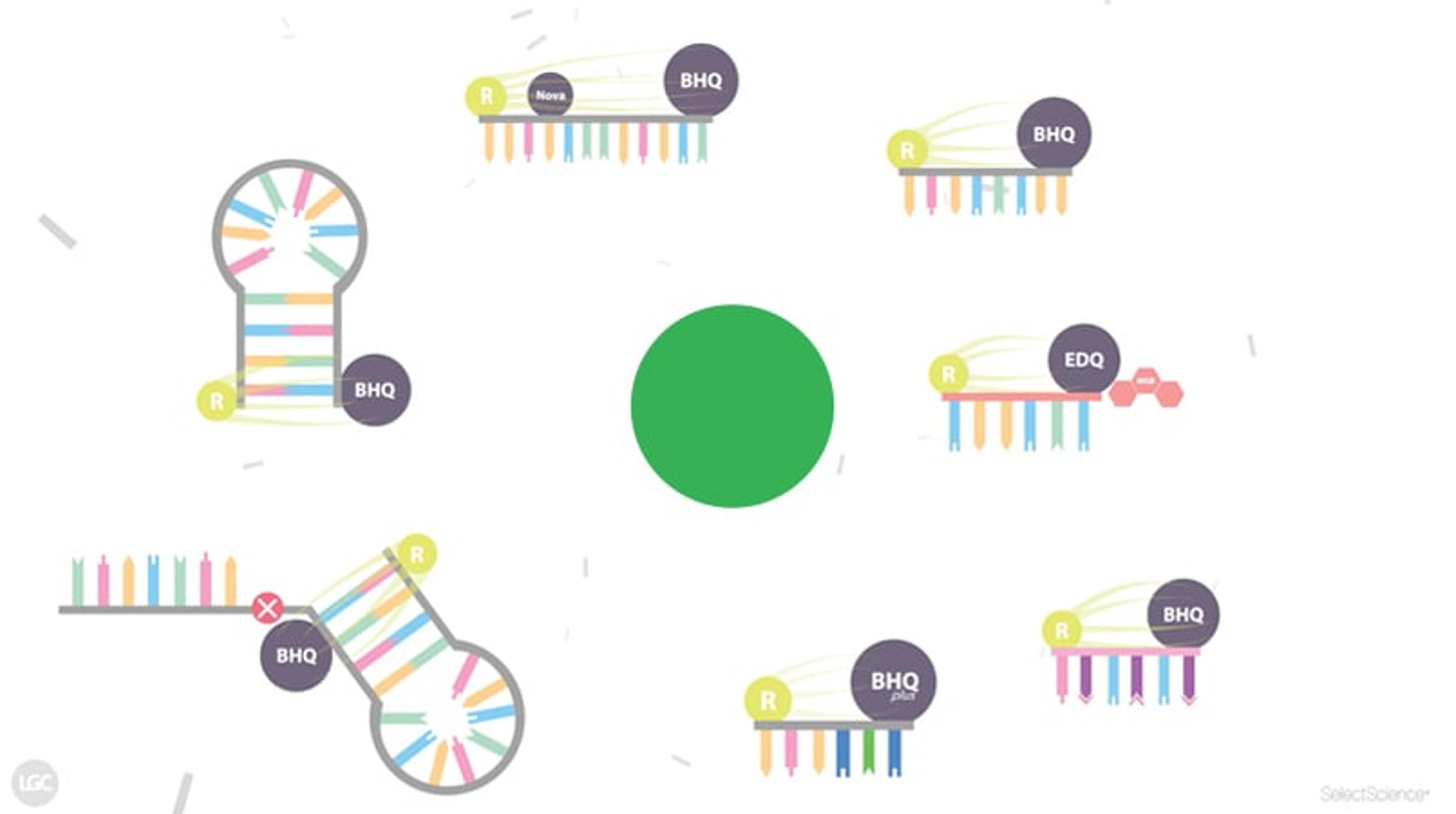
7 innovative qPCR probe types explained
This comprehensive walkthrough animation outlines the latest developments in probe technologies in the qPCR field, highlighting the mechanisms of seven different real-time PCR probe and primer formats:
- Dual-labelled hydrolysis probes [00:19]
- BHQnova™ Probes [01:17]
- Minor groove binder (MGB) probes [01:49]
- Locked nucleic acid (LNA) probes [02:31]
- BHQplus™ Probes [03:15]
- Molecular Beacons [04:45]
- Scorpions™ Primers [06:00]

PCR Forge cuts through the guesswork of multiplex PCR design
Explore how a free web-based design tool is removing the barriers to building robust PCR assays