Junior
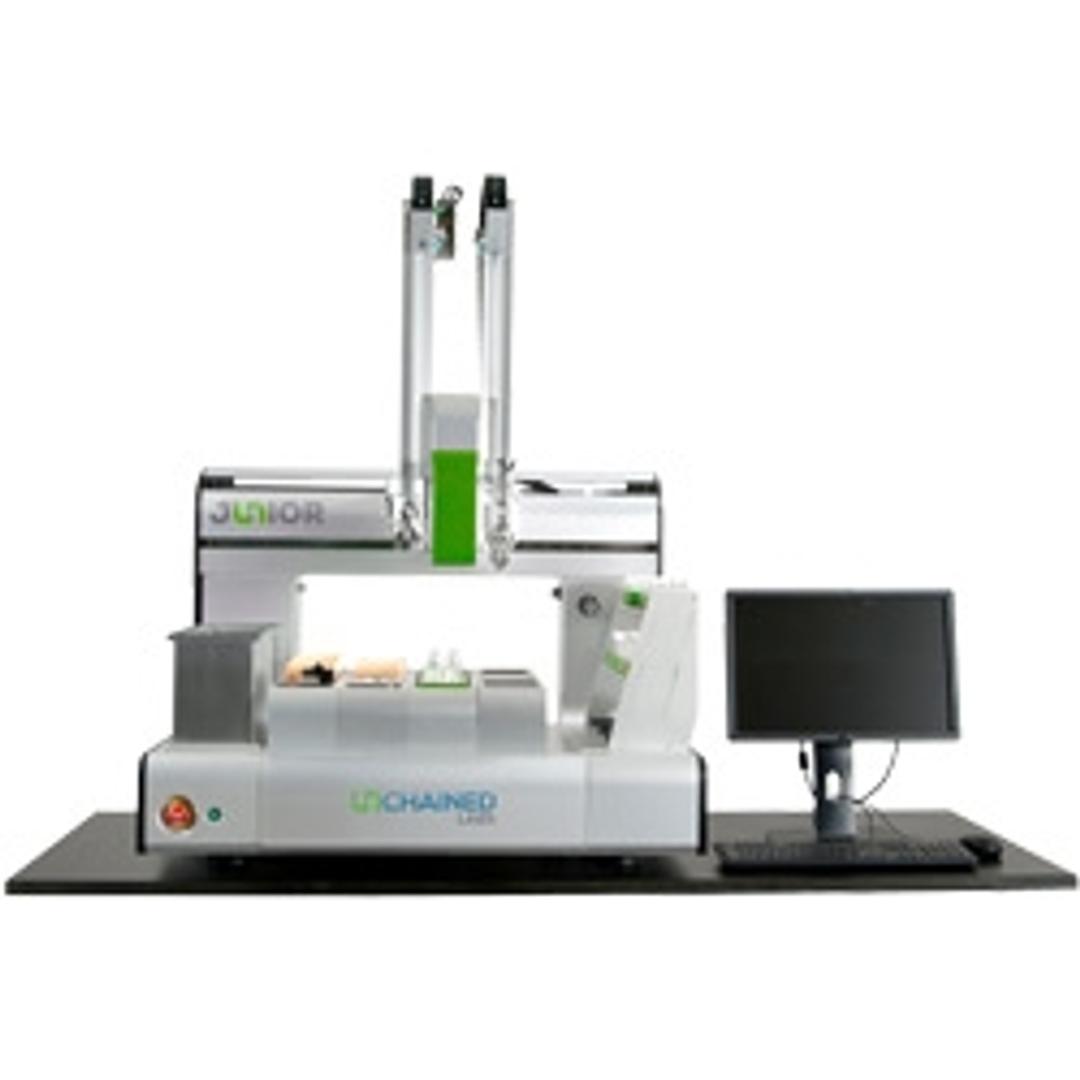
The most configurable benchtop workflow solution
The most configurable benchtop workflow solution

Receive your quote directly from the manufacturer.
Automate your benchtop
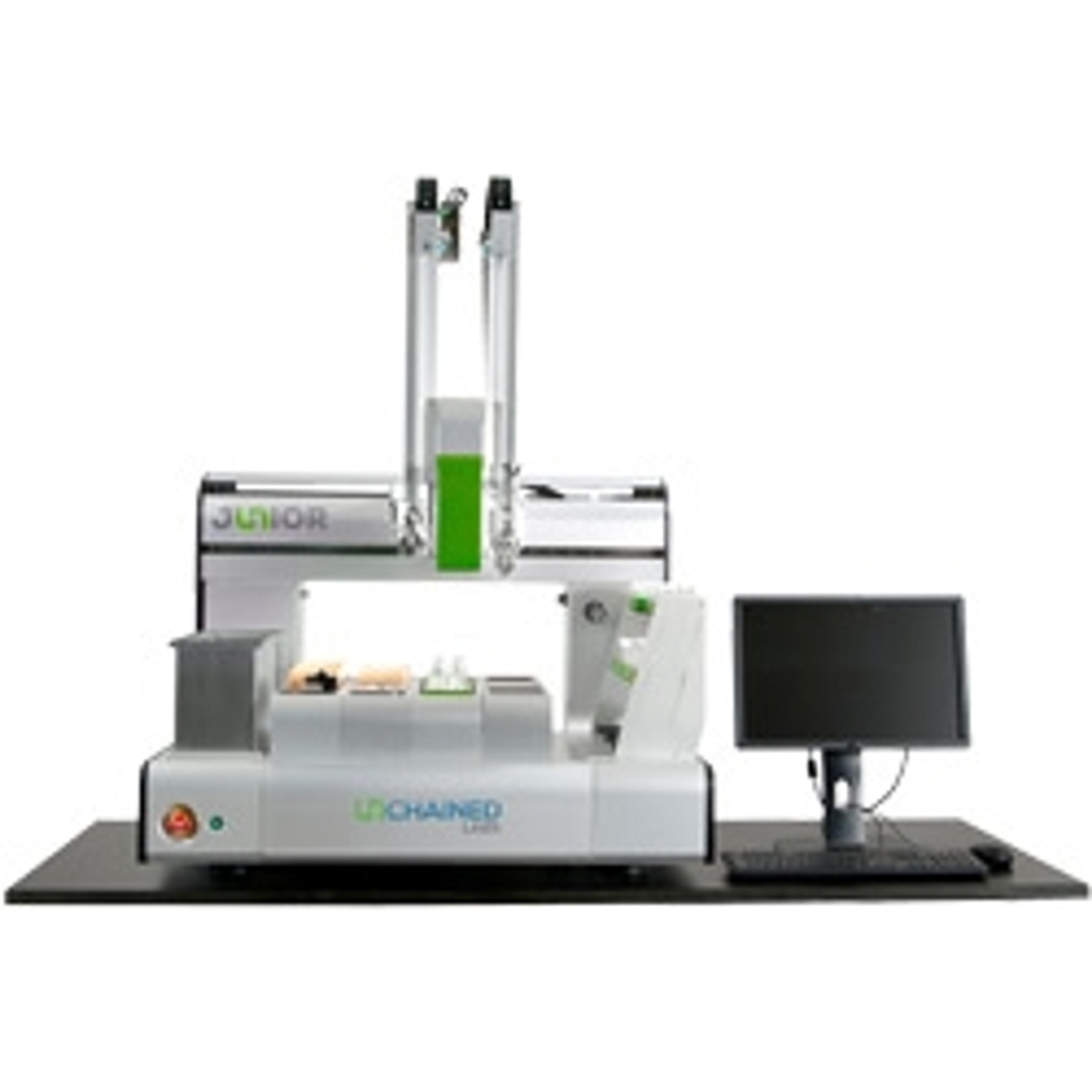
Junior automates all your hands-on, back and forth and hard to do biologics formulation, small molecule preformulation and process chemistry tasks. Power through more samples in a single day, and get them done the same way every time. Hand off your routine work to Junior, and hit the next big thing on your plate instead.
Hand it off
Walk up, set up your run and walk away. Junior automates the parts of your API screening process you’d normally do one by one at the bench. Preconfigured decks for high-throughput solubility and polymorph screenings are ready to go when you are. Examine more variables in a single day, get them done the same way every time and check out a broader developability and formulation space.

Fast Track Mass Spec Sample Prep
Mass spectroscopy (MS) is a ubiquitous characterization tool that is vital to biologics development. Unfortunately many MS experiments require a compatible sample solution that differs from the supplied formulation to acquire high quality mass spectra. For example, electrospray ionization (ESI) experiments require a solution of water, organic solvent and organic acid as well as the removal of salts, detergents and buffering molecules. To remove these unwanted buffer components and to hit the right solution conditions, buffer exchange and/or dilution are commonly used.
Unleashing High-Throughput Reaction Screening the Unchained Way
A successful high-throughput approach to reaction screening requires rational and systematic exploration of a broad set of variables to achieve optimization expeditiously. There are many types of potential variables that can be screened. Even with the aid of high-throughput screening tools, chances are that it’s still unlikely to screen all the possible combinations of reaction variables a process chemist desires. A well-planned high-throughput approach enables scientists to more clearly see the “big picture”, quickly abandon disadvantaged routes and rapidly pinpoint advantageous and impactful conditions to focus on.
Accelerating your Process Optimization: Sampling from Reactions In-Progress Means Better Decisions in Less Time
Drug development and fine chemical researchers are always searching for the best reaction conditions — those that give the greatest yield, the highest purity or the most reaction control, using the most cost effective reagents and conditions. Getting detailed knowledge of how a reaction performs under a variety of conditions is ideal, but the level of detail needed to make optimal process decisions is usually unobtainable due to time and resource constraints. As a result, your process is limited by inadequate information. Times have changed and technology exists that can give you a better understanding of a reaction profile and enable critical scale-up and control strategies.
Integrating Automation and DOE to streamline and Accelerate Quality by Design Activities for Process Chemistry
Getting drugs to market is hard. Modern drug development organizations face many business and environmental challenges. Billions of dollars are spent on new molecules or vaccine discoveries that can fail at any point in development, during the manufacturing process or in clinical trials. It is critical to design safe drug products and develop robust processes that minimize project risk as a candidate moves through development, out to the plant and into humans. In addition, in the eyes of the regulator, the application of Quality by Design (QbD) principals will soon become mandatory in drug submissions.
Let it Flow: Automated Low Volume Viscosity Measurements with Junior
Biologic drug products typically need to be manufacturable and deliverable at high concentrations. High concentration monoclonal antibody (mAb) formulations are often highly viscous, making the manufacture and delivery of these formulations potentially problematic. Measuring the viscosity of a biologic formulation at its intended final concentration can help to more fully characterize the developability of the biologic
drug product.
Off to the Races: Rapid Buffer Exchange, Protein Quantification and Stability Screening with Junior, Lunatic and Uncle
The conformational, chemical and colloidal stability of a protein are strongly influenced by the buffer solution. Altering buffer salts, pH, ionic strength, excipients and surfactants may increase or decrease the stability of a molecule. The process of screening formulation buffers to optimize stability is a time consuming process. The time required to perform buffer exchange is often a limiting factor in biologics development. Junior with buffer exchange removes the buffer exchange bottleneck by automating buffer exchange and sample concentration, which reduces required hands-on time and increases the number of samples that can be prepared in a day.
Fully Automated Turbidity Measurements of mAbs with Junior VIS
Turbidimeters are routinely used to evaluate protein stability throughout formulation development. Although they provide accurate results and are easy to use, they require significant hands-on time. The visual inspection station (VIS) from Unchained Labs provides an alternative which can perform hundreds of turbidity measurements per day with minimal hands-on time. This application note compares the automated VIS to a standard turbidimeter, the Hach Lange 2100 AN, using five mAb drug formulations currently in development.
Automated Viscometry Measurement with Junior VIS
Many mAb formulations require high concentrations (>150 mg/ml mAb) to be effective, which can increase their viscosity and limit drug delivery options. Routine viscosity screening of drug candidates and formulations can be extremely time-consuming when using conventional manual techniques. In this application note, the viscometry results for six mAb formulations (20–200 mg/ml) measured using Unchained Labs' viscosity station and a Malvern Kinexus rheometer are compared, showing how the viscosity station can increase lab productivity.
Eliminate the Bottleneck in Powder Dispensing
Many consider the time-consuming task of manually dispensing and weighing solids to be an unavoidable bottleneck. Concerns about the precision and accuracy of dispensing and accurate handling of powders with a wide variety of characteristics still prevent some labs from adopting automated solid dispensing technologies. This application note demonstrates the precision, accuracy and flexibility of Unchained Labs' Junior for powder dispense, by describing the accurate dispensing of a variety of powders with very different characteristics.
Automation of mAbs Stress Testing with Visual Inspection on Junior
Discover an automated method that can analyze biological formulations in minutes. In this application note, Junior with VIS was used to analyze the color, visible particle count, and turbidity of monoclonal antibodies (mAbs) of various concentrations and formulations. The LEA software suite paired with the LEA Analysis Add-in for Excel were used to analyze results.
How to Save Time by Automating Your Buffer Exchange Analysis
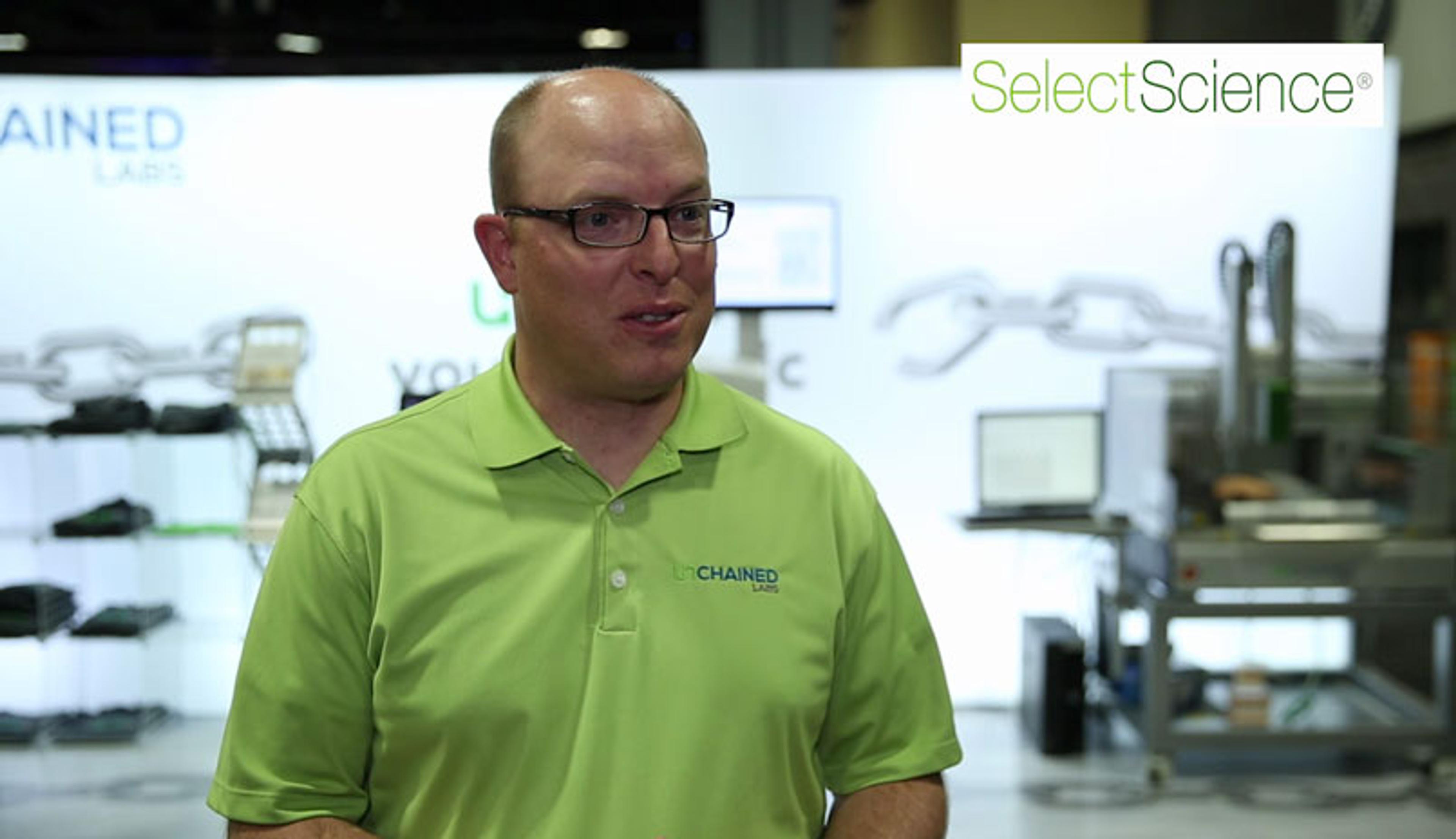
Discover the comprehensive portfolio of buffer exchange products available from Unchained Labs. In this interview, John Proctor, Ph.D., Senior Director, Marketing, Unchained Labs, explains how their technology enables automation of lengthy manual methods, reducing hands-on time down from days to just one hour, with the system handling the rest of the process. He explains that they aim to bring biologics tools to the pharmaceuticals industry that simplify biologics research, enabling researchers to discover "the next big thing".