Interface 5000E Potentiostat
A full-featured potentiostat for battery testing, fuel cells and supercapacitor testing.
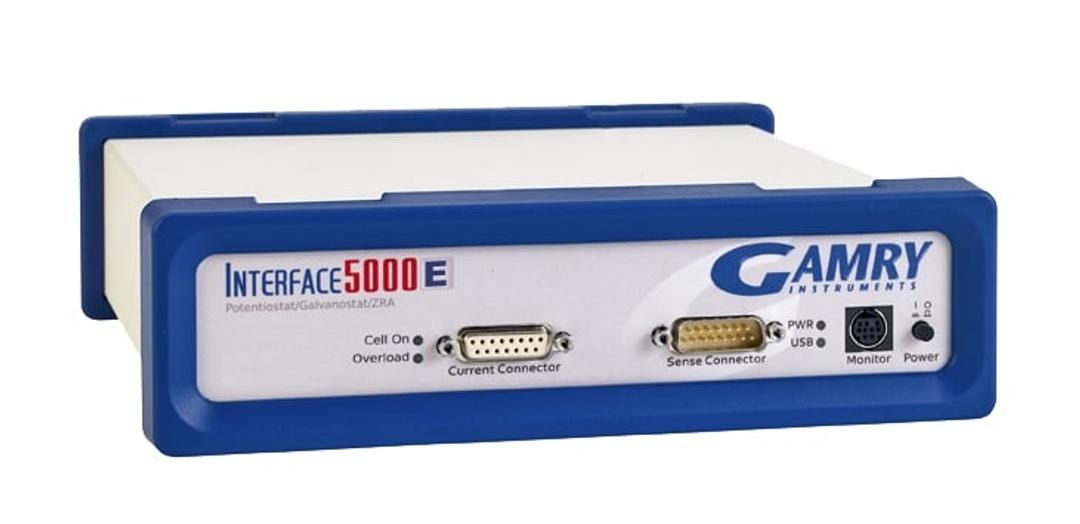
Interface 5000E for battery testing
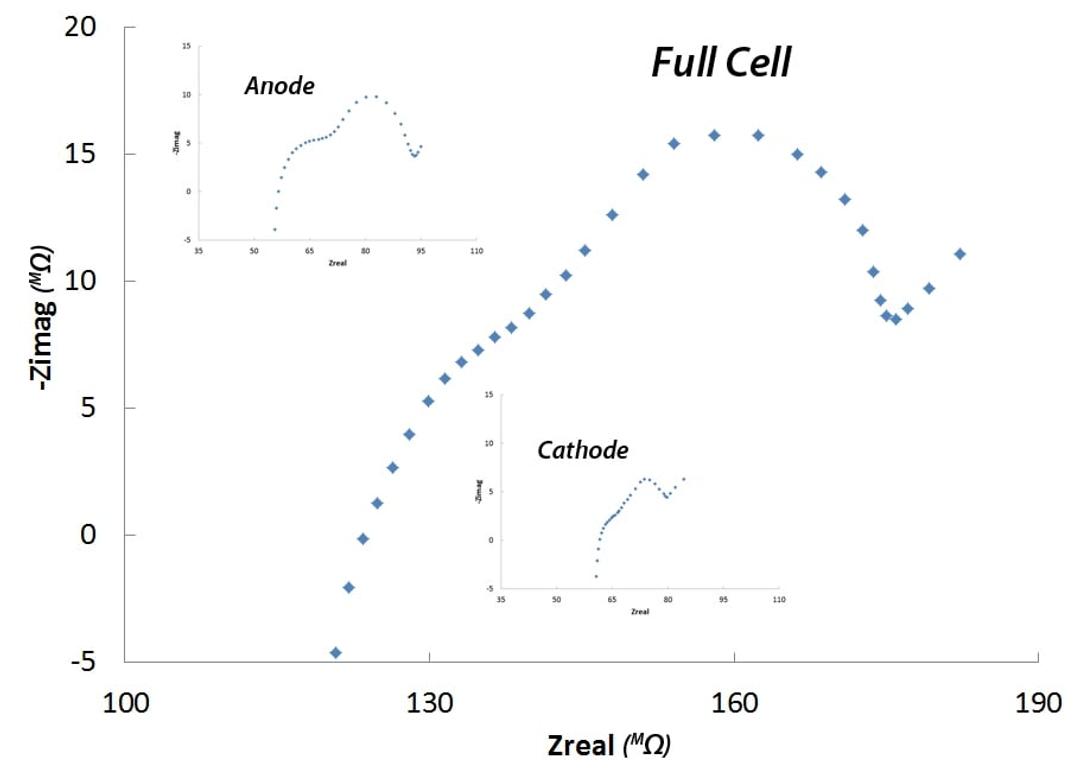
Monitor both half cells



The supplier does not provide quotations for this product through SelectScience. You can search for similar products in our Product Directory.
Super easy development product
Lithium ion cell
We bought it 1 year before. It works seamlessly and it really helps for the research.
Review Date: 11 Sept 2024 | Gamry Instruments
Good device and easy to handle
Electrolysis
I think the product is very useful, but it would be better if the voltage of the counterelectrode (responisble voltage) have a wider range, because sometimes there are distances and memebranes inbetween and a overload occurs. That would be easier with a higher responsible voltage of the counter electrode.
Review Date: 14 Jul 2022 | Gamry Instruments
Incredible equipment and company
Analyze electrochemistry in battery and supercapacitor materials
Gamry has an astounding reputation and its for a great reason. We use their 5000E interfaces on a day to day basis for analyzing electrochemical reactions and characterizing materials. The equipment is incredibly sensitive, accurate and easy to use. Their software is quite user friendly and has astounding capabilities for retrofitting operations to your daily needs. We highly recommend this product for anyone who is interested in detailed assessment of electrochemical processes. Gamry has spanned their capabilities to a variety of power levels which offers benchtop evaluation systems with easy scalability.
Review Date: 4 May 2022 | Gamry Instruments
Simple but powerful
Battery
A simple and easy-to-use potentiostat to perform EIS and CV electrochemical diagnostic methods for Li-ion batteries.
Review Date: 8 Feb 2022 | Gamry Instruments
Great reproducible EIS-experiments
Electrochemical fuel cell characterization
The Gamry Interface 5000E is a perfect tool for characterizing electrochemical processes within a fuel cell by impedance spectroscopy. In particular, the good and easy-to-use software as well as the Labview interfaces make the use of this and other Gamry devices very simple.
Review Date: 15 Dec 2021 | Gamry Instruments
IFC 5000E is great for Li-Ion Battery testing.
Battery characterization
We're using four IFC 5000E for battery characterization and ageing diagnosis in our research battery laboratory. The results of those tests are used to assess the safety of aged/EOL Li-Ion batteries for further sencond life use. We really like the ease of use. You can just connect multiple IFC 5000E to a PC and the software automatically detects and connects them. The software for the experiments is very easy to use. What we'd wish to see for next generation equipment is a ethernet connection.
Review Date: 22 Jul 2021 | Gamry Instruments
A great potentiostat in a small form factor
Electrocatalysis research
Easy to use, versatile, and with plenty of experiment scripts, this portable potentiostat is my go-to. Pros: Great capabilities, experiment sequences are easy to build, easy to use, portable, the knowledge database/documentation on Gamry’s website is unparalleled, great customer service, inexpensive, 5 A current. Cons: Short cables (that make for better impedance results, yet can make it hard to reach), the cables are stiff and can get damaged by bending
Review Date: 11 May 2021 | Gamry Instruments
Incredible equipment.
Energy supercapacitors
Electrochemical characterization of composites performance in liquid solutions. Absolutely incredible equipment with excellent accuracy.
Review Date: 5 May 2021 | Gamry Instruments
I strongly recommend Gamry.
Study the electrochemistry of batteries
The price of the Gamry Interface is lower than any other equivalent instrument from other suppliers and it's very easy to use. I strongly recommend Gamry.
Review Date: 18 Sept 2020 | Gamry Instruments
Quality data and intuitive software interface. I would definitely purchase again!
Flow battery testing and analysis
We use this unit to flow test battery electrolytes and evaluate their electrochemical performance. The software is straightforward to learn and use, especially for setting up long-term cycling studies. The EIS is superb and efficient. We have published data collected with the Interface 5000E in several top tier research journals.
Review Date: 5 May 2020 | Gamry Instruments
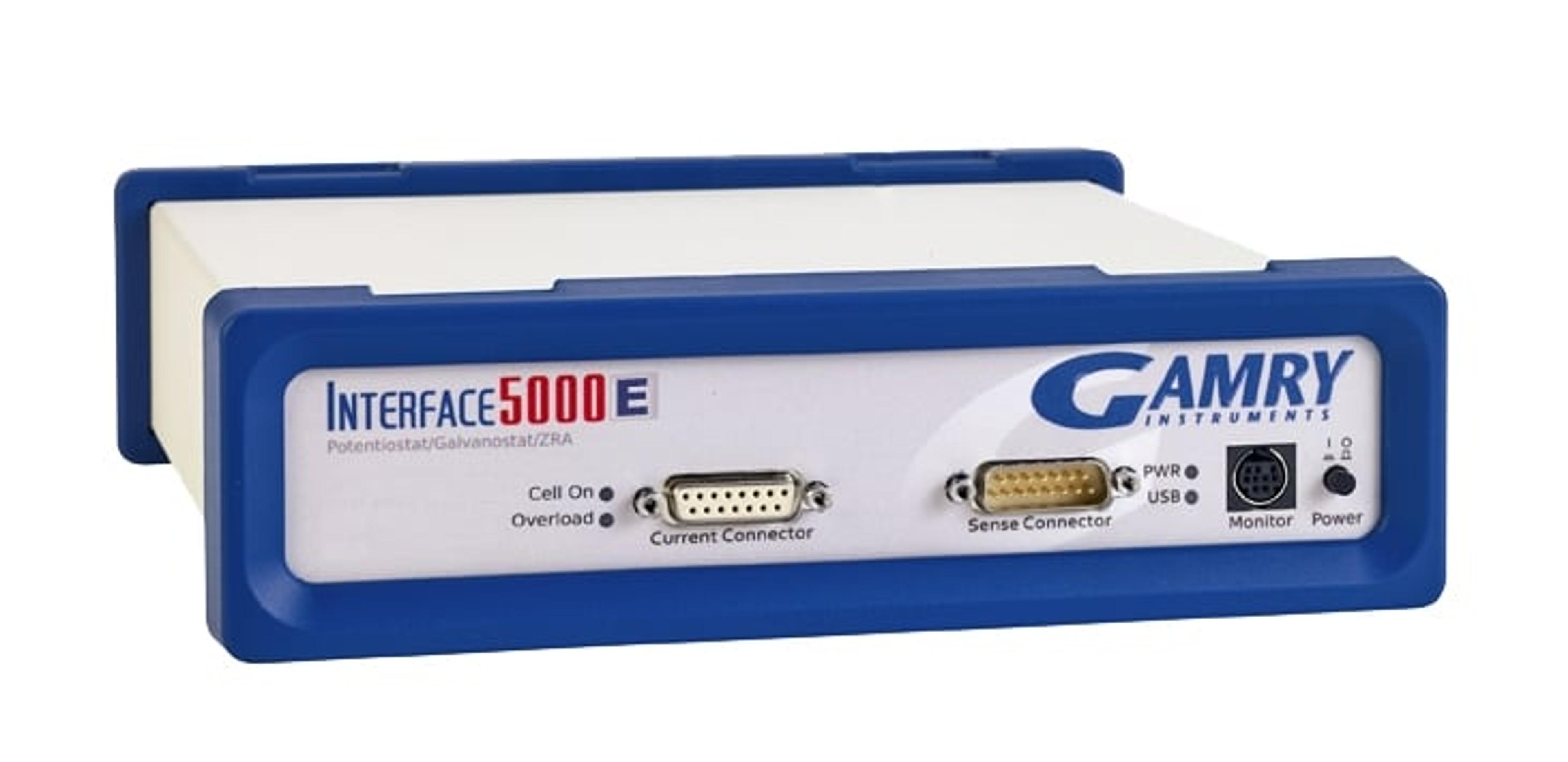
The Interface 5000E potentiostat is designed for cell-level testing of various energy storage and conversion devices and includes capabilities for monitoring both half cell voltages in addition to the whole cell voltage during an experiment.
A second electrometer gives you the ability to monitor both half cells in a typical three electrode setup. You can monitor both the anode and cathode in addition to the entire cell in charge/discharge experiments and EIS experiments.
Features:
- Designed for cell-level testing of various energy storage and conversion devices.
- A second electrometer gives you the ability to measure both half-cell voltages in a typical three electrode setup.
- EIS 10 μHz - 1 MHz.
- Currents up to 5 A.
Techniques Available:
- Battery Testing.
- Testing of fuel cells and supercapacitors.
- Electrochemical Impedance Spectroscopy.

EIS of difficult samples
Electrochemical Impedance Spectroscopy (EIS) is a technique that can be applied to various systems. This white paper is designed to give helpful information for systems that are a bit more challenging to measure. Typical examples would include barrier coatings, very corrosion-resistant materials, and very low impedance samples such as large supercapacitors (on the order of hundreds or thousands of Farads).
Simultaneous half-cell measurements on energy devices
In this application note, Gamry Instruments looks at the dual-electrometer feature in the Interface™ 5000 potentiostat using an equivalent circuit meant to mimic an energy storage device. The dual electrometer allows the user to make a second voltage measurement in addition to the one made by the potentiostat. Effectively, the dual-electrometer feature allows users to make five-electrode measurements.
Characterization of batteries and fuel cells using electrochemical impedance spectroscopy
Alternative energy sources are becoming more prevalent as alternatives to fossil fuels become important in the electricity generation equation. Fuel cells and batteries both play their part in this arena for energy storage and conversion. Their success depends on continued improvement in performance. While there are many tools used in the characterization of these devices during all stages of developent, one stands common – electrochemical impedance spectroscopy. Electrochemical impedance spectroscopy (EIS) is a powerful technique that is particularly useful for battery and fuel cell development. What makes this technique so powerful is that it is a non-destructive technique that allows you to characterize everything from materials, to cells, to modules, and even full packs.
Troubleshooting your Gamry potentiostat
In this application note, Gamry outlines how to troubleshoot, calibrate and check the EIS performance a Gamry potentiostat.
How to use the Interface 5000 Dual Electrometer
In this technical note, Gamry Instruments describes how to utilize the Dual Electrometer feature of the Interface 5000 to simultaneously measure both half cells of a symmetrical cell.
How to Set Up Your Electrochemical Experiment: Two-, Three-, and Four-Electrode Experiments
This applcication note explores and explains the setup of Gamry Instruments potentiostats in a series of electrode experiments. This note is applicable to any Gamry potentiostat, as well as some others.
Testing Electrochemical Capacitors Part 3: Electrochemical Impedance Spectroscopy
This application note is Part 3 of the series describing electrochemical techniques for energy-storage devices. It discusses basics of Electrochemical Impedance Spectroscopy (EIS) and introduces Gamry’s EIS techniques by measurements on single electrochemical capacitors (ECs) and stacks.
The Fundamentals of the Potentiostat
In this application note, learn about the fundamentals of the potentiostat - an electronic instrument that controls the voltage difference between a working electrode and a reference electrode. Both electrodes are contained in an electrochemical cell. The potentiostat implements this control by injecting current into the cell through an auxiliary, or counter, electrode.

Understanding the Specifications of your Potentiostat
In this application note Gamry Instrument explain potentiostats, showing how different potentiostats are aimed at different applications. They explain all of the important factors so that you can choose the right one for your research.
More information is available from their website here.
Interface 5000 Potentiostat Demonstration Video
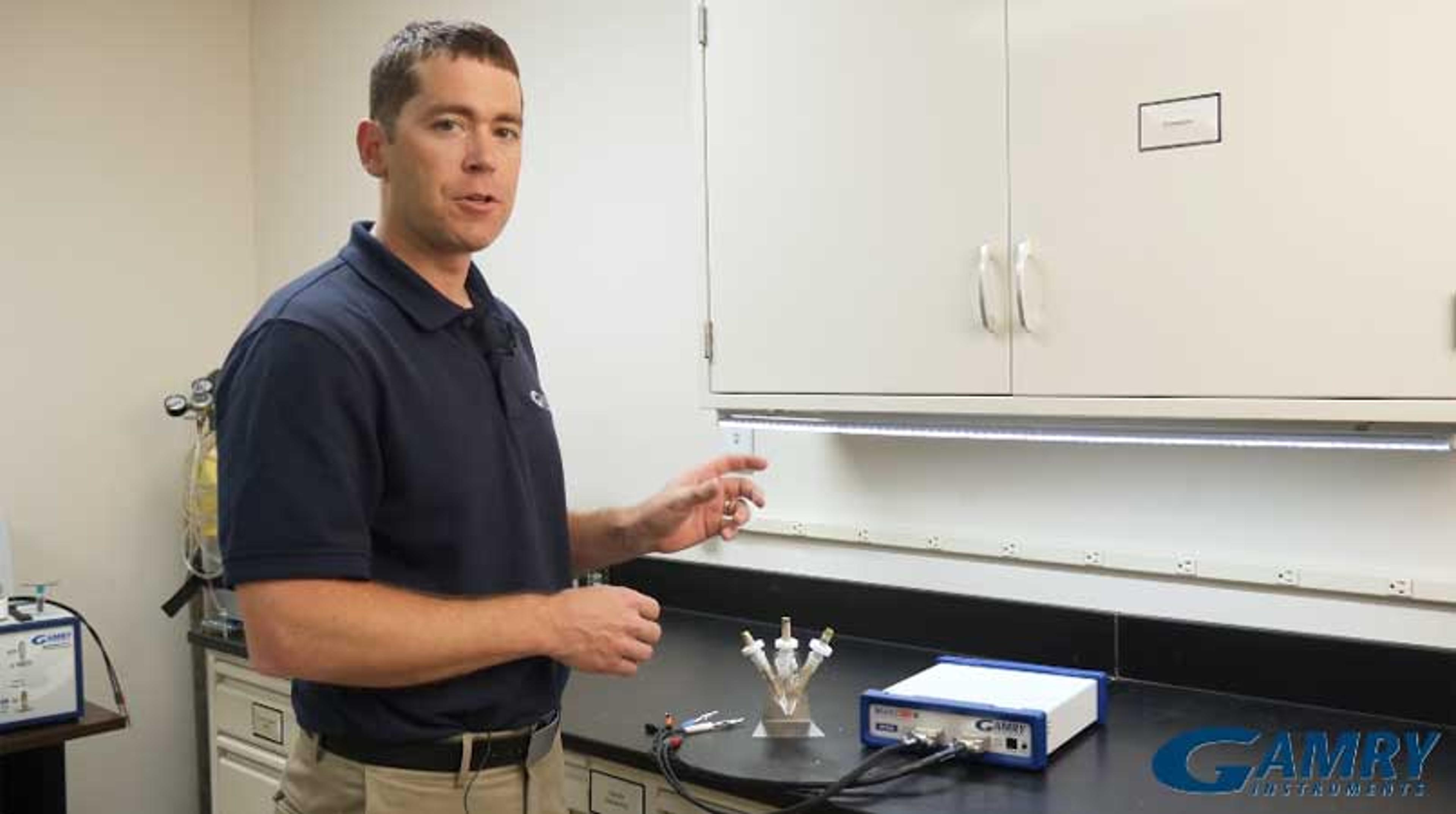
This video shows The Interface 5000E potentiostat designed for cell-level testing of various energy storage and conversion devices. With capabilities for monitoring both half cell voltages in addition to whole cell voltage during an experiment.