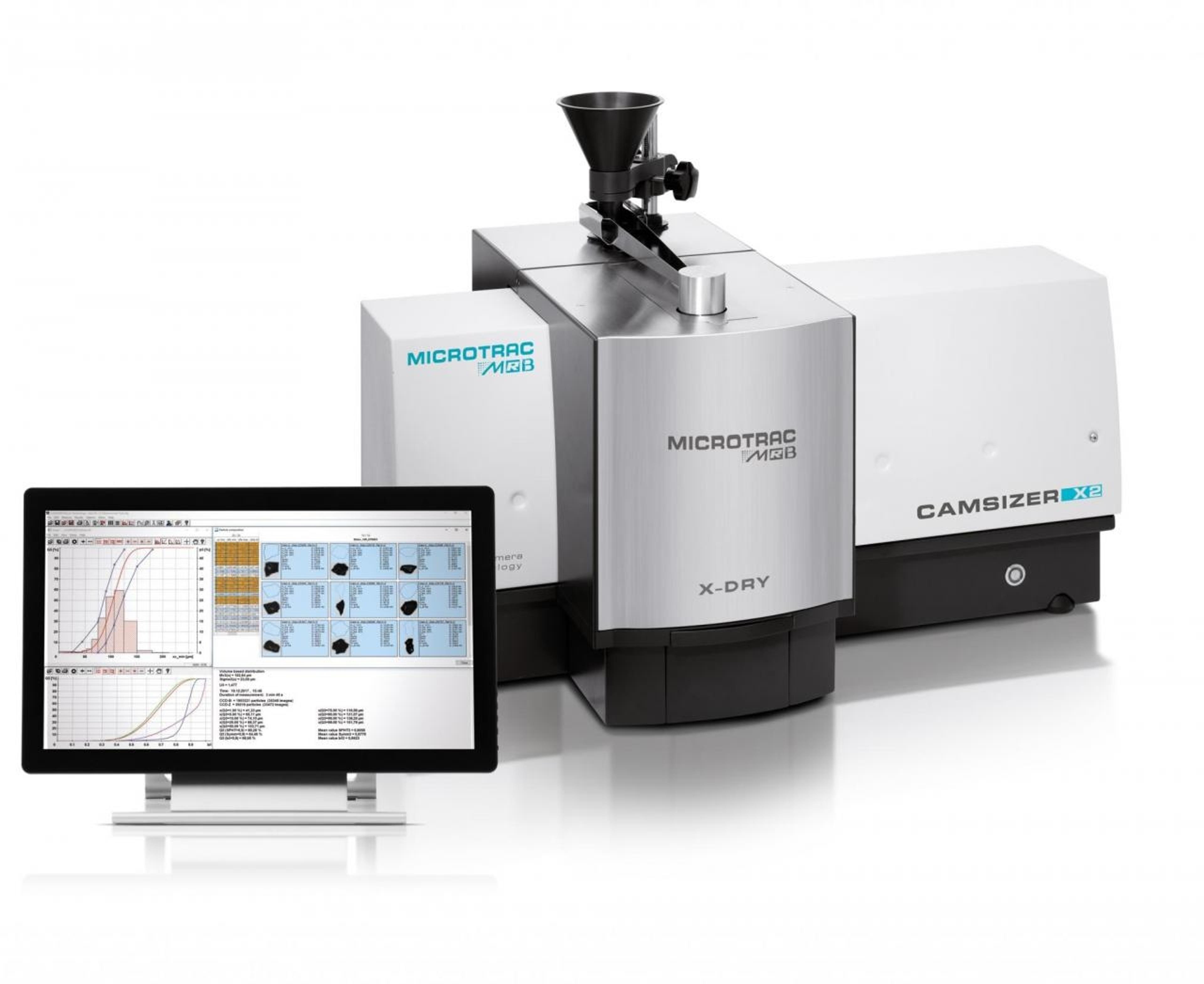
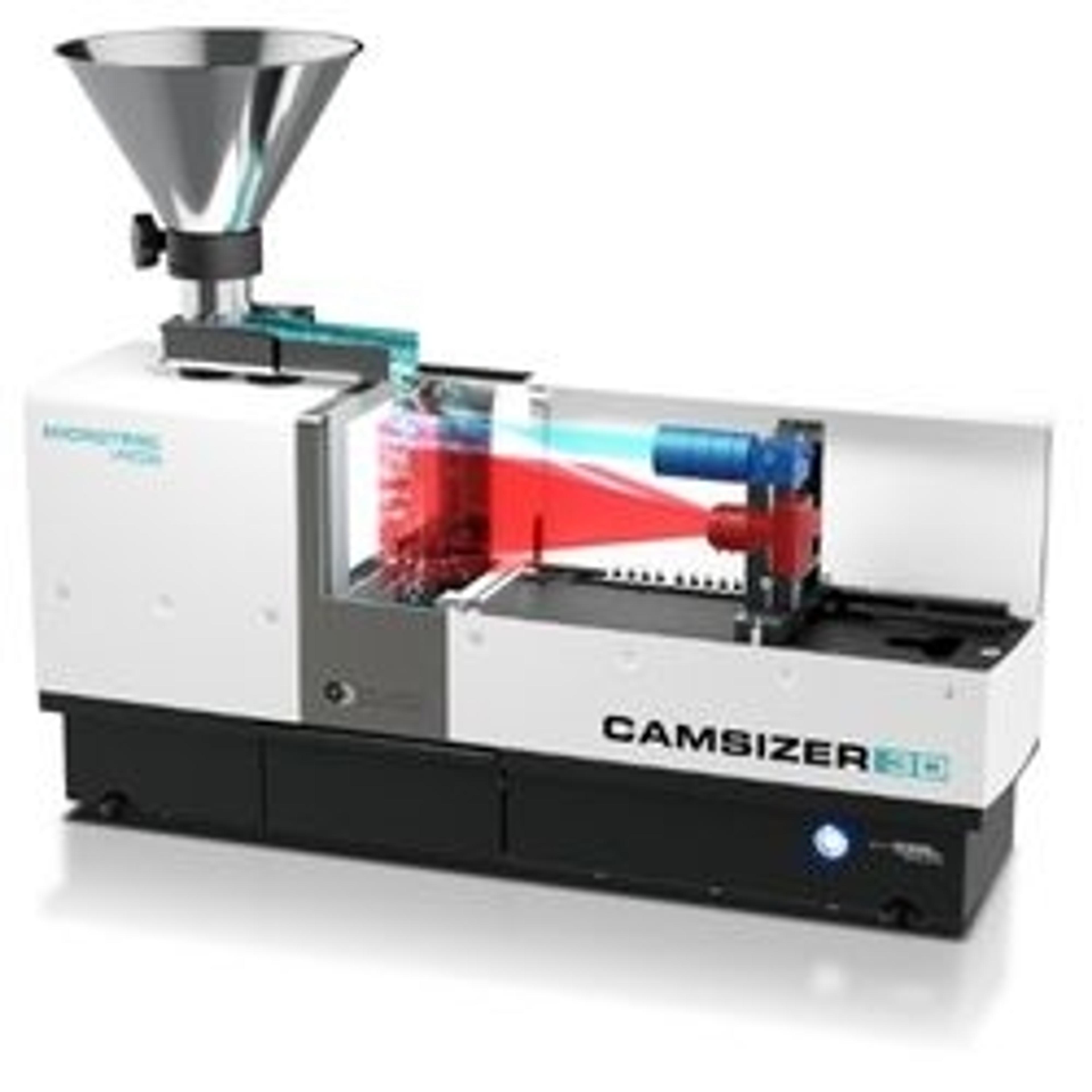
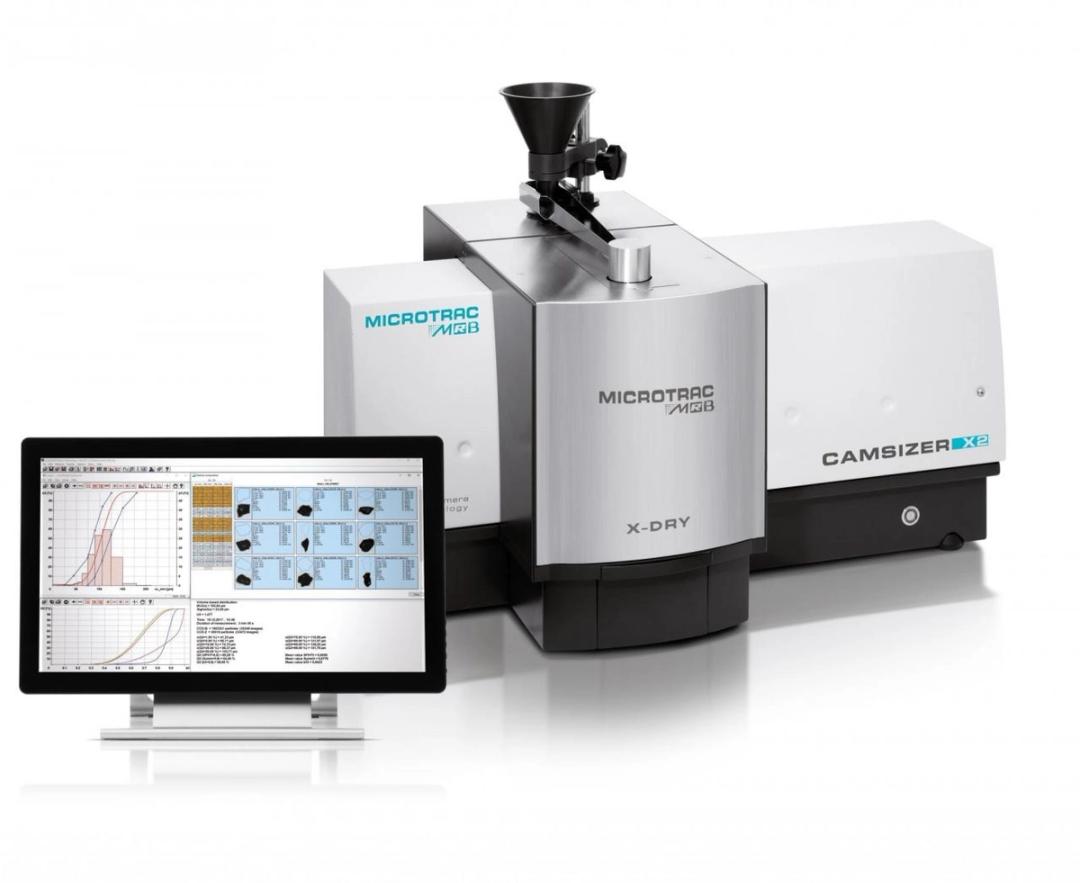
CAMSIZER X2 - Optical Particle Analyzer for Fine Powders
With Unique Dual Camera Technology

Receive your quote directly from the manufacturer.
Perfect for Quality Assurance
Metal additive manufacturing
Regularly used to characterise and monitor powder during recycling in LPBF. Ease of use and low sample quantity allows results on PSD and morphology to be seen in minutes for quality assurance.
Review Date: 12 Dec 2022 | Microtrac (a VERDER company)
We only use the X-Fall more since our materials are big to measure other ways.
Materials (chemicals) characterization
We have the three modules, X-Fall, X-Flow and X-Jet. We only use the first two and sometimes it challenging to get reproducible results. We only use the X-Fall more since the materials are so big to measure other ways. Most of the time static is our greatest enemy. Materials get very staticy and get all over the place using the X-Fall.
Review Date: 7 Dec 2022 | Microtrac (a VERDER company)
We rely heavily on the results from these analyzers! Accurate and repeatable!
small particle size distribution
The product is very easy to use; we get a lot more information from this system than we did from our previous analyzer. The staff diligently works with developing and meeting our internal needs and has been more than willing to provide the education and background necessary to get the biggest bang for our buck! We are very pleased with this instrument.
Review Date: 7 Dec 2022 | Microtrac (a VERDER company)
It's a must have instrument for analytical lab
Small molecule active pharmaceutical ingredients for various therapeutic conditions and indications
Been using this instrument for a while now for particle size analysis of our small molecule APIs. The performance, accuracy & reproducibility is excellent. The amazing part is its ability to work with very small sample size. Very happy with the instrument.
Review Date: 11 Dec 2021 | Microtrac (a VERDER company)
The CAMSIZER X2 uses Dynamic Image Analysis to improve quality control of fine powders in a size range from 0.8 µm to 8 mm. The instrument provides precise and fast analysis of particle size and particle shape which helps to improve product quality, reduce rejects and save costs.
Correct sample preparation and dispersion of the particles before they pass the measurement field are as important as the actual analysis. Particularly for fine powders which tend to agglomerate, sufficient dispersion is crucial to the reliability of the measurement results. Therefore, various modes of sample feeding help to achieve separation of the agglomerates without destroying individual particles.
The modular X-Change System fulfils this requirement in a perfect way. With fine, agglomerating samples it is difficult to record the properties of a single particle. Therefore, it is important to have various possibilities of feeding the sample to the analysis area to be able to find for each material the optimum between the desired dispersion of the agglomerates and the undesired destruction of the individual particle. The CAMSIZER X2 offers three alternative dispersion methods: by gravity, by air pressure and in liquids. Thus, it is possible to choose the optimum method for each sample type.
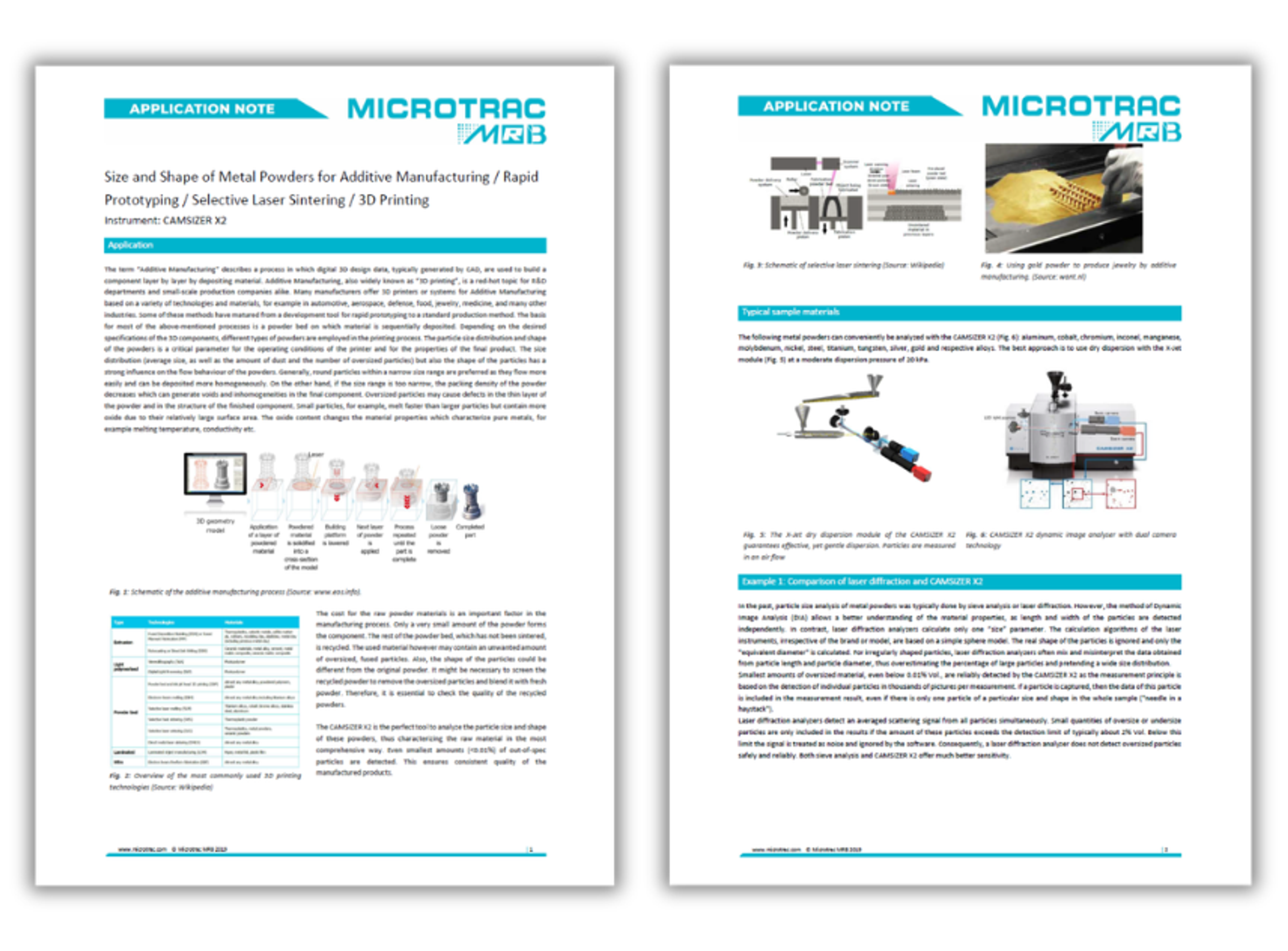
Size and shape of metal powders for additive manufacturing
In this application note, Microtrac MRB provides information on the size and shape analysis of metal powders for additive manufacturing. The term “additive manufacturing” describes a process in which digital 3D design data, typically generated by computer-aided design (CAD), are used to build a component layer by layer by depositing material. Additive manufacturing, also widely known as “3D printing”, is a red-hot topic for R&D departments and small-scale production companies alike. Many manufacturers offer 3D printers or systems for additive manufacturing based on a variety of technologies and materials, for example in automotive, aerospace, defense, food, jewelry, medicine, and many other industries. Some of these methods have matured from a development tool for rapid prototyping to a standard production method.
The basis for most of the above-mentioned processes is a powder bed on which material is sequentially deposited. Depending on the desired specifications of the 3D components, different types of powders are employed in the printing process. The particle size distribution and shape of the powders is a critical parameter for the operating conditions of the printer and for the properties of the final product. The size distribution (average size, as well as the amount of dust and the number of oversized particles) but also the shape of the particles has a strong influence on the flow behavior of the powders.
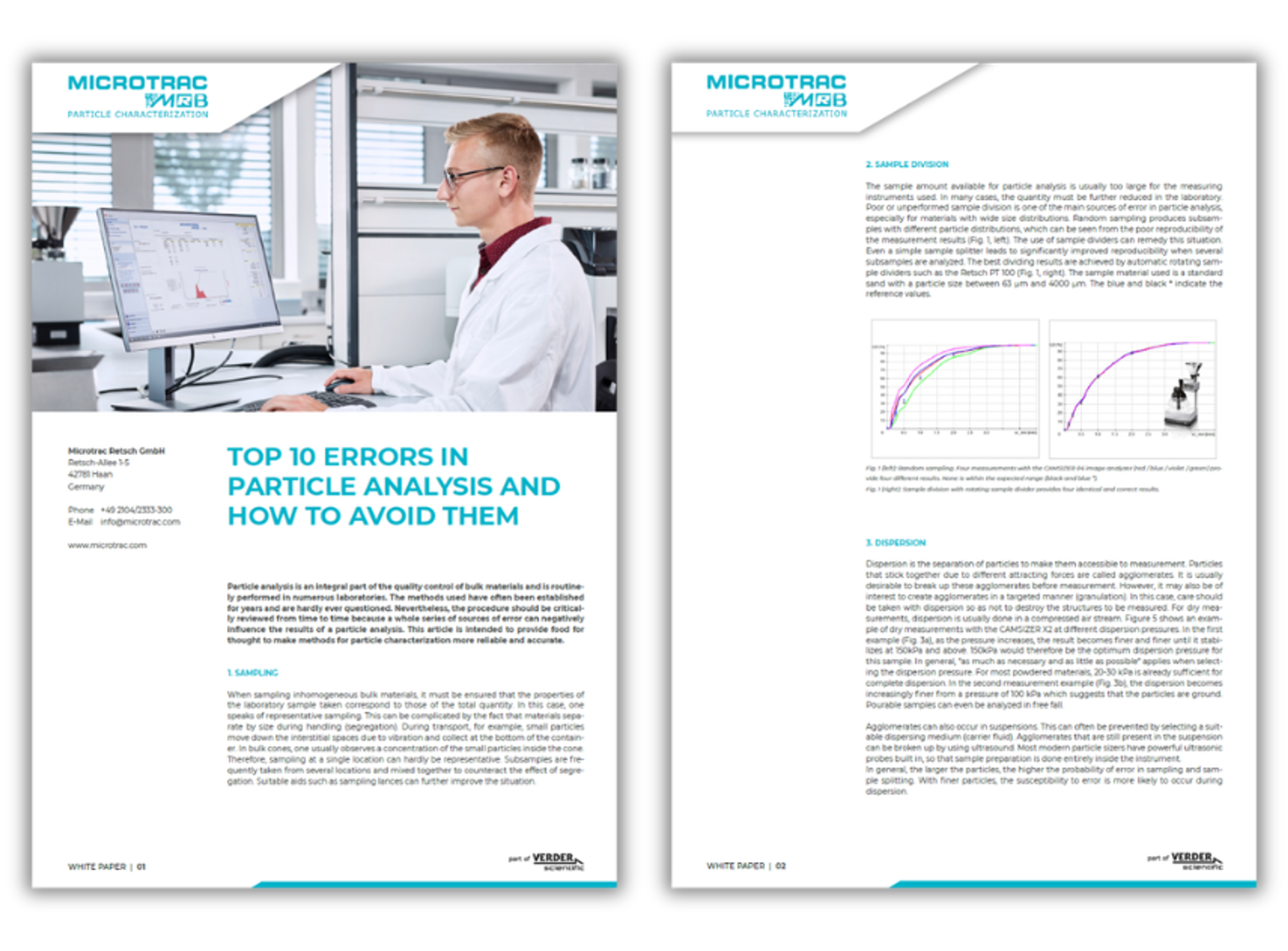
Top 10 errors in particle analysis and how to avoid them
In this application note, Microtrac MRB outlines some of the most common errors made in particle analysis. Particle analysis is an integral part of the quality control of bulk materials and is routinely performed in numerous laboratories. The methods used have often been established for years and are hardly ever questioned. Nevertheless, the procedure should be critically reviewed from time to time because a whole series of sources of error can negatively influence the results of a particle analysis.
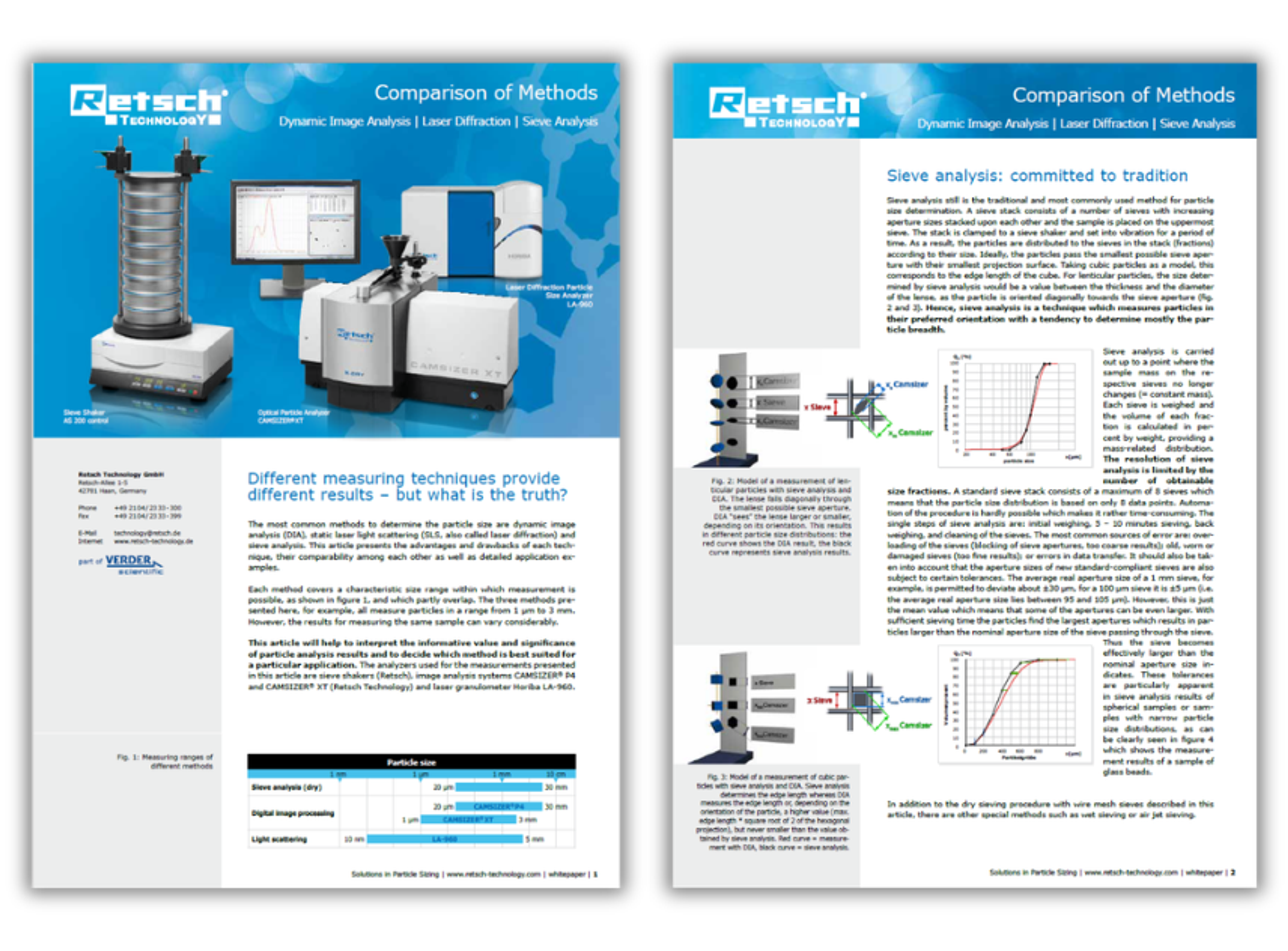
Comparison of Methods: Dynamic Image Analysis, Laser Diffraction and Sieve Analysis
This white paper provides an overview of the informative value and significance of particle analysis results and how to decide which method is best suited for a particular application. The most common methods to determine the particle size are dynamic image analysis (DIA), static laser light scattering (SLS, also called laser diffraction) and sieve analysis. This article presents the advantages and drawbacks of each technique, their comparability among each other as well as detailed application examples. Each method covers a characteristic size range within which measurement is possible, and which partly overlap. The three methods presented here, for example, all measure particles in a range from 1 μm to 3 mm. However, the results for measuring the same sample can vary considerably.

Particle Size Distributions: Dynamic Image Analysis Beats Laser Diffraction in a Micron to Millimeter Range
Read this application note to learn about the advantages to using Dynamic Image Analysis for measuring particle size distributions. Using the CAMSIZER XT it is possible to measure particle size and particle shape in the 1µm to 3mm range, to a higher resolution than is possible from laser diffraction.