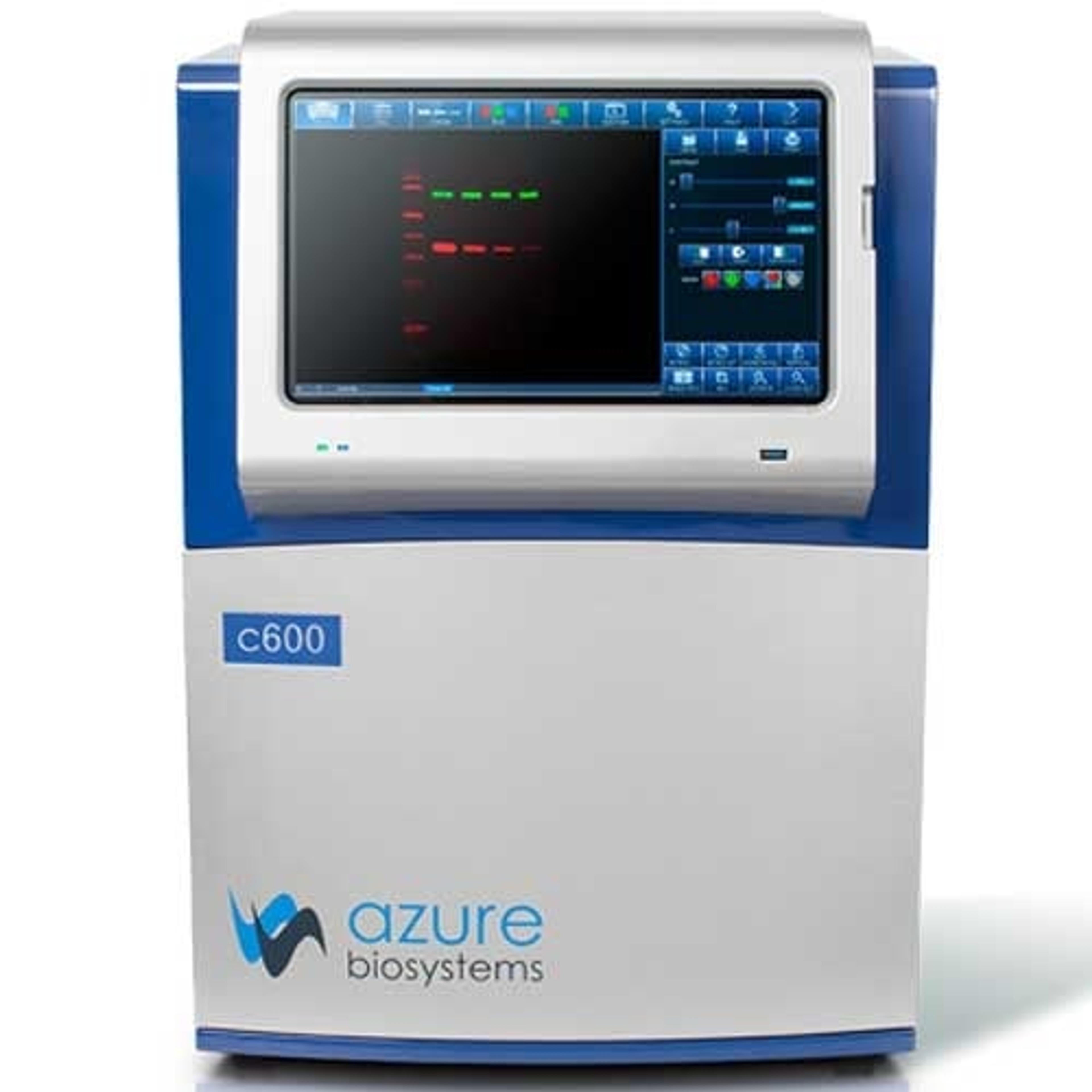
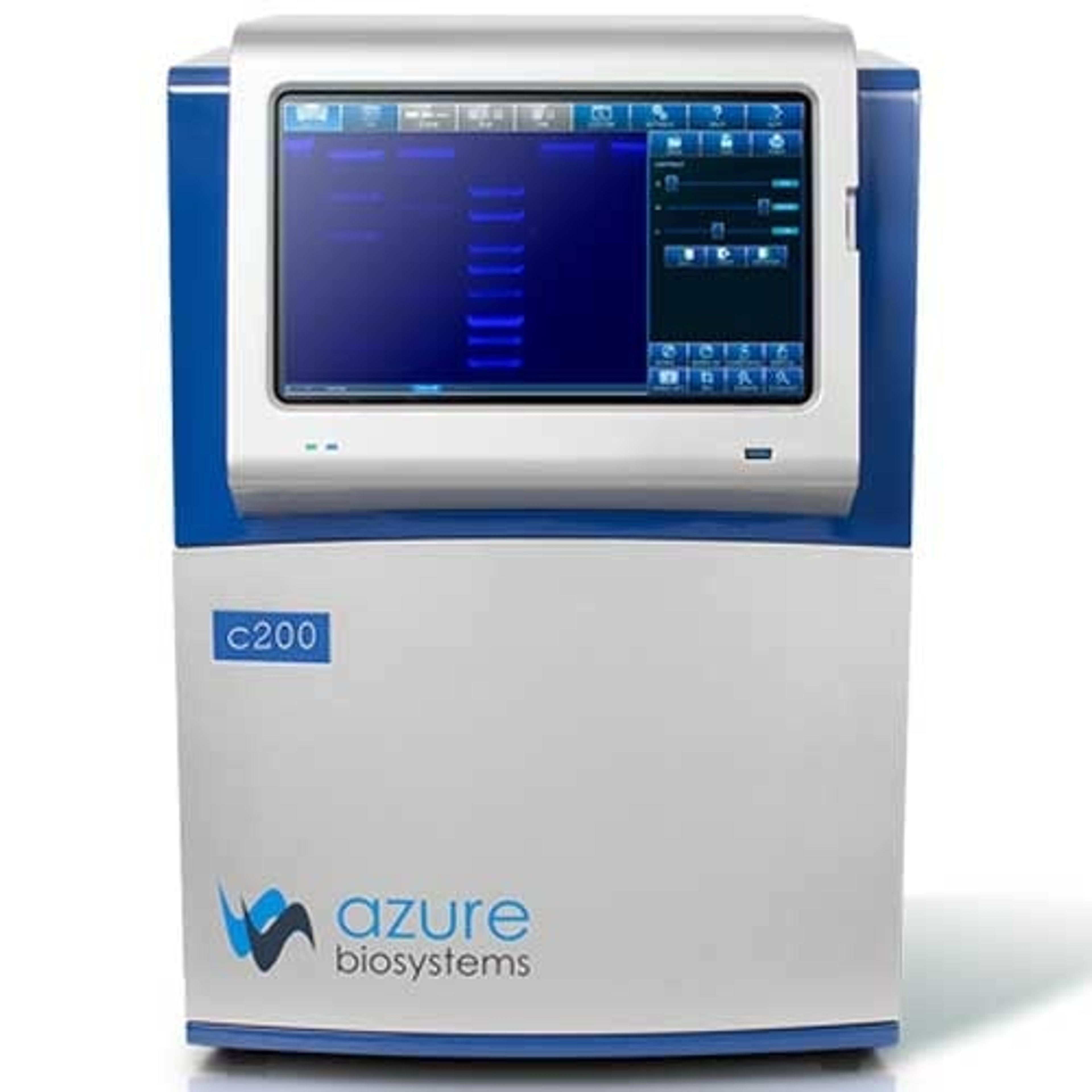
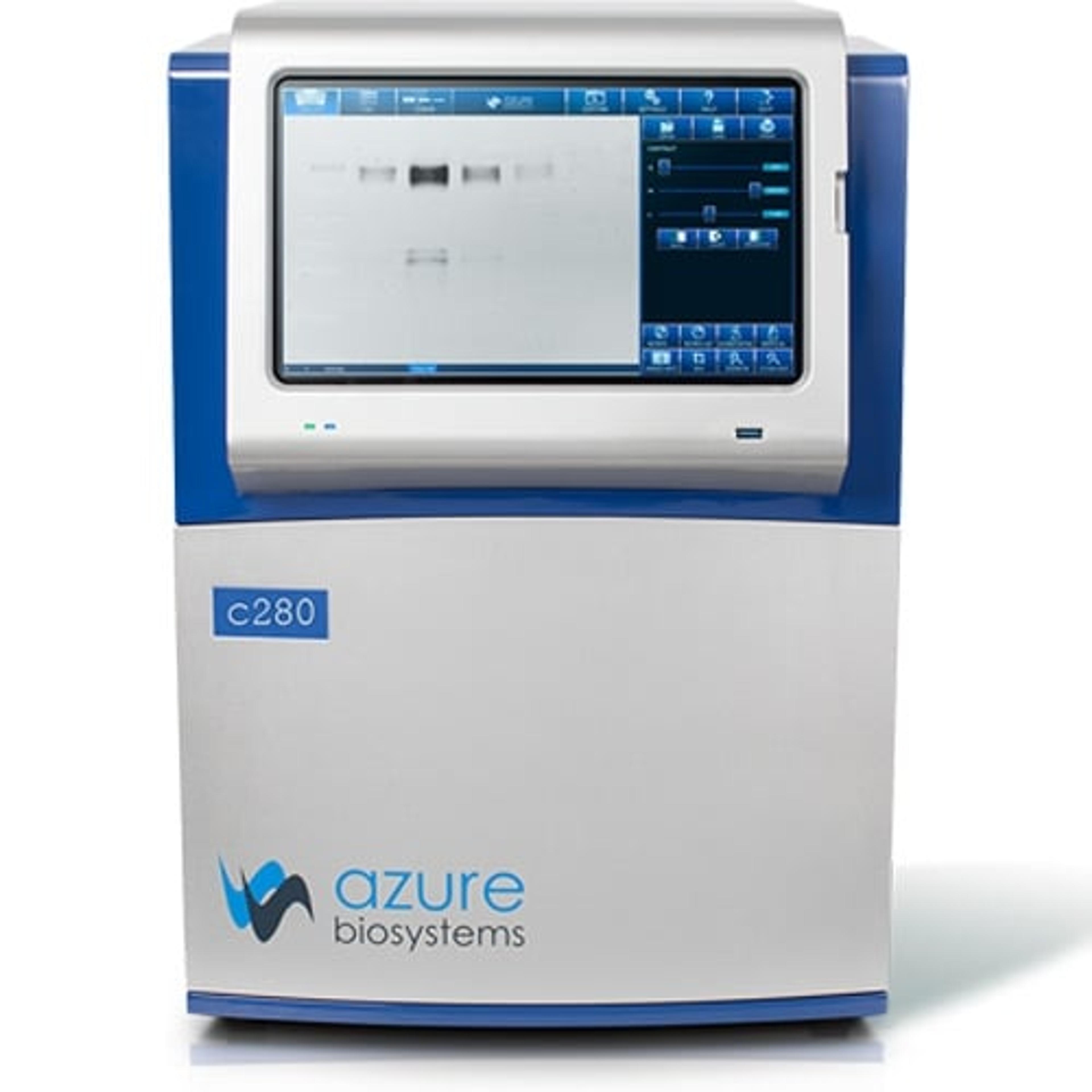
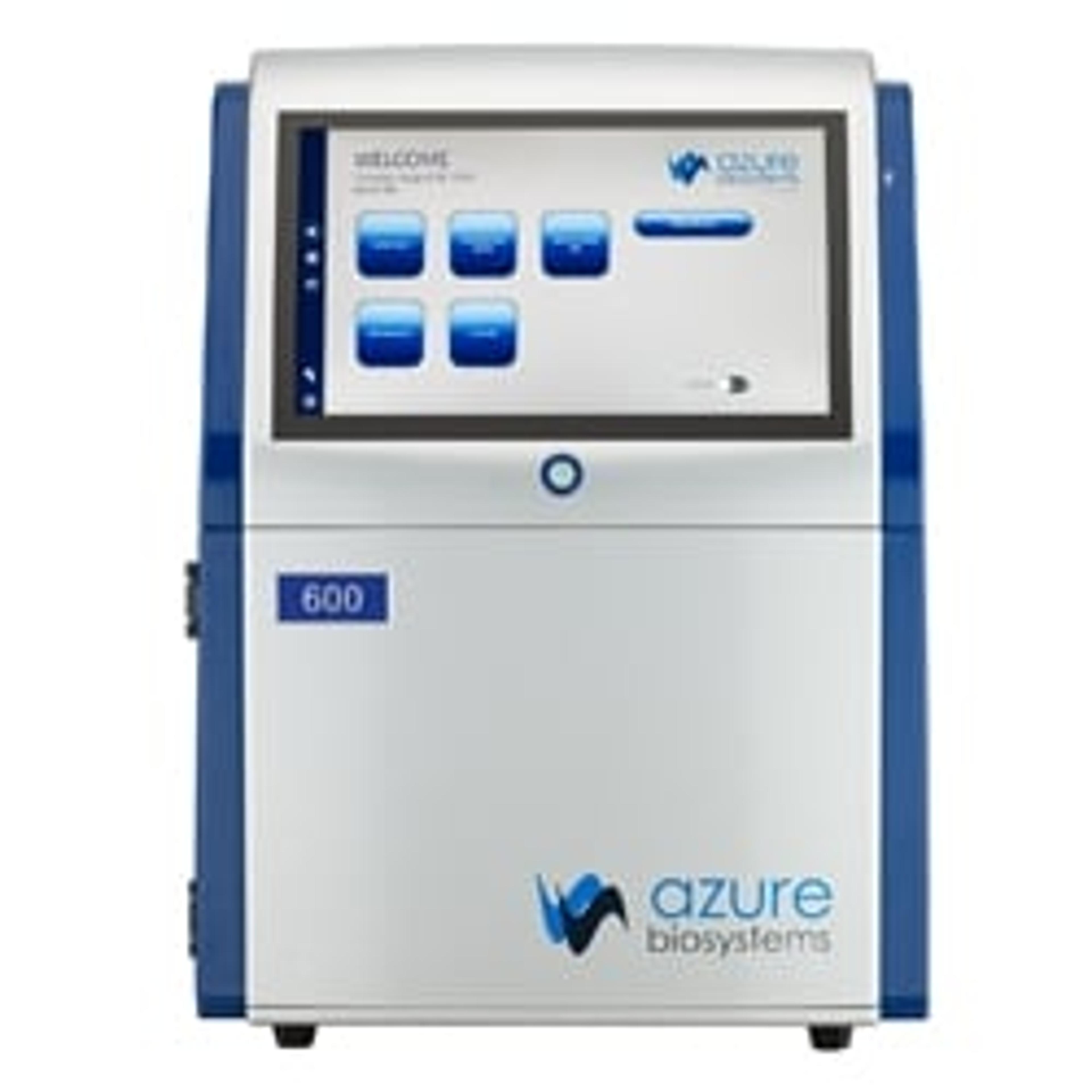
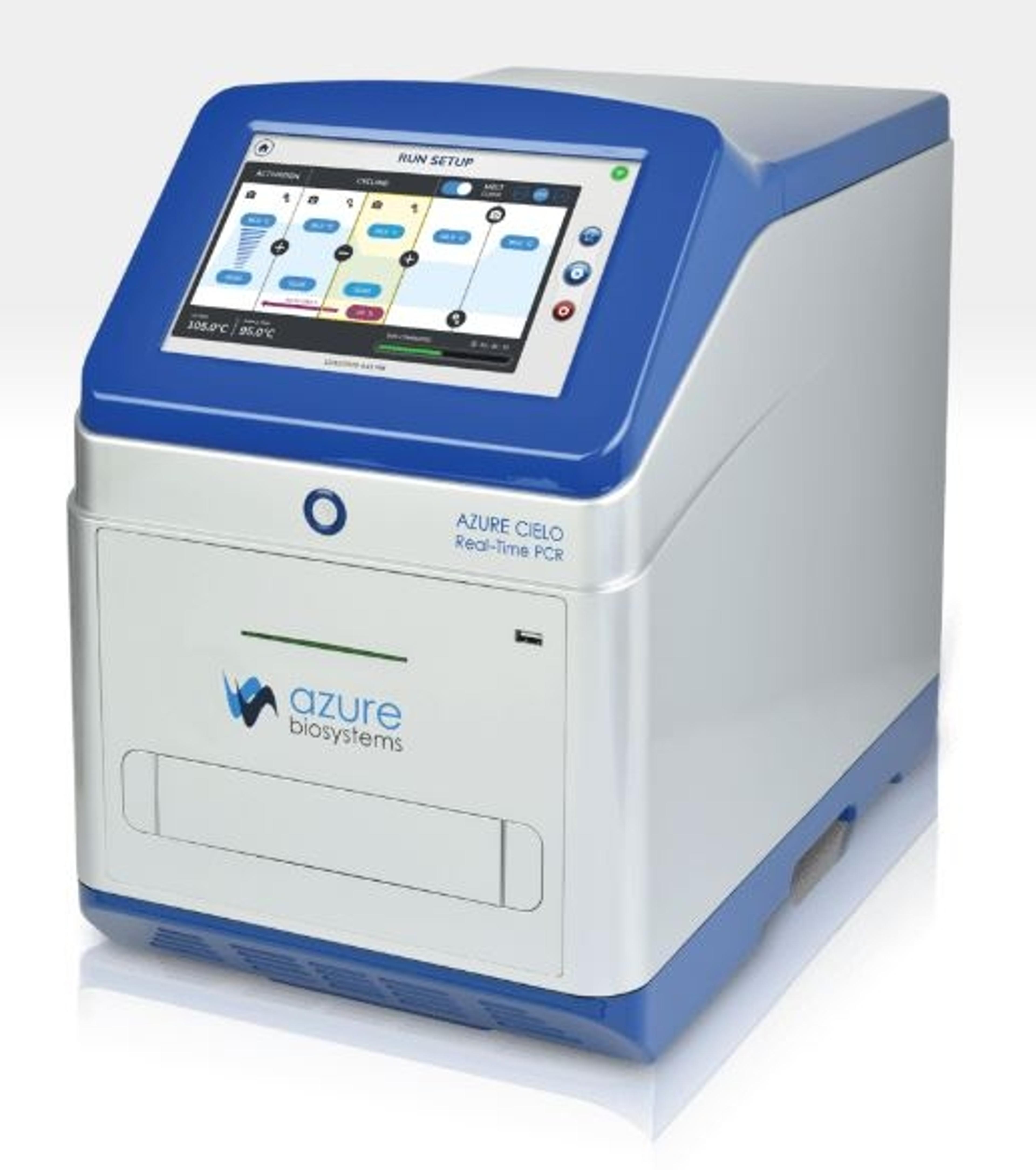
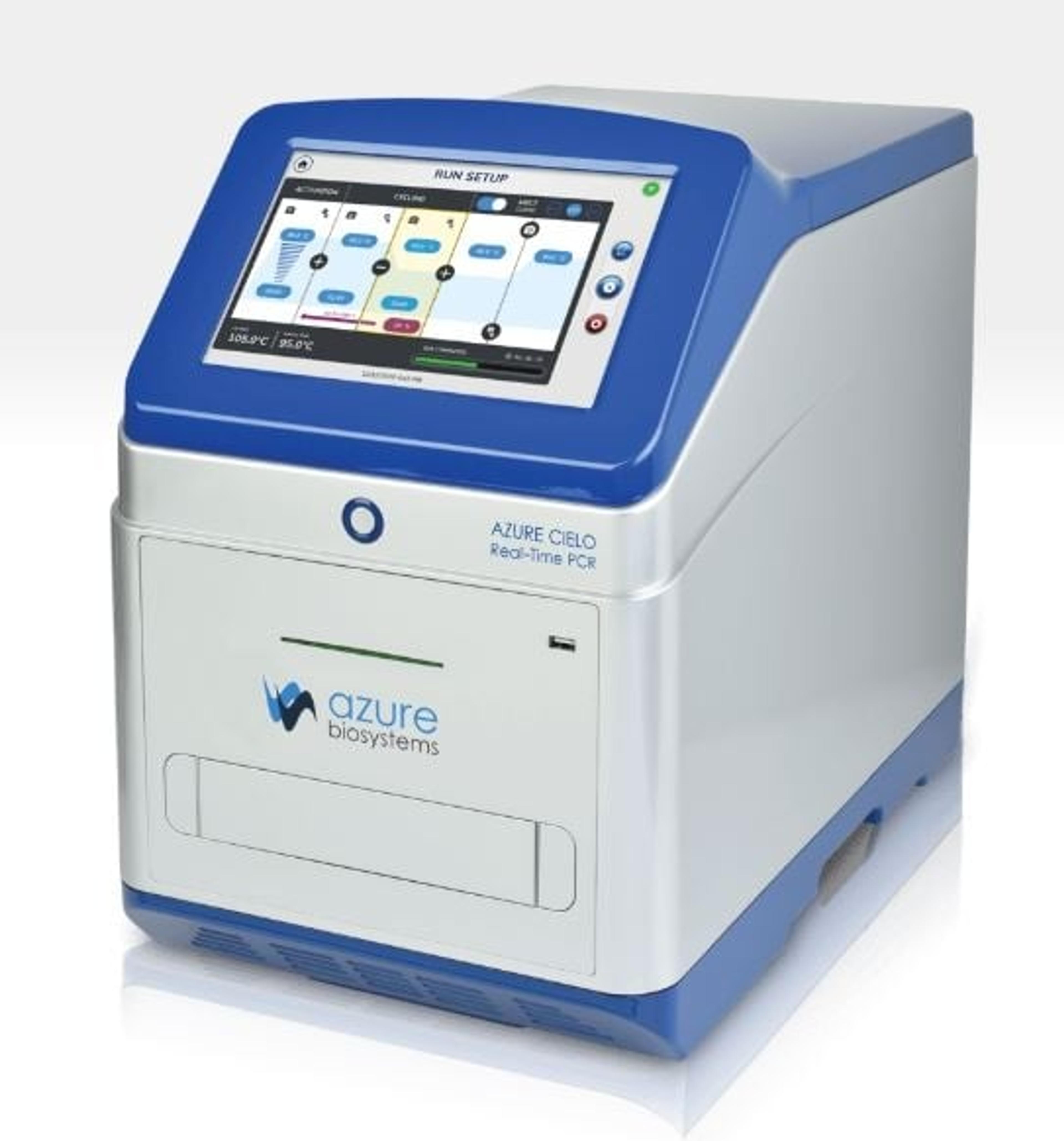
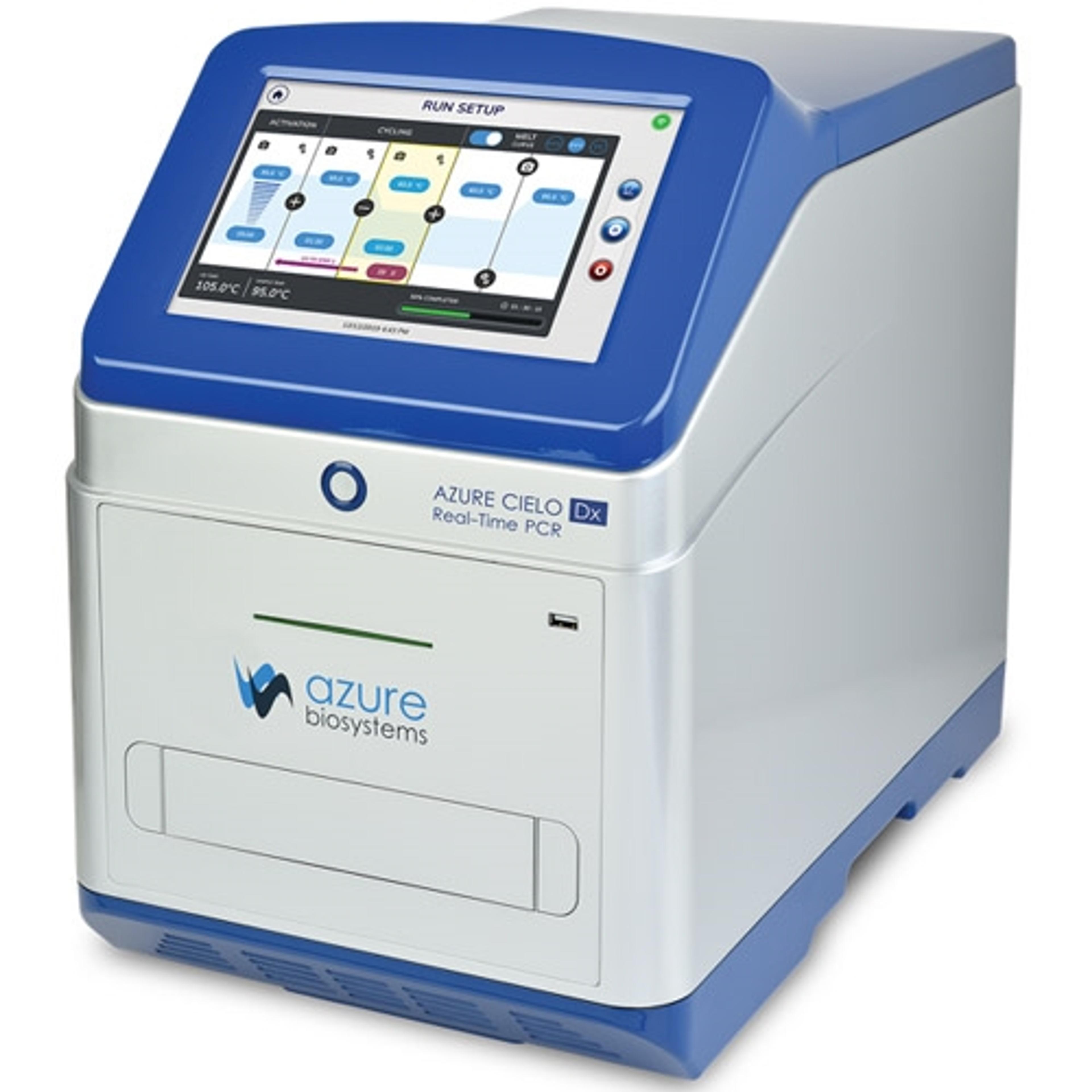
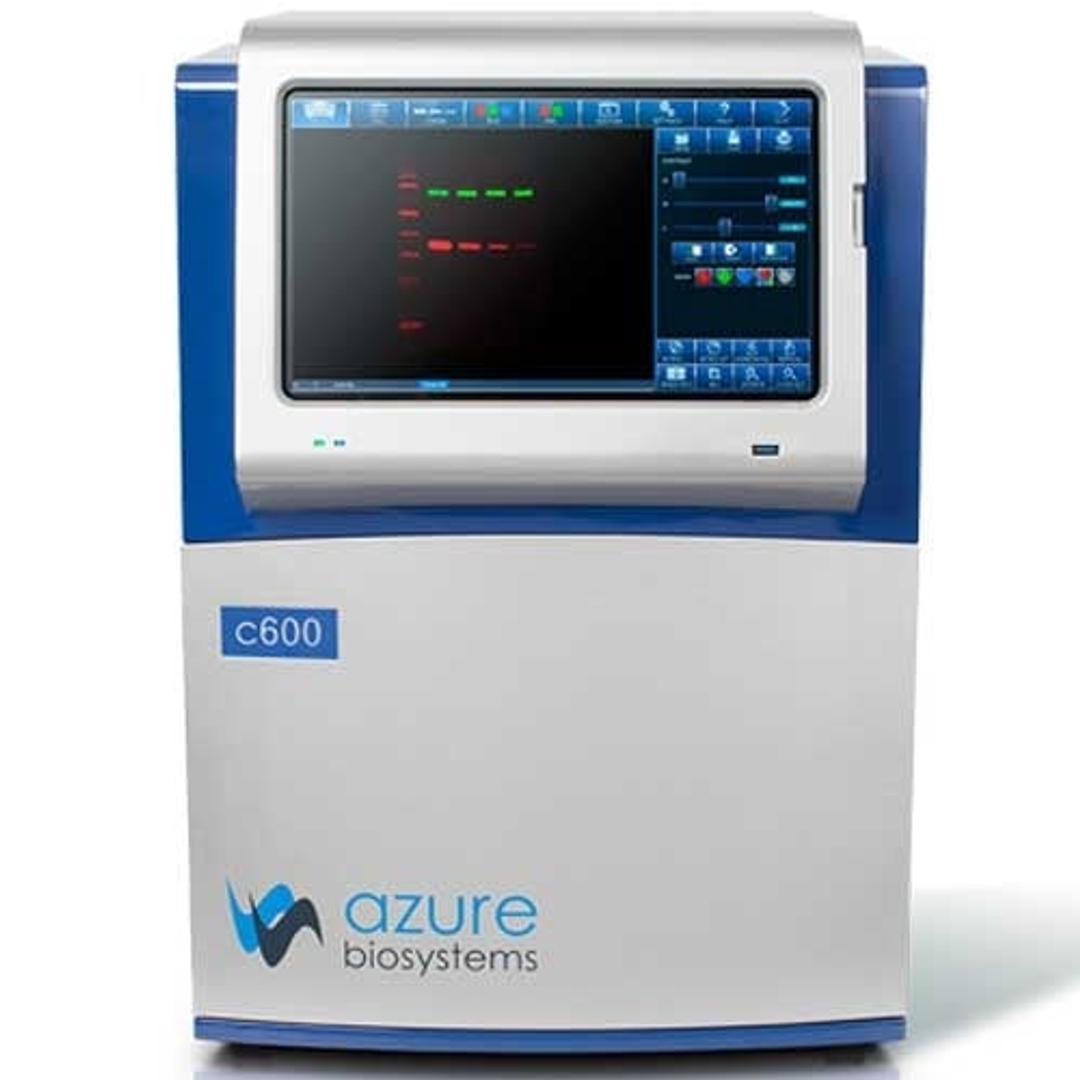
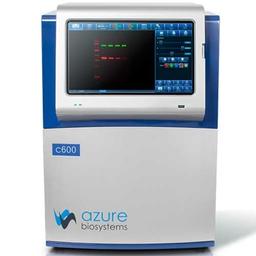
Azure c600 Gel Imaging System
The Ultimate Western Blot Imaging System.

Receive your quote directly from the manufacturer.
Excellent instruments. Very sensitive. Easy to use.
Chemiluminescence and fluorescence imaging
I love our Azure 600 imager. The chemiluminescence and fluorescence image capture functionalities are awesome! The software allows merging of the two images. Additionally, I can independently adjust the contrast of the chemi and fluorescence images using the same software. Lastly, I love the fact the printout of the images captured are exact size of the original samples.
Review Date: 10 May 2022 | Azure Biosystems
We use it daily and never have any issues!
Gel imaging
Very nice all-in-one imager. Produces high quality images and the integrated image software is easy and intuitive.
Review Date: 17 Dec 2020 | Azure Biosystems
Highly recommended.
Western blot
One of the best imaging system with high sensitivity, high dynamic range and laser-based detection for NIR based western blot and total protein stain.
Review Date: 15 Jul 2020 | Azure Biosystems
Absolutely recommend for any lab in need of an imager.
Western blot and agarose gel imaging
The C600 is an easy to use, powerful piece of equipment. The diverse functions (i.e. NIR, RGB, Chemi, etc.) make this imager a very valuable and versatile addition to the lab. While our machine in particular had an extremely uncommon software issue, the sales and service staff of Azure worked with us to ensure that our down time was minimal.
Review Date: 6 Jul 2020 | Azure Biosystems
It provides highly accurate and sensitive images.
Western Blot, agarose gel imaging
The c600 is a great imager. The experience of using this machine has been fantastic. It is easy to use and software is very intuitive. In addition, it provides highly accurate and sensitive images. Additionally, the after-sales service is highly professional, they respond almost immediately to any doubt or problem we have. I would definitely recommend it.
Review Date: 7 May 2019 | Azure Biosystems
Large spectrum of applications and very reliable.
Cancer Biology, Immunology, Molecular and Cellular Biology
Great machine. worked very well in our lab. Super convenient and easy to use device. Large spectrum of applications and very reliable.
Review Date: 21 Feb 2019 | Azure Biosystems
Excellent data analysis software.
Health Sciences
This is absolutely the best imager I have used. Easy to use intuitive software, very sensitive camera with low noise. Excellent data analysis software. Very portable.
Review Date: 15 Feb 2019 | Azure Biosystems
Azure c600 is a perfect imager.
Chloroplast Development
Azure c600 is a perfect imager. Although it is a new brand product, it has high quality and good performance. We love the multi-function of c600, with it everyone in our lab can capture multiplex samples on chemiluminescence, RGB and NIR and so on. The most important thing is the support is excellent, when we have questions, the technical support of Azure will support us timely, patiently and professionally. Especially, their regular after-sales service every 6 months which on using, technology, even on our experiment is one thing I haven’t seen before. Azure’s high-level product and service really make us feel satisfied.
Review Date: 28 Jan 2019 | Azure Biosystems
Great instrument for imaging of chemiluminescence and fluorescence of IB membranes
Immunoblot imaging, agarose gel imaging
The imager works well for both chemo and fluorescence imaging. Only concern might be that the more images are taken, the slower the software works. Maybe it's because of the operating system. Additionally, when more than 10 images are open, the software shuts down and restarts, without losing data. It is also a plus to be able to save every image in a common file extension such as tiff.
Review Date: 14 Jan 2019 | Azure Biosystems
Manufacturer's Response
We apologize that you experienced this. This should not happen. Our systems engineer reached out to you and hopefully have helped resolve the issue.
User friendly
Western, gel imaging
The system is easy to use and is very user friendly. The issue I find is the cooling time of its CCD camera. It takes almost 30 minutes to acquire the actual temperature and that should be taken care of. The instrument otherwise works great and image quality is very good.
Review Date: 10 Jan 2019 | Azure Biosystems
The Azure c600 is the only system that offers two channel laser based IR detection, chemiluminescent detection with the speed and sensitivity of film, the ability to image visible fluorescent dyes, and the ability to image standard EtBr and protein gels.
Infrared Laser Excitation for Quantitative Western Blot Imaging in the NIR
Improve Your Data Quality
- Imaging with infrared dyes offers signal stability and low background fluorescence
- imaging with NIR dyes allows you to study multiple proteins in a blot, even if those proteins overlap in molecular weight.
- Azure Biosystem’s cSeries laser technology offers two IR detection channels enabling a user to image more than one protein in an assay.
Sensitive Detection of Proteins with Chemiluminescent Westerns
Get Out of the Dark
- The Azure cSeries provides accurate and fast chemiluminescent detection, as well as the sensitivity,
dynamic range, and linearity needed for quantitative blot analysis. - Get the best picture every time, and stop wasting money on film.
Use Cy®5/Cy®3/Cy®2 Dyes, Blue-Excited DNA Dyes, and More
A Total Solution for Western Blot Imaging and Gel Documentation
- The cSeries is a multichannel, multimodal imager, with IR, visible light, and UV excitation channels.
- Detect Cy dyes, Alexa® dyes, Safe dyes, and more
Also included is AzureSpot, an easy-to-use imaging software package for imaging single or multicolor blots, and DNA and protein gels. The software comes with a software tutorial for easy training of new users.
Brochures

Western blotting eBook
By focusing on best practices for Western blotting and how to choose appropriate experimental conditions, this guidebook provides an excellent starting point and resource for researchers interested in generating reliable, reproducible Western blots. Whether your final data is numbers on a graph or simply the image of the blot, we hope we’ve helped you make all your Western blots quantitative.
Imaging Viral Load in Chicken Embryos
This application note demonstrates how sensitive high-resolution imaging systems, such as the Azure c600, can quickly and easily image fluorescently tagged NDV in chicken embryos, and, to some extent, quantify the viral load in various embryonic tissues.
Imaging Three-color Western Blots with the Azure c600
This application note demonstrates a procedure to obtain three-color fluorescent blots using WesternDot® reagents. Multicolor detection is a powerful application of fluorescent Western blotting. Two or more proteins can be detected on one blot using antibodies labeled with different fluorophores. The ability to simultaneously assay multiple proteins on a Western blot represents a significant advantage of fluorescent detection over chemiluminescent detection, because chemiluminescent detection requires stripping and re-probing a blot or using duplicate blots to detect two proteins, approaches that can introduce errors and variation.
Azure Biosystems Presents the Only Imaging System for all Western Blot Applications
The Azure cSeries imagers are easy-to-use and reliable instruments for Western blot imaging, and enable labs to use one system for fluorescent and chemiluminescent Westerns. The simple user interface allows fast imaging of all sample types. Full upgradability means customers can have confidence that their system will grow and adapt with their needs. Customers no longer have to choose one chemistry for their Western blots; they can buy one system and customize it to their needs.
Digital Imaging for Western Blots: Why it’s Essential and What to Look for in a Digital Imaging System
When most people think of imaging their Western blot, they think of going into a darkroom and exposing the blot to film to detect a chemiluminescent signal. The advent of digital imaging has transformed Western blot detection. This paper outlines how Western blotting has changed, and reviews the qualities to look for in a digital imager.
How to Improve Your Chemiluminescent Western Blots
Chemiluminescent Westerns are popular assays for assessing protein expression. In this indirect detection method, chemiluminescent substrates emit light when reacted with an antibody conjugated to an enzyme. The emitted light is then captured and recorded. It is a highly sensitive assay and can detect femtograms of protein. Although it is only semi-quantitative, it is useful for detecting the presence or absence of a protein. Here are some tips to improve your chemiluminescent Western blots.
Wet or Dry? Which Type of Transfer is Best for Your Protein?
To perform a Western blot, proteins are separated according to molecular weight by electrophoresis through a polyacrylamide gel. The proteins are then transferred from the gel onto a solid membrane support for subsequent immunodetection by protein-specific antibodies. Transfers can be performed by wet transfer or under semi-dry conditions. This application note outlines the benefits and drawbacks of each system which must be considered when optimizing transfer conditions.
How to Improve Your Fluorescent Western Blots
Fluorescent Western blots are the gold standard for quantitative Westerns. They are ideal for detecting multiple proteins simultaneously (multiplexing), allowing in-lane normalization and detection of your protein of interest and loading control at the same time. In addition, post-translational modifications can be studied and quantitated easily. This application note suggests how to improve your fluorescent Western blots.
Chemiluminescent and Fluorescent Westerns: Choose the Best Assay for Your Experiment
This application note evaluates chemiluminescent and fluorescent western blotting to enable you to choose the best assay for your experiment. Learn how fluorescent detection can complement, enhance and provide new insight when coupled with chemiluminescent detection.

Could you be the next winner in our weekly ‘Every Opinion Counts’ giveaway?
Just leave a quick lab product review today for your chance to scoop one of our weekly $100 prizes