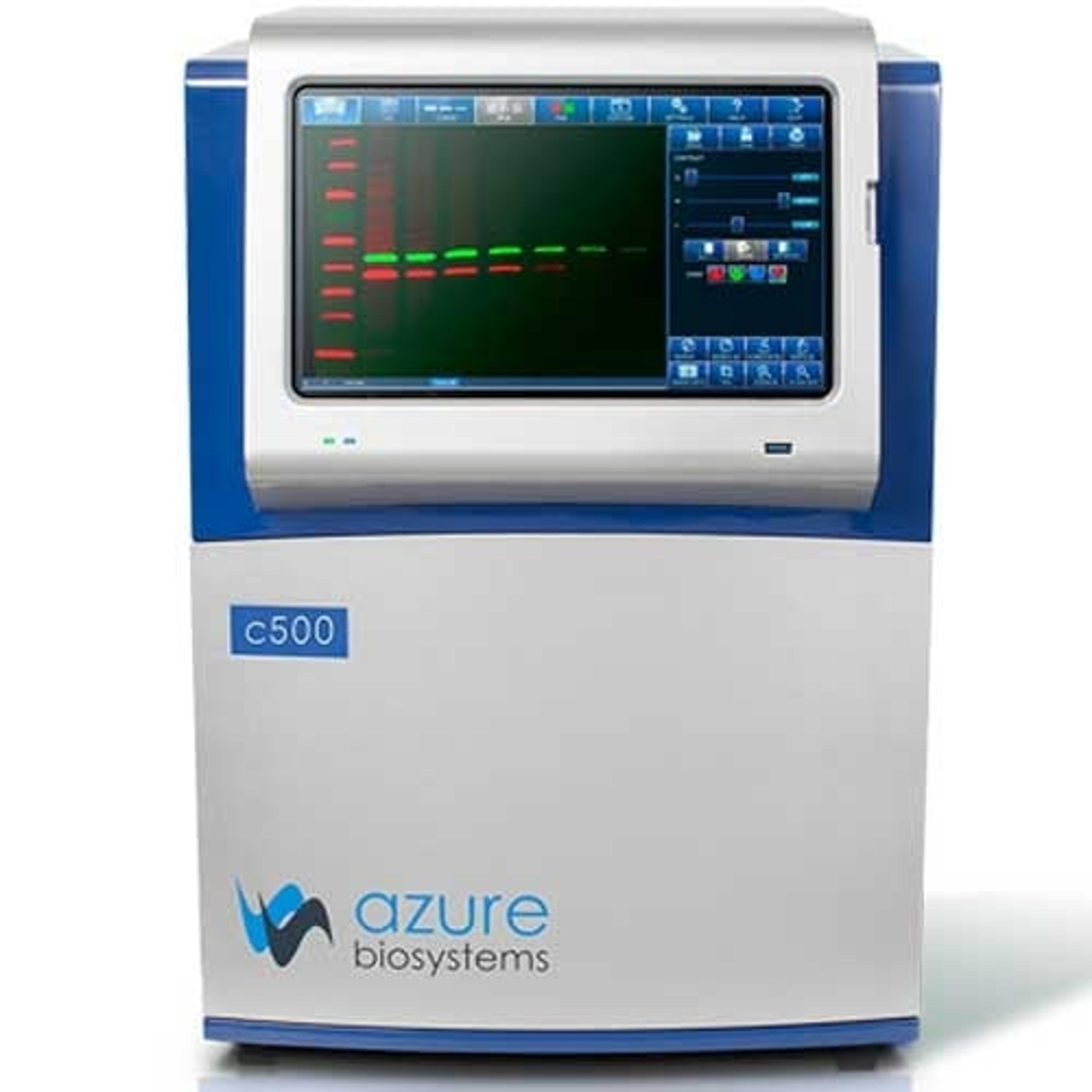
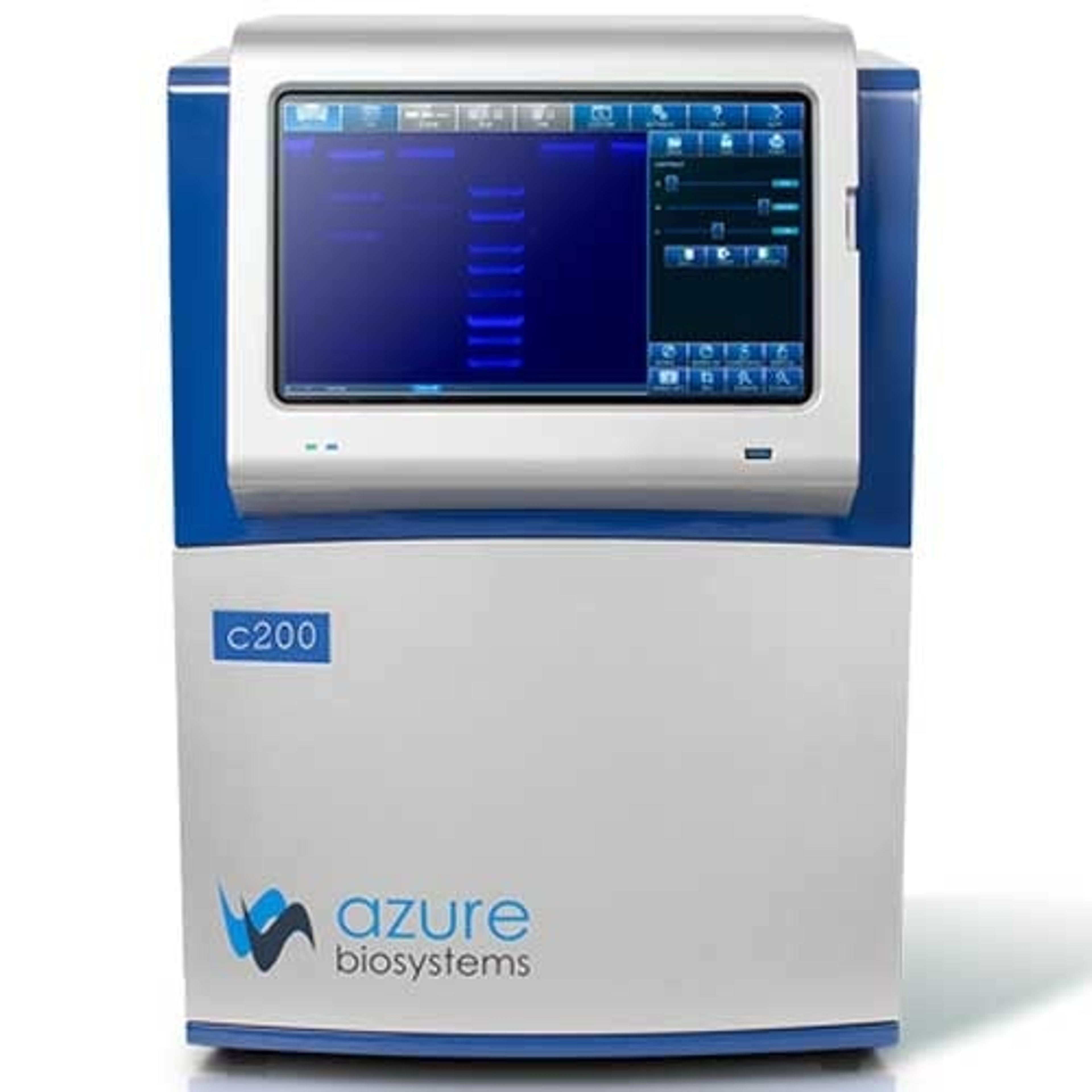
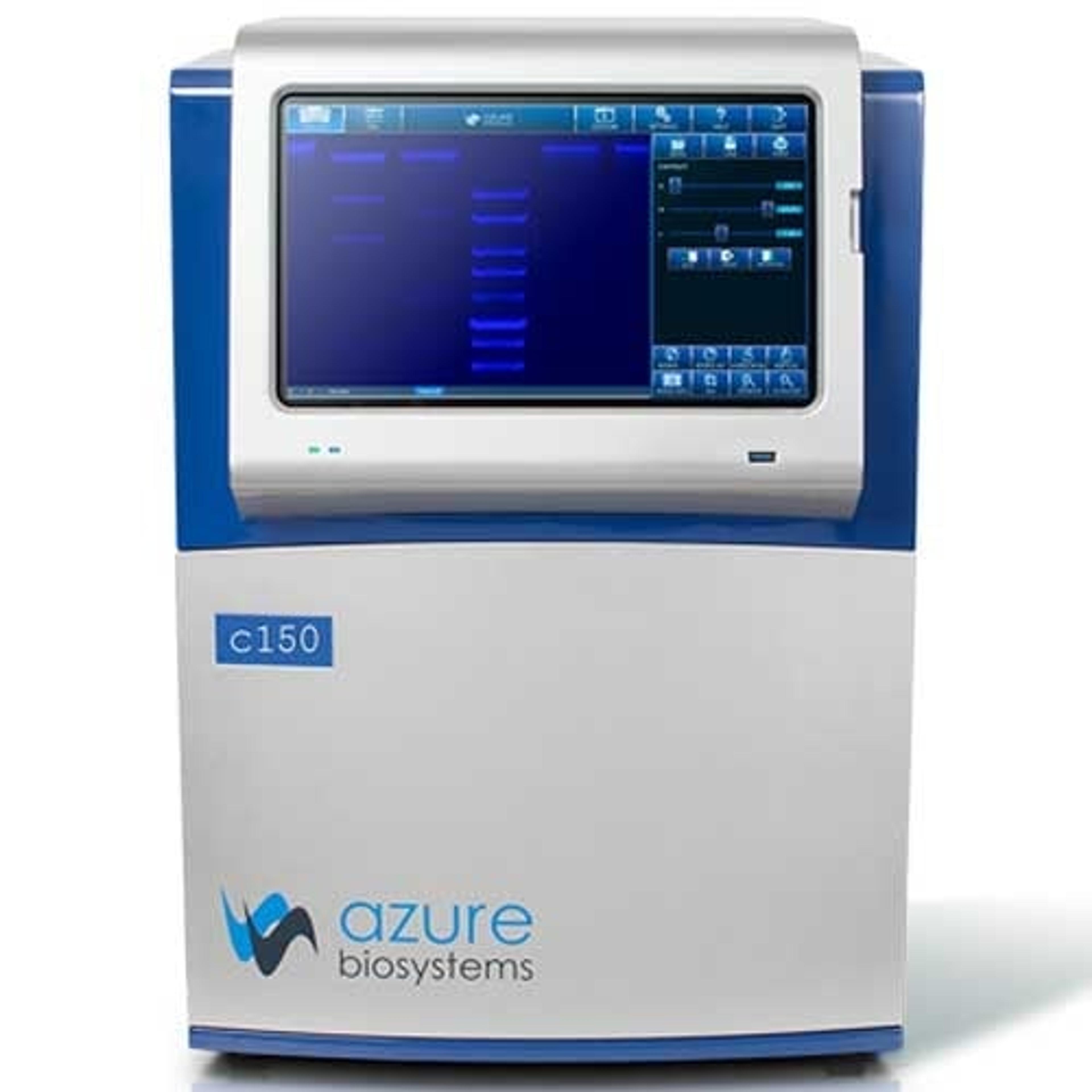
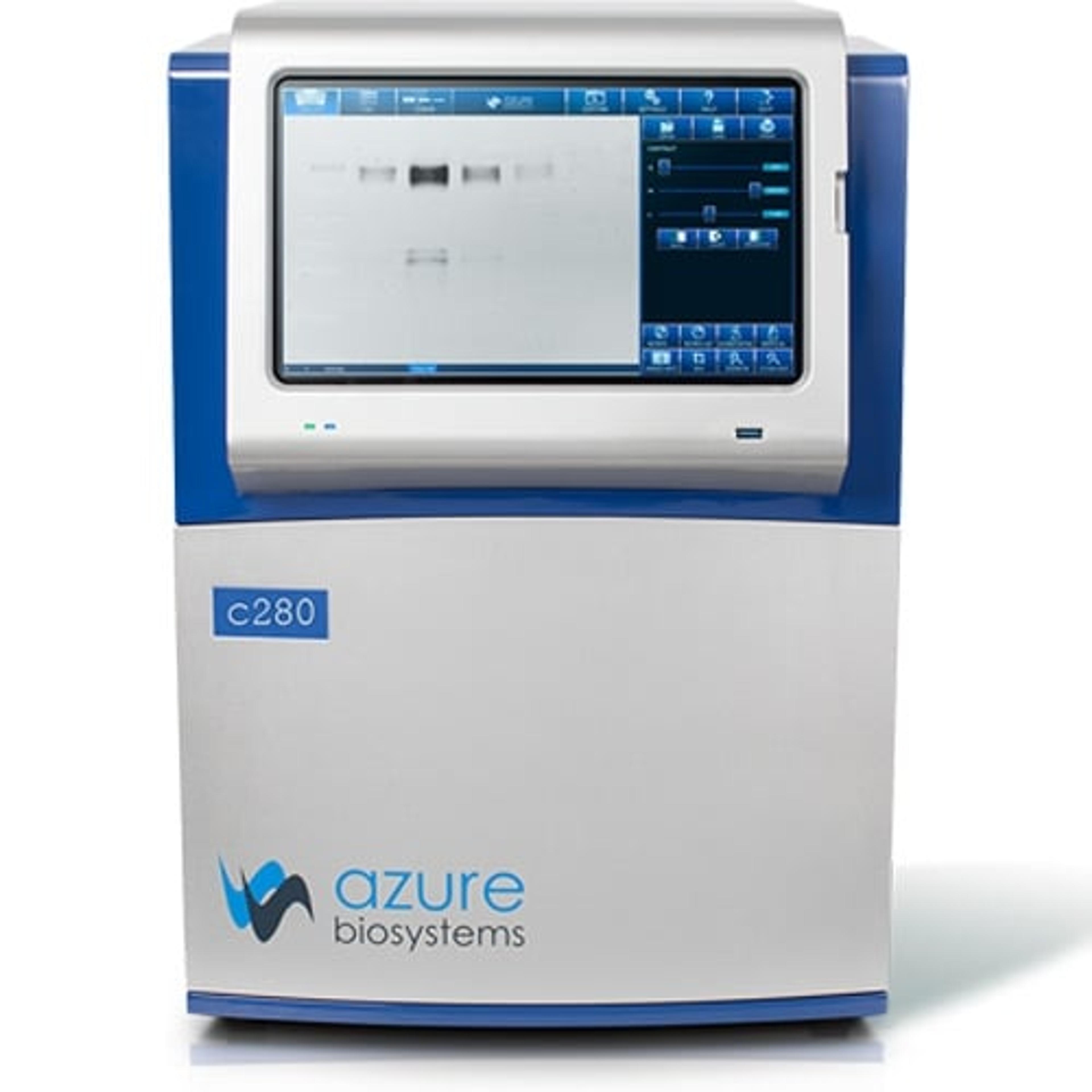
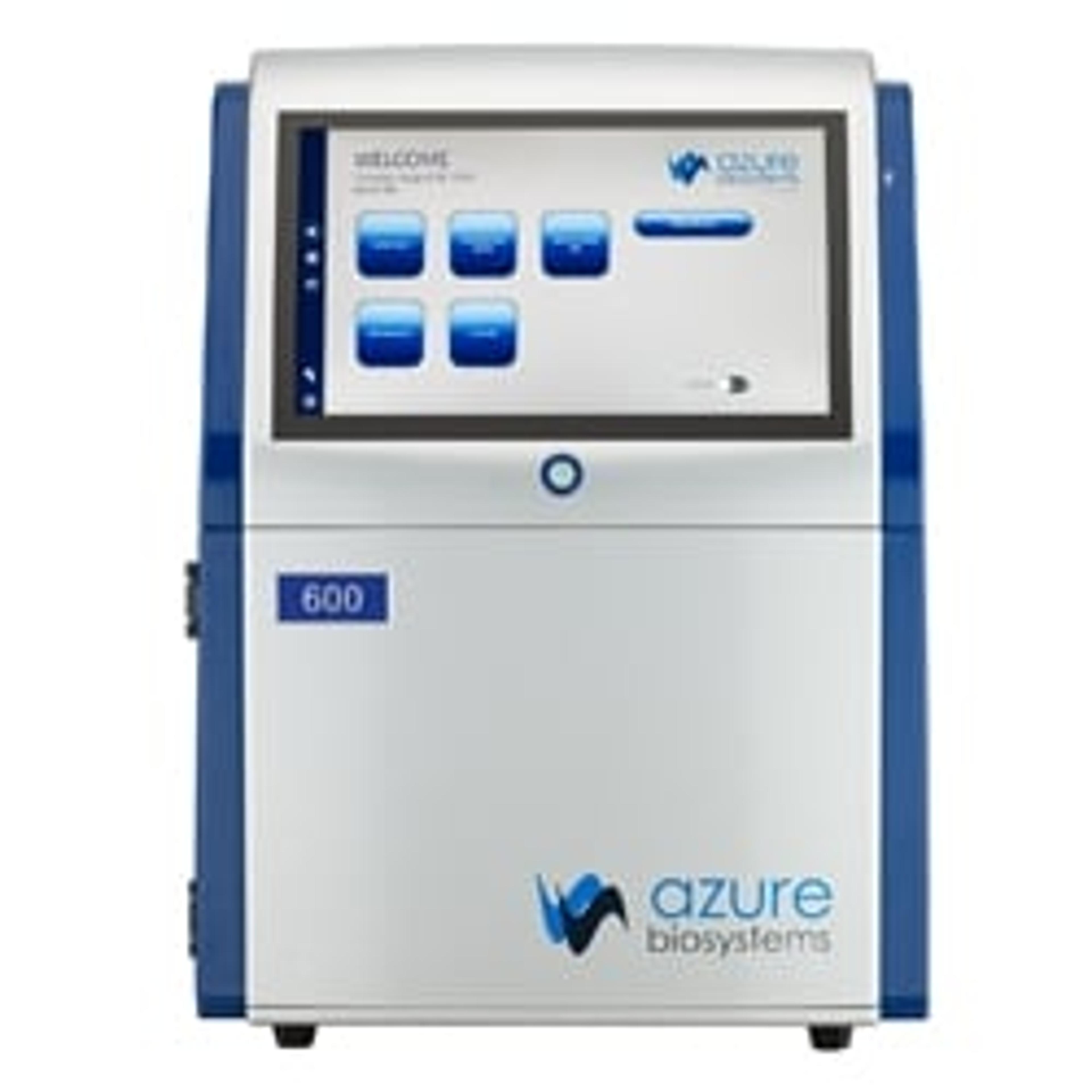
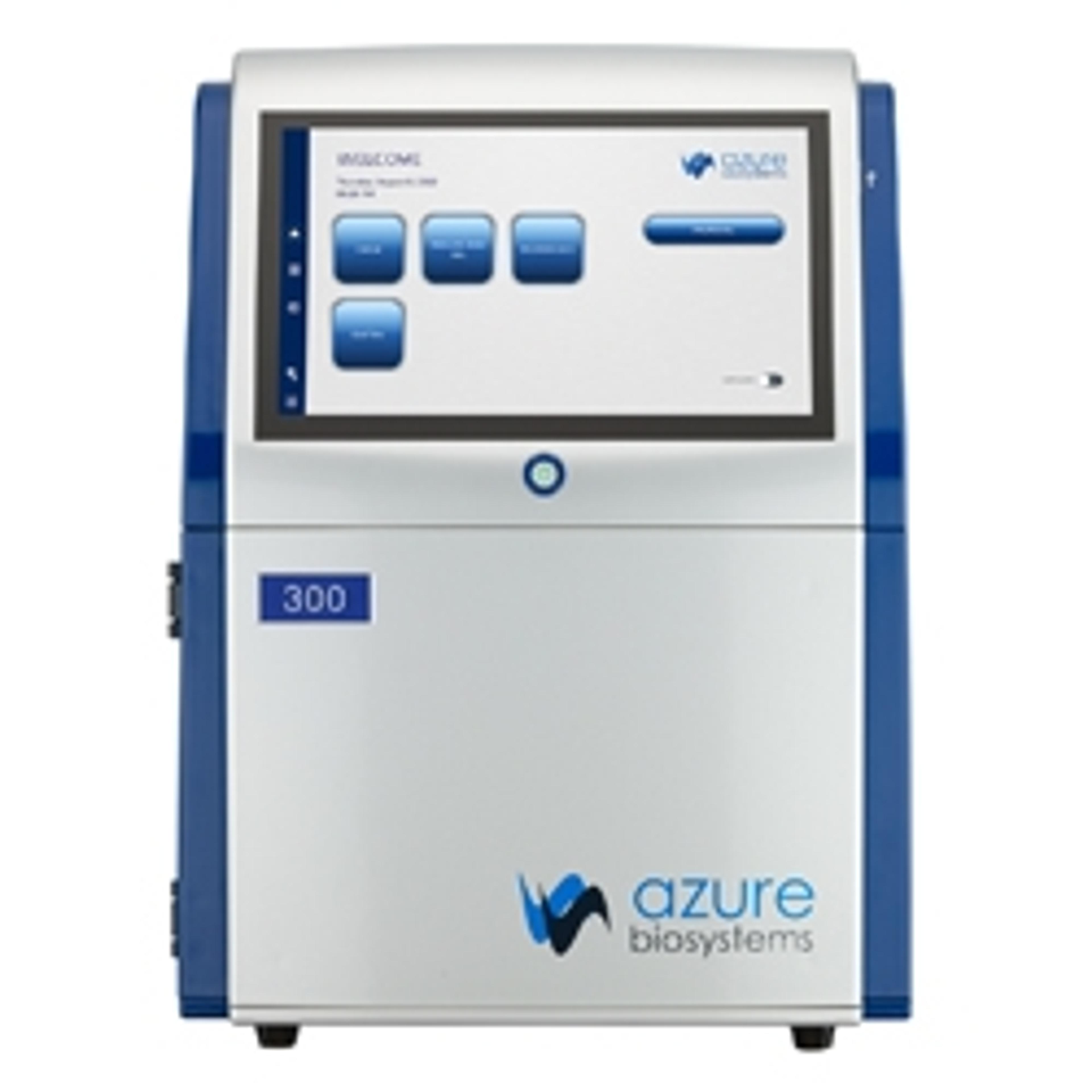
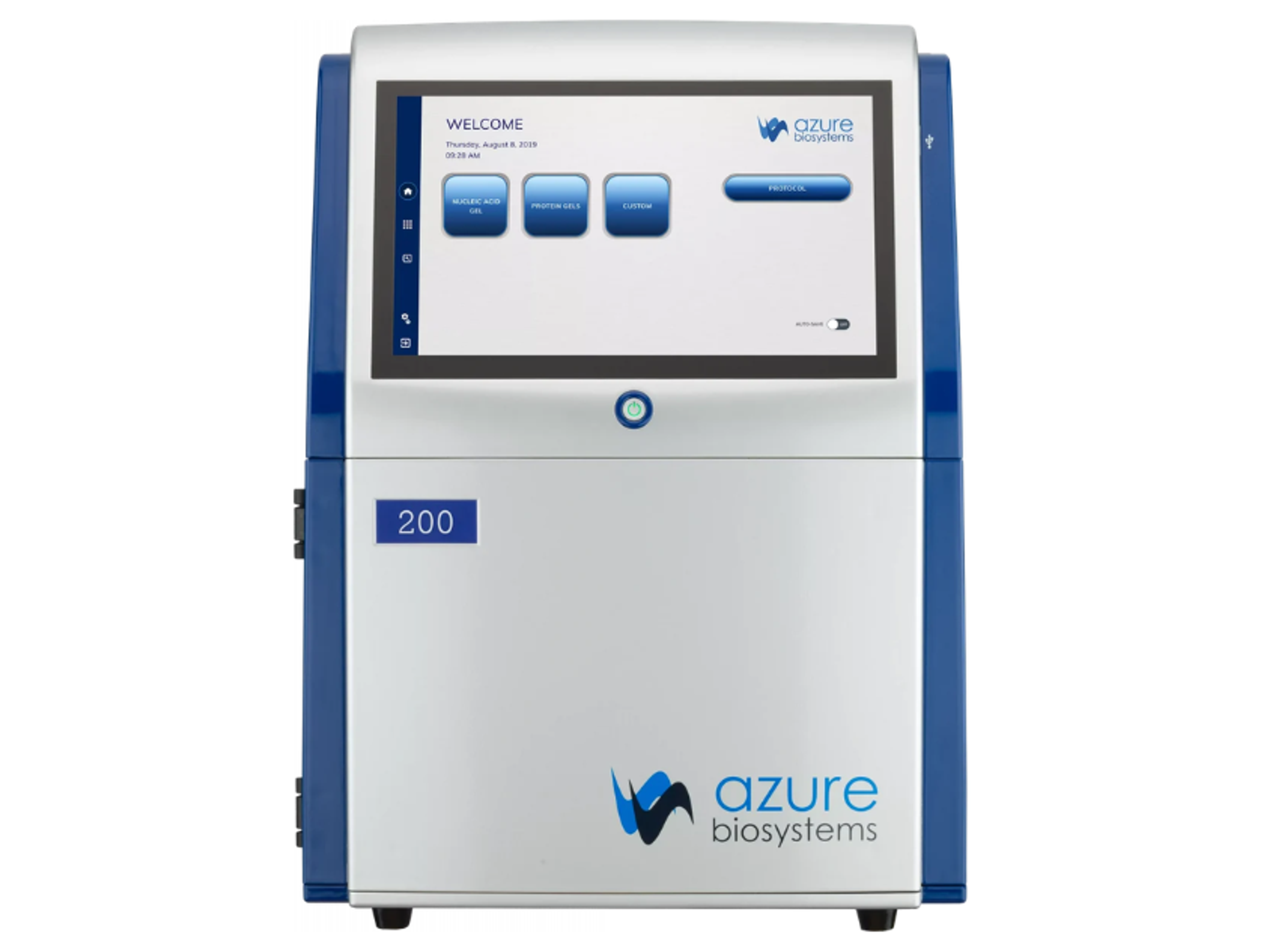
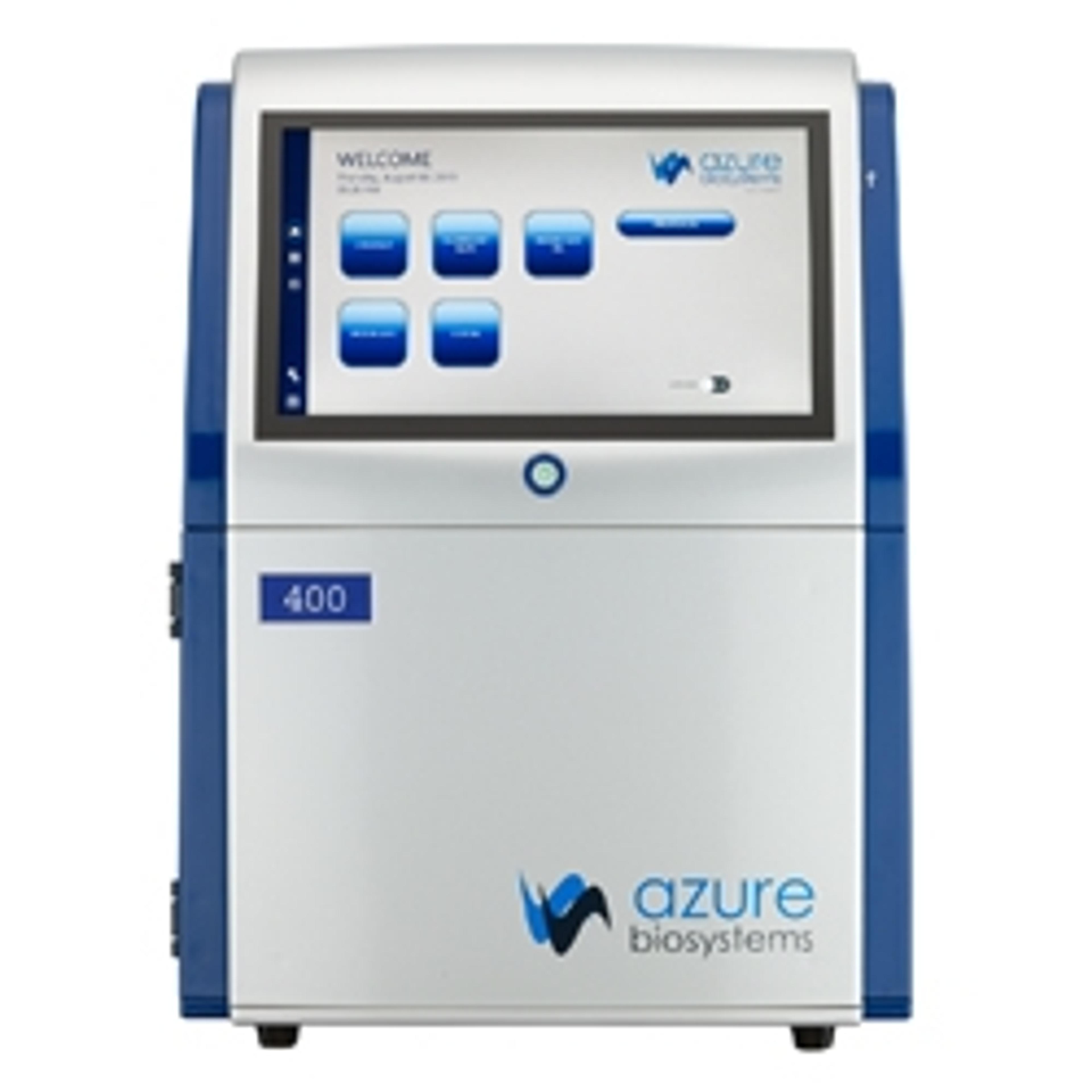
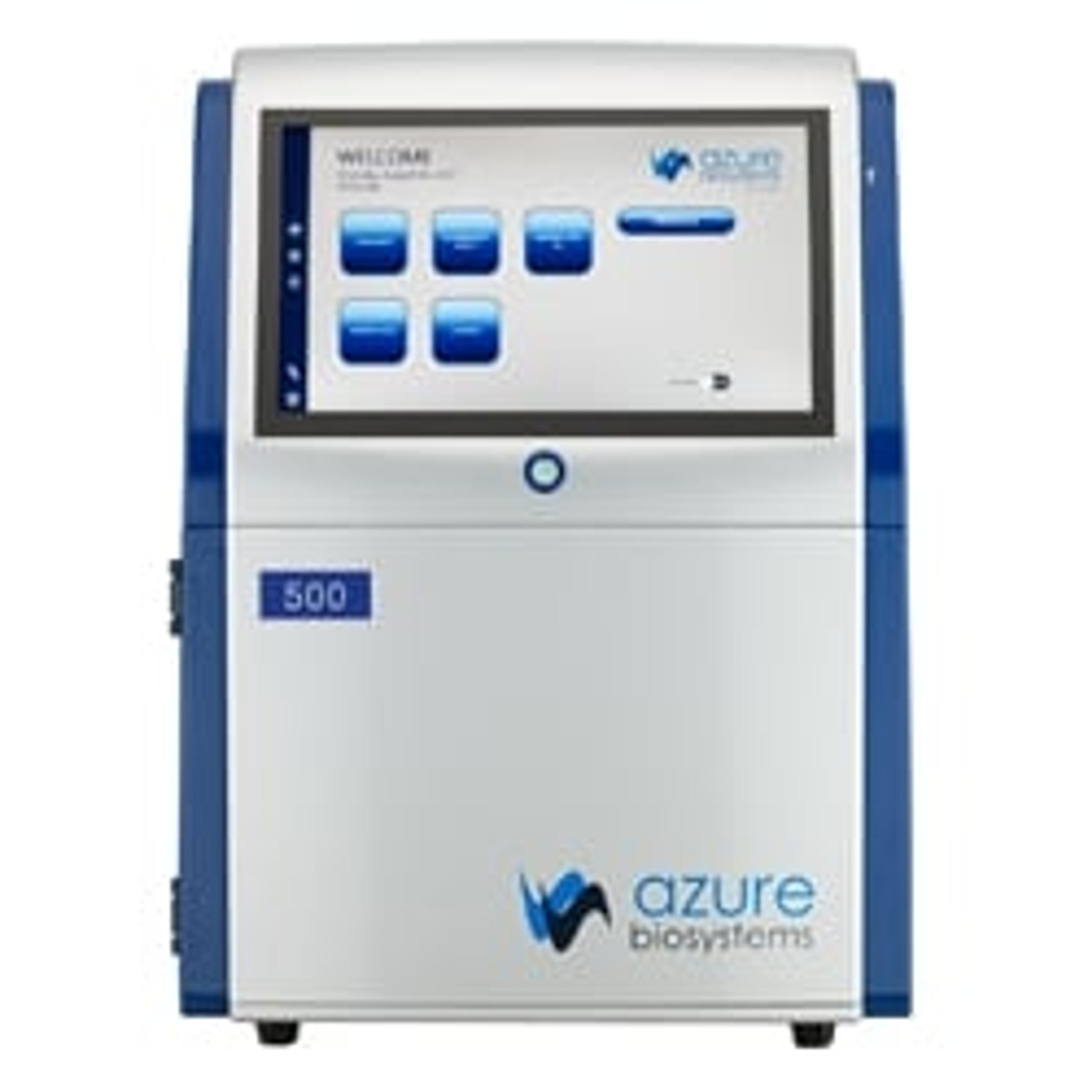
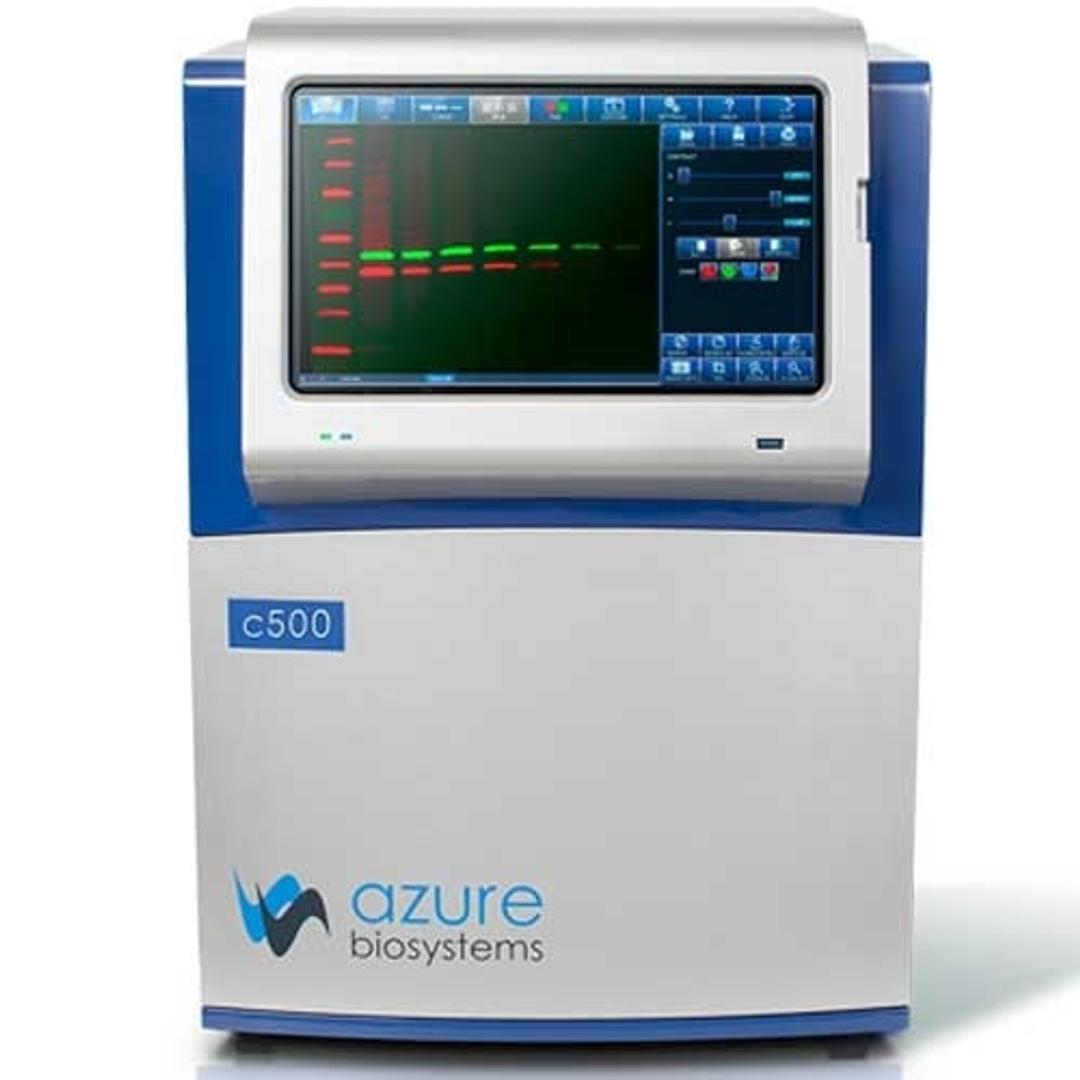
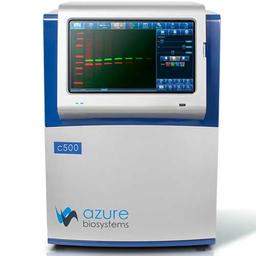
Azure c500 Gel Imaging System
Infrared Western Blot Imaging System.

Receive your quote directly from the manufacturer.
Really good equipment.
Analyze presence of protein in tissue samples
I had to develop a duo fluorescent western blot assay and we had the possibility to use the Azure c500. Really easy to use, I don't know if it could be easier. The quality of the images are really good. The rest of my lab prefer to use TMB and films... I will do my best to change their mind.
Review Date: 17 Dec 2020 | Azure Biosystems
Fantastic instrument!
Western blotting and DNA gels from cell and tissue samples
The system is super user friendly and was significantly less expensive than a better-known alternative. I love the idea of being able to use ECL, NIR, and UV in one small instrument! The company is local to the Bay Area and the service reps are just the best I've interacted with. There are 2 minor things that could be improved: 1: The red laser lane is too strong, which makes it difficult to work with WB ladders or total protein stains, 2: The tablet does not have enough memory, but I really like not having a separate computer for this piece of equipment. In my view, this is the best all-in-one instrument on the market. I would buy it again.
Review Date: 17 Dec 2020 | Azure Biosystems
Operation of capture software is easy, reduces instrument manager’s training work.
Instrument management
We purchased a c500 imager from Azure several years before, this system runs still stable now. The excellent resolution and the sensitivity give us many quality sample images. The c500 contains many functions such as gel, ECL western blot, NIR fluorescence, it is a very important aspect for instrument platform. The operation of the capture software is very easy, it can reduce instrument manager’s training work. The service is perfect, the technical support of Azure helps us to training and support several times when we need.
Review Date: 28 Jan 2019 | Azure Biosystems
Azure c500 gel imaging system is revolutionary and the expert after care astounding.
Western and Northern Blotting
The Azure C500 gel imaging system has been an invaluable tool in our lab. It has revolutionised the blotting process. Images are spectacular and the analysis software is very user friendly. This machine makes these techniques more reliable and easier to perform. Recently we had problems with it and called for a service. The customer care and works carried out were outstanding. The work was completed in fantastic time to such a high standard. Our machine is like brand new again. I am most impressed by this level of care. Many thanks to Jan Wolfram at Azure Biosystems and Kevin Chalmers at Cambridge Bioscience. I highly recommend the Azure C500 for ease of use and functionality and the team that help look after it.
Review Date: 5 Apr 2018 | Azure Biosystems
The Azure c500 is the only system that offers two channel laser based IR detection, chemiluminescent detection with the speed and sensitivity of film, and the ability to image standard EtBr and protein gels.
Infrared Laser Excitation for Quantitative Western Blot Imaging in the NIR
Improve Your Data Quality
- Imaging with infrared dyes offers signal stability and low background fluorescence
- imaging with NIR dyes allows you to study multiple proteins in a blot, even if those proteins overlap in molecular weight.
- Azure Biosystem’s cSeries laser technology offers two IR detection channels enabling a user to image more than one protein in an assay.
Sensitive Detection of Proteins with Chemiluminescent Westerns
Get Out of the Dark
- The Azure cSeries provides accurate and fast chemiluminescent detection, as well as the sensitivity,
dynamic range, and linearity needed for quantitative blot analysis. - Get the best picture every time, and stop wasting money on film.
UV and blue-Excited DNA Dyes, Coomassie gel imaging and More
A Total Solution for Western Blot Imaging and Gel Documentation
- The cSeries is a multichannel, multimodal imager, with IR, visible light, and UV excitation channels.
Also included is AzureSpot, an easy-to-use imaging software package for imaging single or multicolor blots, and DNA and protein gels. The software comes with a software tutorial for easy training of new users.
Brochures

Western blotting eBook
By focusing on best practices for Western blotting and how to choose appropriate experimental conditions, this guidebook provides an excellent starting point and resource for researchers interested in generating reliable, reproducible Western blots. Whether your final data is numbers on a graph or simply the image of the blot, we hope we’ve helped you make all your Western blots quantitative.
Phosphorylated Protein Detection is More Efficient by Fluorescent Western Blot
This application note demonstrates the convenience and accuracy of fluorescent Western blotting for the detection of phosphoproteins in comparison to traditional chemiluminescent assays. A protocol for the visualization of modified and unmodifed proteins simultaneously is outlined, which improves the speed and accuracy for multiplex detection of proteins that requires no blot stripping.
Azure Biosystems Presents the Only Imaging System for all Western Blot Applications
The Azure cSeries imagers are easy-to-use and reliable instruments for Western blot imaging, and enable labs to use one system for fluorescent and chemiluminescent Westerns. The simple user interface allows fast imaging of all sample types. Full upgradability means customers can have confidence that their system will grow and adapt with their needs. Customers no longer have to choose one chemistry for their Western blots; they can buy one system and customize it to their needs.
How to Improve Your Chemiluminescent Western Blots
Chemiluminescent Westerns are popular assays for assessing protein expression. In this indirect detection method, chemiluminescent substrates emit light when reacted with an antibody conjugated to an enzyme. The emitted light is then captured and recorded. It is a highly sensitive assay and can detect femtograms of protein. Although it is only semi-quantitative, it is useful for detecting the presence or absence of a protein. Here are some tips to improve your chemiluminescent Western blots.
Wet or Dry? Which Type of Transfer is Best for Your Protein?
To perform a Western blot, proteins are separated according to molecular weight by electrophoresis through a polyacrylamide gel. The proteins are then transferred from the gel onto a solid membrane support for subsequent immunodetection by protein-specific antibodies. Transfers can be performed by wet transfer or under semi-dry conditions. This application note outlines the benefits and drawbacks of each system which must be considered when optimizing transfer conditions.
How to Improve Your Fluorescent Western Blots
Fluorescent Western blots are the gold standard for quantitative Westerns. They are ideal for detecting multiple proteins simultaneously (multiplexing), allowing in-lane normalization and detection of your protein of interest and loading control at the same time. In addition, post-translational modifications can be studied and quantitated easily. This application note suggests how to improve your fluorescent Western blots.