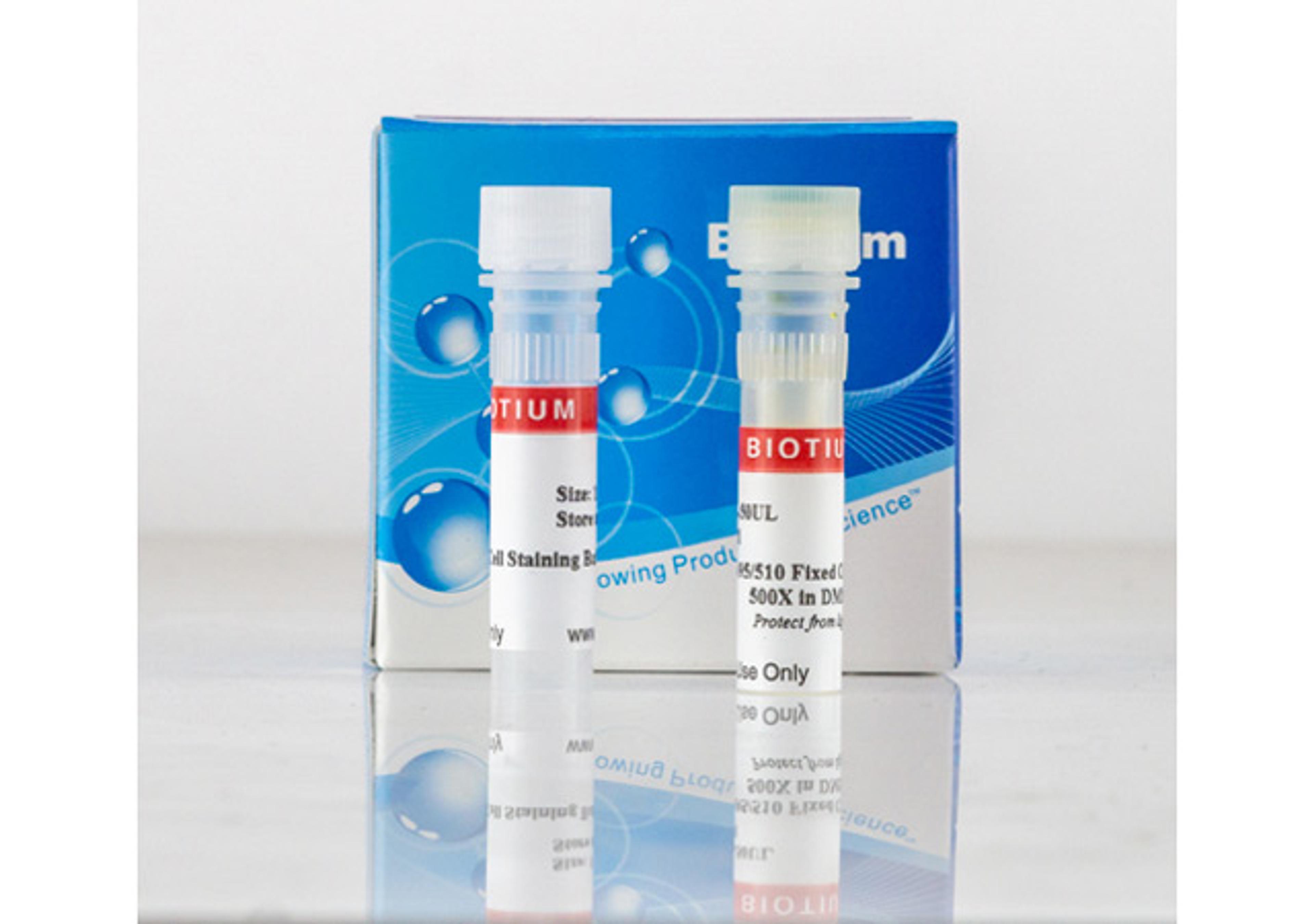
CytoLiner™ Fixed Cell Membrane Stains
Novel lipophilic fluorescent dyes for selective staining of the plasma membrane in formaldehyde-fixed cells. Available in 6 colors, from blue to near-IR.
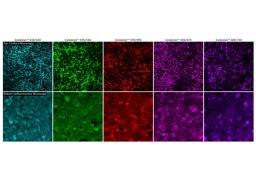
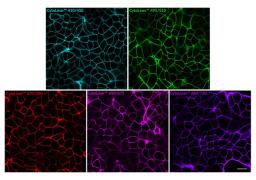

The supplier does not provide quotations for this product through SelectScience. You can search for similar products in our Product Directory.
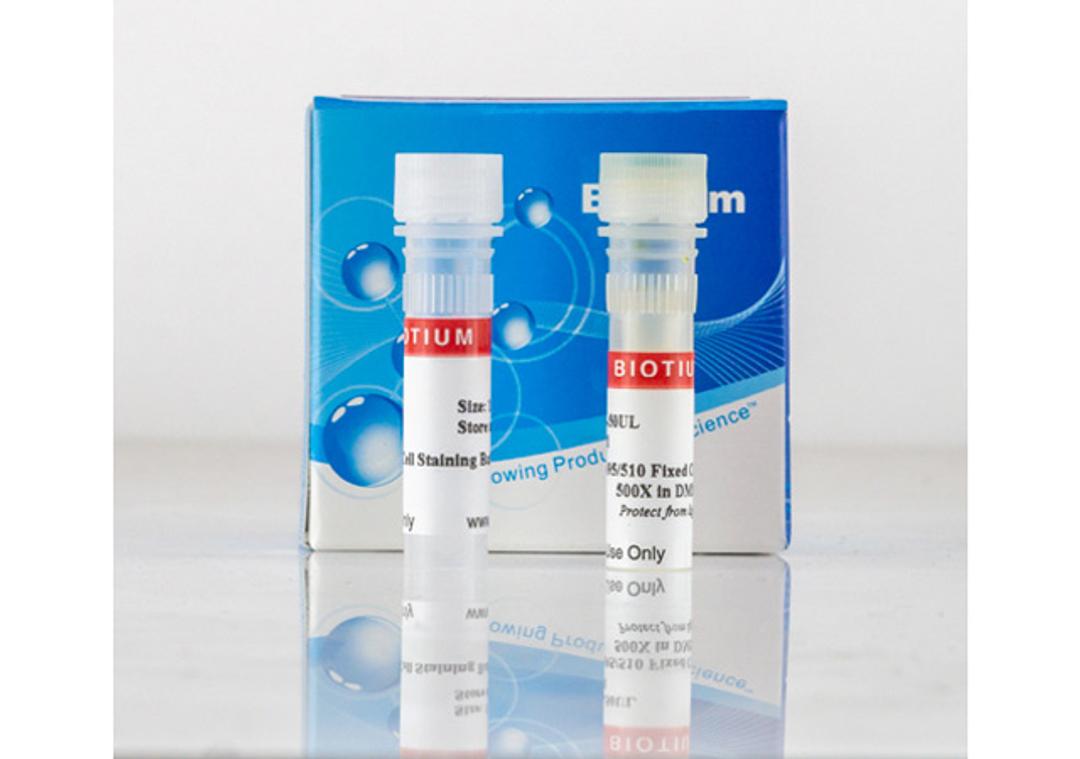
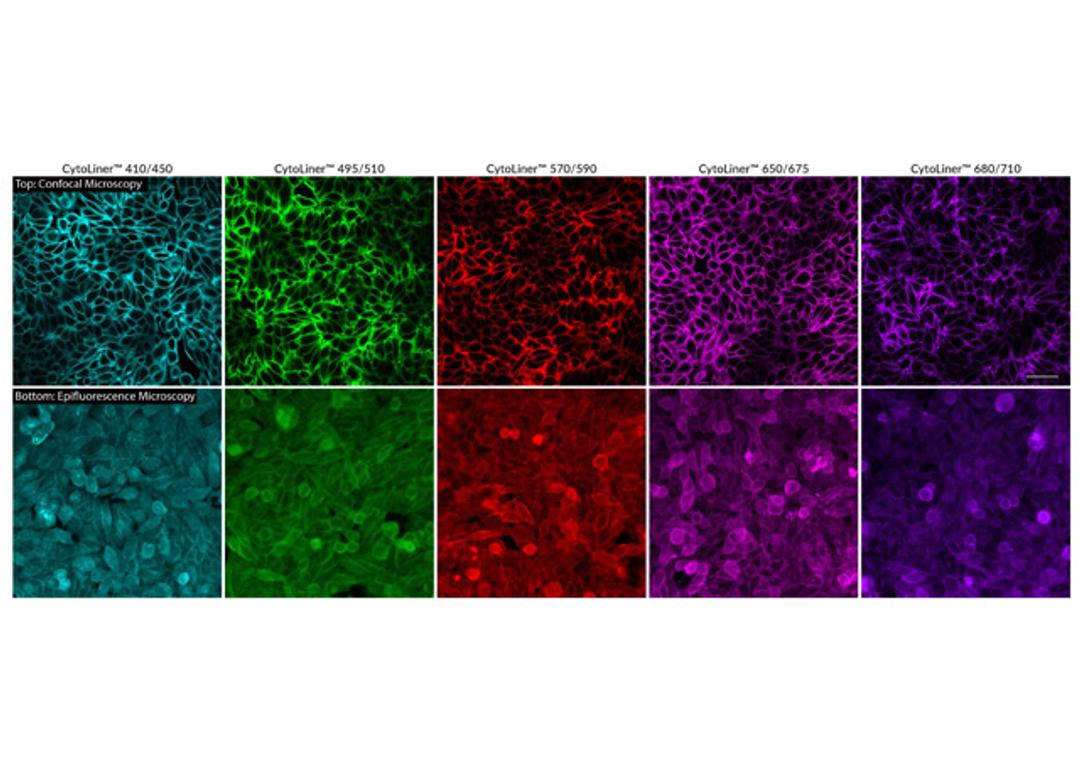
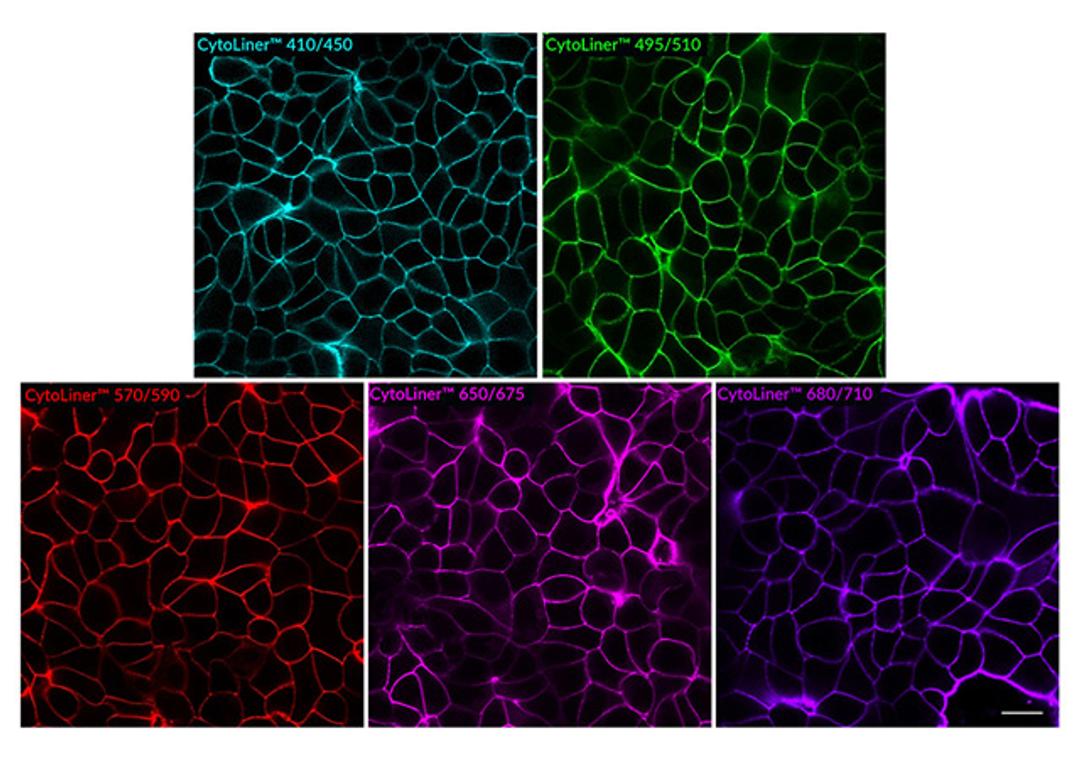
CytoLiner™ Fixed Cell Membrane Dyes are novel lipophilic fluorescent dyes developed specifically for selective plasma membrane staining in fixed cells for microscopy. The dyes are engineered for robust and consistent staining of formaldehyde-fixed cells, and are suitable for downstream immunofluorescence staining protocols.
Features
- Robust and consistent staining of plasma membrane in formaldehyde-fixed cells
- Suitable for antibody co-staining
- Compatible with poly-L-lysine coated cultureware
- Available in 6 colors from blue to near-IR
CytoLiner™ 410/450 Fixed Cell Membrane Stain, 1000 labelings #30131
CytoLiner™ 410/450 Fixed Cell Membrane Stain, 250 labelings #30131-T
CytoLiner™ 495/510 Fixed Cell Membrane Stain, 1000 labelings #30132
CytoLiner™ 495/510 Fixed Cell Membrane Stain, 250 labelings #30132-T
CytoLiner™ 570/590 Fixed Cell Membrane Stain, 1000 labelings #30133
CytoLiner™ 570/590 Fixed Cell Membrane Stain, 250 labelings #30133-T
CytoLiner™ 650/675 Fixed Cell Membrane Stain, 1000 labelings #30134
CytoLiner™ 650/675 Fixed Cell Membrane Stain, 250 labelings #30134-T
CytoLiner™ 680/710 Fixed Cell Membrane Stain, 1000 labelings #30135
CytoLiner™ 680/710 Fixed Cell Membrane Stain, 250 labelings #30135-T
CytoLiner™ 785/815 Fixed Cell Membrane Stain, 1000 labelings #30140
CytoLiner™ 785/815 Fixed Cell Membrane Stain, 250 labelings #30140-T
Selecting the right fluorescent cell stains for imaging and cytometry applications
This guide from Biotium provides an overview of fluorescent cell stains and their use in imaging and cytometry workflows. Discover how different probe types target specific cellular structures, including membranes, cytoplasm, nucleus, and organelles. The resource also outlines considerations for selecting appropriate dyes based on experimental needs, and highlights approaches for distinguishing live and dead cells, monitoring apoptosis, and improving signal specificity for reliable cell analysis.