Cogent Amide Hydride™
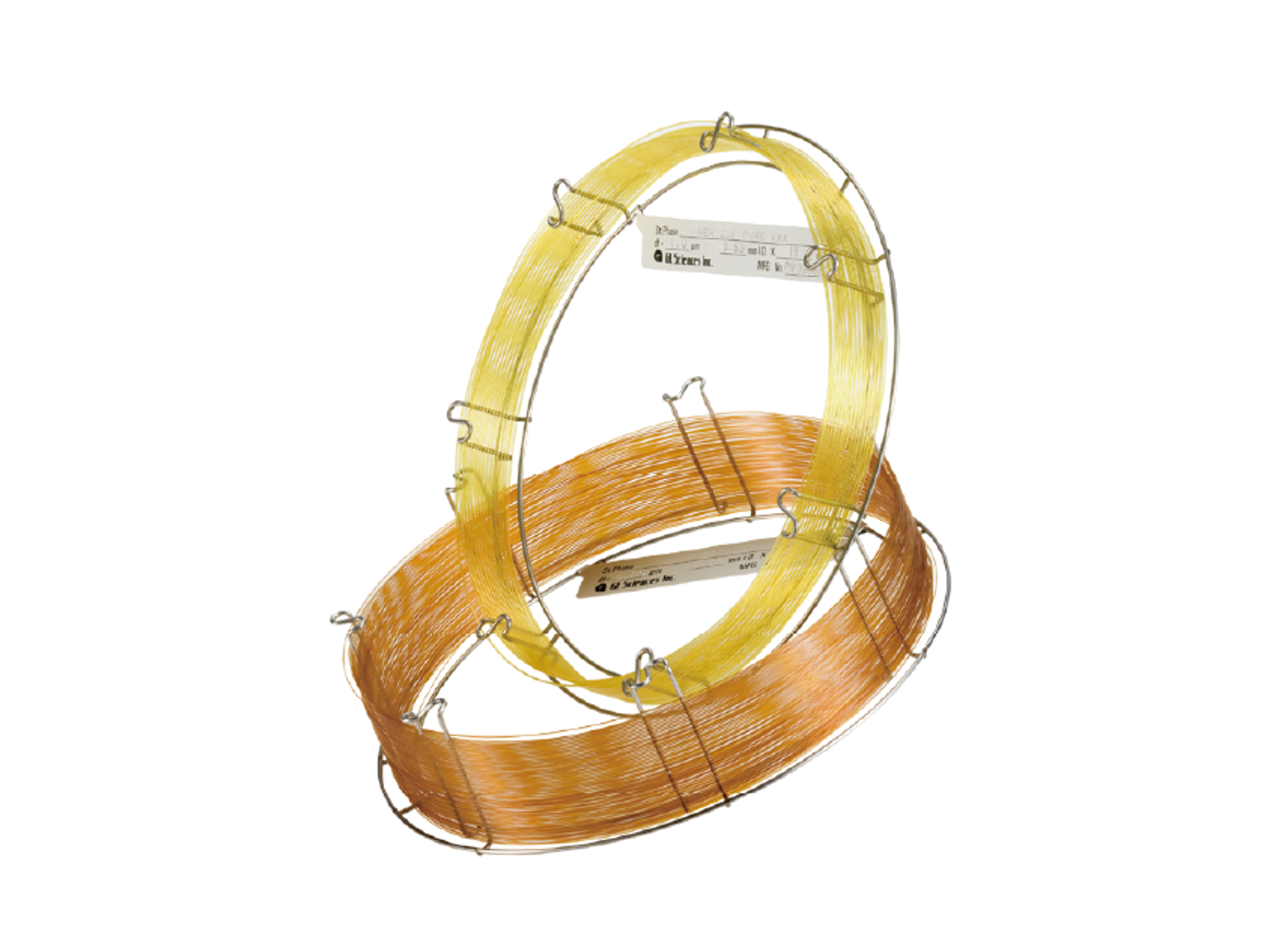
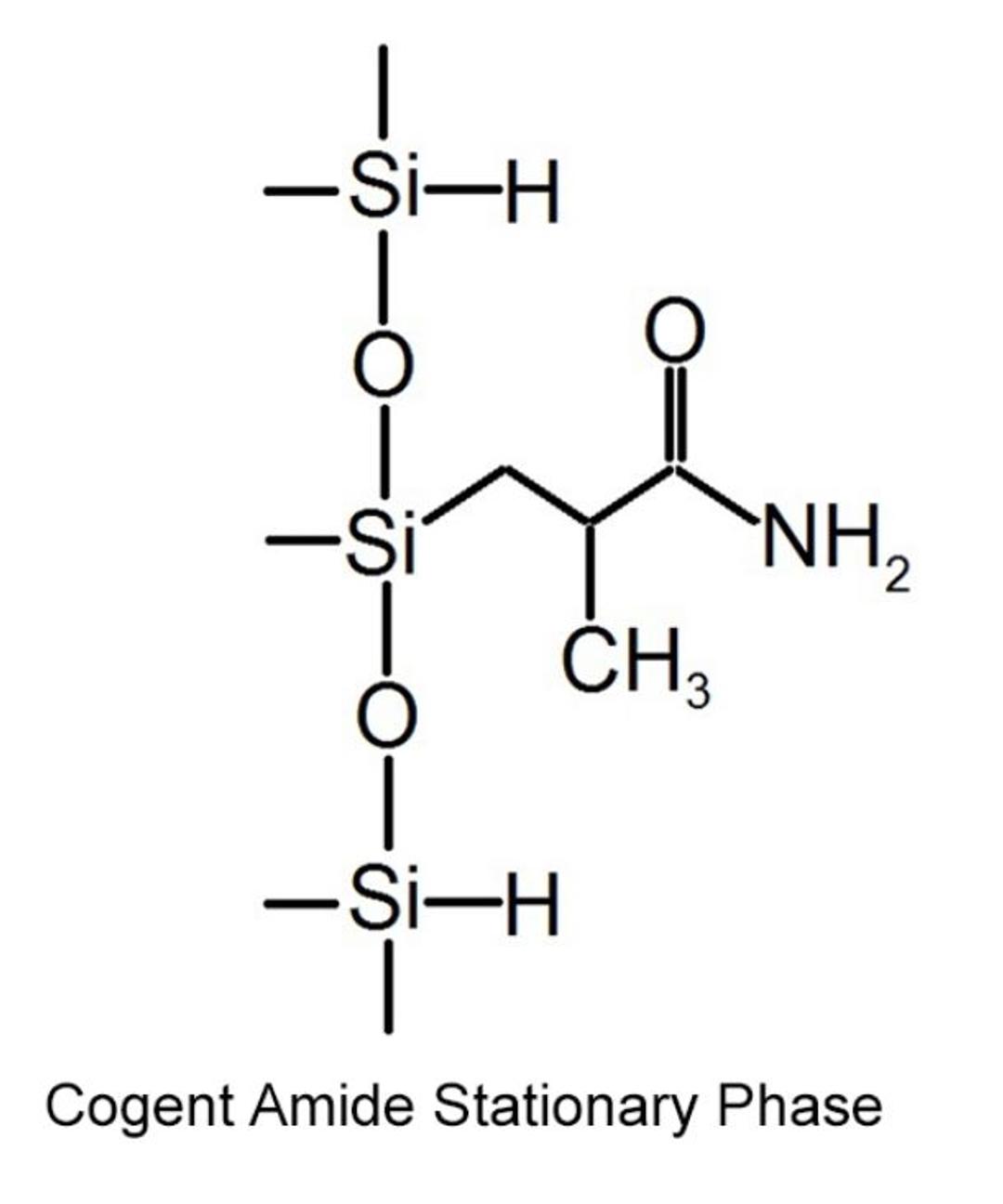
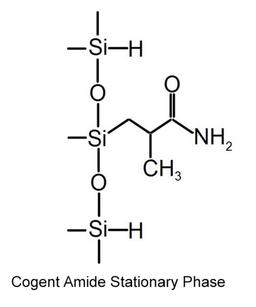
Cogent Amide Hydride™ HPLC Columns are manufactured with TYPE-C™ silica (silica hydride) and have an ethyl amide functional group bonded to the silica particle with direct, silicone-carbon bonds. The manufacturing of silica makes these columns extremely stable.


The supplier does not provide quotations for this product through SelectScience. You can search for similar products in our Product Directory.
The Cogent Amide Hydride™ Column is chosen for analysis of Sugars and other Analytes with amine groups. These columns can be used in Reversed-Phase or Aqueous Normal Phase (ANP) HPLC or LCMS.
- Excellent for Sugars
- No end capping
- Can be used at very low pH
- No permanent associations with acetone
Unlike other amino phases, the Cogent Amide Hydride™ does not make permanent associations with acetone. Amide functional groups are never ionic under any chromatographic conditions providing some advantages. These columns are recommended for separations of biomolecules, macro-molecules, carbohydrates, peptides, polysaccharides, and tryptic digests.

Ribose and Xylose: Retention and separation of simple sugars
Sugars can be difficult to analyze with HPLC due to their polarity. Columns with amine ligands are often used for retention of simple sugars like Ribose and Xylose, but they have a number of drawbacks.
In this application note, MicroSolv Technology Corporation demonstrates that the Cogent Amide Column avoids these problem because its ligand is less chemically reactive than an amine, while still obtaining good retention and separation of the two sugar analytes.
Galactose and Sucrose: Retention and separation of mono and disaccharides
In this application note, MicroSolv Technology Corporation demonstrates the ability of the Cogent Amide Column to retain two highly polar test solutes.
Fructose and glucose in Coca-Cola
In this application note, MicroSolv Technology Corporation demonstrates the separation of polar sugars in Coca Cola© utilizing the Cogent Amide column.
Tizanidine HCl tablet with precision
Tizanidine has several amine groups which can present problems to chromatographers. In this application note, MicroSolv Technology Corporation demonstrates how the Cogent Amide Column is virtually free of residual silanols and therefore a symmetrical peak shape can be obtained.
Fluoxetine (Prozac)
Fluoxetine can have a tendency to tail in some HPLC methods due to its secondary amine group. In this application note, MicroSolv Technology Corporation demonstrates how peak shape with the Cogent Amide Column was found to be highly symmetrical without the aid of ion pairing agents. This allows the method conditions to be adapted to LC-MS if needed.