Click Chemistry Reagents
Vector Labs provides a diverse portfolio of Click Chemistry reagents, including azide and terminal alkyne reagents, biotin azides, sortagging substrates, DBCO and TCO reagents, tetrazine compounds, bis-sulfone conjugation reagents, accelerating ligands, and labeling kits to enable efficient, bioorthogonal bioconjugation and labeling applications.

Receive your quote directly from the manufacturer.
Click Chemistry refers to a class of biocompatible chemical reactions that are rapid, selective, and produce high-yield, stable products under mild conditions. In the context of cross-linking, Click Chemistry enables precise and efficient covalent attachment of biomolecules using pairs of reactive groups, such as azides and alkynes. This approach is particularly useful for labeling, conjugation, and surface modification applications where traditional cross-linkers may lack specificity or stability.
Vector Labs provides a diverse portfolio of Click Chemistry reagents, including azide and terminal alkyne reagents, biotin azides, sortagging substrates, DBCO and TCO reagents, tetrazine compounds, bis-sulfone conjugation reagents, accelerating ligands, and labeling kits to enable efficient, bioorthogonal bioconjugation and labeling applications.
Brochures
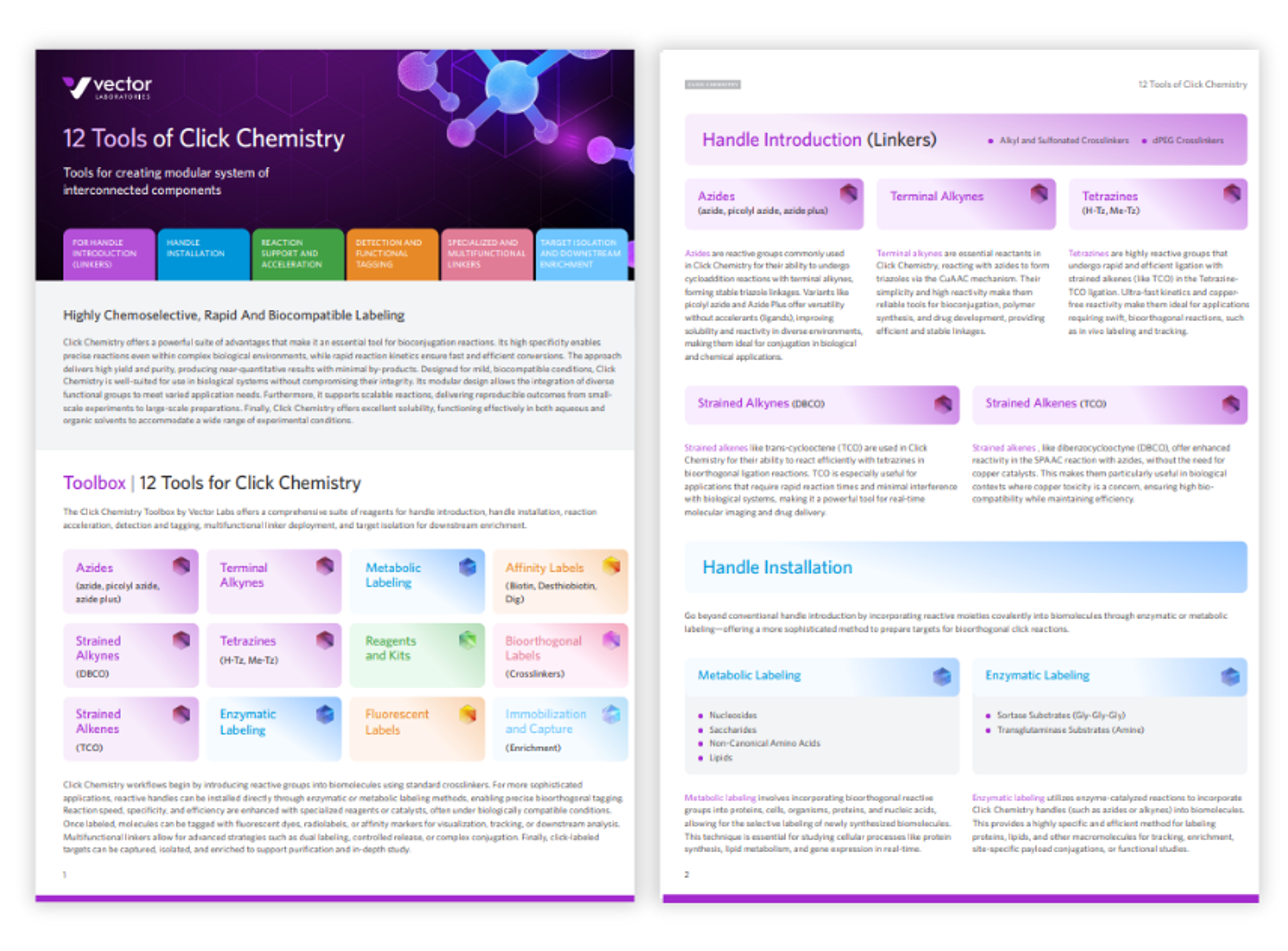
12 tools of click chemistry
In this product brochure, Vector Laboratories showcases its comprehensive portfolio of Click Chemistry tools, providing researchers with reliable, high-quality solutions designed to streamline workflows and deliver consistent, reproducible results across a wide range of applications.
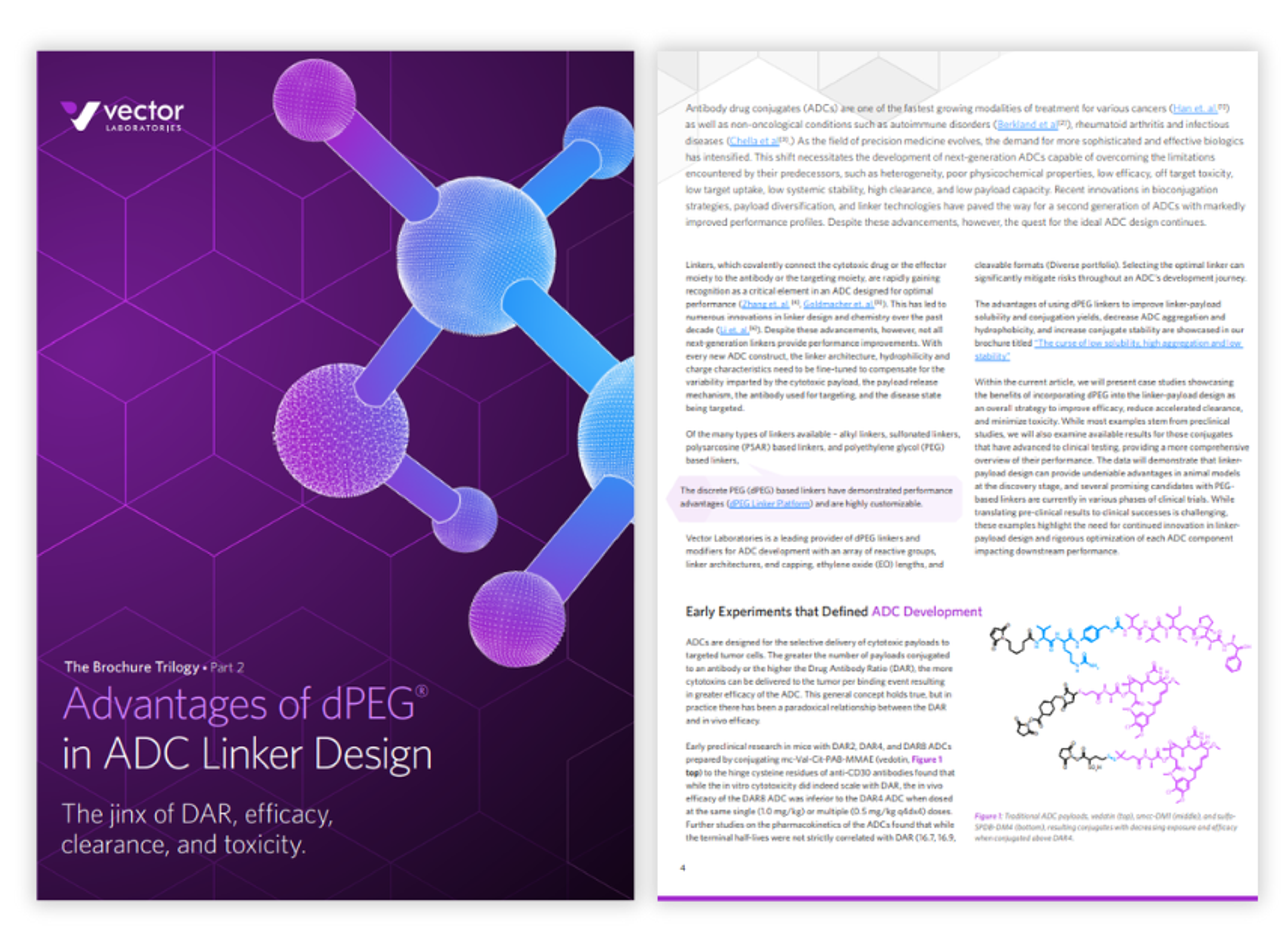
Advantages of dPEG in ADC linker design
In this product brochure, Vector Laboratories presents case studies showcasing the benefits of incorporating dPEG into the linker-payload design as an overall strategy to improve efficacy, reduce accelerated clearance, and minimize toxicity. Vector Laboratories offers a range of dPEG linkers and modifiers for ADC development with an array of reactive groups, linker architectures, end capping, ethylene oxide lengths, and cleavable formats.
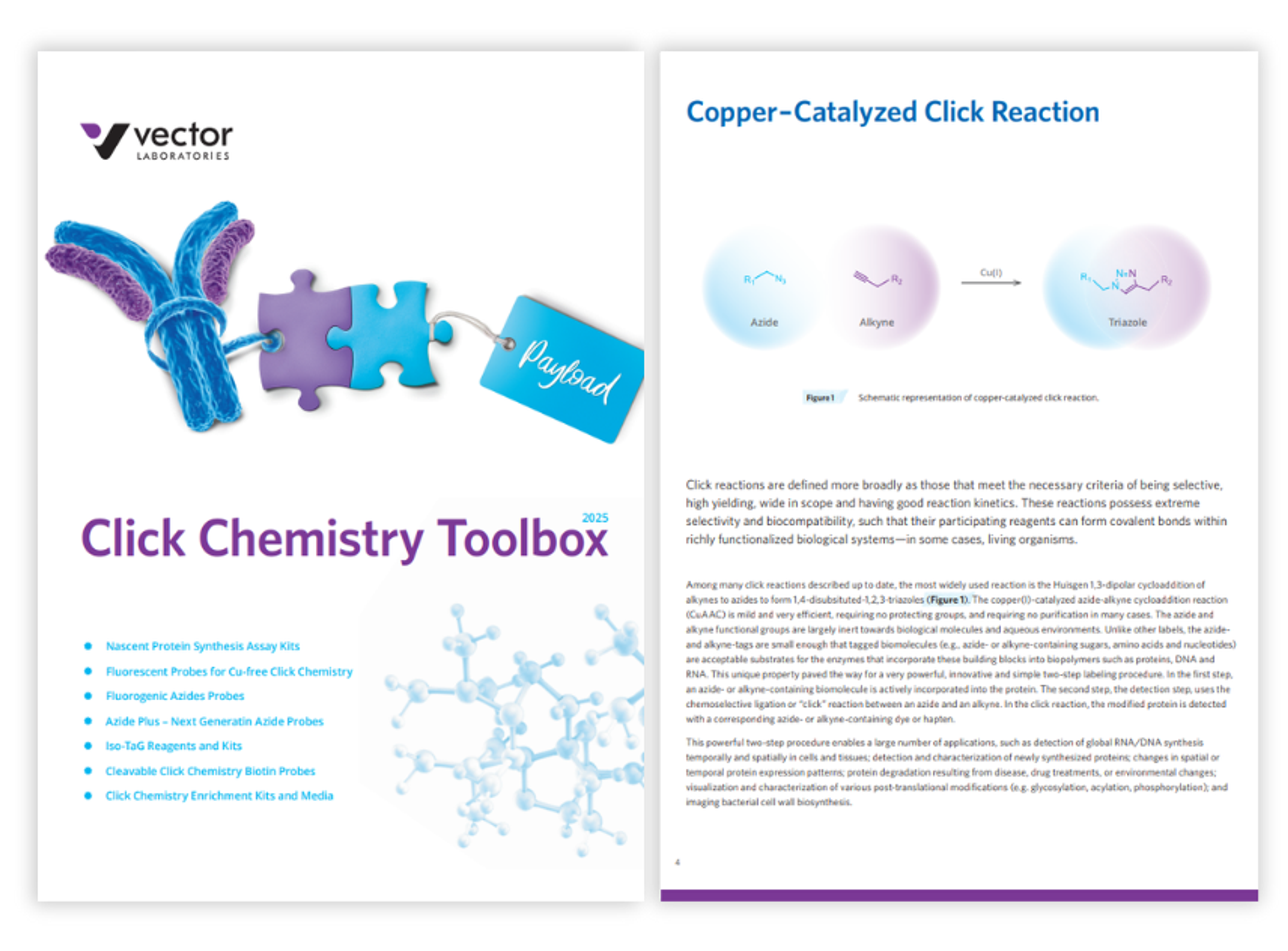
Click chemistry toolbox
In this product brochure, Vector Laboratories showcases its versatile collection of reagents, probes, and assay kits for biorthogonal labeling, imaging, enrichment, and proteomics.

Bispecific ADCs targeting the cancer, not the patient
Tuesday, July 28 at 15:00 BST | 16:00 CEST | 10:00 EDT | 07:00 PDT
Bispecific antibody-drug conjugates (ADCs) represent an emerging frontier in targeted cancer therapy, combining the precision of antibody-based targeting with the potency of cytotoxic payloads. By recognizing two distinct tumor-associated markers rather than one, bispecific ADCs can improve tumor selectivity, helping to distinguish cancer cells from healthy tissue and potentially reducing off-target effects. As the field advances, researchers are exploring innovative approaches to address longstanding challenges in efficacy, safety, and patient outcomes, making bispecific ADCs a rapidly growing area of interest in oncology research and drug development.
This SelectScience webinar introduces BiVictriX Therapeutics and its role as an early pioneer in bispecific, logic gated, ADCs. It will cover how ADCs are reshaping targeted cancer therapy and why bispecific targeting offers a route to improved tumor selectivity and reduced off-tumor toxicity. The presentation will also explore the key steps to take when designing a bispecific ADC, including target selection, antibody format, linker strategy, and payload choice, and how these decisions influence efficacy, safety, and clinical potential.
8 questions that shape your bioconjugation strategy
A practical guide on how to choose the right bioconjugation chemistries, linkers, and characterization methods