Analyst software
Simple, Flexible, and Fast LC-MS/MS Acquisition Software



Receive your quote directly from the manufacturer.
NEED MAC CONNECTIVITY!!
Analyze metabolites in tissue samples
It’s a relatively easy software but the limitation to only window devices is SO inconvenient considering MAC is consuming the world of technology.
Review Date: 23 Apr 2024 | SCIEX
The Best Quantitating Software
quantitation assays
I've used many different brand instruments over the years with their own analyzing software. But Sciex's Analyst software is by far the most user-friendly and has the most straightforward data reporting. Other companies what to make quantitation software with way too many options.
Review Date: 26 Jul 2022 | SCIEX
Very accessible.
LC-MS
Helps make very good progress, super fast and easy to customize.
Review Date: 13 Sept 2020 | SCIEX
Analyst has helped in developing effective MRM with sMRM techique
Analyze metabolites in Serum
Analyst has helped in developing effective MRM with sMRM techique
Review Date: 9 Nov 2015 | SCIEX
Proteomics
I have been using this software for over three years now and found it absolutely amazing. It is easy to connect it with the Sciex Analysis software Protein Pilot. I do a lot of iTRAQ work and quantitation is a big part of my research.
Review Date: 10 Nov 2014 | SCIEX
Before Analyst, the software for SCIEX mass-spectrometers ran on Apple computer (1990). This software was excellent and had only one competitor: Hewlett-Packard. When Analyst was created, the idea was to write software that resemble as closely as possible to the one that ran out of Apple. The first result (Analyst 1.0) was not a success and all the old users were unhappy. With the various versions that have occurred over the years and thanks to the advice of the users, Analysts became a very good product. I begin to work with Sciex mass-spectrometers about 24 years ago and use analyst since he was born and I can say that the latest versions are really very powerful and functional. Of course nothing is perfect, but the standards achieved by Analyst are certainly at the highest levels. It’s simple to use, does not require a high degree of expertise, can be implemented with many other useful tools and meets all the safety requirements. Clearly, every software has its strengths and weaknesses, you just recognize them. The price of the software is in "the normal range" respect to other products and you can have all necessary support (upgrading, patches, drivers) via internet. All those purchasing an AB Sciex mass-spectrometer, they will do a great job with Analyst.
Review Date: 21 Oct 2014 | SCIEX
Residue Chemistry
This software is extremely user friendly, reliable, and allows for multiple functions. In our type of work, the software that is easy to use makes it very useful as we have constant need of training new people and this allows us to not spend so much time training. Everything is at the tip of your fingers and can be located on the tool bar. The only down fall is the metabolic software is not part of it and is separate. I highly recommend this product.
Review Date: 27 Jun 2014 | SCIEX
CRO
Very user friendly software.
Review Date: 20 Dec 2013 | SCIEX
Whether you’re an expert or a novice, Analyst Software’s broad functionality powers all elements of your lab to enhance performance and generate accurate results. Based on industry needs, Analyst Software provides comprehensive functionality for more efficient workflows and faster data analysis. From flexible data acquisition and rapid data processing, Analyst Software is an integral component of your complex MS analysis. The software delivers enables sophisticated analytical results and simplifies validation requirements in regulated environments, so you can generate reliable results.
Brochures

Analyst LC/MS Software and 21 CFR Part 11 Regulations
The purpose of this paper is to present an approach to assist the user in meeting 21 CFR Part 11 compliance with Analyst® LC/MS Software version 1.2 and above, including Analyst Software 1.4.1, when used in quantitative studies supporting Good Laboratory Practice (GLP) bioanalytical studies. In this paper, we outline the joint responsibilities between a supplier and its customers to support users’ 21 CFR Part 11 compliance.
Rapid and Sensitive Analysis of a 93-Compound Forensic Panel in Urine using the QTRAP/Triple Quad 4500 LC-MS/MS System
This technical note describes a rapid and sensitive analysis of a comprehensive panel of forensic compounds in human urine using the ExionLCTM AC HPLC system and the QTRAP®/Triple Quad™ 4500 LC-MS/MS system. This forensic panel contains 93 compounds, and a total of 212 MRM transitions (including internal standards) are monitored. Some compounds ionize preferentially in positive mode, while others ionize preferentially in negative mode; therefore this method takes advantage of rapid polarity switching. The total LC runtime is 6.5 minutes, which can be further accelerated for a smaller panel of compounds. Sample preparation is based on enzymatic hydrolysis and a simple “dilute and shoot” methodology.
Intelligent Use of Retention Time during Multiple Reaction Monitoring for Faster and Extended Compound Screening with Higher Sensitivity and Better Reproducibility
With the new Scheduled MRM™ Algorithm offered in the Analyst® software version 1.5, MRM transitions of the targeted analytes are monitored only around the expected retention time. Thus, automated MRM scheduling decreases the number of concurrent MRM transitions, allowing both the cycle time and the dwell time to be optimized for highest sensitivity, accuracy, and reproducibility. In addition Scheduled MRM™ allows the monitoring of many more MRM transitions in a single acquisition or to speed up the analysis by the use of UHPLC or to combine both concepts without compromising data quality.
Using Your QTRAP LC/MS/MS System at Full Potential
This document outlines the 6 easy steps to upgrade a basic Multiple Reaction Monitoring (MRM) acquisition method to utilize the Scheduled MRM™ Pro algorithm to improve quantitative data quality and to automatically include Enhanced MS/MS scanning to increase confidence in compound identification and confirmation.
Intelligent Use of Retention Time During Multiple Reaction Monitoring for Faster and Extended Compound Screening with Higher Sensitivity and Better Reproducibility
LC-MS/MS instruments operating in Multiple Reaction Monitoring (MRM) are widely used for targeted quantitation and screening on triple quadrupole and hybrid triple quadrupole linear ion trap (QTRAP® ) systems because of their well known selectivity and sensitivity. However, the current limit of a few hundred transitions per chromatographic run limits the number of analytes that can be monitored per injection. In this application note, find out how the new Scheduled MRM™ Algorithm offered in the Analyst® software version 1.5, only monitors the MRM transitions of the targeted analytes around the expected retention time.
Analyst® LC/MS Software and 21 CFR Part 11 Regulations
The purpose of this paper is to present an approach to assist the user in meeting 21 CFR Part 11 compliance with Analyst® LC/MS Software version 1.2 and above, including Analyst Software 1.4.1, when used in quantitative studies supporting Good Laboratory Practice (GLP) bioanalytical studies. In this paper, the joint responsibilities between a supplier and its customers to support users’ 21 CFR Part 11 compliance is outlined.
Rapid and Sensitive Analysis of a 93-Compound Forensic Panel in Urine Using the QTRAP®/Triple Quad™ 4500 LCMS/MS System
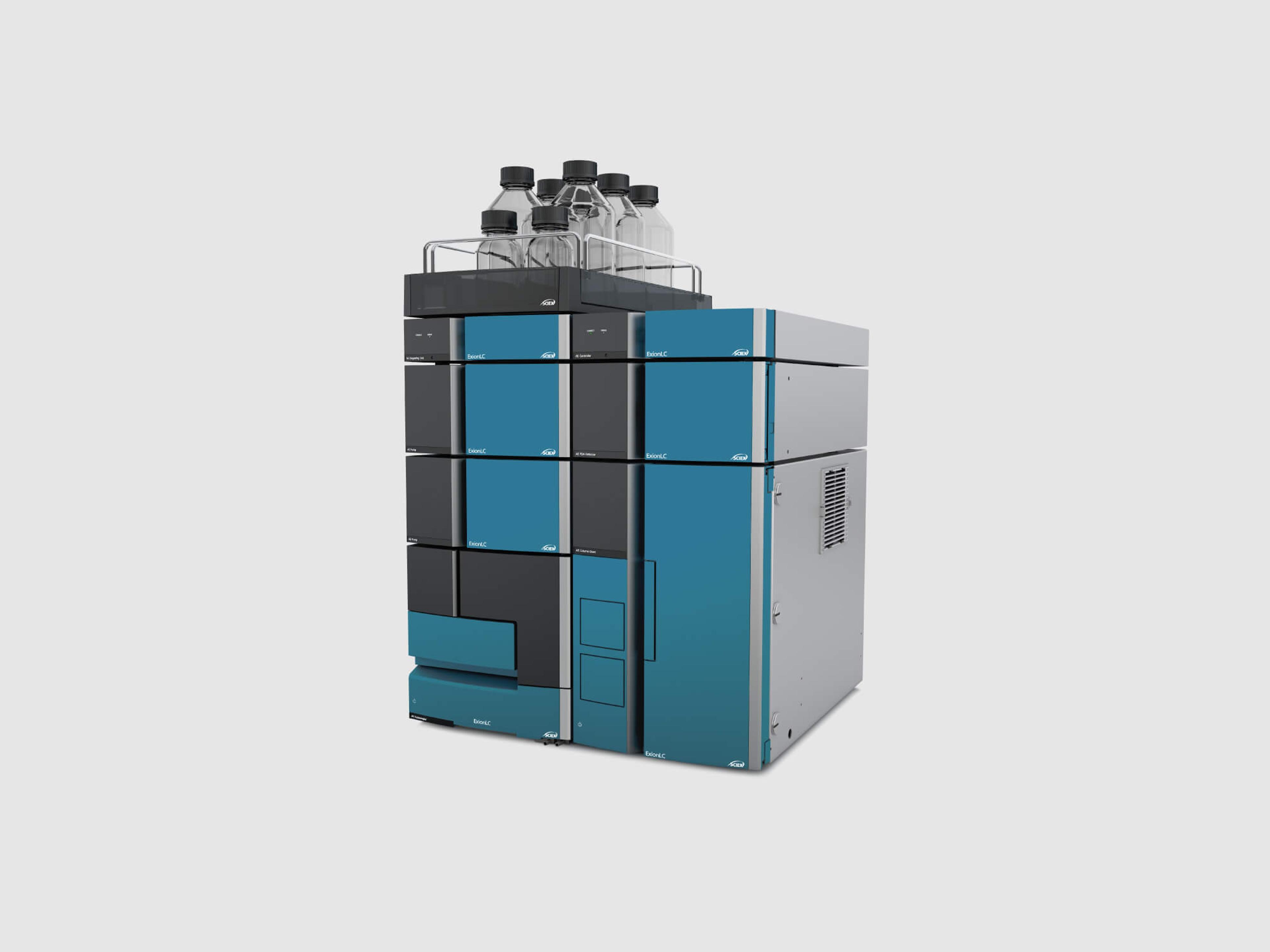
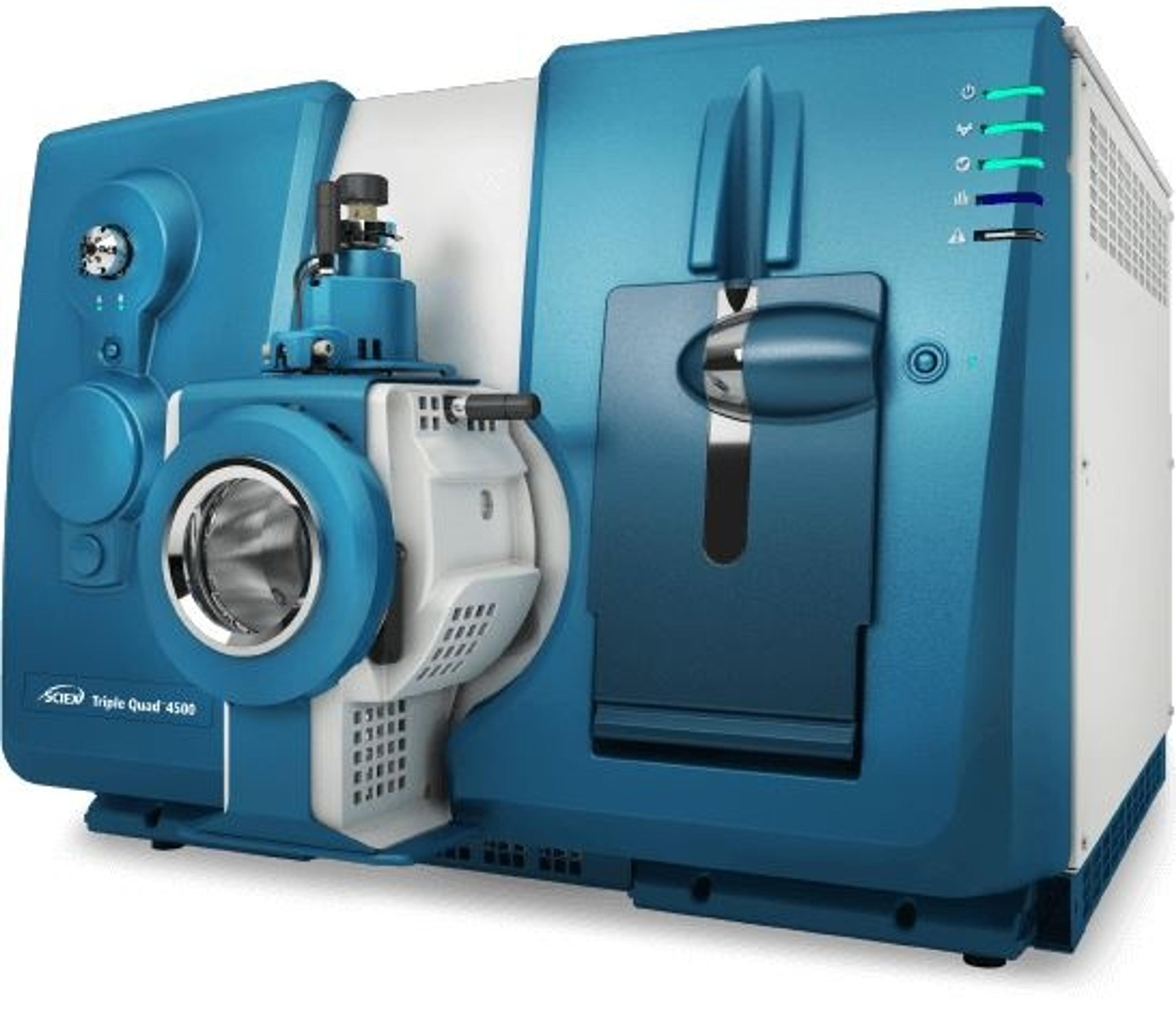
In this technical note, we describe a rapid and sensitive analysis of a comprehensive panel of forensic compounds in human urine using the ExionLCTM AC HPLC system and the QTRAP®/Triple Quad™ 4500 LC-MS/MS system (Figure 1). This forensic panel contains 93 compounds, and a total of 212 MRM transitions (including internal standards) are monitored.
Using Your QTRAP® LC/MS/MS System at Full Potential
This document outlines the 6 easy steps you can follow to import MS/MS spectral libraries into MasterView™ software and LibraryView™ software (3 easy steps) and to add new compounds to an existing library (3 easy steps). These MS/MS libraries can be used when analyzing samples using MRM-triggered MS/MS scans collected on a QTRAP® LC/MS/MS system and compare those results to MS/MS compound libraries to identify and confirm positive peaks in unknown samples.
Improving SWATH by Overlapped Windows
This application note investigates the use of overlapping SWATH windows to improve the cycle time and reduce the SWATH window size. The ability to acquire all possible MS/MS fragments during each cycle of data acquisition has radically changed peptide quantitation capabilities. Since no prior information is required, data acquisition is greatly simplified. During data processing, the particulars of which peptides and proteins are studied can be changed at any time, without the need for reacquiring any data. This investigation demonstrated that overlapping windows enabled deconvolution to narrower windows without loss in duty cycle and that narrower windows improved MS/MS quality and quantitative properties.
Techniques to Improve MRM Assay Development Efficiency
More studies are using MRM and targeted proteomic strategies to quantify peptides/proteins of interest in biological samples. Scheduling the acquisition of MRM transitions of analytes in time greatly increases the number of peptides that can be monitored within a single assay. However, developing a robust time-scheduled assay for larger numbers of peptides can be time consuming. This poster demonstrates a range of techniques for improving the efficiency of assay development, allowing the optimizing of a large number of peptides at once.
How to Verify and Update Retention Times in Scheduled MRM Acquisition Methods using Analyst MultiQuant Software
This application note describes a procedure to update retention times and other parameters when transferring acquisition methods using the Scheduled MRM algorithm from one laboratory to another.