Read, Wash, Dispense & Automate with BioTek Instruments at LabAutomation 2010

20 Jan 2010
Sarah Sarah
Marketing / Sales

Product news

BioTek's READ, WASH, DISPENSE & AUTOMATE theme exemplifies the full line of microplate technology solutions that will be demonstrated at booth 151, as well as a variety of informative presentations throughout the conference. The new EL406™ 1536-well washer, the latest advancement in microplate washing, will also feature.

As BioTek’s next generation washer platform, the EL406 features two dispense manifolds, driven by separate microprocessor controlled syringe pumps, used individually or in parallel for maximum 1536-well throughput. Angled tube designs guarantee thorough yet gentle washing, even for loosely adherent cell monolayers. An available peristaltic pump dispenser module can be added as an alternative washing tool or dedicated reagent dispenser. The EL406 will be featured at the fourth annual “Late Night with LRIG: Rapid-Fire Innovation Session”, to be held January 25, 2010 at the Wyndham Hotel Palm Springs, Mojave Learning Center.

Also at the booth will be BioTek’s new patent-pending Synergy™ H4 Hybrid Microplate Reader, which combines sensitive filter- and flexible monochromator-based optics in one high-performance unit. This unique hybrid of both technologies provides for endless flexibility in current and future microplate-based assay choice and also covers the entire range of microplate-based fluorescence, absorbance and luminescence assays.

BioTek’s workshops at LabAutomation 2010 include:
• Automated Workflows for Luminex xMAP Assays – Use of BioTek microplate washers including the EL406, ELx405 and ELx50 for automation of Luminex xMAP assays using either polystyrene or magnetic beads. This workshop will be held Tuesday, January 26 from 12:30 - 2:00 pm in the Palm Springs Convention Center, Smoketree AB. Register at www.biotek.com/labauto and attend this workshop for your chance to win an Amazon Kindle!
• Cell Culture Simplified: The BioLevitator and 3D CellHOST (sponsored by Hamilton and Global Cell Solutions) – This workshop will focus on Hamilton’s BioLevitator product for 3D cell culture and Global Cell Solutions 3D matrix called GEM. BioTek will demonstrate the ability to perform automated assays with cells on GEM using BioTek’s MicroFlo Select dispenser, Precision pipetting system and Synergy 4 hybrid microplate reader. This workshop will be held Monday, January 25 from 12:30 – 2:00 pm in the Palm Springs Convention Center, Smoketree DE.


BioTek’s technical poster presentations at LabAutomation 2010 include:
• Automated Processing of a Homogeneous Phospho-ERK1/2 Assay for Use as a Universal GPCR Sensor
• Automated Cell Dispensing into 1536-Well Microplates for HTS Screening
• Automated Cytotoxicity Profiling of Small Molecule Compounds
• Automation of a Microplate Cell-based Assay to Measure Activity of the Histamine H1 G Protein-Coupled Receptor using a Novel 3-D Cell Culture Technique
• Utility of Hybrid Multi-Mode Readers using both Filter- and Monochromator-based Detection Capabilities as demonstrated with Fluorescence Polarization, Time-Resolved Fluorescence Resonance Energy Transfer and Fluorescence Intensity Assays for the Measurement of ADP Accumulation
• Automation of a Multiplexed Cell-based Assay to measure simultaneously Inhibition and Induction of the Cytochrome P450 Isoform 3A4 by Small Molecule Compounds
• A Novel Homogeneous, Fluorescence-based Technology for Dual measure of Phosphodiesterases and their Downstream Effector Kinase Activities in Biochemical and Cell-based Assays
• Automated Washing of Magnetic Bead xMAP Assays for Multiplexed mRNA and Metabolic Hormone Assays
• Versatile, Cost-effective Automation of Avian Flu and Mycoplasma Gallisepticum-Synoviae ELISAs

Additional innovative microplate instruments presented at BioTek’s booth (#151) include:
• READ: the New Synergy™ H4 Hybrid Microplate Reader, Synergy HT Multi-Mode Microplate Reader, PowerWave™ Microplate Spectrophotometer and Take3™ Multi-Volume Plate
• WASH: New EL406™ 1536-well Microplate Washer, ELx405™ Microplate Washer and ELx50™ Microplate Strip Washer, all with magnetic bead washing
• DISPENSE: MicroFlo™ Select Dispenser, MicroFill™ Microplate Dispenser and EL406™ combination Microplate Washer Dispenser
• AUTOMATE: Precision™ Automated Microplate Pipetting System and BioStack™ Microplate Stacker

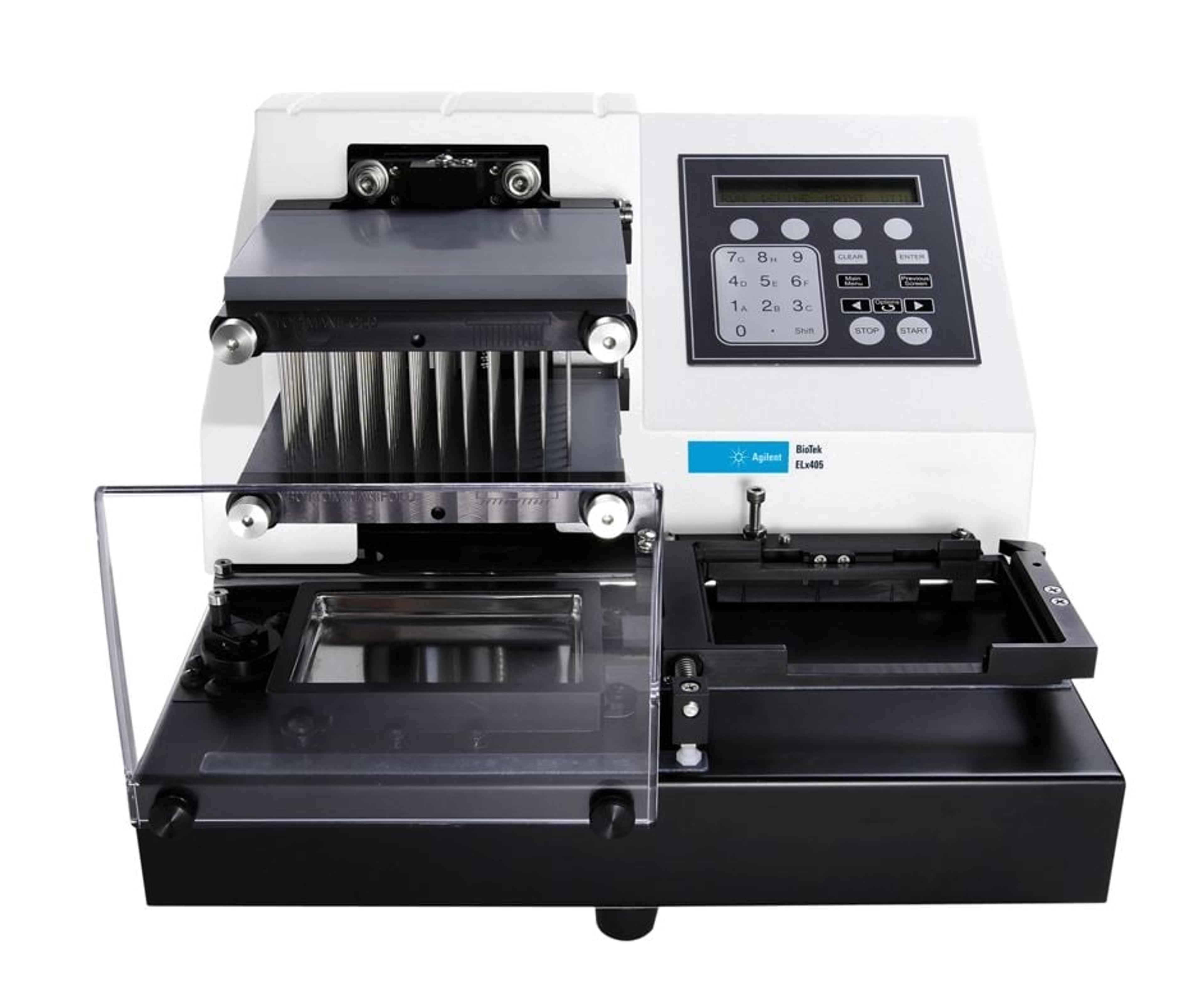
Agilent BioTek ELx405 Select Deep Well Washer

Agilent Technologies

The Agilent BioTek ELx405 Select is the first deep well plate washer that aspirates and dispenses into 96- and 384-well deep well and standard height microplates. The ELx405 Select is available in several configurations to address a wide variety of plate washing applications, including ELISA and cell-based assays.
(29)

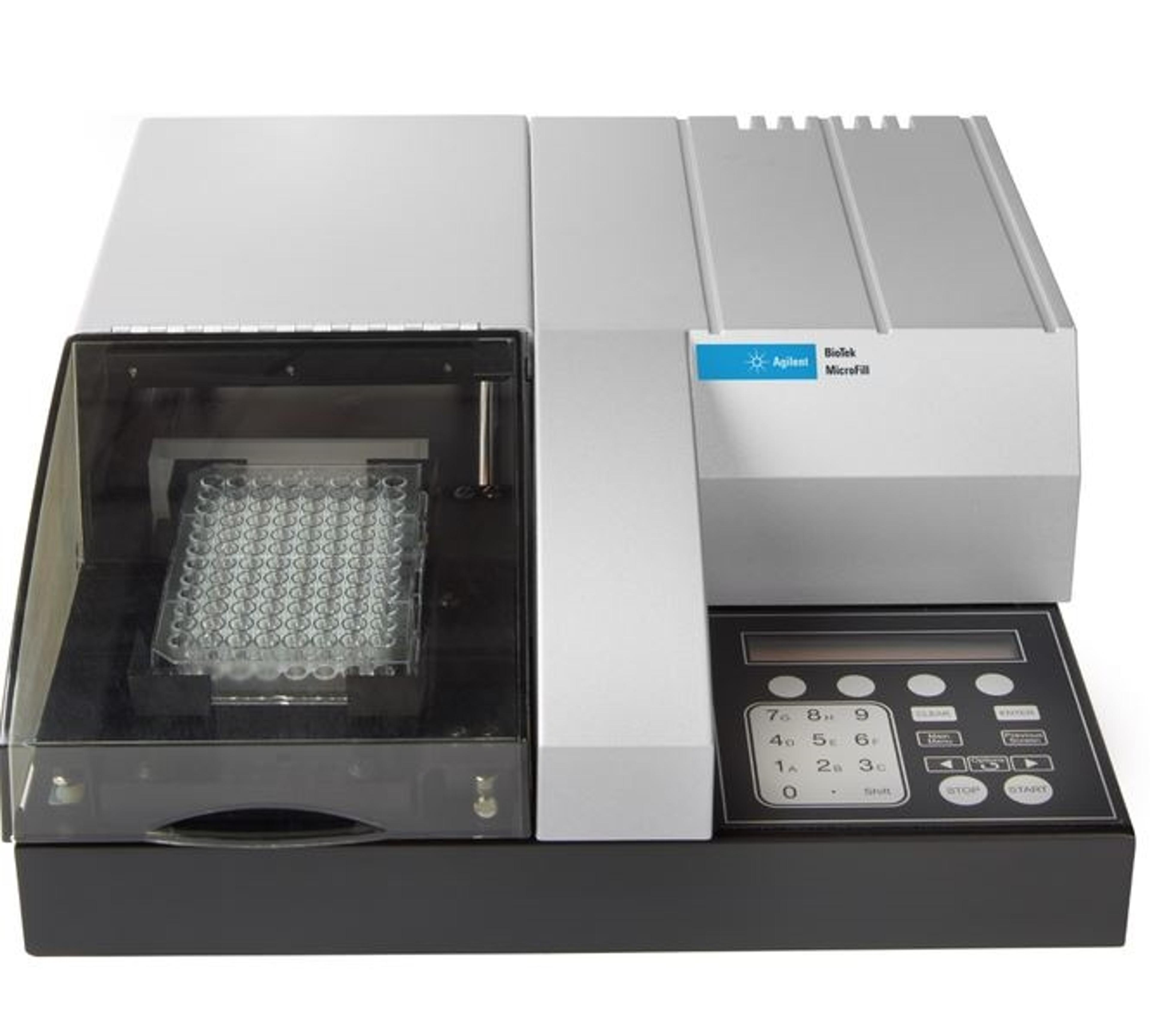
Agilent BioTek MicroFill Dispenser

Agilent Technologies

Agilent BioTek MicroFill is an economical, compact, and reliable dispenser for 24-, 96-, and 384-well microplates. An autoclavable fluid path is ideal for applications that require sterility. The dispense flow rates are easily selected to accommodate sensitive cell-based assays or vigorous dispensing for ELISA. Accurate and precise dispensing are guaranteed, without the time-consuming recalibration, cassette replacement, and maintenance commonly associated with other dispensers. Intuitive, on-board software is easy to use and saves time in instrument setup.
(3)

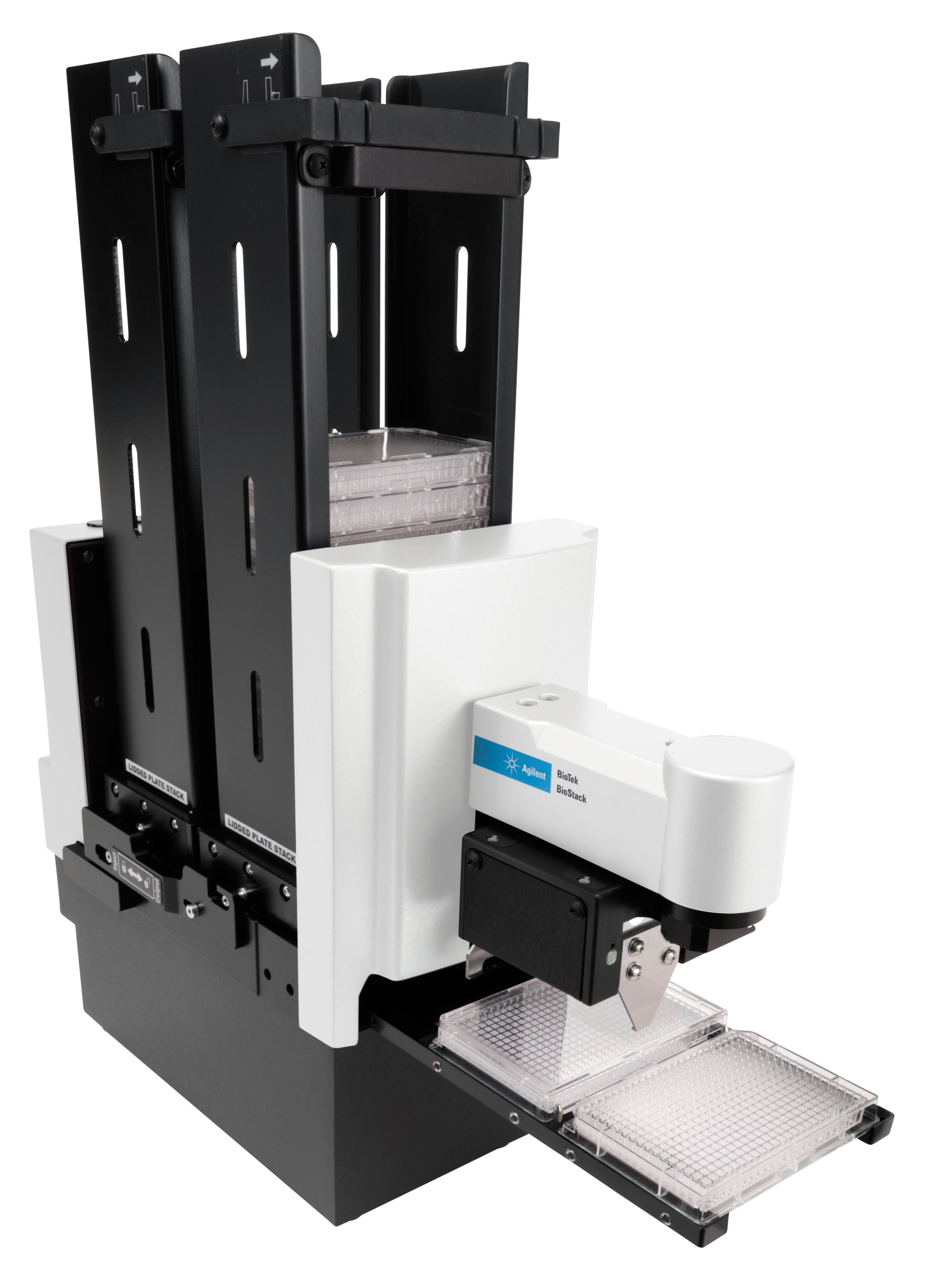
Agilent BioTek BioStack Microplate Stacker

Agilent Technologies

The Agilent BioTek BioStack microplate stacker is a compact and versatile microplate stacker, compatible with Agilent BioTek washers, dispensers, plate readers, and imaging systems. The rapid plate exchange speeds deliver increased throughput and enhanced efficiency and greater productivity.

(29)

Links

Tags

UV-Visible SpectroscopyUltraviolet-visible (UV-Vis) spectrophotometers are used to measure the interaction of UV and visible light with a sample, including transmission, reflectance & absorbance. The two major instrument classes are single-beam or double-beam spectrophotometers. More specialized equipment includes colorimeters, spectroradiometers and refractometers. Portable and microvolume spectrophotometers are also available. For the modular spectroscopy lab, explore a range of light sources for combination with a spectrograph/spectrometer and optics. Find the best UV-Vis spectroscopy products in our peer-reviewed product directory: compare products, check customer reviews and receive pricing direct from manufacturers.ELISAEnzyme-linked immunosorbent assays (ELISA), also known as enzyme immunoassays (EIA), are used for the detection and quantification of proteins, peptides and antibodies in a sample. ELISA often comes in kit format, with pre-selected antibody pairs to detect specific proteins or biomarkers of diseases such as diabetes and obesity, or cardiovascular and neurological disorders. Detection is made possible with chemiluminescent, fluorescent or colorimetric substrates and detection instruments such as microplate / ELISA readers. Other kits available include: Enzyme-linked immunospot (ELISPOT) assays for the quantification of protein-producing cells and chemiluminescent immunoassays (CLIA) kits. Find the best ELISA kits and products in our peer-reviewed product directory: compare products, check customer reviews and receive pricing direct from manufacturers.MicroplatesMicroplates are multi-well plates used to increase the throughput of biological investigations. The number of wells microplates contain can range from 6 to 3243 wells, with the 96-well format being the most commonly used. Microplates can come tailored for a range of applications including cell culture, PCR, filtration, storage, non-binding surface, protein crystallization, as well as pre-coated, deep well and normal Standard microplates. Additionally, options for microplate colors include clear , black, white or black with clear bottom and white with clear bottom for absorbance microplate reader applications. Find the best microplates for your lab in our peer-reviewed product directory: compare products, check customer reviews and receive pricing direct from manufacturers.High-Throughput ScreeningHigh-throughput screening (HTS) is an automated drug discovery technique for identification of active compounds against a compound library. Use HTS readers and integrated assay preparation / analysis workstations to screen your compounds. Identify active compounds against various HTS libraries, including membranes, proteins and peptides and HTS cell lines. Find the best high-throughput screening products in our peer-reviewed product directory: compare products, check customer reviews and receive pricing direct from manufacturers.Microplate Readers / DetectorsMicroplate readers are used to automate the detection and analysis of labeled or label-free components in microplates during assays or live-cell monitoring. Microplate readers are generally distinguished by their mode of detection. Types include absorbance, luminescence, fluorescence intensity, fluorescence polarization, TRF / FRET and multimode microplate readers. Microplate readers deliver a high throughput of samples by reading multiple wells simultaneously, with the 96-well format the most commonly used. As a result, microplate readers are often used in the drug discovery, bioassays, research and pharmaceutical industries for screening applications. Microplate loading can also be automated, with robotic microplate stackers to increase throughput. Find the best microplate readers in our peer-reviewed product directory: compare products, check customer reviews and receive pricing direct from manufacturers.Assay AssemblyAssay Assembly is technique used in drug discovery to develop assays to test the cytotoxicity, genotoxicity, or other activities of a compound on a cell. Assay assembly requires chip assembly, a delivery system and a detection and analysis method. Beneficial features of assay kits or automated systems include high-throughput, high speed and sensitivity and low signal to noise ratio.Robotic InstrumentsRobotic instruments can be used for high-throughput automation of many lab processes. Such processes use instruments for assays like cell based assays and ELISA, for sample preparation like shakers, centrifuges and incubators, and for analysis such as sequencing and western blot analyzers. Useful features of robotic instruments include speed, reproducibility, barcode readers, software and automation.Plate ProcessingAutomated plate processing is used in microplate technologies for high-throughput, speed and efficiency. Plate processing systems include microplate handlers for moving plates, heat sealers, stackers and carousels for storage, retrieval and delivery, microplate washers and piercers. Useful features of plate processors include walk-away automation, compatibility and easy integration with microplate systems.Automated Liquid HandlingAutomated liquid handling equipment is used to mix, dilute and dispense allotted volumes of liquid into microplates and other vessels automatically. The robotic, liquid handling arms can dispense from single channel to 3456 multichannel as well as operate nanoliter dispensing, enabling high throughput of samples. Find the best automated liquid handlers in our peer-reviewed product directory: compare products, check customer reviews and receive pricing direct from manufacturers.PumpsLaboratory pumps are devices used to move liquids and gases by vacuum or positive displacement. The pressures/vacuums generated are determined by the type of pump used. High vacuum pumps include diffusion, ion, roots and turbopumps; for primary/medium vacuum applications see rotary vane pumps, scroll & diaphragm pumps. For the positive displacement of liquids explore a range of syringe and peristaltic pumps, as well as fluid aspirators. Discover the best pumps in our peer-reviewed product directory: compare products, check customer reviews and receive pricing direct from manufacturers.