
Field labs turn to UV‑Vis for reliable chromium analysis
Uncover why UV-Vis is overtaking ICP-MS as the smarter option for environmental field monitoring
1 Sept 2026
Environmental monitoring labs rarely operate under predictable or fully controlled conditions. Unlike centralized analytical facilities, these labs must account for fluctuating sample loads, time‑critical measurements, and the realities of field‑based work that standard instrument specifications often overlook. When samples arrive in high numbers, they frequently need to be measured on the same day they are collected. Testing labs are typically located at, or near, the sampling site, which can be remote, modestly equipped, and staffed by small teams without specialist instrument training. In these settings, high analytical sensitivity remains essential, but it must be achievable within practical field constraints.

William Yip, Product Manager for Analytical Solutions at Edinburgh Instruments.
A key focus for many of these labs is the detection of contaminants linked to industrial processes. Among these, hexavalent chromium (Cr(VI)) is particularly important due to its persistence and well‑documented health risks. As regulations tighten around its presence in waterways and consumer products, the analytical methods used to detect and track Cr(VI) must meet both regulatory expectations and the practical realities of field‑based testing. Selecting an appropriate technique therefore involves more than achieving high analytical sensitivity alone.
William Yip, Product Manager for Edinburgh Analytical, a subdivision of Edinburgh Instruments, works directly with environmental monitoring customers to understand where their workflows break down. Speaking with SelectScience®, Yip shares what field-based labs actually need, and why the answer is not always the most capable instrument available.
The reality of environmental monitoring in the field
Central laboratory and field monitoring conditions are very different settings. Many environmental labs operate with just two or three staff members running high numbers of daily samples with limited access to technical support.
"For environmental labs, usually they will have a large number of samples, maybe hundreds or more than that per day," says Yip. "Sometimes they are remote or even in a mobile lab. Those small labs want an easy-to-use, fast measurement method."
The perishable nature of environmental samples adds another layer of urgency. Contaminant concentrations can change after collection, meaning the analytical workflow has to keep pace with sample throughput without sacrificing accuracy.
Those small labs want an easy-to-use, fast measurement method.
William Yip, Product Manager, Edinburgh Analytical
Why hexavalent chromium is a useful benchmark
Hexavalent chromium (Cr(VI)) is one of the most closely scrutinized environmental contaminants, and for good reason. It is carcinogenic, dissolves readily in water, and persists in the environment long after the original contamination source has been controlled. It enters ecosystems through electroplating operations, pigment manufacturing, and anti-corrosive surface coatings.
In contrast, Chromium-3 (Cr(III)), which is widely used in leather tanning, is generally considered safe and is in fact an essential trace nutrient in the human diet. The two forms can, however, coexist in the same environmental sample. When production processes are poorly controlled, Cr(III) can be oxidized to Cr(VI), converting a naturally occurring, non-harmful substance into a damaging carcinogenic contaminant. Being able to identify which form is present in a sample, and in what quantity, is therefore central to any meaningful assessment of environmental risk.
Regulatory agencies and voluntary standards organizations including the Environmental Protection Agency (EPA), the European Chemicals Agency (ECHA), the American Society for Testing and Materials (ASTM) International, and the International Organization for Standardization (ISO) have established maximum allowable limits for Cr(VI) across drinking water, textiles, toys, electronics, and packaging materials, including an EPA drinking water standard for total chromium of 0.1 mg/L. The Restriction of Hazardous Substances Directive (RoHS) similarly limits Cr(VI) in electrical and electronic equipment, extending monitoring requirements beyond environmental water testing into manufacturing QA/QC.
The limitations of ICP-MS for chromium monitoring
ICP-MS is widely used for trace metal analysis but has a significant limitation for Cr(VI) monitoring. It measures total chromium without differentiating between Cr(III) and Cr(VI), meaning results can overestimate the regulated hexavalent form and may not satisfy standard regulatory methods. Resolving this requires additional sample pre-processing or coupling with ion chromatography, adding steps and increasing the level of operator training required.
"If you want to differentiate between Cr(III) and Cr(VI) with ICP-MS, you need extra processing, which will make the process more complicated and require an operator that usually has a higher caliber of training," says Yip.
The running costs add up quickly too as ICP-MS is expensive to purchase and maintain, and its dependence on liquid argon creates a supply chain problem that is easy to underestimate. "Sometimes it is difficult to replenish liquid argon if your station is far away from the city," says Yip. Relocating the instrument between monitoring locations is not a realistic option for most teams.
UV-Vis spectrophotometry as the regulatory standard
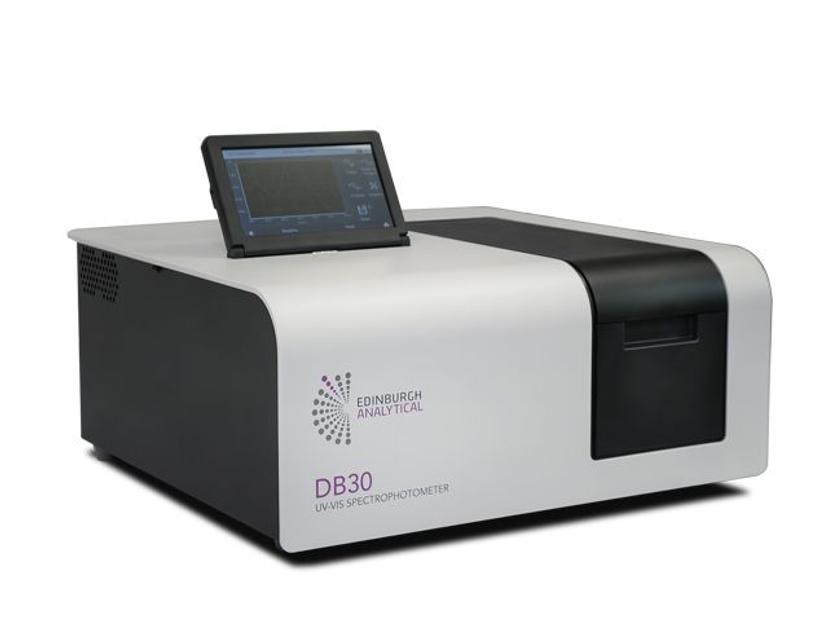
The DB30 UV-Vis Spectrophotometer is a powerful double beam instrument designed for precise and accurate measurement of absorption and transmission across various wavelengths.
UV-Vis spectrophotometry is well placed to address the limitations associated with ICP-MS, including differentiating between chromium forms without requiring pre-treatment, reducing operator training requirements, and is well suited to the remote and mobile conditions that many environmental labs operate in. Importantly, it is also the technique specified by EPA Method 7196A, and by equivalent ASTM and ISO standards, for Cr(VI) determination in water samples. UV-Vis is not simply a more accessible alternative to ICP-MS, it is the regulatory standard method.
The Edinburgh Analytical DB30 is a double-beam UV-Vis spectrophotometer is built to meet those requirements. Its variable bandwidth design allows users to optimize sensitivity across different applications, and pre-loaded measurement methods on the touchscreen interface mean operators can run compliant analyses without configuring parameters from scratch. Critically for remote work or small laboratories, the instrument operates as a standalone unit with no requirement for an external PC.
"The user just presses a key, and then it will load all the parameters for the measurement of chromium-6," says Yip. "This eases and facilitates for labs to perform measurements in an efficient way."
Edinburgh Analytical validated the DB30's performance through a field study on the River Almond in Livingston, Scotland, applying EPA Method 7196A to water samples collected over one week. The exercise reinforced a principle Yip hears regularly from customers: "Those environmental samples should ideally be measured within the same day that you collect them," he says.
Scaling throughput and strengthening data management
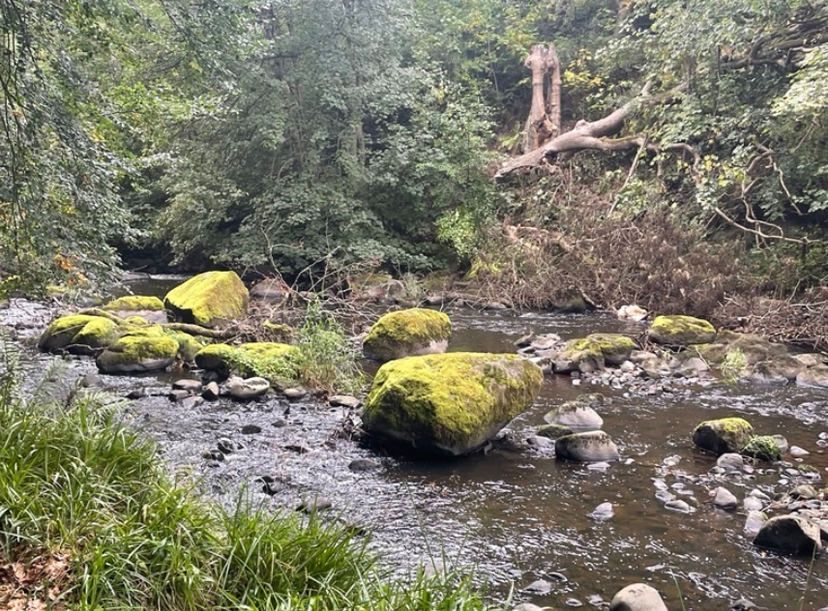
Field study led on the River Almond in Livingston, Scotland, using DB30 Double Beam UV-Vis Spectrophotometer.
As detection limits fall and sample volumes grow, the DB30 supports increased throughput via its compatibility with sample accessories, including autosipper and micro flow cells, which reduces measurement time from two to three minutes to a matter of seconds. For environmental labs that process samples from multiple sites simultaneously, keeping results organized becomes just as essential as accelerating the analysis itself.
"The data can look similar, but they are under different locations or different projects, so it needs some project management techniques," says Yip. Edinburgh Analytical's PC software addresses this through a project browser that allows users to organize results by location or project, reducing the risk of misattribution as monitoring programs scale.
Looking ahead, Yip anticipates that automation, cloud-based data consolidation, and AI-assisted trend analysis will define the next phase of environmental analytics. For labs trying to meet today's requirements without overcomplicating their workflows, that means choosing an instrument designed for the conditions in which monitoring actually happens.
Related products
Request Quote for All Products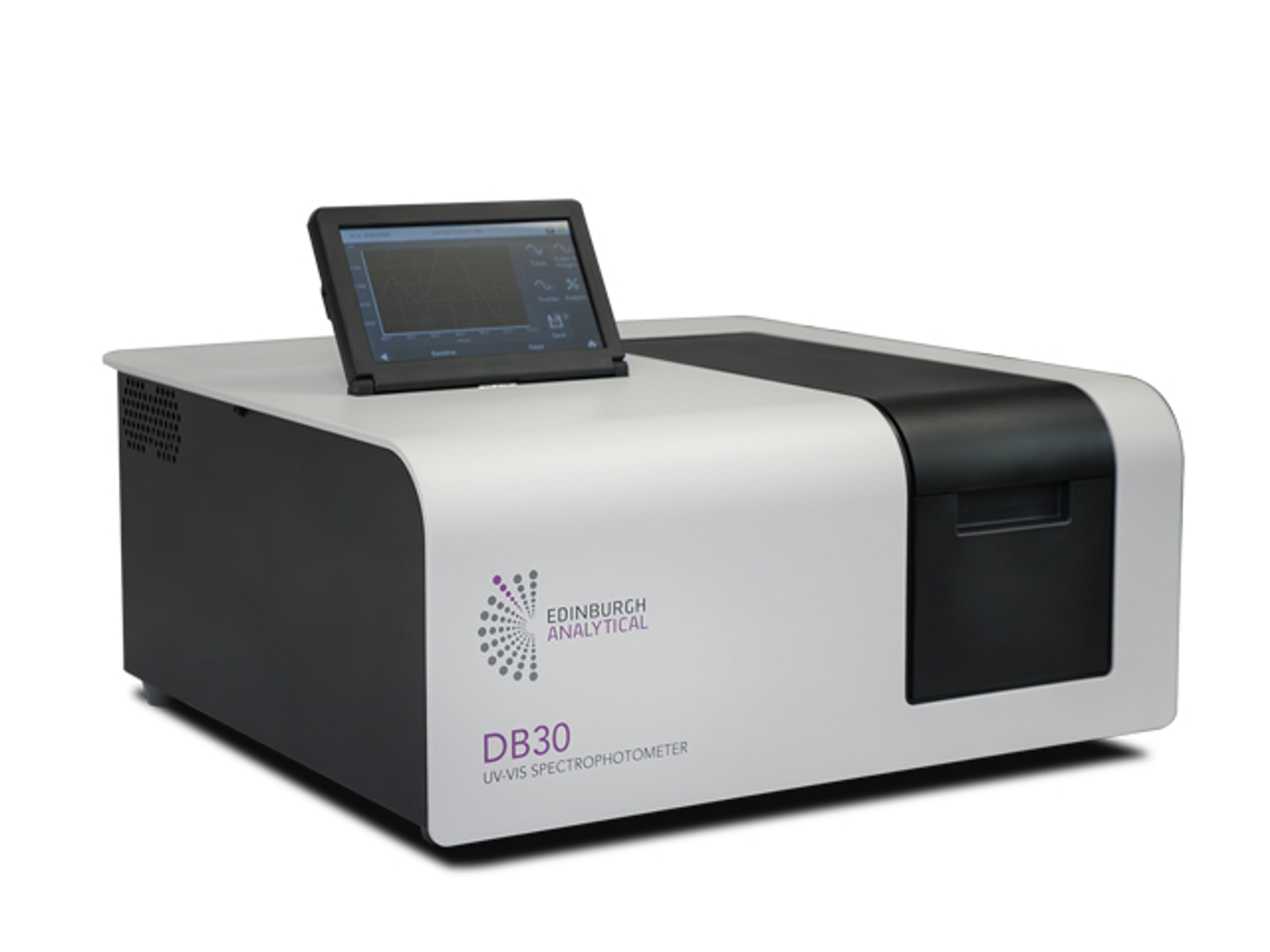
DB30 Double Beam UV-Vis Spectrophotometer
Edinburgh AnalyticalVersatile double beam UV-Vis spectrophotometer with a benchtop footprint. Suitable for analytical, research, and pharmaceutical industry applications.
Links
Tags
Frequently asked questions
Show frequently asked questions
How do environmental monitoring labs benefit from using UV-Vis spectrophotometry instead of ICP-MS for hexavalent chromium (Cr(VI)) analysis?
Environmental monitoring labs benefit from UV-Vis spectrophotometry because it directly differentiates between Cr(VI) and Cr(III) without additional pre-treatment or coupling to ion chromatography, unlike ICP-MS, which only measures total chromium. UV-Vis is the regulatory standard for Cr(VI) determination in water samples under EPA Method 7196A and equivalent ASTM and ISO standards, ensuring compliance with limits set by agencies such as the EPA, ECHA, ASTM International, ISO, and RoHS. It also reduces operator training requirements, avoids dependence on liquid argon, and is better suited to remote, small, or mobile labs that must process high daily sample loads under time‑critical conditions.
Why is hexavalent chromium (Cr(VI)) a critical contaminant for environmental monitoring labs and regulatory agencies?
Hexavalent chromium (Cr(VI)) is a critical contaminant because it is carcinogenic, dissolves readily in water, and persists in the environment long after the original source is controlled. It commonly enters ecosystems through industrial activities such as electroplating operations, pigment manufacturing, and anti-corrosive surface coatings. In contrast, trivalent chromium (Cr(III)), used in leather tanning and an essential trace nutrient, is generally considered safe, but can be oxidized to Cr(VI) when production processes are poorly controlled.
Regulatory bodies including the EPA, ECHA, ASTM International, ISO, and the RoHS Directive have set strict limits for Cr(VI) in drinking water, textiles, toys, electronics, packaging, and electrical and electronic equipment, making accurate speciation and quantification of Cr(VI) central to environmental risk assessment and compliance.
How does the DB30 double-beam UV-Vis spectrophotometer support high-throughput, field-based environmental monitoring of Cr(VI)?
The Edinburgh Analytical DB30 double-beam UV-Vis spectrophotometer supports high-throughput, field-based environmental monitoring of Cr(VI) by combining regulatory-compliant methods with practical features for small and remote labs. It includes pre-loaded measurement methods on a touchscreen interface so operators can run EPA Method 7196A-compliant Cr(VI) analyses by simply pressing a key, without configuring parameters from scratch. Its variable bandwidth design optimizes sensitivity across applications, and it operates as a standalone unit without an external PC, which is ideal for mobile or modestly equipped labs.
Through compatibility with accessories such as autosippers and micro flow cells, the DB30 reduces measurement times from two to three minutes to seconds, enabling labs to process large numbers of samples from multiple locations on the same day they are collected. Edinburgh Analytical’s PC software further strengthens data management by allowing users to organize results by location or project, reducing the risk of misattribution as monitoring programs scale.