
When organoids meet coronaviruses – Assessing potential coronavirus drug targets in organoids
17 Oct 2021
Industry news
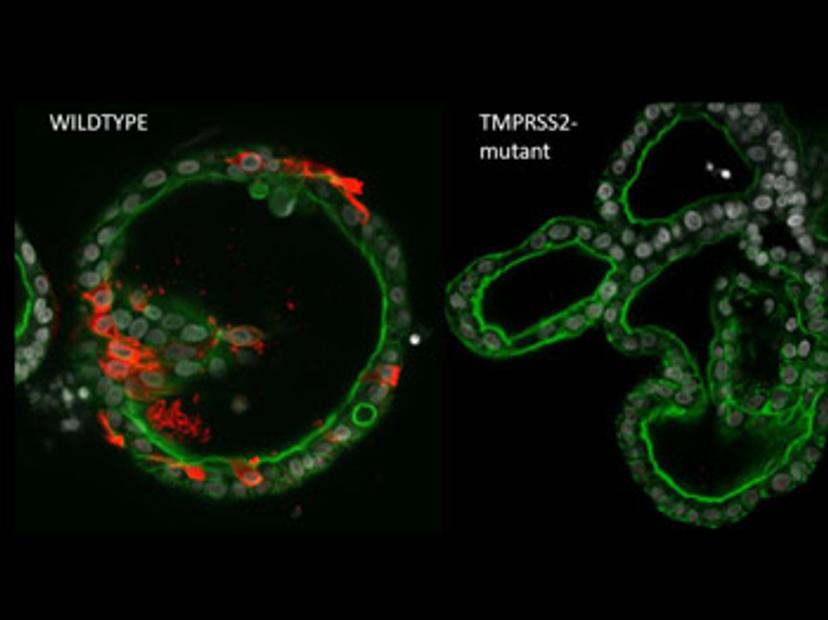
Researchers from the group of Hans Clevers in collaboration with the group of Bart Haagmans (Erasmus MC) established an organoid biobank to search for the genes that are essential for the spreading of a SARS-CoV-2 infection. Their study was published in Nature Communications on 17 September and highlights the usefulness of organoids for basic research into coronaviruses, as well as highlighting potential drug targets.
Organoids are tiny 3D structures grown from stem cells that mimic organ function. Researchers have previously succeeded in developing organoid models for various organs, including the gut, lung, uterus and even the snake venom gland. The organoids have proven useful for diagnostic purposes, predicting therapy responses in patients and unlocking secrets about the development of tissues and rare cell types.
Host Factors
Researchers can add levels of complexity to the organoid cultures for specific purposes. They can for example add immune cells to tumor organoids to study the efficacy of therapy, or inject pathogens into organoids to model their effect on the cells. The latter approach has recently been used to model coronavirus infections in human cells. One of the key questions about the coronavirus – and viruses in general – is what factors it uses to enter human cells and replicate. These so-called host factors could be appealing drug targets to influence viral replication and -spreading.
Biobank of intestinal organoids
To find out more about the host factors that are specifically important for the replication and spreading of coronaviruses, the groups of Hans Clevers and Bart Haagmans developed a biobank of mutant intestinal organoids. This means that the organoids, that mimic the biology of the intestine, contained various mutations in the host factors that were previously discovered to be relevant for coronaviruses. These mutations cause changes in the activity of the host factors.
TMPRSS2 as therapeutic target
Consequently, the researchers injected the mutant organoids with SARS-CoV-2 – the virus responsible for COVID-19 – to study the effect of the mutations on the replication and spreading of the virus. Among other things, they identified the gene TMPRSS2 to be involved in this process: organoids with non-functioning TMPRSS2 showed reduced replication and spreading of the virus. This gene may therefore be an attractive therapeutic target for this coronavirus. Specific inhibitors for TMPRSS2 have recently been developed.
Relevance of human models
Previously, studies used cell lines of animals (most importantly, of the African green monkey) to identify therapeutic targets for the coronavirus. These cell lines are easy to work with, but do not fully recapitulate the biology of human cells that are targets of SARS-CoV-2. This is illustrated by the anti-malaria drug Chloroquine, which was found to be effective against SARS-CoV-2 infection in these cell lines, but turned out to be ineffective in clinical trials with patients. This indicates that the cell lines cannot sufficiently predict the effectiveness of therapeutics in humans. When repeating the Chloroquine-experiments using the mutant organoids instead of previously used cell lines, the research groups observed no therapeutic effect. In other words, the results in organoids were similar to the results in clinical trials, suggesting that – compared to animal cell lines – the organoids could be better suited to predict the effectiveness of therapeutics in humans.
Future viruses
With their study, published in Nature Communications, the groups of Hans Clevers and Bart Haagmans underscore the relevance of organoids for research into coronaviruses. Furthermore, they identify TMPSS2 as a potential therapeutic target for SARS-CoV-2. Their newly developed biobank could also aid in screening future emerging viruses to rapidly identify therapeutic targets.
Want the latest science news straight to your inbox? Become a SelectScience member for free today>>