Meet the winners of the 2022 Scientists’ Choice Awards for Drug Discovery & Development

Scientific, technological, and communications excellence has been celebrated at SLAS2022 with MOBILion Systems, Agilent Technologies, and Wyatt Technology Corp. among those recognized

8 Feb 2022

Blake Forman
Content Creator

Editorial article

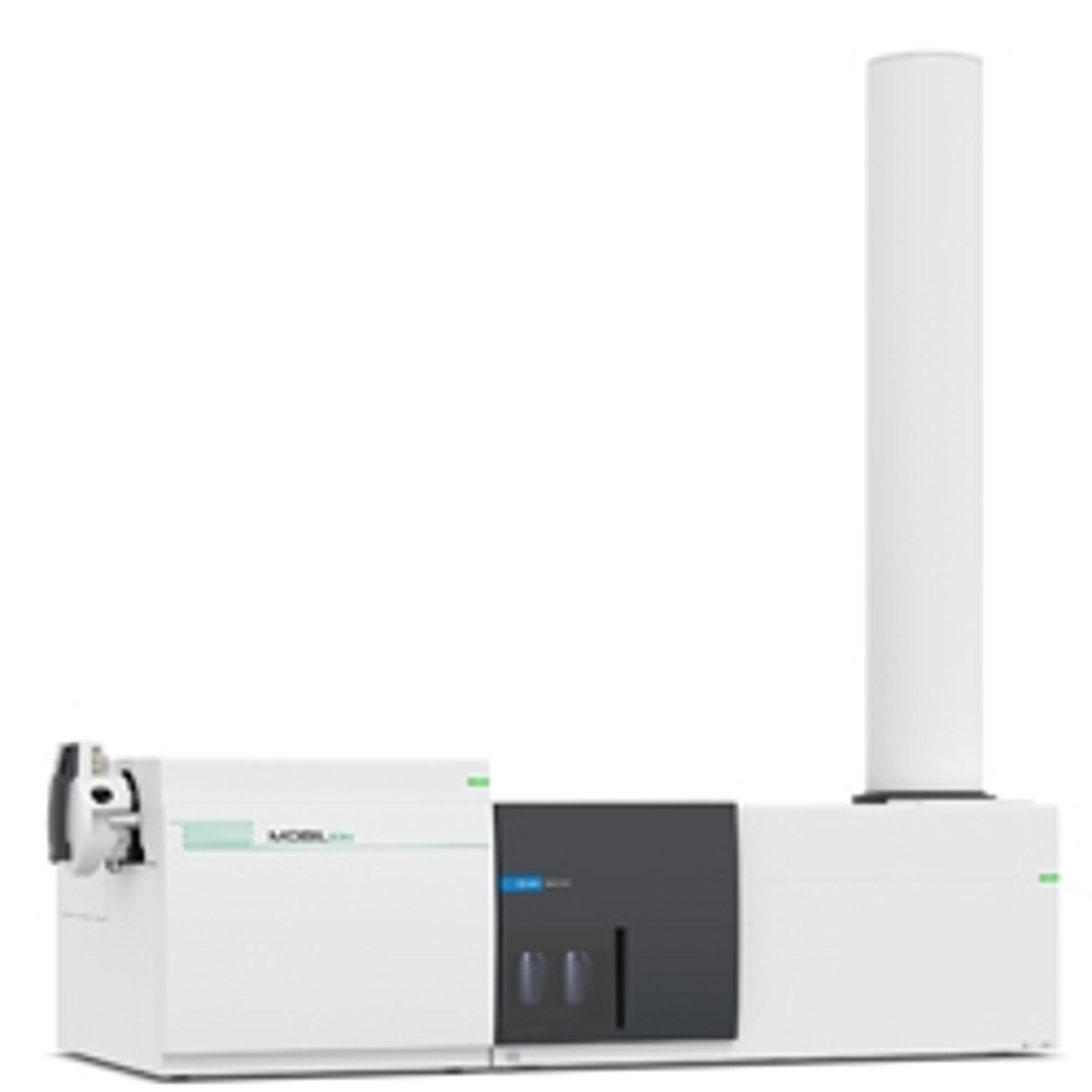
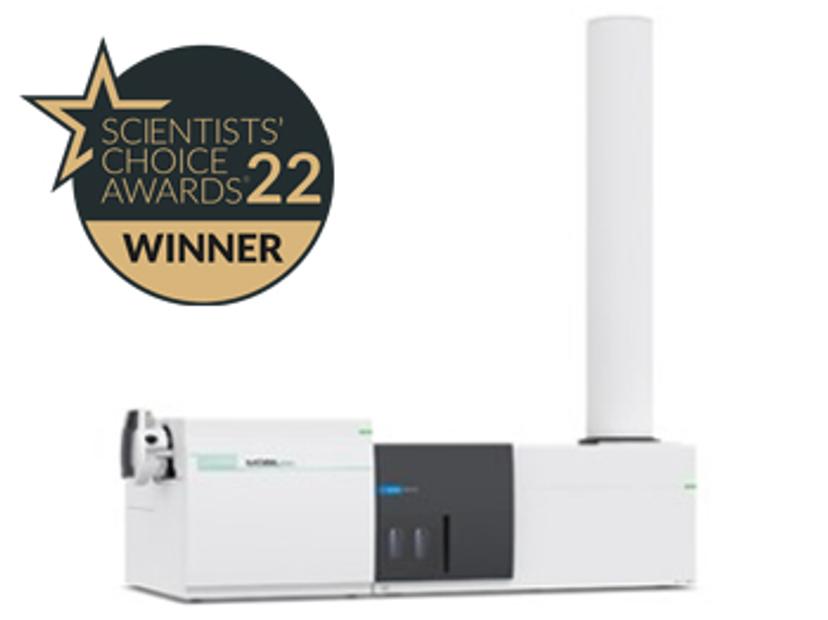
MOBIE from MOBILion systems is the winner of Best New Drug Discovery & Development Product of 2021

The world’s most innovative and effective drug discovery and development technologies have been recognized at the Society for Laboratory Automation and Screening conference in Boston, USA. Winners of the 2022 Scientists’ Choice Awards® were announced live by SelectScience Vice President Jay Leech to an audience of industry leaders and scientists.

Now in their 15th year, the awards are unique in the industry as they are chosen by scientists. Each year, we invite scientists around the globe to participate by nominating, reviewing and voting for the lab products that have had the greatest impact on their work. This year, more scientists than ever got involved — read on to reveal their chosen winners.

Best New Drug Discovery & Development Product of 2021

The award for Best New Drug Discovery & Development Product of 2021 goes to the MOBIE from MOBILion Systems, as voted for by scientists around the world.

The MOBIE system separates and identifies molecules with unprecedented resolution. Leveraging a 13-meter ion mobility path length to provide deeper level characterization without compromising time, MOBILion's best-in-class SLIM-based High-Resolution Ion Mobility Mass Spectrometry (HRIM-MS) platform separates and identifies molecules with faster analysis and simpler workflows.

Your runners-up are:

Drug Discovery & Development Video Interview of the Year – in association with The Scientists’ Channel

This year’s winning video ‘How freezers are playing an important role in biomaterial development’ is an interview with Dr. Mohammad Albanna, CEO and Founder of Humabiologics.

In this video, Albanna discusses his team’s work providing biomaterials for applications such as bioprinting, tissue engineering, and the creation of cancer models for drug screening. Albanna also highlights the importance of reliable freezers from PHCbi for the effective storage of tissue samples.

Watch here

Drug Discovery & Development Application eBook of the Year

The Drug Discovery & Development eBook of the Year Award goes to Wyatt Technology Corp. for ‘Biopharmaceutical characterization: Improve predictive screening'. This application compendium presents a guide on how to achieve deeper characterization of biotherapeutic proteins using light scattering technology such as the DAWN Multi-Angle static Light Scattering (MALS) detector by Wyatt Technology Corp.

Drug Discovery & Development Editorial Article of the Year

This year’s winning article is titled ‘Harnessing cutting-edge proteogenomics in the quest for novel drug targets’ and features technology from Olink Proteomics.

In this exclusive interview, Dr. Anders Mälarstig, director of target sciences at Pfizer Worldwide Research and Development, discusses how a collaborative consortium of principal investigators (PIs) from several research groups called SCALLOP are using Olink Proteomics platforms to conduct analysis of proteogenomic data from plasma samples covering a wide range of different diseases.

Drug Discovery & Development Webinar of the Year

This year’s Webinar of the Year is awarded to Professor Akiko Iwasaki, professor of immunobiology and molecular, cellular and developmental biology at Yale School of Medicine in collaboration with Fluidic Analytics.

The webinar, titled ‘Immune responses to SARS-CoV-2’ and available to watch on demand, discusses immune responses in COVID-19 patients with moderate and severe disease. Iwasaki compares viral load, immune phenotype and cytokines that are predictive of mortality, and discusses signatures of cytokines and growth factors that associate with recovery vs. disease exacerbation.
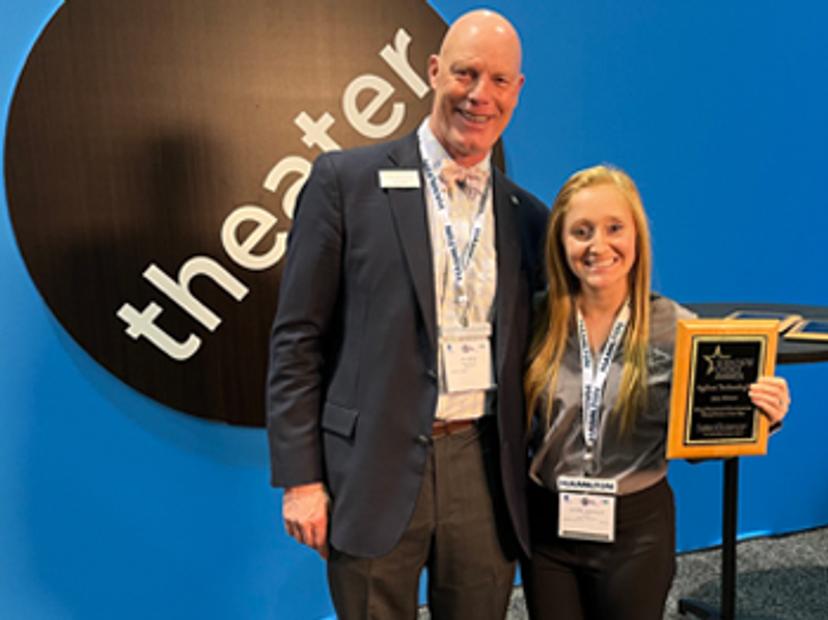
Jay Leech (left) presents Lauren Dostillio (right) with the Scientists' Choice Award for Virtual Event of the Year at SLAS 2022

Jay Leech (left) presents Lauren Dostillio (right) with the Scientists' Choice Award for Virtual Event of the Year at SLAS 2022

Drug Discovery & Development Email of the Year

The winner in the Email of the Year category goes to ‘How do your method development procedures align with upcoming ICH Q14 Guidelines?', from Waters Corporation. The winning email featured a free download of a new infographic describing the benefits and steps of Analytical Quality by Design (AQbD), an enhanced approach to robust method development.

Drug Discovery & Development Innovative Content of the Year

Agilent Technologies is the winner of this year's Innovative Content of the Year award which celebrates new and creative content. The winning content is titled 'Robust Analytical Characterization: Accurate, Reliable Quantitation for Biotherapeutics' and features an interactive guide on the chromatographic applications for critical quality attribute monitoring within the most common bioanalysis workflows.

Drug Discovery & Development Virtual Event of the Year

This year’s winner of Drug Discovery & Development Virtual Event of the Year is Agilent Technologies for its 'Pioneers in biopharma: Meet the leaders steering the industry on a path that celebrates and supports women' one-day virtual event. This event spanned three live sessions with industry thought leaders covering topics such as research and development in process analytical technologies, the development of novel modalities, and the integration of emerging technologies to the field of mass spectroscopy.

Visit the Scientists’ Choice Awards website for more information

Want to share your opinion on the drug discovery & development products in your lab? Leave a review now and you could win an iPad or $500 Amazon gift card >>
Links

Tags

Sample PreparationSample preparation can improve the quality and speed of separation techniques. Products to assist sample preparation include filtration equipment, evaporators, membranes and sieves.LC-MSLC-MS (liquid chromatography-mass spectrometry) systems and equipment are used for separation and quantitative analysis of complex mixtures, combining liquid chromatography and mass spectrometry. Quantify proteins, contaminants, pesticides or screen for drug metabolites with a high level of sensitivity. LC-MS systems and equipment include reverse phase, normal phase and specialized columns integrated with various MS detectors such as time-of-flight (TOF), quadrupole, orbitrap or ion trap mass analyzers. LC-MS/MS instruments equipped with a qTOF or triple quadrupole analyzer give greater sensitivity and resolving power to your analysis. Find the best LC-MS equipment in our peer-reviewed product directory: compare products, check customer reviews and receive pricing direct from manufacturers.Mass SpectrometryMass spectrometry (MS) is a powerful analytical technique used to identify and quantify molecules based on the mass-to-charge ratio of gas-phase ions. It provides detailed information about the structure, composition, and properties of compounds and is widely used across fields such as environmental monitoring, materials science, drug discovery and development, food and beverage testing, and wider chemical research. Key MS techniques include tandem mass spectrometry (MS/MS), liquid chromatography–mass spectrometry (LS-MS) and inductively coupled plasma (ICP-MS). Choosing from these wide range of techniques and technologies can be a daunting task, so keep up to date with scientific applications, performance expectations, and customer reviews here all in one place. Visit our product directory to receive quotes direct from the manufacturer. ProteomicsProteomics is the systemic bioinformatics study of proteins and amino acids, including their structure, size, function and identification. Tools used in proteomics include chromatography, blotting and gels, protein arrays, mass spectrometry and ELISA and associated analysis software. Analyzers and proteomic systems should be sensitive, high resolution, fast and may be automated for high-throughput.High-Throughput ScreeningHigh-throughput screening (HTS) is an automated drug discovery technique for identification of active compounds against a compound library. Use HTS readers and integrated assay preparation / analysis workstations to screen your compounds. Identify active compounds against various HTS libraries, including membranes, proteins and peptides and HTS cell lines. Find the best high-throughput screening products in our peer-reviewed product directory: compare products, check customer reviews and receive pricing direct from manufacturers.Microarray AnalysisMicroarrays, also known as biochips, are used for the detection and analysis of multiple genes, proteins, antibodies, or biomarkers on a single microchip. This can reveal information on protein or gene expression, single nucleotide polymorphism (SNP), copy number variation (CNV), epigenetics and patient health in clinical diagnostic tests. Discover a range of microarray scanners and prefabricated antibody, protein, RNA and DNA microarrays for your analysis or consider creating your own custom microarrays with a microarray printer. Find the best microarray products in our peer-reviewed product directory: compare products, check customer reviews and receive pricing direct from manufacturers.Cell-Based AssaysCell-based assays are used to monitor the presence, quantity and activities of a desired cellular analyte including drug molecules or biomarkers. This can reveal information on cell health (apoptosis, cytotoxicity, viability and proliferation assays), cell metabolism, cell migration and cell signaling mechanisms. Find the best cell-based assay products, kits and equipment with our peer reviewed product directory: compare products, check customer reviews and receiving pricing direct from manufacturers.BiomarkersBiomarkers are biological markers which can be measured and evaluated to indicate a biological state. The use of biomarkers in research and diagnosis can indicate a normal or disease state or drug response of cells / tissues. Biomarkers include genetic markers, cell surface markers such as antigens, antibodies or receptors and secreted molecules such as cytokines. An assay system is required for identification of biomarkers. :Biopharmaceutical AdvancesBiopharmaceutical advances follow the development of pharmaceuticals derived from biotechnology, also known as biotechnology medicines. Biopharmaceuticals may be produced from cell lines, plants, or microbial cells. Important considerations of biopharmaceutical use include application, cost, production process and purification.Automated Liquid HandlingAutomated liquid handling equipment is used to mix, dilute and dispense allotted volumes of liquid into microplates and other vessels automatically. The robotic, liquid handling arms can dispense from single channel to 3456 multichannel as well as operate nanoliter dispensing, enabling high throughput of samples. Find the best automated liquid handlers in our peer-reviewed product directory: compare products, check customer reviews and receive pricing direct from manufacturers.Next Generation SequencingNext-generation sequencing (NGS), also known as whole-genome sequencing, high-throughput sequencing and massive parallel sequencing, produces and analyses thousands to millions of nucleotide sequences at once. Sequencing systems operate via varying technologies depending on the manufacturer, including sequencing by synthesis, ligation, pyrosequencing, ion semiconductor and single-molecule real-time sequencing. For NGS, library preparation is paramount to successful sequencing. In this section, explore a range of library preparation kits, from targeted, amplicon-based or hybridization-based kits including epigenomic, transcriptomic and genomic workflows to fragmentation kits. Find the best next-generation sequencing products in our peer-reviewed product directory: compare products, check customer reviews and receive pricing direct from manufacturers.Drug DeliveryDrug Delivery refers to dosage form, route of administration, formulations, technologies, and systems for transporting a pharmaceutical compound in the body as needed to safely achieve its desired therapeutic effect. Drug delivery is often approached via the biopharmaceutical or small molecule drug's formulation, but it may also involve medical devices or drug-device combination products. Considerations include instrumentation, software and services. RegulatoryPharmaceutical regulations impact on all areas of drug development, manufacture and control and supply. Services are provided from the early stages of drug development and clinical trials through to dossier submission, approval and marketing. Regulatory also includes submission of analytical studies from the pharmaceutical product and safety. Bioprocessing / FermentationBioprocessing is the use of biological materials to perform commercial, scientific or medical research processes. Biological materials used include cells, enzymes and organisms. Usually bioprocessing requires a batch or continuous bioreactor such as a fermentor or cell culture system. The advantages of using a reactor include high productivity, easy configuration, adjustable values and automation.Scientists Choice AwardsEach year, the SelectScience Scientists' Choice Awards celebrate the best products in the industry, as nominated and voted for by our scientist members.