How the Bio-Rad Academy is leading the way in ‘advancing science and saving lives’

In the fast-paced world of science, knowledge drives progress, and The Bio-Rad Academy leads the charge

1 May 2024

Lawrence Howes
Editorial Assistant

Editorial article

Chloe Etienne, Senior Campaign Manager, and Matthew Hammond, Applications and Collaborations Manager for the Protein Quantitation Group at Bio-Rad discuss the value of the Bio-Rad Academy to the scientific community

The Bio-Rad Academy is an online platform that offers a diverse array of high-quality courses for scientists of all levels. With over six decades of experience as a global leader in life science research and clinical diagnostics, Bio-Rad is committed to advancing scientific understanding to enhance quality of life. The Academy was established on the core belief that education serves as a catalyst for driving positive change.

To gain a deeper understanding of the philosophy and mission behind the Bio-Rad Academy, SelectScience® spoke with Chloe Etienne, Senior Campaign Manager, and Matthew Hammond, Applications and Collaborations Manager for the Protein Quantitation Group at Bio-Rad.

The birth of the Bio-Rad Academy

The Bio-Rad Academy is designed to provide practical knowledge and insights into common technologies that biologists and researchers use daily. The course offerings are as diverse as the scientific community it serves. Currently, the Academy provides courses covering techniques like quantitative PCR (qPCR), droplet digital PCR (ddPCR), flow cytometry, western blotting, and immunoassays, with plans for expanding the course catalog in the future. These courses are not isolated lessons but gateways to user forums, where learners can connect, ask questions, and network with like-minded individuals.

Hammond explains that the Academy's genesis emerged from Bio-Rad's commitment to teaching and supporting its users. The vision was clear – to create a centralized platform where “knowledge and information sharing could benefit the widest audience possible”. It became evident that this endeavor required a consistent structure and format to provide a seamless user experience regardless of which topics are covered.

What to expect from a Bio-Rad Academy course

Each course follows a similar format, presenting concise video lessons and reinforcing the information with brief quizzes. The courses introduce theoretical concepts at a practical level, ensuring that the focus remains on equipping learners with a deep understanding of how their choices in experiment setup and execution impact their results.

Etienne mentions another unique feature – the Academy's community. It's not merely a one-sided learning platform but a dynamic space where anyone who enrolls in a course can engage with fellow participants. Since its launch in 2023, more than fifteen thousand individuals have registered for courses. The community allows for discussions, image sharing, and interaction with Bio-Rad experts and peers, enriching the learning experience.

Enhance your learning with collaboration

The collaborative environment within the Bio-Rad Academy significantly enhances the learning experience. Etienne and Hammond emphasize that the Academy is not merely a platform to learn about Bio-Rad's products; it is about improving the practice of science. This sentiment aligns perfectly with Bio-Rad's mission statement: “Advancing science and saving lives together.”

Hammond explains, "it's not a place to just learn about our products, and we're not just trying to sell; we really believe in doing science better." This mission is reflected in the Academy's commitment to providing material in an unbranded fashion. While Bio-Rad does offer solutions, they are presented alongside other choices available to customers. The objective is to ensure that the Academy is accessible and valuable to a broad audience. Etienne adds, "we are all scientists first." The global scientific community's need to come together, exemplified by the challenges of the COVID-19 pandemic, is mirrored in the Academy's spirit of unity, bringing scientists together to elevate the quality of science.

Free accessibility to fulfill the mission


The Academy aims to bring everyone together and make science better.

Chloe Etienne  Bio-Rad


One of the most remarkable aspects of the Bio-Rad Academy is its accessibility. The courses are offered for free, aligning perfectly with Bio-Rad's mission of advancing science and saving lives together. Matthew stresses that the broader the availability, the faster science will advance.

The strong commitment to maintaining the Academy as a non-branded and commercialism-free platform is also part of a strategy to prevent alienation and ensure that the platform remains inclusive and valuable to the scientific community. By providing high-quality education for free, Bio-Rad underscores its dedication to the global scientific community's growth. Etienne summarizes, "The Academy aims to bring everyone together and make science better."

Building the Academy’s future together

As we look ahead, the Bio-Rad Academy promises a wealth of opportunities for further growth and innovation. Etienne and Hammond are enthusiastic about the future of the Academy, with plans for new courses, exploration of continuing education credits, deeper dives into theory, and courses on data security and publication standards. The Academy is open to feedback and suggestions from users, actively encouraging them to shape its future.

The Bio-Rad Academy is more than just an educational platform; it is a community of scientists coming together to learn, share, and advance science with the aim to, ultimately, save lives. Its high-quality, accessible courses and collaborative environment create a unique and exciting place for anyone, helping students to experienced practitioners expand their knowledge, all in the spirit of advancing science and saving lives together.

Begin your journey with the Bio-Rad Academy, enroll in a course, and share this knowledge with your peers.

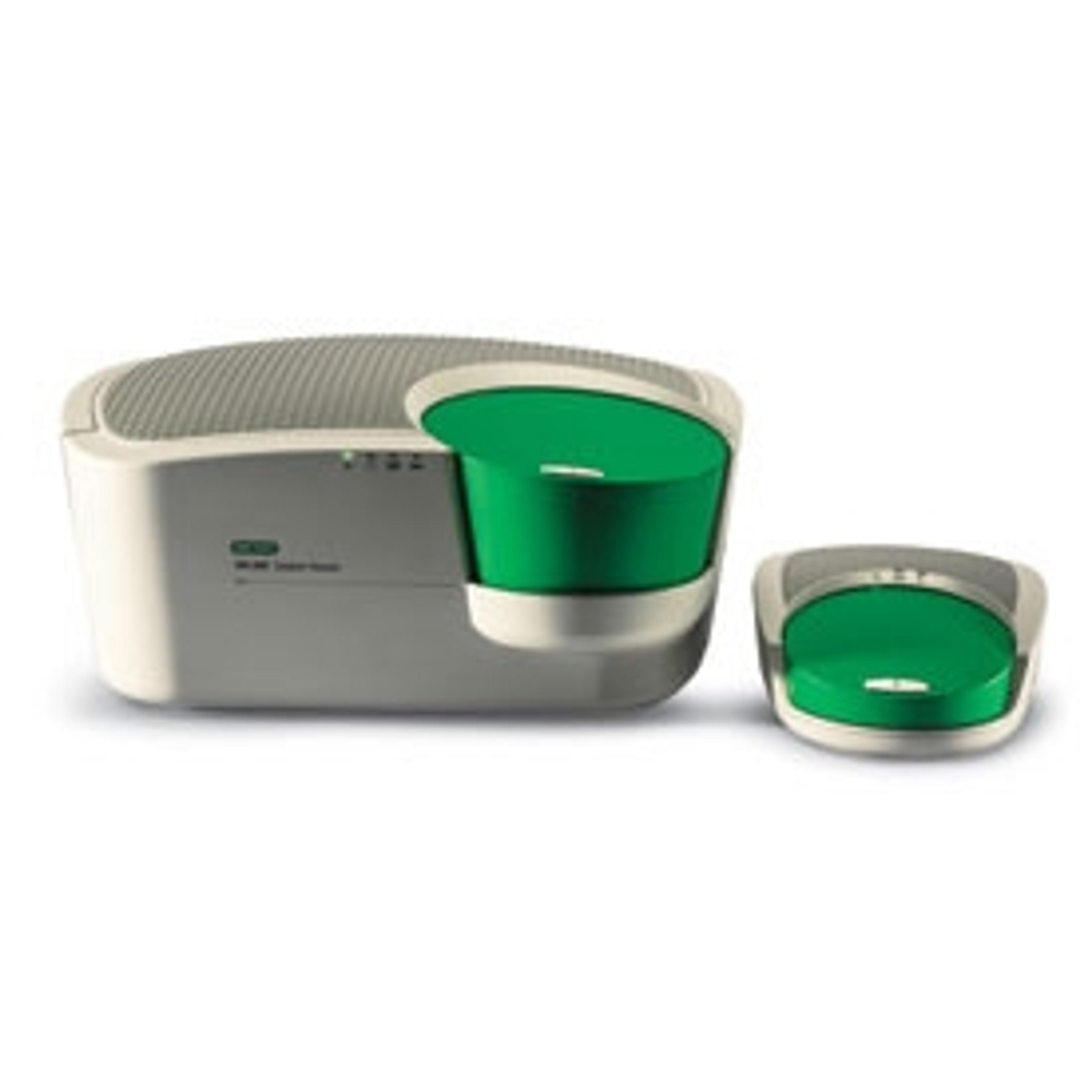
QX200™ Droplet Digital PCR System

Bio-Rad

Droplet Digital PCR System, includes droplet generator, droplet reader, laptop computer, software, associated component consumables, for EvaGreen or probe-based digital PCR applications

(31)

Links

Tags

Capillary ElectrophoresisCapillary electrophoresis (CE) is used to separate molecules based on charge, size and hydrophobicity. Pressure, voltage or a vacuum is used to introduce the sample to fused silica capillaries. Fluorescence, UV/Vis, UV or diode array detectors are used to visualize components. Types of CE systems include capillary electrochromatography (CEC), capillary zone electrophoresis and capillary gel electrophoresis. Find the best capillary electrophoresis equipment in our peer-reviewed product directory: compare products, check customer reviews and receive pricing direct from manufacturers.Gas ChromatographyGas chromatography (GC) is an analytical technique used to separate and quantitate mixtures of small and volatile compounds. Gas chromatographs or GC systems include components such as GC columns, detectors, pumps and autosamplers. Choose from packed or capillary GC columns, flame ionization (FID), photoionization (PID) electron capture detectors and selective or non-selective detectors. Find the best gas chromatographs in our peer-reviewed product directory: compare products, check customer reviews and receive pricing direct from manufacturers.AntibodiesAntibodies are used in techniques such as confocal and fluorescence microscopy, flow cytometry, ELISA, ELISPOT, immunohistochemistry, western blotting and immunopreciptation. Select specific antigen reactivity, high specific affinity, low non-specific binding, monoclonal or polyclonal, primary or secondary antibodies and associated conjugates such as an enzyme or dye for visualization.BiosensorsBiosensors are devices used to detect an analyte using biological molecules specific to the analyte coupled to a detector. Biosensor instruments may be photometric, typically using surface plasma resonance (SPR), electrochemical or QCM (quartz crystal microbalance) biosensors. Biosensors should be selective, portable, robust and sensitive and have a fast response time. Systems may be manual or automated and usually have associated software.Cell / Tissue CultureCell culture or tissue culture is used to study the biology of cells or tissues and to isolate cellular products in an environment which can be manipulated and well defined. Accurately control your culture environment with bioreactors or culture incubators, bind your cells to a surface or together with an extracellular matrix. Distinguish cell types with differential media or proliferate cells with certain characteristics using selective media. Enrich your media with supplements such as growth factors, sera and vitamins. Find the best cell and tissue culture products, kits and equipment in our peer-reviewed product directory: compare products, check customer reviews and receive pricing direct from manufacturers.Genome AnalysisGenomics, the study of genomes, includes functional genomics, evolutionary genomics and comparative genomics. There are many genomic technologies such as DNA sequencing of whole genomes, computational biology and bioinformatics. DNA and nucleic acids must be isolated and concentrated from cells for analysis with kits, automated analyzers and software. Other useful technologies for studying genomics include PCR, microarrays and electrophoresis.MicroplatesMicroplates are multi-well plates used to increase the throughput of biological investigations. The number of wells microplates contain can range from 6 to 3243 wells, with the 96-well format being the most commonly used. Microplates can come tailored for a range of applications including cell culture, PCR, filtration, storage, non-binding surface, protein crystallization, as well as pre-coated, deep well and normal Standard microplates. Additionally, options for microplate colors include clear , black, white or black with clear bottom and white with clear bottom for absorbance microplate reader applications. Find the best microplates for your lab in our peer-reviewed product directory: compare products, check customer reviews and receive pricing direct from manufacturers.OligonucleotidesOligonucleotides are small nucleic acid polymers, usually less than 20 bases in length. Oligonucleotides can be made via enzymatic cleavage or more commonly by chemical synthesis with polymerases. Their use includes FISH, southern blots, microarrays and as primers in PCR. High fidelity synthesis kits and detection systems are available for easy production and detection, respectively.PCR and Thermal CyclingPolymerase chain reaction (PCR) kits and thermal cyclers are used for the in vitro amplification of DNA permitting subsequent analysis and experimental procedures. Explore a range of high-quality polymerase, primers and nucleotides or simplify your workflow with a PCR mastermix. Find reverse transcription PCR (RT-PCR) and cDNA synthesis kits for RNA products and libraries. Quantitatively measure the amplification of DNA with real-time PCR (qPCR) and droplet digital PCR (ddPCR) kits and systems, and discover automated PCR setup solutions to increase throughput. Alternative DNA amplification methods also include recombinase polymerase amplification (RPA) kits. Find the best PCR kits and thermal cyclers and purification equipment in our peer-reviewed product directory: compare products, check customer reviews and receive pricing direct from manufacturers.Cell Lines Stem Cells and Primary CellsPrimary cell cultures, established cell lines and stem cells are vital for <i>in vitro</i> and <i>ex vivo</i> experimentation. High-quality cells, optimized for your applications, alongside optimized cell substrates, growth medium and supplements, are critical for experimental success. Explore a range of cells suitable for your applications, including isogenic cell lines, competent cells, induced pluripotent stem cell (iPSC)-derived cell lines, fungal/bacterial/mammalian cell lines, stem cells and cancer cell lines. Find the best cells for your research in our peer-reviewed product directory: compare products, check customer reviews and receive pricing direct from manufacturers.Gel Doc / Image AnalysisGel documentation (gel doc) or gel imaging systems are used for the analysis of proteins, antibodies and nucleic acid immobilized in polyacrylamide or agarose gels, membranes or microarrays. Explore a range of a gel imaging systems, densitometers, scanners, transilluminators or UV lamp + CCD cameras for your image analysis solutions. Colorimetric, fluorescent and/or radioisotopic samples can be visualized and documented for further analysis. See gel doc / Image analysis software for quantitative 1D and 2D analysis of your samples. Find the best gel doc / image analysis products in our peer-reviewed product directory: compare products, check customer reviews and receive pricing direct from manufacturers.MicrobiologyMicrobiology is the study of microorganisms including protists, prokaryotes, fungi, and, often, viruses. Microorganisms are a useful research tool as genetic vectors and, in immunology, for antibiotic susceptibility testing, cellular biology and genetics. Microorganisms commonly grow readily in incubators with microbial culture media; this can contain chromogenic supplements to differentiate between cell lines. Estimate your culture’s density of microorganisms with colony counters, or screen and select colonies for desirable clones with automated colony pickers. Additionally, equipment is available to monitor environments for the presence of microbes and identify with microbial identification instruments. Find the best microbiology products in our peer-reviewed product directory: compare products, check customer reviews and receive pricing direct from manufacturers.Microarray AnalysisMicroarrays, also known as biochips, are used for the detection and analysis of multiple genes, proteins, antibodies, or biomarkers on a single microchip. This can reveal information on protein or gene expression, single nucleotide polymorphism (SNP), copy number variation (CNV), epigenetics and patient health in clinical diagnostic tests. Discover a range of microarray scanners and prefabricated antibody, protein, RNA and DNA microarrays for your analysis or consider creating your own custom microarrays with a microarray printer. Find the best microarray products in our peer-reviewed product directory: compare products, check customer reviews and receive pricing direct from manufacturers.DNA / RNA Extraction and PurificationPurified DNA and RNA are required for numerous downstream molecular biology applications. Consequently, the importance of high-quality DNA/RNA extraction and purification equipment cannot be underestimated. Many purification kits are available and are typically optimized for nucleic acid type and source, including plasmid DNA, genomic DNA, mRNA, RNA and viral nucleic acid purification kits. Automated extraction and purification of nucleic acids can be implemented with magnetic bead separator instruments or high-throughput purification workstations. Find the best DNA/RNA extraction and purification equipment in our peer-reviewed product directory: compare products, check customer reviews and receive pricing direct from manufacturers.DNA SequencingDNA sequencing, such as sanger sequencing, is a biological technique that determines the precise order of nucleotide bases in a fragment or template of DNA. DNA sequencers and genetic analyzers are based on capillary electrophoresis, where labeled DNA fragments are electrophoretically separated by size as they migrate through a polymer. Find the best DNA sequencing products, including DNA sequencing kits, genomic libraries and genetic identity kits in our peer-reviewed product directory: compare products, check customer reviews and receive pricing direct from manufacturers.