
Why the future of diagnostics depends on people as much as technology
CLINICAL24 Ambassador Bamidele Farinre on workforce development, AI readiness, and creating opportunities for the next generation of laboratory professionals
1 Oct 2026
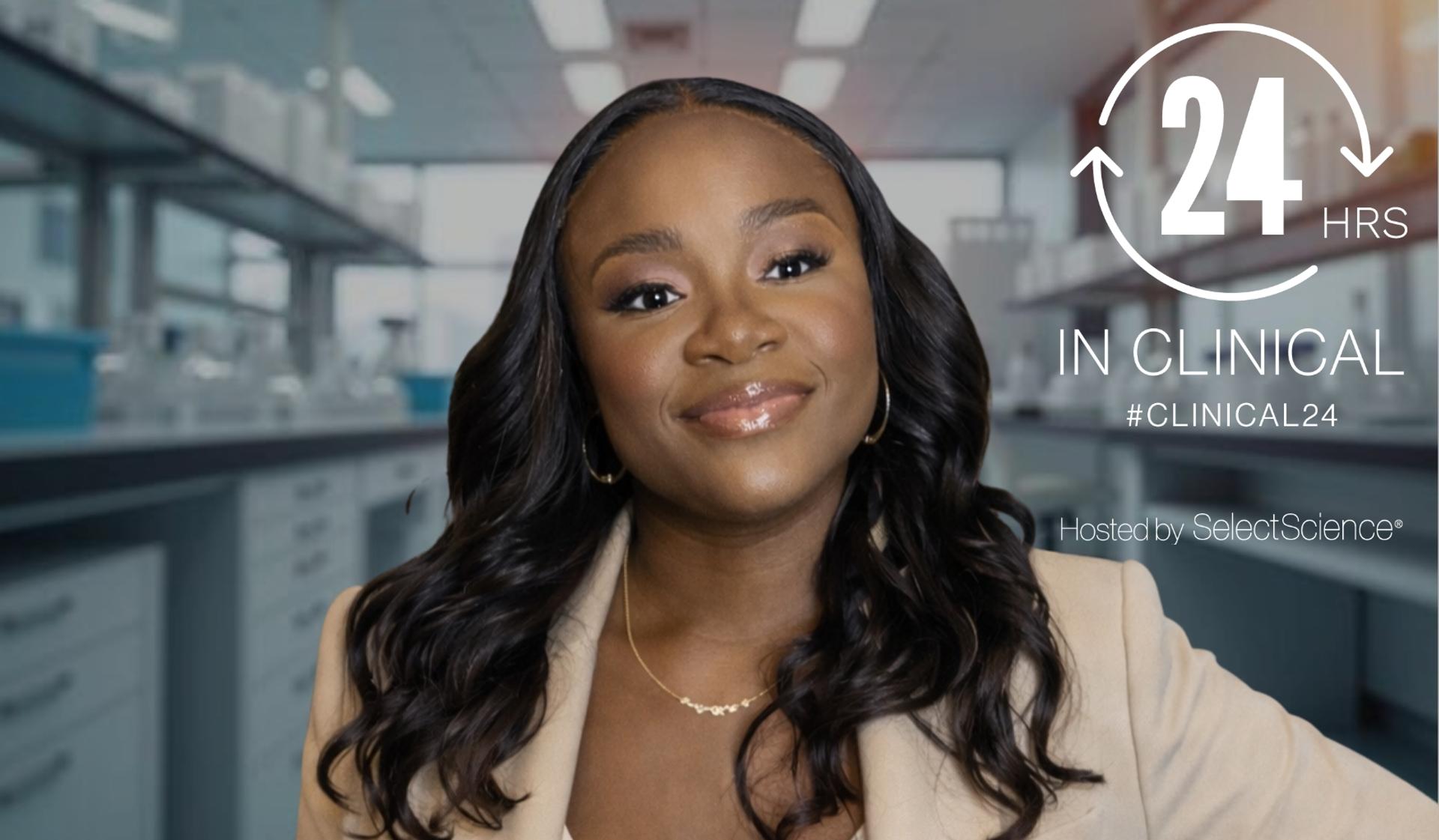
CLINICAL24 Ambassador Bamidele Farinre
The future of laboratory medicine will be shaped by artificial intelligence, automation, and digital transformation. But technology alone cannot secure that future. Behind every innovation, every quality system, and every result that informs patient care is a scientific workforce that must be supported, developed, and given the opportunity to lead.
Few people understand that relationship as clearly as Bamidele Farinre. A Chartered Biomedical Scientist, STEAM Programme Director, educator, author, and AI equity advocate, Bamidele has experienced the laboratory from several perspectives: beginning as a medical laboratory assistant, progressing through scientific and leadership roles, and ultimately helping shape the systems, policies, and opportunities surrounding the profession.
Her journey began with a setback. After not passing her A levels as a teenager, she was told that she did not have what it took to study science. Rather than allowing that judgement to determine her future, she rebuilt her path from the ground up.
Today, Bamidele is Vice Chair of the Institute of Biomedical Science Virology Specialist Advisory Panel, an HCPC Biomedical Scientist International Registration Assessor, a Fellow of the Institute of Biomedical Science, an Honorary Fellow of the Academy for Healthcare Science and a global advisor for the Young Africa Enterprise project (YAEP). Gotara senior STEM advisor And more recently a CLINICAL24 ambassador. She has led programs spanning laboratory governance, quality improvement, workforce development, and digital transformation, including major initiatives during the COVID-19 pandemic.
As a CLINICAL24 Ambassador, Bamidele is helping to bring greater visibility to the scientists, support staff, leaders, and systems that keep clinical laboratories operating around the clock. In conversation with SelectScience, she discusses the fragility of the laboratory workforce pipeline, the conditions required for responsible AI adoption, and why equitable opportunity is inseparable from better patient care.
From the laboratory bench to the strategy room
Bamidele’s current work sits at the intersection of laboratory science, leadership, education, and responsible innovation.
“I began my career as a medical laboratory assistant and worked my way up through the UK healthcare and STEM ecosystem,” she explains. “That route means I have seen the laboratory from the bench, from the management table, and now from the strategy room.”
As a Chartered Scientist and STEAM Programme Director working in a consulting capacity, she designs and leads programs intended to strengthen the scientific workforce, build the pipeline of future scientists, and help organizations prepare for change, including the adoption of artificial intelligence.
Her days no longer follow the rhythms of the laboratory bench. Instead, her work may involve writing policies and strategic frameworks, developing educational materials, meeting professional bodies and policymakers, mentoring professionals through her No Ceiling platform, or building connections that create opportunities for others.
“Strategic networking is about opening doors for people, especially those who have been told there is no room for them,” she says.
Although the nature of her work has changed, the values learned in the clinical laboratory continue to guide it.
“The laboratory taught me precision, accountability, and the discipline of getting things right when a patient is waiting. I now apply those same standards to the systems, people, and policies that surround the laboratory, because the quality of a result depends as much on the workforce and the environment behind it as on the analyser in front of it.”
The fragile human pipeline behind laboratory medicine
For Bamidele, the greatest challenge facing clinical laboratories is not one instrument, budget, or backlog. It is the sustainability of the workforce on which the entire service depends. “The biggest challenge is the fragility of the human pipeline that keeps laboratories running, at exactly the moment the demands on them are growing fastest,” she says.
Diagnostics informs a substantial share of clinical decision-making, yet many laboratories are operating with stretched teams. At the same time, talented people can struggle to enter the profession, secure their first opportunity, or identify a clear route towards registration, specialisation, and leadership. “Talent that begins as a medical laboratory assistant, as I did, should have a visible route to registration and leadership, not a maze.”
Bamidele sees several interconnected pressures within that pipeline. Early-career scientists and laboratory support staff can encounter uneven access to training, unclear entry routes, and insufficient protected learning time. Graduates may struggle to secure the first position that allows them to turn qualifications into experience. Once people enter the profession, career development is not always clearly defined or consistently supported.
She is particularly keen to distinguish mentorship from sponsorship. “Mentors offer advice; sponsors open doors,” she explains. “Too many high-potential scientists, particularly from underrepresented backgrounds, have no one with influence speaking for them when opportunities are allocated.”
Structured preceptorship is equally important. Newly qualified and internationally trained professionals need support as they enter unfamiliar laboratory environments, build confidence, and apply their knowledge safely in practice. Without deliberate investment in these areas, laboratories risk losing talented people at multiple points in their careers. The consequences extend beyond staffing levels.
“A laboratory that cannot train, retain, and progress its people cannot safely adopt new technology,” says Bamidele. “Technology introduced without an inclusive, prepared workforce widens the gaps it was meant to close.”
For her, the workforce is not simply one challenge among many. It is the foundation on which quality, innovation, turnaround times, and patient outcomes depend.
AI must empower the workforce, not leave it behind
Bamidele believes responsibly implemented artificial intelligence and digital transformation have enormous potential to strengthen laboratory medicine. Automation and AI-assisted systems could help laboratories manage repetitive, high-volume work, optimize workflows, and enable scientists to devote more attention to interpretation, quality, and clinical partnership.
Digital learning, simulation, and AI-supported competency monitoring could also make training more consistent and accessible. Meanwhile, advances in decision support, pattern recognition, and digital pathology could help patients reach accurate diagnoses and appropriate treatments sooner.
The transformation could create new career pathways too. “Data, informatics, digital governance, and AI assurance are emerging roles that laboratory scientists are well placed to lead,” Bamidele says. “They create progression routes that did not exist a decade ago.”
However, she is clear that the value of AI will be determined by how it is designed, governed, and introduced. “The technology matters, but the greatest potential lies in how we prepare and include the people who will work alongside it.”
Tools trained using unrepresentative data can reproduce or deepen existing bias. Staff who are not given the skills or confidence to work with new systems risk being left behind by the transformation they are expected to deliver. Bamidele therefore pairs technological innovation with three essential commitments: investment in AI readiness and digital skills across the workforce, governance that maintains qualified human accountability for clinical decisions, and inclusive design and testing across different patient populations.
“The innovation with the greatest potential is a laboratory profession that is equipped, included, and confident to shape technology, rather than merely receive it.”
The laboratory as a clinical partner
Alongside her focus on the workforce, Bamidele wants to challenge one of the most persistent misconceptions about laboratory medicine: that it is a back-office service, removed from direct patient care. “The laboratory is the hidden engine of the patient journey,” she says. “Most patients never meet the scientists who process their samples, yet a large share of clinical decisions, from diagnosis to treatment choice and monitoring, depends on the results produced there.”
What is often missing from public understanding is the level of judgement behind those results. Biomedical scientists do not simply operate analyzers. They interpret and validate findings, investigate unexpected patterns, identify results that do not fit the wider clinical picture, and communicate urgently when a result cannot wait.
Behind every report sit quality systems, accreditation requirements, governance processes, equipment checks, competency frameworks, and the constant vigilance of laboratory professionals. “The reliability people take for granted has to be built and defended every hour.”
The COVID-19 pandemic briefly brought that contribution into public view as laboratory teams expanded testing at extraordinary speed. CLINICAL24, Bamidele believes, offers an opportunity to reveal that the laboratory’s importance is not confined to moments of national crisis.
“A patient’s night-time emergency, a newborn’s screening result, and a cancer patient’s monitoring all rely on a team working while much of the world sleeps.” That is the reality at the heart of the campaign: clinical laboratories do not sit at the edge of the patient pathway.
“The laboratory does not sit at the edge of patient care. It sits at its start, and it deserves to be seen, valued, and invested in accordingly.”
Making diagnostics equitable by design
Looking ahead, Bamidele wants equity to become a fundamental design principle for both diagnostic services and the technologies used within them. “I want to see diagnostics become equitable by design: a system in which every person, whatever their background, postcode, or profession, has the same chance to be diagnosed accurately, treated promptly, and served by a workforce that reflects them.”
That ambition is deeply connected to her own experience. “I was told I did not have what it takes to study science, and I rebuilt my path from the ground up. Talent is everywhere, but opportunity is not.” It is this conviction that underpins BAMS Space ‘No Ceiling’ and No Ceiling Consulting, through which Bamidele mentors professionals, supports organizations, and speaks about leadership, career development, AI readiness, and inclusive innovation.
It also informs her work at the intersection of AI and equity. In 2026, her proposal on Equity, Diversity and Inclusion in Artificial Intelligence was selected by the UK All-Party Parliamentary Group on Diversity and Inclusion in STEM and adopted into its 2026 to 2027 programme, led by the British Science Association. The initiative explores how AI can be developed and implemented more fairly across healthcare, education, and employment.
Within diagnostics, the connection between inclusion and patient outcomes is direct. AI trained and tested across representative populations is less likely to underperform for groups historically underserved by healthcare systems. Workforces that welcome, develop, and progress people from different backgrounds bring a broader range of experiences to quality improvement, innovation, and decision-making.
Representation can also support trust. When communities see themselves reflected in the scientific workforce and have confidence in how technologies are being used, they may feel better able to engage with screening, diagnostics, and care. Equity, in this context, is not separate from scientific quality. It is one of the conditions needed to achieve it.
A profession with no ceiling
Bamidele’s vision for the future brings together the themes that have shaped her career: scientific excellence, visible career pathways, responsible innovation, and the belief that opportunity should not be determined by background.
Clinical laboratories cannot thrive through technology alone. They need people with the skills to scrutinize that technology, the confidence to influence its development, and the opportunity to progress into the new areas it creates. That requires more than occasional training or supportive words. It requires structured entry routes, protected professional development, effective preceptorship, active sponsorship, inclusive leadership, and a willingness to recognize talent wherever it begins.
As a CLINICAL24 ambassador, Bamidele is using her platform to champion both the visible and unseen people behind diagnostics, while calling for a future in which laboratory transformation is measured not only by the sophistication of its technology, but by who is able to participate in and benefit from it.
“My hope for CLINICAL24 and the wider profession is simple,” she concludes. “Let us build diagnostics in which technology is trusted because it is fair, laboratories are strong because their people are supported, and every patient, and every aspiring scientist, has no ceiling to their potential.”
Bamidele Farinre spoke with Lucy Lawrence, Science Editor at SelectScience, as part of the CLINICAL24 campaign exploring the people, technologies, and innovations shaping modern clinical laboratories.
Explore the full #CLINICAL24 featureTags
Frequently asked questions
Show frequently asked questions
Why is workforce development important for the future of diagnostics?
Workforce development ensures laboratories have the skilled scientists, support staff, and leaders needed to safely deliver diagnostic services. Without investment in people, laboratories may struggle to adopt new technologies, maintain quality standards, and meet increasing patient demand.
What is the difference between mentorship and sponsorship in laboratory careers?
Farinre highlights that mentors provide advice and guidance, while sponsors actively advocate for individuals and help create opportunities for career progression. Both are valuable, but sponsorship can play a particularly important role in helping talented professionals access leadership opportunities.
How could artificial intelligence benefit clinical laboratories?
AI has the potential to support laboratories by automating repetitive tasks, improving workflow efficiency, enhancing decision support, and enabling scientists to focus on more complex analytical and clinical decision-making activities.
What are the risks of implementing AI in healthcare and diagnostics?
Farinre stresses that AI systems must be designed, tested, and governed responsibly. Risks include algorithmic bias, unequal performance across patient populations, and insufficient workforce training, all of which could affect healthcare outcomes if not carefully addressed.
Why is AI readiness important for laboratory professionals?
AI readiness ensures laboratory staff have the skills and confidence to work effectively with emerging technologies. This includes understanding digital systems, data governance, quality assurance, and the responsible use of AI in clinical settings.
Do biomedical scientists contribute directly to patient care?
Yes. While patients may not interact directly with laboratory professionals, diagnostic results influence a large proportion of clinical decisions. Biomedical scientists play a vital role in generating, validating, interpreting, and communicating laboratory findings that support patient care.
What does 'equitable by design' mean in diagnostics?
Equitable by design refers to creating diagnostic services and technologies that work effectively for all populations, regardless of background, location, or demographic factors. This includes developing inclusive workforces and ensuring diagnostic technologies are tested across diverse patient groups.
What new career opportunities could emerge as diagnostics becomes more digital?
The growth of AI, data science, informatics, digital pathology, and governance is creating new career pathways for laboratory professionals. Scientists may increasingly contribute to areas such as AI assurance, digital transformation, and healthcare data management.
How is CLINICAL24 helping raise awareness of laboratory medicine?
CLINICAL24 shines a spotlight on the people, technologies, and innovations that keep clinical laboratories operating around the clock. The campaign aims to increase recognition of the crucial role laboratory professionals play in supporting patient care and advancing healthcare.