
Validated IC-MS/MS workflow improves EPA 557 regulated drinking water analysis
The Thermo Scientific HAA9 Disinfection By-Products (HAAs) Application Workflow ensures accurate and reproducible determination of haloacetic acids in drinking water samples
6 Apr 2021
Municipal utility laboratories, contract testing laboratories, and local or regional governing agencies performing water testing can now benefit from a new, validated application workflow using ion chromatography tandem mass spectrometry (IC-MS/MS) to achieve haloacetic acid (HAA) analysis in drinking water in accordance with the U.S. Environmental Protection Agency Method 557 (EPA 557).
The new Thermo Scientific Disinfection By-Products (HAAs) Application Workflow uses the Thermo Scientific Dionex ICS-6000 HPIC system and a Thermo Scientific Dionex IonPac AS31 column coupled with triple quadrupole mass spectrometry, to deliver a fast, sensitive and simple method, that has been developed for direct analysis of nine HAAs, bromate, and dalapon in drinking water samples. The robust and validated workflow enables method precision and accuracy, following the EPA 557 regulation, which is paramount to testing drinking water safety. To minimize system downtime, trained field service personnel can provide after sales support for the complete IC and MS/MS system as required.
“With the growing interest in brominated and iodinated disinfection byproducts (DBPs) in addition to chlorinated DBPs, the water testing industry is under greater pressure to carry out increasingly selective and sensitive analyses, while increasing throughput,” said Dino Alfano, vice president and general manager, ion chromatography and sample preparation, Thermo Fisher Scientific. “The new IC-MS/MS workflow for HAA analysis in drinking water can determine all relevant analytes in water samples in 35 minutes, a 39% faster analysis time than the original U.S. EPA Method 557 workflow.”
Gerhard Paluca, senior sanitary chemist, Erie County Public Health Laboratory said, “The original gas chromatography electron capture detector (GC-ECD) method we used for HAA determination was labor-intensive and fraught with recovery issues. Since adopting the new, easy-to-use IC-MS/MS system, we have improved confidence in our results, identifying and quantifying low concentrations of HAAs in drinking water samples. The direct detection eliminates tedious sample preparation steps such as sample acidification, extraction, and derivatization, reducing the overall analysis time.”
The validated IC-MS/MS workflow enables reliable and reproducible quantitation of target HAAs in drinking water per EPA method 557. Excellent separations of nine HAAs, bromate, and dalapon from common interference anions such as chloride, sulfate, and carbonate are enabled by the unique selectivity of the Dionex IonPac AS31 column. The MS detection method provides high sensitivity and makes it possible to directly inject drinking water samples, therefore eliminating the complexity and variabilities of sample preparation. These method improvements allow time and cost savings for water testing laboratories and provide results that enable laboratories to more rapidly confirm the safety of drinking water.
For more of the latest science news, straight to your inbox, become a member of SelectScience for free today>>
Related products
Request Quote for All Products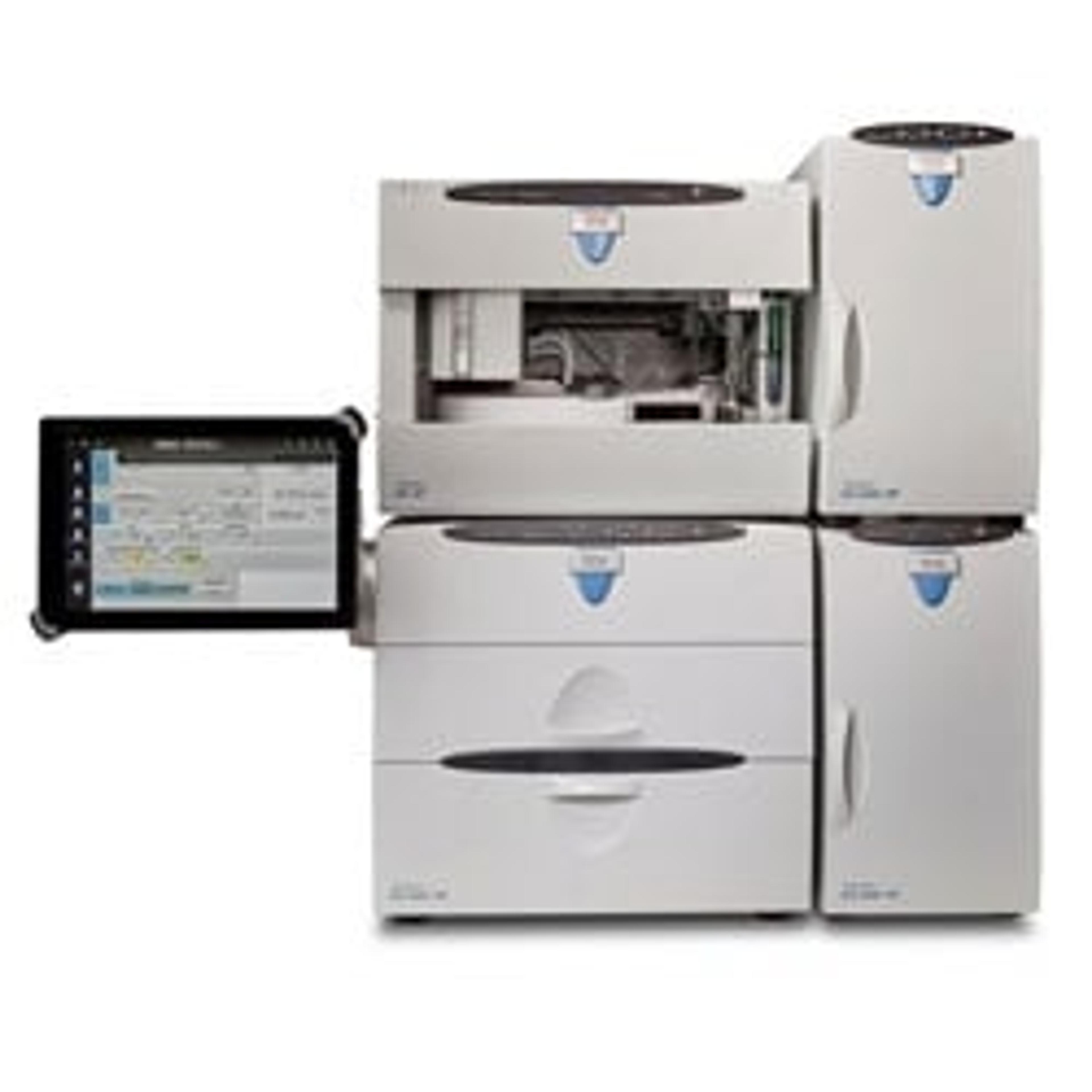
Thermo Scientific™ Dionex™ ICS-6000 Capillary HPIC™ System
Thermo Fisher ScientificObtain high performance, convenience, and flexibility by using a top-of-the-line IC platform optimized for capillary flow rates. The Thermo Scientific™ Dionex™ ICS-6000 Capillary HPIC™ System enables you to scale down column size, injection volumes, and flow rates by a factor of 25 to 100. With a capillary configuration, your system is always ready and able to run samples 24/7 with minimal calibration and equilibration time. These systems combine the all the advantages of high pressure ion chromatography and capillary IC. They are available in three configurations to match your application requirements. Choose from three configurations: Dionex ICS-6000 Single Channel Capillary RFIC System use this single channel capillary IC system to run one analysis at a time, 24/7. Dionex ICS-6000 Dual Channel Capillary RFIC System This dual capillary system can run two different analyses concurrently on a single sample, or analyze two samples in parallel. Alternately, run the same analysis on both channels to double throughput. Dionex ICS-6000 Carbohydrates Analysis Capillary IC System use this capillary IC system for analyzing carbohydrates with ion exchange chromatography and electrochemical detection. High pressure ion chromatography, high performance Fast, sensitive separations without sacrificing resolution—up to two times faster with Fast IC columns Outstanding resolution using columns with small-diameter particles, thanks to high-pressure capability Continuous operation at up to 5000 psi when configured as a Thermo Scientific™ Reagent-Free™ IC (RFIC™) system Optimized peak resolution with a choice of isocratic and electrolytic gradient separations on each channel Powerful and user-friendly operation using the Thermo Scientific™ Chromeleon™ Chromatography Data System (CDS) Wide variety of chemistries available in Thermo Scientific capillary and Fast IC columns Flexible, easy to configure, modular design Flexible, easy to configure, modular design Time-saving dual system option The capillary advantage Always ready with 24/7 uptime and minimal calibration and equilibration time Up to 18 months of continuous operation on one Eluent Generation cartridge Small dead volumes for minimized peak dispersion Reduced eluent disposal costs—only 15mL/day if eluent used for continuous operation at 10μL/min Enhanced ease-of-use: Dionex IC Cube houses capillary consumable cartridges with simple, colorcoded connections Flexible support for capillary columns of 0.2–0.6mm I.D. Application flexibility Typical flow rate range: 5–20μL/min Column i.d.: 02–0.6mm Typical yearly eluent usage: 5.25L Seamless sample preparation capabilities Dionex autosamplers integrate seamlessly with all Dionex ICS-6000 HPIC systems, providing effortless automation and advanced sample preparation capabilities.