This Month’s Top News Stories in Drug Discovery

28 Nov 2014

Kerry Parker
CEO

Editorial article

In this month’s interesting articles, learn about CombiChem and effective antibody discovery, and read about neuroscience imaging, high-throughput screening technologies, tumor invasion assays, drug encapsulation and neurotoxin assays.

The Resurgence of CombiChem Technologies
The generation of large diverse libraries of new compounds from defined building blocks for screening, known as ‘combinatorial chemistry’, is a key part of the drug discovery process. Two recent studies in Nature Chemistry provide examples of 'modern combichem' and describe the products and techniques used to combine the features of natural product biosynthesis into the creation of compound libraries.

How to set up an Effective High Throughput Antibody Discovery Lab
In the past 15 years, changes in the cost and reliability of technology have caused an explosion of tools and applications that increased the capability and capacity of any researcher, lab or company to speed up discovery. Automation and high throughput screening (HTS) are two examples of these advances, which have become a normal presence in the majority of the world’s labs today. Combine these capabilities with the power of flow cytometry and your options are limitless.

Five Essential Neuroscience Imaging Applications
Read about these essential imaging technologies and how they help with neuroscience research.

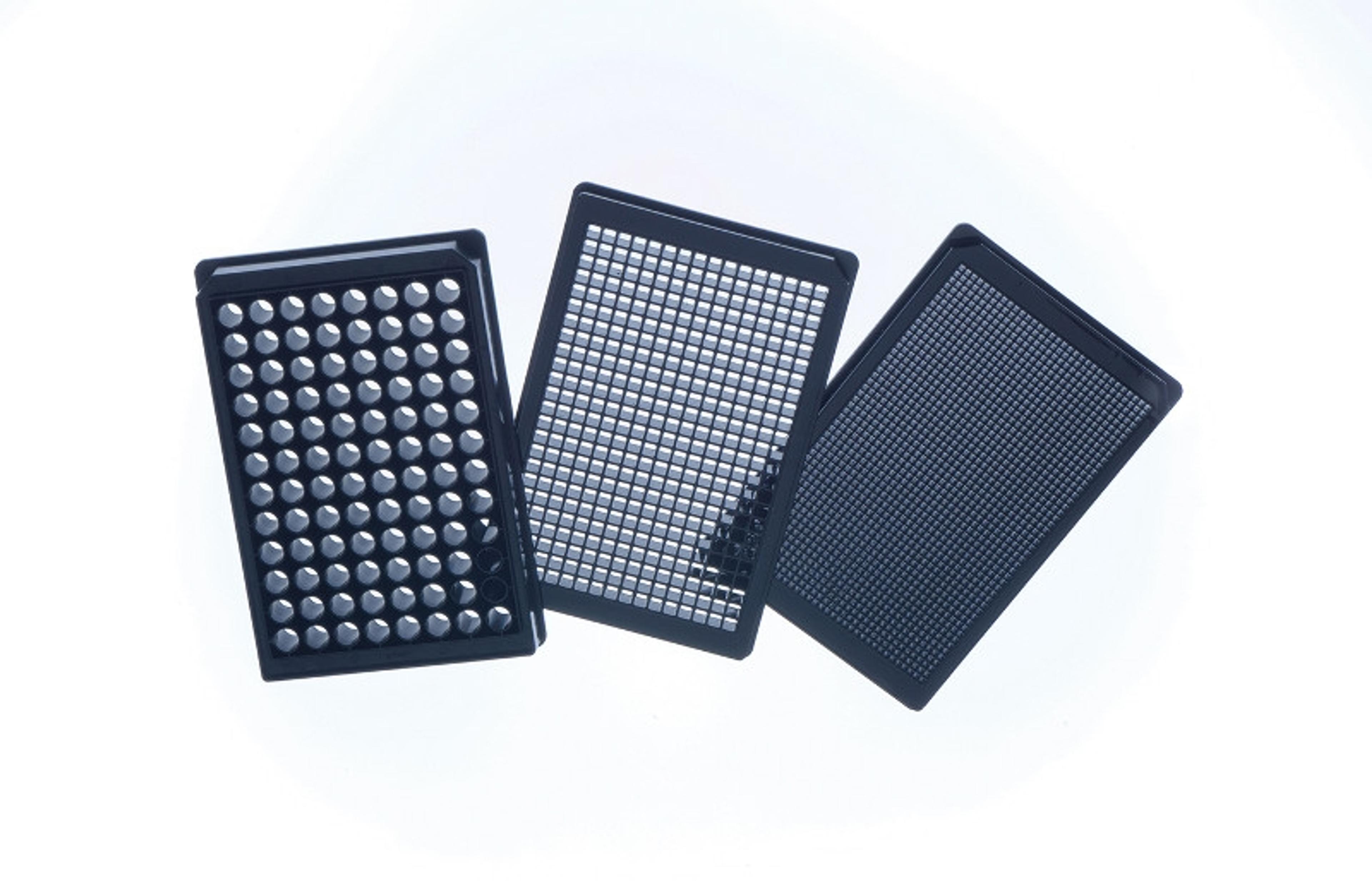
SCREENSTAR: A 1536 Well Microplate for High Content and High Throughput Screening
SCREENSTAR is a new generation microplate for advanced high content and high throughput screening. Manufactured entirely of cycloolefin, an innovative resin with advanced optical properties, the SCREENSTAR microplate features a black pigmented frame with a 190 μm ultra-clear film bottom. Combining excellent optical features with high-quality surfaces for cell culture and biochemical assays, the microplate design facilitates the use of high magnification objectives with a low working distance, ideally suited for fully automated screening systems.

Cellular Analysis of 3D Spheroid-Based Tumor Invasion Assays
This application note describes how the entire invasion assay procedure, from spheroid formation through monitoring of the invasion process, can be performed in one plate, which makes the process much easier to perform. Instructions for forming the invasion matrix are also included.

High Sensitivity Botulinum Neurotoxin Assays Using the Infinite® F500
Download this application poster to discover why BioSentinel recommends the advanced features of the Infinite® F500 Reader from Tecan to its customers. BioSentinel uses the Infinite® F500 Reader in its high sensitivity, FRET-based botulinum neurotoxin assays, for detection of bioterrorism agents.

Assessing Drug Encapsulation Efficiency Using Nanoparticle Tracking Analysis
This application note describes the use of Nanoparticle Tracking Analysis for size and concentration measurements of drug delivery nanoparticles. In addition, by using a fluorescently tagged drug molecule, it was possible to determine how many drug delivery nanoparticles had successfully been loaded with drug molecules.

Links

Tags

Mass SpectrometryMass spectrometry (MS) is a powerful analytical technique used to identify and quantify molecules based on the mass-to-charge ratio of gas-phase ions. It provides detailed information about the structure, composition, and properties of compounds and is widely used across fields such as environmental monitoring, materials science, drug discovery and development, food and beverage testing, and wider chemical research. Key MS techniques include tandem mass spectrometry (MS/MS), liquid chromatography–mass spectrometry (LS-MS) and inductively coupled plasma (ICP-MS). Choosing from these wide range of techniques and technologies can be a daunting task, so keep up to date with scientific applications, performance expectations, and customer reviews here all in one place. Visit our product directory to receive quotes direct from the manufacturer. Cell / Tissue CultureCell culture or tissue culture is used to study the biology of cells or tissues and to isolate cellular products in an environment which can be manipulated and well defined. Accurately control your culture environment with bioreactors or culture incubators, bind your cells to a surface or together with an extracellular matrix. Distinguish cell types with differential media or proliferate cells with certain characteristics using selective media. Enrich your media with supplements such as growth factors, sera and vitamins. Find the best cell and tissue culture products, kits and equipment in our peer-reviewed product directory: compare products, check customer reviews and receive pricing direct from manufacturers.High-Throughput ScreeningHigh-throughput screening (HTS) is an automated drug discovery technique for identification of active compounds against a compound library. Use HTS readers and integrated assay preparation / analysis workstations to screen your compounds. Identify active compounds against various HTS libraries, including membranes, proteins and peptides and HTS cell lines. Find the best high-throughput screening products in our peer-reviewed product directory: compare products, check customer reviews and receive pricing direct from manufacturers.ADME-ToxicologyADME-toxicology (ADME-Tox) studies are used in pharmacology and pharmacokinetics to assess the activity/toxicity of drugs <i>in vivo</i> or <i>in vitro</i>. Find bioassays for absorption, distribution, metabolism, and excretion of drug molecules including cytotoxicity, transporter/permeability, metabolism and activity assays as well as hepatocytes and cell lines for ADME. Find the best ADME-toxicology products in our peer-reviewed product directory: compare products, check customer reviews and receive pricing direct from manufacturers.Cell-Based AssaysCell-based assays are used to monitor the presence, quantity and activities of a desired cellular analyte including drug molecules or biomarkers. This can reveal information on cell health (apoptosis, cytotoxicity, viability and proliferation assays), cell metabolism, cell migration and cell signaling mechanisms. Find the best cell-based assay products, kits and equipment with our peer reviewed product directory: compare products, check customer reviews and receiving pricing direct from manufacturers.High-Content ScreeningHigh-content screening (HCS), also known as high-content analysis (HCA), is a high-throughput technique used in drug discovery to identify substances that alter the phenotype of cells. HCS uses fluorescent microscopic imaging and automated image analysis to investigate cellular events such as apoptosis, cell viability, GPCR activation, oxide production, neurite outgrowth, and cell signaling. Find the best fluorescent labeling reagents, cellular assays, and high-content imaging systems in our peer-reviewed product directory: compare products, check customer reviews and receive pricing direct from manufacturers.DNA / RNA Extraction and PurificationPurified DNA and RNA are required for numerous downstream molecular biology applications. Consequently, the importance of high-quality DNA/RNA extraction and purification equipment cannot be underestimated. Many purification kits are available and are typically optimized for nucleic acid type and source, including plasmid DNA, genomic DNA, mRNA, RNA and viral nucleic acid purification kits. Automated extraction and purification of nucleic acids can be implemented with magnetic bead separator instruments or high-throughput purification workstations. Find the best DNA/RNA extraction and purification equipment in our peer-reviewed product directory: compare products, check customer reviews and receive pricing direct from manufacturers.In Vivo Imaging Systems<i>In vivo</i> imaging systems, including pre-clinical imaging systems and medical imaging systems are used to non-invasively visualize and capture images of live animals and plants. Monitor the natural processes or diseases of your subjects using small-animal pre-clinical imaging systems, including single photon positron emission tomography (SPECT), positron emission tomography (PET), computed tomography (micro-CT), magnetic resonance imaging (MRI), X-ray radiography, ultrasound, fluorescence and bioluminescence imagers. Multimodal systems and software solutions are also available for correlative analysis of organ, tissue, cell, or molecular-level processes. Find the best in vivo imaging products in our peer-reviewed product directory: compare products, check customer reviews and receive pricing direct from manufacturers.Compound AnalysisCompound analysis is used to discover specific compounds that could be promising candidates for pharmaceutical use. This potential is identified when compounds have the desired effect, such as interaction with a target protein, during high throughput screening.Drug DeliveryDrug Delivery refers to dosage form, route of administration, formulations, technologies, and systems for transporting a pharmaceutical compound in the body as needed to safely achieve its desired therapeutic effect. Drug delivery is often approached via the biopharmaceutical or small molecule drug's formulation, but it may also involve medical devices or drug-device combination products. Considerations include instrumentation, software and services. Scale-upScale-Up is generally defined as the process of transferring the results of the discovery phases of the drug discovery process, obtained on a laboratory scale, to the pilot plant and finally to production scale. Scale-Up uses reactors and pump systems as well as reagents, standards and buffers. Often Scale-Up is provided as a service by Contract Manufacturing Organizations (CMOs). NeuroscienceNeuroscience research investigates the neurological mechanisms underlying behavior, neurodegenerative diseases, and other brain conditions. Learn about the innovative technologies for bioimaging, electrophysiology, cell culture, chromatography and other techniques used in this field.Cell ImagingCell imaging can be achieved using a number of techniques including confocal microscopy, transmission electron microscopy, atomic force microscopy, and light sheet microscopy.NeurotoxinScreeningUsing robotics, data processing and control software, liquid handling devices and sensitive detectors, screening allows a researcher to quickly conduct millions of chemical, genetic or pharmacological tests.
This Month’s Top News Stories in Drug Discovery