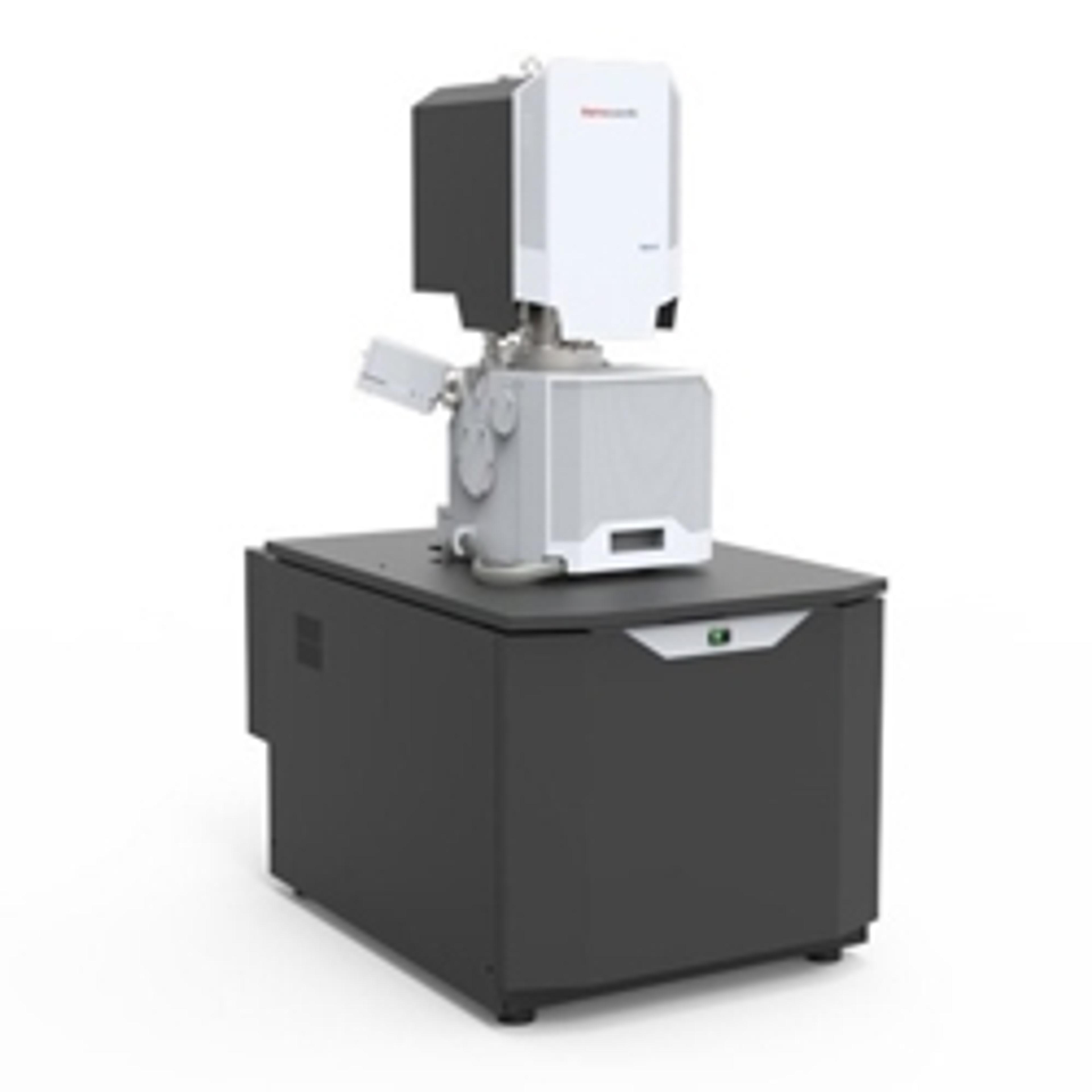
Thermo Fisher Scientific accelerates complex materials research at Monash University with specialized 300kV (S)TEM microscope
20 May 2021
Thermo Fisher Scientific has developed a custom-built high-resolution scanning transmission electron microscope ((S)TEM) to support advanced materials research at Monash University. The instrument is being installed in the Monash Centre for Electron Microscopy (MCEM) in Melbourne, Australia, a node of Microscopy Australia.
The Thermo Scientific Spectra φ is configured to provide enhanced electron beam flexibility to optimize advanced imaging of complex material systems. The Spectra φ was designed and built to meet the specifications of a team led by Professor Joanne Etheridge, of MCEM and Fellow of the Australian Academy of Science. By incorporating Spectra φ into their instrument lineup, Monash University will continue driving groundbreaking research into significant energy related and other initiatives, including high-efficiency photo-voltaic devices, batteries, materials light-weighting, low consumption electronics and clean generation, all which support making the world cleaner, healthier and safer.
"This new instrument enables our researchers to probe matter in innovative ways to visualize features they could not previously see," said Professor Joanne Etheridge, Director of the MCEM. "This will be a vital tool in the development of more efficient solar cells, transport alloys, battery materials, low-energy electronics, catalysts and biodegradable polymers—as well as many other materials that underpin our daily lives."
This flexibility in the control of the electron beam includes the ability to choose both the accelerating voltage and energy resolution, in combination with the largest array of unique, customized apertures ever configured in an advanced Thermo Scientific transmission electron microscope. The system provides electron energy loss spectroscopy (EELS) capabilities and is equipped with an advanced combination of pixelated (S)TEM, optimized (S)TEM, direct electron and low voltage optimized detectors. The microscope, configured on the Thermo Scientific Spectra platform, has the electronic, mechanical and electromagnetic stability needed to maximize data quality for situations such as in-situ experiments when long acquisition times are required.
"This is a revolutionary instrument and a powerful new addition to our world-class Monash Technology Research Platforms," said Professor Rebekah Brown, Senior Vice-Provost and Vice-Provost (research) at Monash University. "Monash is home to an extensive network of world-leading research technology platforms, in-house support and expertise available to our research community and collaborators. We believe innovation requires smart creative collaborations, and this is a prime example. We look forward to the new scientific discoveries it will enable."
"We are thrilled about our ongoing collaboration with Monash University and the opportunity to design a custom-built microscope that will advance materials science," said Rosy Lee, vice president of materials science at Thermo Fisher. "Understanding the value of the unique feature combinations in this microscope is critical to helping us make the most effective commercialization and integration choices for our future products."
Want the latest science news straight to your inbox? Become a SelectScience member for free today>>