
The new Eppendorf µCuvette G1.0 – Less is more
15 Nov 2012The Eppendorf µCuvette™ G1.0 is a microliter measuring cell, and therefore it is especially suited for photometric measurements of high sample concentrations in the Eppendorf photometers (Eppendorf BioPhotometer or Eppendorf BioSpectrometer). Photometric measurements are only as accurate as the device and corresponding accessory. Thus, selecting the perfect cuvette is just as important as choosing the right device.
Concerning the Lambert Beers Law, the higher the concentration of a sample, the shorter the optical path length should be with which the sample will be measured. The μCuvette G1.0 features an optical path length of only 1 mm, which is 10 times shorter than the light path length of standard cuvettes. For example, this allows nucleic acid concentrations to be measured with high reproducibility in a much higher concentration range (up to 1,500ng/ µL) without prior dilution. Only 1.5μL of a sample is required for the measurement.
The µCuvette G1.0 has been developed exclusively for Eppendorf BioPhotometer and BioSpectrometer. The devices are pre-programmed to a layer thickness of 1mm. All BioSpectrometer are offering in addition a pre-programmed method to quantify nucleic acid using the µCuvette G1.0. After selecting this method or the 1mm layer thickness in the parameter settings, the software realizes all calculations considering the layer thickness. In addition, the optical characteristics of the devices, as e.g. the light beam focusing and light beam guidance, are optimally adjusted to those of the µCuvette G1.0. The usage in older BioPhotometer and BioSpectrometer devices is possible without limitations in performance.
This optimization as well as the connection of both cuvette parts by means of a low-backlash journal bearing joint provide for highly reproducible conditions during measurement.
Related products
Request Quote for All Products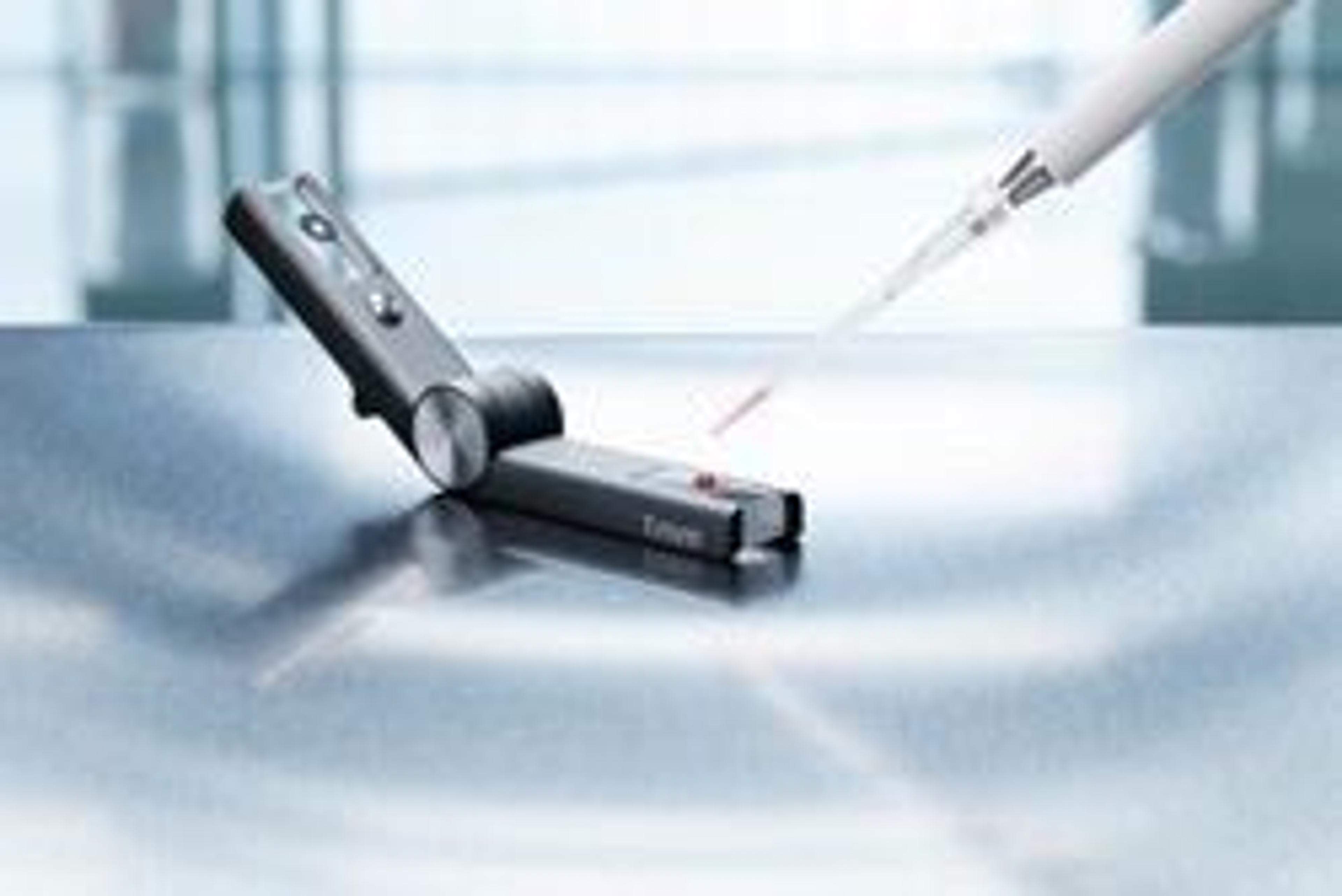
µCuvette G1.0™
EppendorfThe Eppendorf µCuvette G1.0 is a microliter measuring cell, and therefore it is especially suited for measuring high concentrations. The higher the concentration of a sample, the shorter the optical path length should be with which the sample will be measured. Thanks to a special Eppendorf coating procedure, the sample volume is positioned exactly and the drop will be shaped with precision. This technology makes it possible to fix the drop without producing any pronounced edges or projections. This minimizes the risk of sample carry-over and simplifies to a large extent the cleaning of the sample surface. Due to the used materials and the selected measuring principle, the self absorption of the µCuvette G1.0 is very low and can be compared to that of standard quartz glass cuvettes. The µCuvette G1.0 has been developed exclusively for Eppendorf BioPhotometer and BioSpectrometer. The devices are pre-programmed to a layer thickness of 1mm. The software realizes all calculations considering the layer thickness. In addition, the optical characteristics of the devices, as e.g. the light beam focussing and light beam guidance, are optimally adjusted to those of the µCuvette G1.0. This optimization as well as the connection of both cuvette parts by means of a low-backlash journal bearing joint provide for highly reproducible conditions during measurement. Application examples: • Concentration determination of nucleic acids and proteins • Measurement of high sample concentrations without dilution • Low sample volumes