
Hiden Analytical introduces its dedicated Carbon Monoxide Analyzer for complex gas mixtures
The analyzer is designed to complement Hiden HPR-20 and QGA 2.0 Gas Analysis systems for quantitative CO measurement in complex gas mixtures
23 Sept 2026
Hiden Analytical has announced the availability of its Carbon Monoxide Analyzer, developed to provide continuous, quantitative carbon monoxide (CO) measurement in complex gas mixtures. Designed for integration with Hiden mass spectrometry systems, the analyzer supports researchers worldwide studying syngas, biogas, catalysis and related gas-conversion processes by measuring CO while other gaseous components are monitored simultaneously.
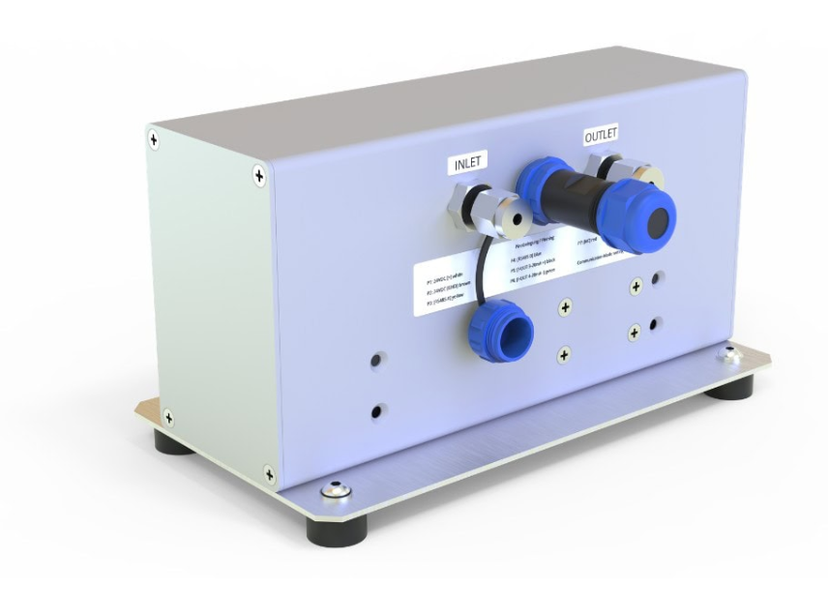
Figure 1: Hiden Carbon Monoxide Analyzer, designed to complement Hiden HPR-20 and QGA 2.0 Gas Analysis systems for quantitative CO measurement in complex gas mixtures.
Dedicated CO measurement alongside mass spectrometry
The CO Analyzer integrates with Hiden HPR-20 and QGA 2.0 Gas Analysis systems. It provides dedicated CO measurement while the mass spectrometer monitors other components in the gas mixture.
This combined approach is particularly relevant when nitrogen, carbon dioxide, methane and other species are present and may complicate carbon monoxide analysis.
Demonstrated CO measurement in complex gas mixtures
Testing demonstrated the combined analytical approach using complex gas mixtures containing carbon dioxide (CO₂), argon (Ar), methane (CH₄) and hydrogen (H₂), alongside two different carbon monoxide concentrations.
For a prepared mixture containing a calculated CO concentration of 0.52 vol%, the CO Analyzer measured 0.51 vol%. In a second test containing a calculated 0.10 vol% CO, the analyzer measured 0.09 vol%.
In both tests, the measured CO concentration was within 0.01 percentage points of the calculated concentration in the prepared mixture. At the same time, the mass spectrometer monitored the other gas components.
These results show close agreement between the prepared and measured CO concentrations. They also illustrate how dedicated carbon monoxide analysis can complement multi-component mass spectrometry when researchers analyze complex gas streams.
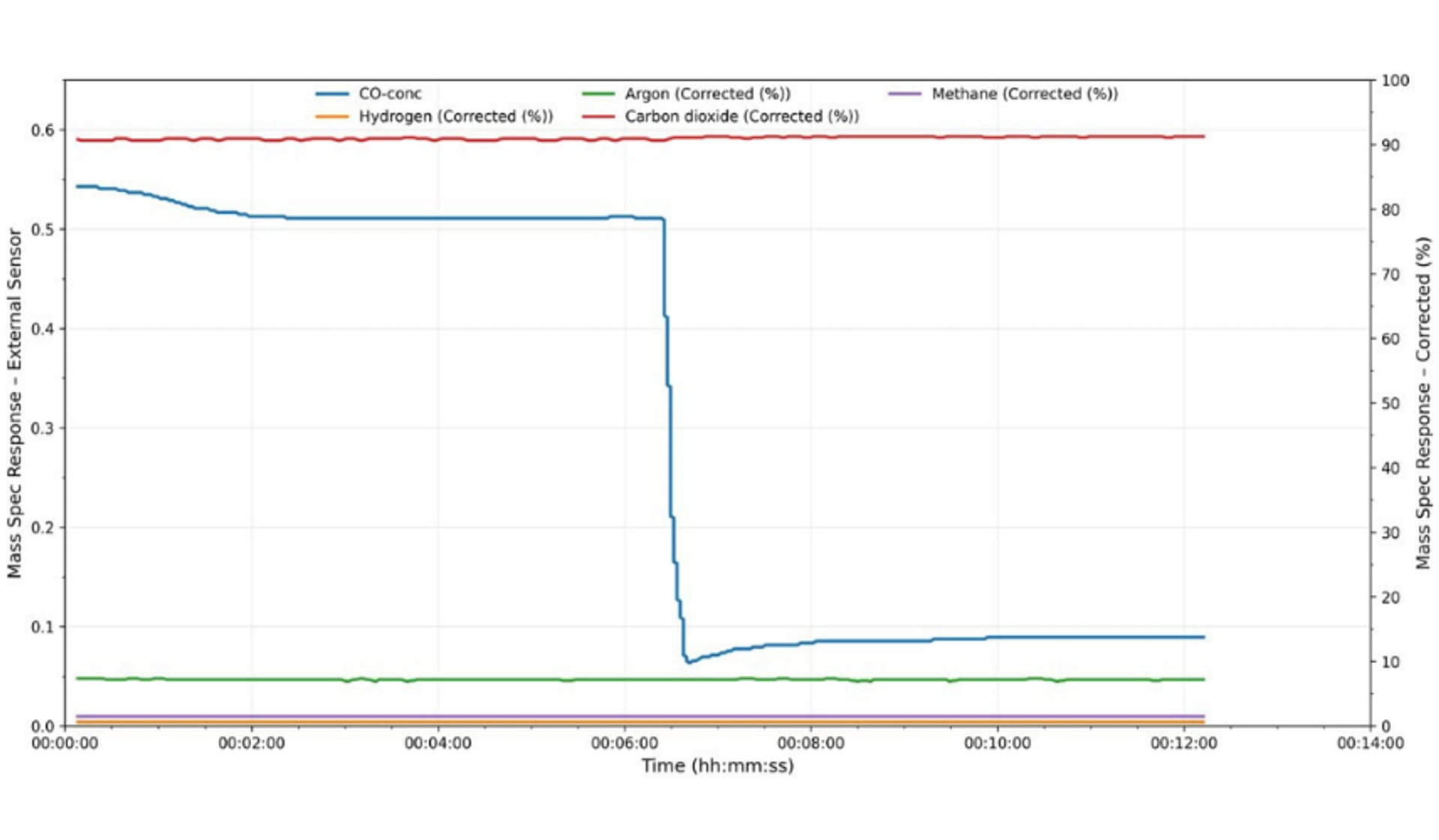
Figure 2: CO Analyzer and mass spectrometry analysis of complex gas mixtures containing CO₂, Ar, CH₄ and H₂. CO Analyzer measurements of 0.51 vol% and 0.09 vol% show close agreement with calculated mixture concentrations of 0.52 vol% and 0.10 vol% CO, respectively.
Carbon monoxide measurement for syngas research
Carbon monoxide and hydrogen are key components in syngas research. Combining the CO Analyzer with mass spectrometry enables dedicated CO quantification alongside simultaneous monitoring of hydrogen, carbon dioxide, methane and other gaseous species.
This approach supports the study of gas composition and changes that occur under different reaction and process conditions.
Multi-species gas analysis for biogas research
The combined system can also support biogas and gas-conversion research, where multiple gaseous components may be present. When carbon monoxide is present or generated, the CO Analyzer provides dedicated CO measurement while the mass spectrometer delivers broader multi-species analysis.
Real-time CO monitoring for catalysis
Carbon monoxide can be an important reactant, intermediate or product in catalysis research. Combining dedicated CO analysis with real-time mass spectrometry allows researchers to monitor changes in gaseous reactants and products as experimental conditions change.
Continuous, integrated carbon monoxide analysis
The CO Analyzer is designed for continuous analysis and is available with measurement ranges from 0–2,000 ppm to 0–100% CO, depending on application requirements.
The instrument can be synchronized with Hiden mass spectrometer software, allowing CO measurements to be acquired and displayed alongside mass spectrometry data. By combining dedicated CO quantification with multi-component mass spectrometry, the analyzer expands the gas analysis options available for complex mixtures across syngas, biogas, catalysis and related applications.
Want the latest science news straight to your inbox? Become a SelectScience member for free today>>
Tags
Frequently asked questions
Show frequently asked questions
How does the Hiden CO Analyzer improve carbon monoxide measurement in complex gas mixtures?
The Hiden CO Analyzer provides continuous, quantitative CO measurement while Hiden HPR-20 or QGA 2.0 mass spectrometry systems simultaneously monitor gases such as hydrogen, carbon dioxide, methane, argon and nitrogen. This integrated approach supports accurate multi-species gas analysis for syngas, biogas, catalysis and related gas-conversion research.
How accurate is the Hiden Carbon Monoxide Analyzer in complex gas streams?
In tests, the CO Analyzer measured 0.51 vol% for a prepared concentration of 0.52 vol% CO and 0.09 vol% for a prepared concentration of 0.10 vol% CO. Both results were within 0.01 percentage points of the calculated concentrations while the mass spectrometer monitored other gas components.
What applications and measurement ranges does the Hiden CO Analyzer support?
The continuous CO Analyzer supports syngas, biogas, catalysis and gas-conversion research, with ranges from 0–2,000 ppm to 0–100% CO. It can synchronize with Hiden mass spectrometer software so researchers can acquire and display dedicated carbon monoxide measurements alongside real-time, multi-component mass spectrometry data.